

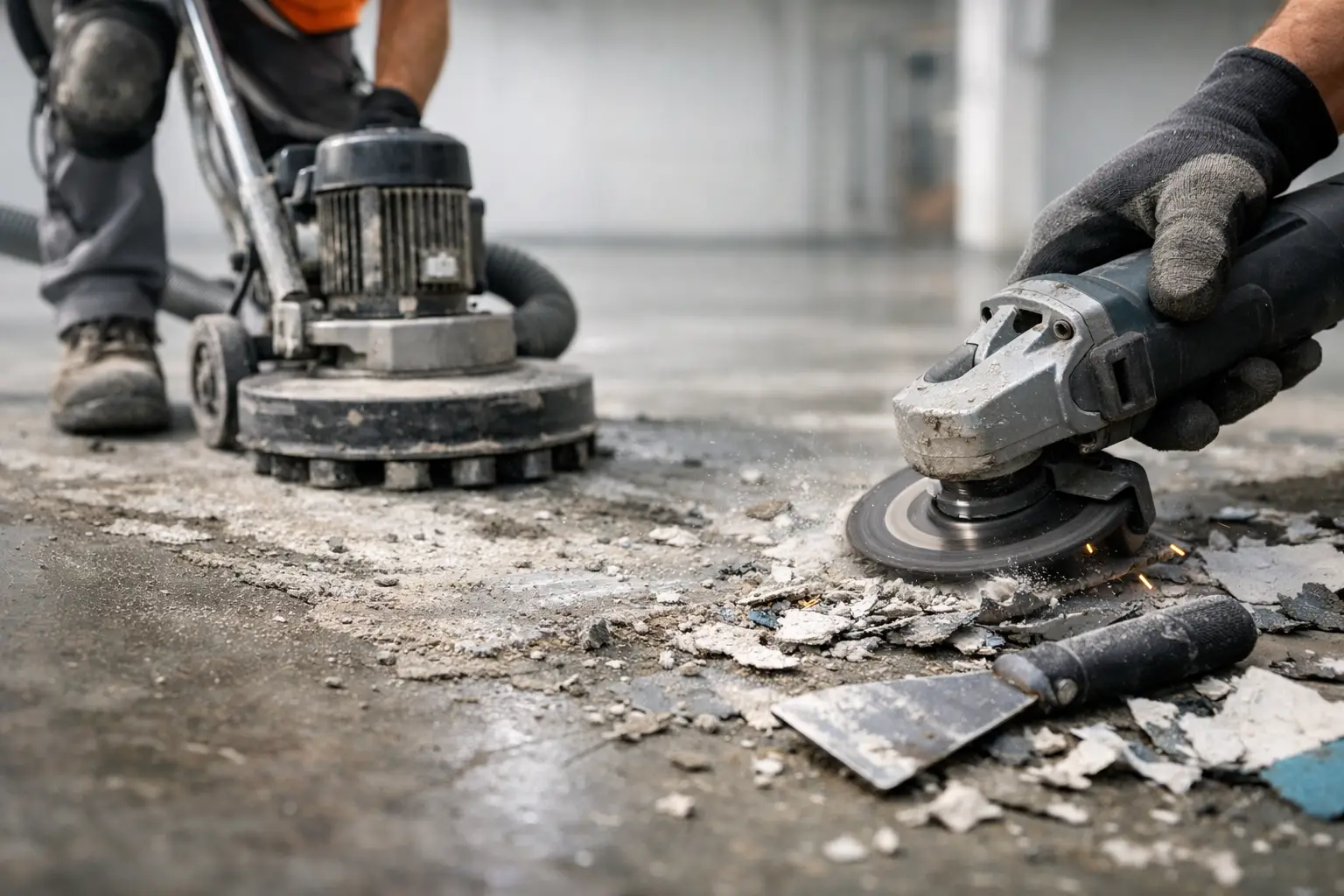
Need epoxy & paint removal done right? Learn what works, what causes slab damage, and why proper surface prep saves time on every renovation.
Epoxy & paint removal sounds simple until the coating will not budge, the slab starts tearing, or the next flooring system fails because the surface was never properly cleaned back. That is where experience matters. Removing surface coatings is not just about getting rid of colour or shine – it is about taking the floor back to a sound, ready state without damaging the substrate underneath.
In residential and commercial renovations, epoxy and paint are often the hidden delay. They cling hard to concrete, soak into porous areas, and leave behind inconsistent patches that interfere with adhesives, levelling compounds, waterproofing, or new floor finishes. If the removal is rushed or handled with the wrong equipment, you can end up with gouges, contamination, or a slab that still is not fit for the next trade.
Why epoxy & paint removal needs the right method
Not all coatings come off the same way. Some epoxy systems are thin and brittle. Others are thick-build industrial coatings designed to resist impact, chemicals, and heavy traffic. Paint can range from a light domestic coating to multiple layers of old commercial product, often with patches of adhesive, filler, or previous repairs underneath.
That matters because the wrong removal method creates more work. Chemical stripping can leave residue if it is not fully neutralised and cleaned. Aggressive mechanical removal can scar the slab if the operator is chasing speed instead of control. In many jobs, the real task is not just removal – it is achieving the correct profile for what comes next.
For example, a floor being prepared for tiles needs something different from a slab being readied for polished concrete, vinyl, or a fresh epoxy system. The finish left behind has to match the installation requirements, not just look clean from a distance.
What makes these jobs difficult
The biggest issue with epoxy & paint removal is bond strength. Once these coatings cure properly, they lock onto the concrete. Add age, moisture movement, previous patching, or multiple recoats, and the floor can become uneven in both hardness and adhesion.
There is also the dust factor. Mechanical grinding and stripping can create a serious mess if the job is not managed with proper dust-control equipment. In occupied homes, offices, retail spaces, and tenanted properties, that is not a minor detail. Clean execution matters because removal work often happens right before the next stage of renovation.
Access can be another problem. Tight rooms, stair access, furnished spaces, and active commercial sites need operators who can work efficiently without turning the whole property into a demolition zone.
How professional epoxy & paint removal is usually done
In most cases, mechanical removal is the most reliable option. That can include floor grinders, scarifies, coating removal machines, and edge equipment to clean tight perimeter areas. The aim is to remove the coating thoroughly while keeping the slab as even and usable as possible.
A proper operator will assess coating thickness, slab condition, access, and end use before starting. If the floor only needs coating removed, the approach may be different from a slab that also needs adhesive removal, levelling correction, or a full prep grind. The best result comes from matching the machine and tooling to the floor, not forcing one method across every job.
This is also where speed and quality have to work together. A rushed pass might strip the obvious coating but leave behind contamination in low spots and pores. A disciplined removal process gets the floor consistently clean and ready for handover.
When DIY removal becomes expensive
Many people try epoxy or paint removal with hire grinders, handheld tools, or chemical products. On small patches, that can sometimes work. On full rooms, garages, shops, warehouses, and renovation sites, it usually becomes a time drain fast.
The common problems are incomplete removal, swirl marks, uneven grinding, edge build-up, and dust everywhere. Even worse, a floor can look stripped but still fail moisture, adhesion, or finish requirements once the new material goes down. That is when a cheap attempt becomes a costly rework.
For builders, renovators, and property owners on a timeline, delays are often more expensive than the removal itself. Getting the floor professionally stripped and prepared the first time keeps the project moving.
What to expect from a proper removal team
A specialist team should do more than turn up with a grinder. They should identify the coating, explain the likely removal method, control dust, protect surrounding areas, and leave the site ready for the next stage wherever possible. That includes dealing with edges, stubborn patches, and the condition of the slab after removal.
At Rapid Stripped, jobs like this are approached with a simple standard – remove the coating properly, keep the site under control, and hand over a surface that is genuinely ready for renovation or reinstallation. That matters across homes, offices, retail fit-outs, hospitality venues, and commercial spaces where downtime and mess need to be kept to a minimum.
If your floor has old epoxy, flaking paint, multiple recoats, or a failed coating system, the right question is not just how to get it off. The real question is how to remove it cleanly, safely, and without creating the next problem. That is what gets a job moving again.