

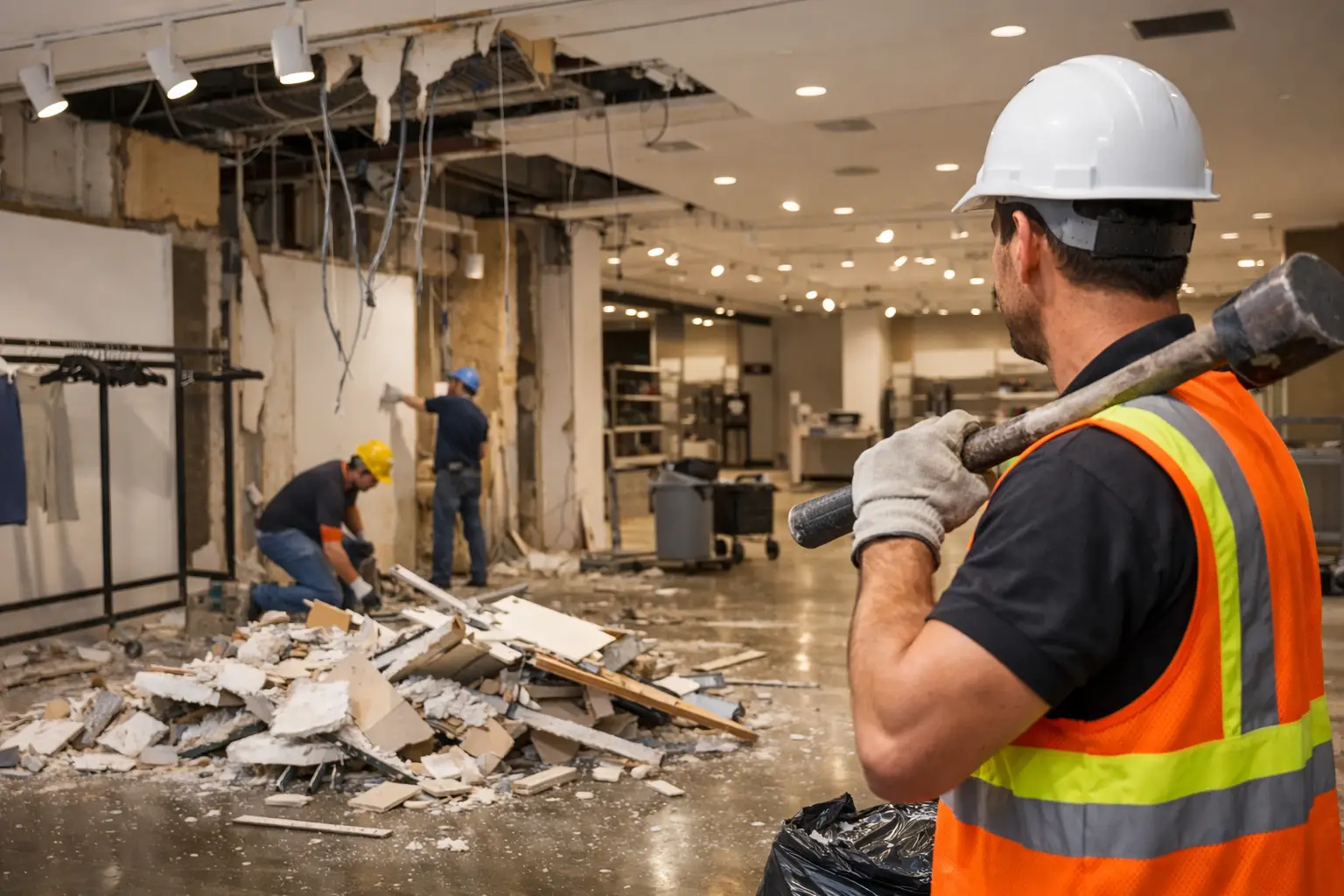
Shop and Retail Stripouts done fast, clean and safely. Get your site cleared, floors stripped and surfaces ready for the next fit-out.
When a retail site needs to change over, every wasted day costs money. That is why Shop and Retail Stripouts need to be planned and executed with speed, control and a clear understanding of what has to happen next on site. It is not just about ripping things out. It is about leaving a clean, safe space that is genuinely ready for the next trade.
For shop owners, builders and property managers, the biggest frustration is usually the handover between one stage and the next. Old flooring is still bonded hard to the slab, fixtures leave damage behind, adhesives are stuck fast, and the new fit-out team is waiting. A proper stripout solves that problem by dealing with the messy, heavy and time-critical work first, so the project can keep moving.
What shop and retail stripouts actually involve
Retail stripouts vary from light internal removal through to full back-to-base demolition. In some shops, the job is mainly floor removal and surface preparation. In others, it includes counters, shelving, wall linings, joinery, vinyl, tiles, carpet, adhesives and damaged substrate clean-up.
The scope depends on the condition of the site and what comes next. If a new tenant is moving in with a fresh fit-out, the stripout needs to leave the premises clear, level and safe for immediate follow-on work. If the site is being refurbished in stages, the work may need tighter dust control, selective demolition and careful protection of areas staying in place.
That is where specialist removal matters. Retail sites often hide difficult materials under the surface – old tile bedding, thick glue, layered floor coverings, patch repairs and uneven slabs. Removing the visible material is only half the job. The real test is whether the floor is properly prepared for vinyl, tile, timber, epoxy or polished concrete afterwards.
Why speed matters in retail environments
Retail works to hard deadlines. Lease dates, fit-out schedules, reopening targets and trade coordination all depend on the stripout being finished on time. Delays at this stage tend to flow through the whole project.
A fast turnaround only helps if the workmanship is right. Rushed stripouts can leave trip hazards, adhesive contamination, broken substrate or unnecessary damage to retained structures. That creates rework, and rework costs time. The better approach is disciplined removal with the right machinery, the right method and proper clean-up at the end.
For many retail projects, completing most of the heavy removal within a day is a major advantage. It reduces disruption, keeps other trades on schedule and gives the client a clear picture of the site condition straight away.
Floors are often the biggest issue
In many shop and retail stripouts, the floor is what holds everything up. Old ceramic tiles, vinyl sheeting, carpet glue, epoxy coatings and timber flooring can all be stubborn to remove, especially in high-traffic commercial premises where multiple coverings have built up over time.
Once the floor covering is up, the slab underneath often still needs work. Adhesive residue, levelling compound, paint, screed and damaged sections can stop a new finish from bonding correctly. This is why floor stripping and surface preparation should never be treated as separate afterthoughts. They are part of the same outcome – getting the site ready for reinstallation.
Grinding, scraping and detailed slab preparation are what turn a rough stripout into a renovation-ready site. If that stage is skipped or done poorly, the next contractor inherits the problem.
What to look for in a stripout contractor
Not every demolition crew is set up for retail work. Shops and commercial tenancies usually need a more controlled approach than general knockdown work. You want a team that understands selective demolition, difficult floor removal, dust management and safe material handling.
It also helps to work with a contractor that can assess the whole sequence of the job, not just the removal itself. If the floor finish is coming off, what condition does the slab need to be left in? If joinery is being removed, what needs to be protected? If the tenancy is in a busy commercial area, how will waste, noise and access be managed?
The right operator will answer those questions early and get on with the work without creating extra problems. That is the difference between a basic demolition service and a specialist stripout team.
Shop and Retail Stripouts with less disruption
Retail sites are rarely simple. There may be neighbouring tenancies, centre rules, restricted hours, tight access or a handover date that cannot move. A good stripout plan accounts for those site realities from the start.
That means using equipment suited to the material, controlling dust wherever possible, keeping the work area organised and removing waste efficiently. Clean execution matters. It keeps the site safer during the job and makes the transition to the next trade much smoother.
For clients across Northern NSW, the Gold Coast, Brisbane and the Sunshine Coast, that practical approach is often what separates a smooth renovation from a stop-start one. Rapid Stripped focuses on exactly that – fast, technically sound stripouts that leave sites ready for what comes next.
If you are planning a retail refurbishment, tenancy reset or complete fit-out changeover, the smartest move is to get the stripout done properly the first time. When the floors are cleared, the surfaces are prepared and the rubbish is gone, the rest of the project has room to move.