

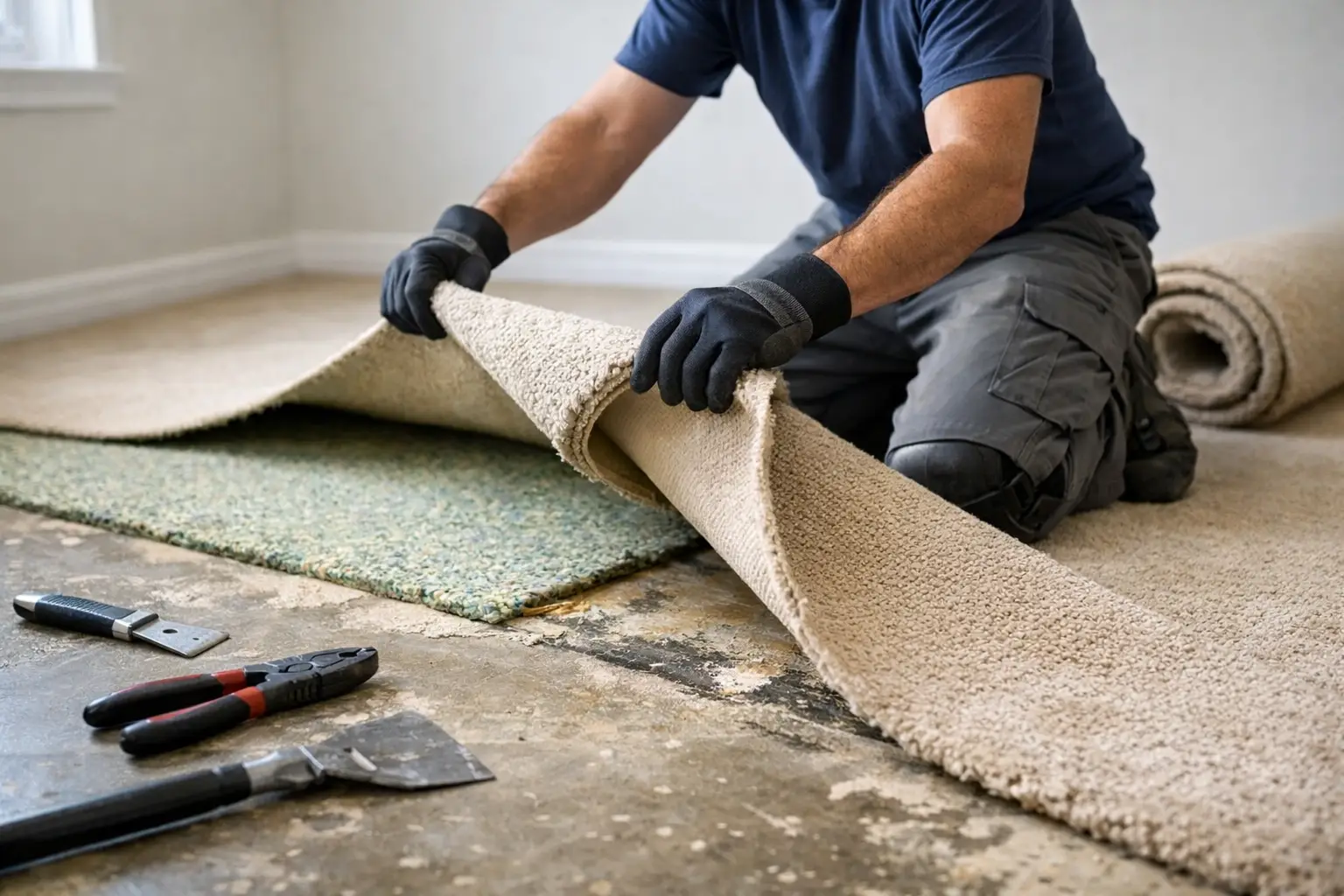
Carpet Removal done right means faster renovations, less mess and a cleaner slab. Know what matters before old carpet comes up.
Old carpet looks easy to rip up until the job starts. Carpet Removal often exposes glued underlay, stubborn staples, damaged subfloors and years of dust packed into every edge. If the goal is a site that is actually ready for the next trade, the removal has to be clean, thorough and controlled from start to finish.
For homeowners and renovators, that usually means more than pulling up the carpet itself. The real work is underneath. Underlay can be brittle, adhesives can bond hard to concrete, and timber subfloors can be left covered in fixings that slow down the next stage. In commercial spaces, the pressure is even higher. Delays affect other trades, fit-out schedules and day-to-day operations.
What proper Carpet Removal really includes
A proper carpet removal job is not finished when the floor covering is off the ground. It includes lifting and removing the carpet, stripping the underlay, extracting staples, smooth edge and tack strip removal, and clearing away adhesive residue where required. If the floor needs to be reused or prepared for a new finish, the substrate matters just as much as the carpet.
That is where many jobs go wrong. A rushed strip-out can leave behind sharp fixings, adhesive lumps, uneven patches and hidden damage. That creates extra work for tilers, floor layers and builders, and it can push the whole project back.
In renovation work, the best result is a floor that is left clean, safe and ready for the next step. Sometimes that means basic removal only. Sometimes it means grinding the slab, scraping off heavy glue or addressing moisture-affected areas before new flooring goes down. It depends on the age of the carpet, how it was installed and what is being installed next.
Why Carpet Removal can get complicated fast
Residential carpet is often fixed with staples and smooth edge around the perimeter, which sounds straightforward until the underlay tears into pieces and leaves hundreds of fixings behind. In older homes, there may also be multiple flooring layers underneath. Carpet over vinyl, carpet over old adhesive, or carpet laid after patch repairs can all change the scope of the job.
Commercial carpet brings a different set of problems. Carpet tiles may be heavily glued. Broadloom carpet can be fixed across large open areas with strong adhesive that does not release cleanly. Offices, retail sites and tenancies also need tighter dust control, safer access and faster turnaround to keep disruption down.
This is why experience matters. Knowing how to remove flooring without damaging the slab or subfloor saves time later. So does having the right equipment to strip, scrape and prepare the surface in one workflow rather than patching the mess afterwards.
What to expect after the carpet comes up
Once the carpet is removed, the floor underneath tells the real story. Concrete slabs may show glue lines, cracks, levelling compounds or moisture staining. Timber subfloors may reveal squeaks, lifted sheets or nail damage. None of that means the job has gone wrong. It simply means the floor is now exposed and can be dealt with properly.
For many projects, this is the point where surface preparation becomes just as important as removal. If new hybrid flooring, vinyl planks, tiles or polished concrete are going in, the substrate needs to be suitable for that finish. A clean pull-up is good. A renovation-ready surface is better.
That is why specialist operators approach carpet removal as part of the bigger preparation process, not as a stand-alone rip-out. The cleaner the handover, the smoother the installation that follows.
When professional removal is the better call
DIY carpet pull-up can work in a small room if the carpet is loose laid or lightly fixed, but larger or older jobs can become labour-heavy very quickly. Adhesives, staples, edge strips and waste disposal all add time. So does cleaning the slab properly once the carpet is gone.
Professional removal makes the most sense when the job needs to be completed quickly, when there is heavy glue or difficult substrate underneath, or when the area has to be left ready for immediate follow-on works. Builders, investors and commercial property managers usually do not want a half-finished strip-out. They want the site cleared, safe and moving.
That is where a specialist team stands apart from a general labour crew. The difference is not just speed. It is knowing how to remove difficult materials cleanly, control dust, protect surrounding areas and leave the floor in a condition that does not create problems for the next trade.
For projects across Northern NSW, the Gold Coast, Brisbane and the Sunshine Coast, that practical approach matters. Fast removal is useful. Fast removal done properly is what keeps a renovation on track.
If you are planning to replace carpet, do not just think about how it comes up. Think about what the floor needs to look like once it is gone. That is what decides whether the next stage starts on time or starts with rework.