

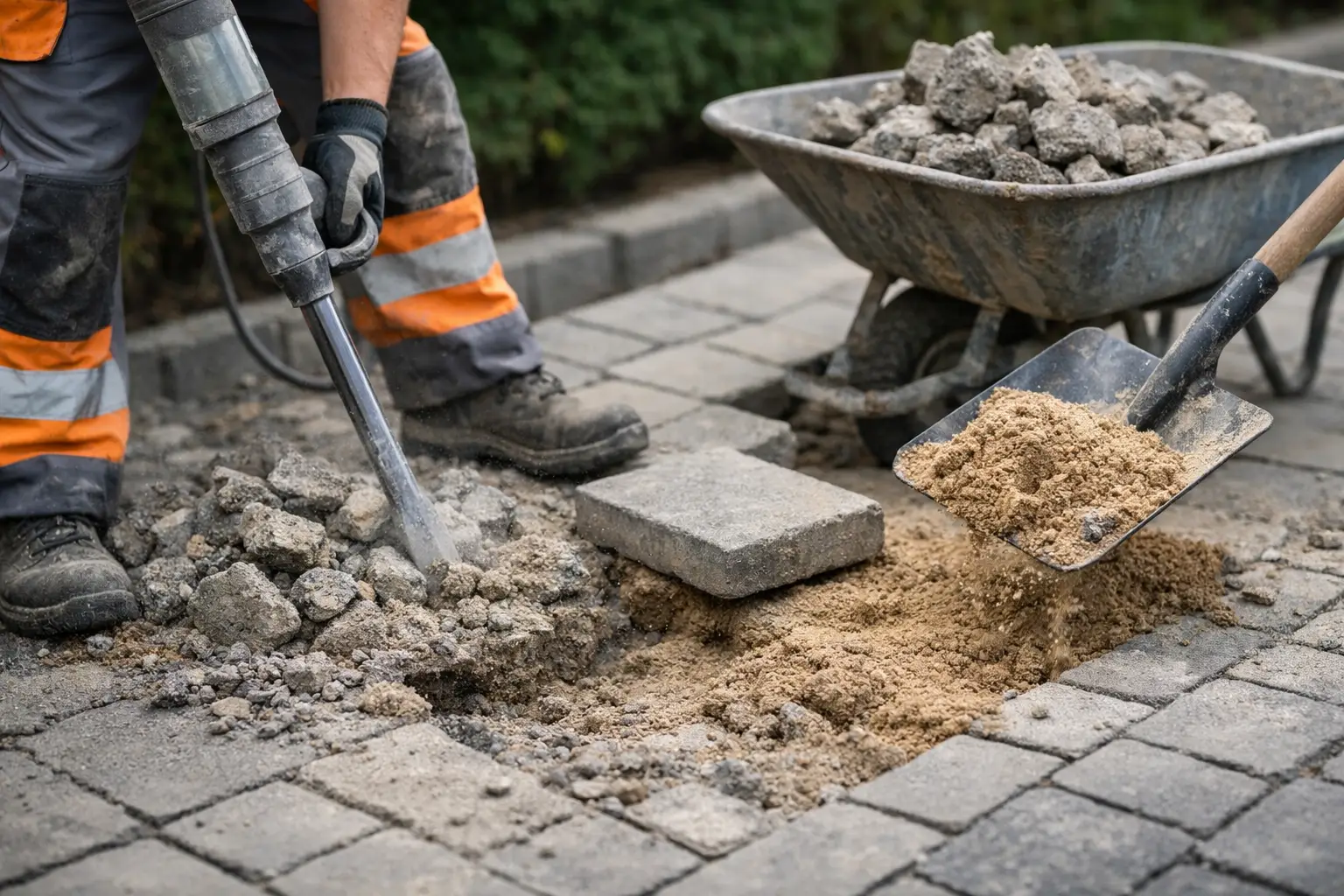
Bedding & screed removal done fast, clean and right. Learn what’s involved, why it matters, and how to prepare a slab for the next stage.
If you have pulled up tiles and found a thick, stubborn layer still bonded to the slab, you are not halfway done – you are at the part that usually causes delays. Bedding & screed removal is the step that decides whether your new flooring goes down properly or whether the next trade walks onto a surface that is uneven, contaminated, or not ready.
This is not light clean-up work. Tile bedding, sand and cement screed, old mortar beds, and levelling layers can be extremely hard, brittle in some areas and rock-solid in others. On older jobs, thickness varies across the room, and what looks flat from above can hide hollows, high spots, loose sections, and adhesive residue underneath. If the goal is a proper renovation, that material has to come off cleanly.
What bedding and screed removal actually involves
In practical terms, bedding and screed removal means mechanically breaking up and lifting the cement-based layer sitting over the structural slab or substrate. That layer may have been used to bed tiles, build falls in wet areas, level an uneven surface, or create height before a floor finish was installed.
Once the top tiles are gone, the real condition of the substrate becomes obvious. Some screeds shear off in sheets. Others are bonded so tightly they need heavier demolition methods and follow-up grinding. A good removal crew does not just rip into it and hope for the best. The job is to remove the material efficiently while protecting the slab where possible and leaving the site ready for the next stage.
Why poor screed removal causes bigger problems later
A lot of renovation issues start with a surface that was called ready when it was not. Leftover bedding, ridges, weak patches, and bonded residue can affect tile installation, hybrid flooring, epoxy coatings, waterproofing, and self-levelling compounds. Even small inconsistencies can become expensive once new finishes are installed.
Wet areas are a common example. In bathrooms, laundries, balconies, and around pools, the screed may have been laid to create drainage falls. If that material comes out unevenly or the slab is damaged during removal, the area may need more correction work before waterproofing can begin. That adds time and creates rework for the next trade.
Commercial sites have a different pressure point. Time matters. Offices, retail shops, hospitality venues, and tenanted spaces often need flooring removed and the slab handed over fast. Slow, messy removal affects everyone who comes after.
The difference between easy removal and difficult removal
Not every bedding removal job is the same. Thickness is one factor, but bond strength matters more. A thin screed that is fully bonded can be harder to remove than a thicker bed that has already started to fail. Material type, moisture exposure, age, reinforcement mesh, and what was installed on top all change the approach.
There is also the issue of what sits underneath. Concrete slabs, suspended slabs, underlayments, and older substrates all need to be treated differently. An experienced operator reads the slab as the work progresses. If the surface starts tearing, cracking, or exposing weak spots, the removal method may need to change on the spot.
That is why bedding & screed removal should be treated as specialist floor removal, not general demolition. The aim is controlled removal, not unnecessary damage.
What a professional result should look like
A proper result is not just a cleared floor. It is a surface that is stripped back far enough, cleaned up properly, and assessed for the next flooring or construction stage. In many jobs, that means removing the screed, taking off residual adhesive or mortar, and grinding the slab to achieve a more suitable finish.
Dust control matters here as well. Cement-based removal creates a large amount of airborne dust if it is not managed correctly. On occupied homes, unit blocks, commercial sites, and renovation projects with other trades on site, clean execution is part of the job, not an extra.
The best removal work is the kind that saves time for everyone else. When the floor is handed over clean, levelled as needed, and free of failed material, tilers, builders, waterproofers, and flooring installers can get straight into their work without patching around someone else’s shortcuts.
When to bring in a specialist for bedding & screed removal
If the area is large, the screed is heavily bonded, there is tile bedding over concrete, or the job has a tight turnaround, specialist equipment and experience make a real difference. The same applies where access is difficult, noise and dust need to be controlled, or the floor must be ready for immediate follow-on works.
For homeowners and renovators, the main risk is underestimating how hard the material is to remove and how much site prep is needed afterwards. For builders and commercial clients, the risk is programme blowout. In both cases, the right crew reduces downtime and avoids handing a problem to the next trade.
Rapid Stripped handles this kind of work with the mindset it needs – fast mobilisation, hard-wearing equipment, controlled removal, and a site left ready for what comes next. That matters whether you are stripping a bathroom, a full home, a retail tenancy, or a commercial floor with no room for delays.
If your tiles are already up and the screed is still holding the job back, that is usually the point where specialist removal pays for itself in time, cleanliness, and a better surface underneath.