

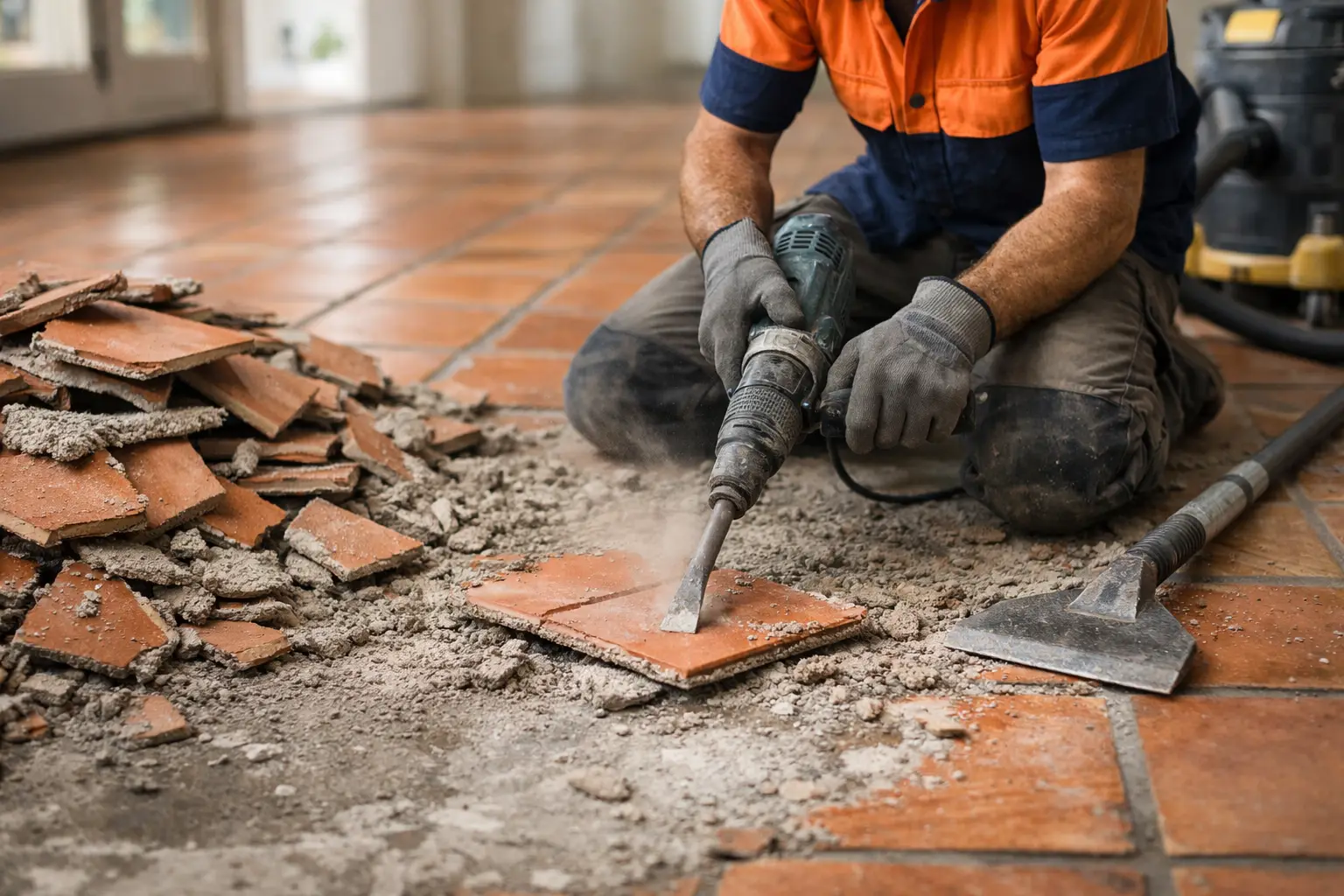
Terracotta Tile Removal needs the right tools and prep. Learn what makes it difficult, what to expect, and how to get a site renovation-ready.
Terracotta Tile Removal looks straightforward until the first few tiles come up and the real problem shows itself underneath. What slows most jobs down is not the tile itself – it is the thick bedding, stubborn adhesive, uneven substrate, and the dust and waste that come with it. If the goal is a clean, ready-for-renovation surface, removal has to be done properly from the start.
Terracotta is a hard-wearing material, but older installations are often heavily bonded and laid over mortar beds that do not let go easily. In homes, that usually means dated kitchens, entryways, patios, and living areas. In commercial settings, it can mean large floor areas that need to be turned around quickly so the next trade can get in without delay.
Why terracotta is harder to remove than many people expect
Terracotta has a reputation for being tough, and that is exactly why removal can become labour-intensive. These tiles are commonly porous, heavy, and installed to last. On many jobs, the tiles break apart before they release cleanly, which means the removal process becomes a combination of tile breaking, bedding removal, adhesive stripping, and slab preparation.
The condition of the floor underneath matters just as much as the tile. A concrete slab may be left with ridges, glue residue, mortar patches, or damage from previous installs. If that surface is not corrected, the next flooring system can fail before it even has a chance to perform properly.
What a proper Terracotta Tile Removal job should include
A proper job is not just about getting the tiles out. It should leave the area safe, clear, and ready for the next stage. That usually starts with assessing the tile thickness, the bedding method, the substrate condition, and site access. A small room with easy access is one thing. A tight unit, occupied home, or active commercial site is another.
From there, the work needs the right equipment. Mechanical tile removal tools, floor grinders, dust-control systems, and waste handling all play a part. Without that setup, removal gets slower, messier, and rougher on the slab.
The final stage is often the part people underestimate most – surface preparation. Once the terracotta is gone, there is usually still a fair bit of work left in removing residual material and bringing the slab to a condition suitable for retiling, polishing, coating, or another floor covering.
The biggest risks with DIY removal
DIY terracotta removal can look like a way to save time, but it often creates delays instead. The first issue is physical effort. Terracotta and bedding removal is heavy work, and progress can be much slower than expected once the initial tiles are up.
The second issue is slab damage. Using the wrong tools or too much force can gouge concrete, crack sections, or leave the floor more uneven than it started. That leads to extra repair work before the new floor can go down.
Then there is dust, noise, and waste. Tile removal produces sharp fragments, heavy rubble, and fine dust that needs to be controlled properly, especially in lived-in homes, tenanted properties, offices, and retail sites. If the site needs to stay orderly and disruption matters, a disciplined removal process makes a real difference.
When speed matters, process matters more
Most clients do not just want tiles removed. They want the site ready for the next trade without a blowout in the schedule. That means removal should be planned around access, protection of surrounding areas, waste removal, and the condition required at handover.
For renovators and builders, this is where specialist work pays off. A fast crew without proper surface prep can create problems for tilers, floor layers, or painters. A proper removal team works with the next stage in mind, not just demolition for its own sake.
That is especially important on bathrooms, kitchens, full-home renovations, units, and commercial fit-outs where every lost day affects multiple trades. In regions such as Brisbane, the Gold Coast, the Sunshine Coast, and Northern NSW, quick turnaround and clean execution are often the difference between staying on programme and falling behind.
What to expect after the tiles are removed
No two floors come up exactly the same, but most terracotta jobs reveal one of three things: a relatively sound slab needing minor clean-up, a floor with heavy residual bedding that needs mechanical grinding, or an uneven surface that needs further preparation before installation. The point is simple – tile removal is only one part of getting a floor renovation-ready.
That is why experienced operators look past the visible surface and plan for what is underneath. It saves time, reduces surprises, and gives clients a more accurate picture of what the site will need once demolition is complete.
Rapid Stripped handles this type of work with the right equipment, controlled removal methods, and a clear focus on leaving the floor clean, safe, and ready for what comes next. For homeowners, builders, and commercial operators, that means less downtime and fewer headaches once the old terracotta is out.
If you are planning to replace terracotta, the smart move is to treat removal and surface preparation as one job, not two separate problems.