

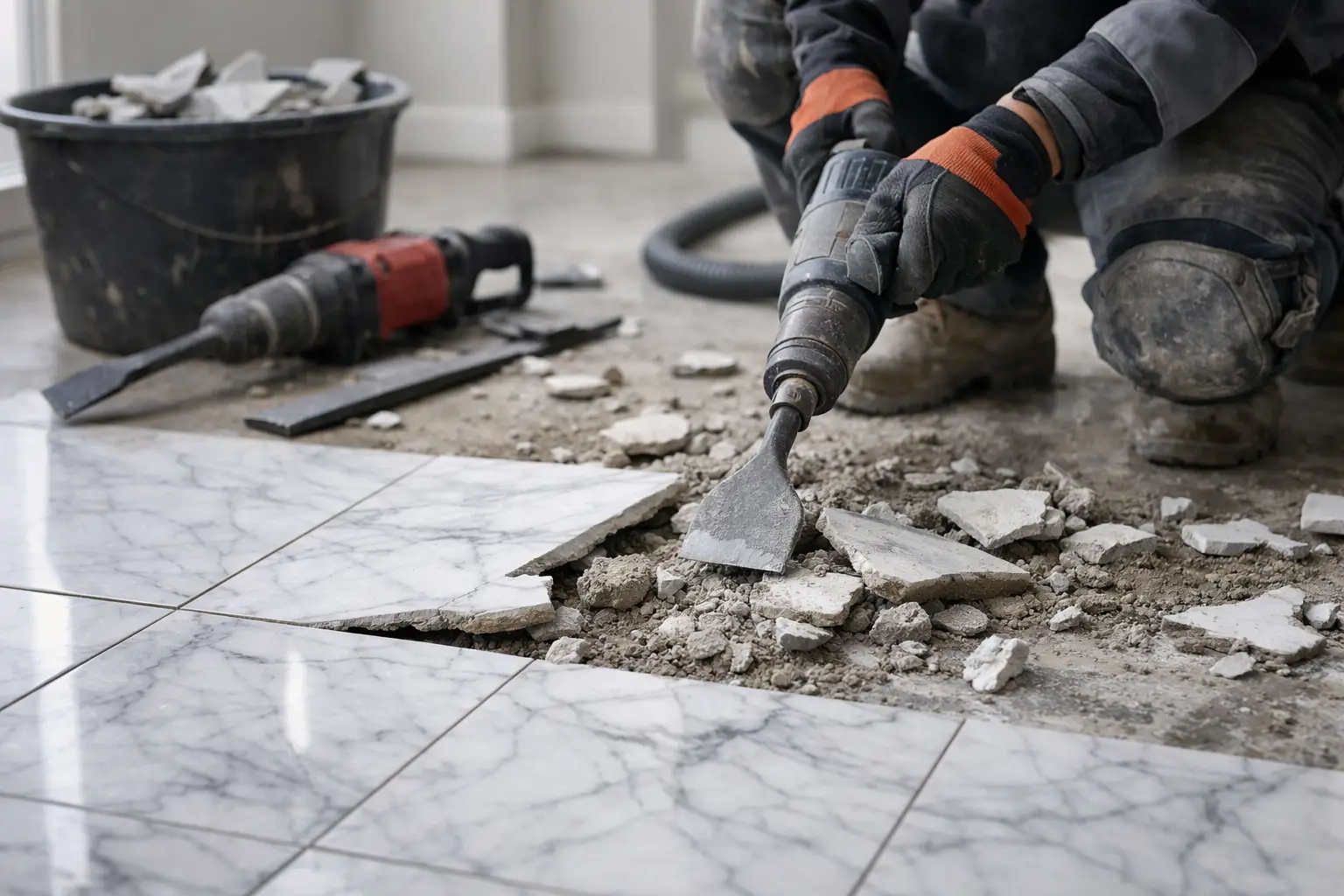
Marble Tile Removal needs the right method, tools and dust control. Learn what makes the job difficult and how professionals get it done cleanly.
Marble Tile Removal looks straightforward until the first tile refuses to lift, the bedding stays bonded to the slab, and half the room fills with dust. That is where many renovation timelines start to blow out. Marble is heavy, brittle, and often installed over strong adhesive or mortar, so removing it cleanly without damaging the substrate takes the right equipment and a methodical approach.
If you are planning a bathroom, kitchen, entry, showroom or full-floor renovation, the real goal is not just getting the marble out. It is leaving the site safe, clean, and ready for whatever comes next.
Why Marble Tile Removal is more demanding
Marble is not the same as standard ceramic. It is denser, heavier, and commonly laid with strong bonding products designed to hold for decades. In older properties, you may also find thick mortar beds, uneven substrates, or repairs hidden underneath previous finishes.
That matters because the removal process is not just about breaking tiles. It is about controlling impact, managing dust, and protecting the slab or underlay beneath. A rushed job can leave gouges, high spots, loose bedding, cracked screed, or adhesive residue that slows down the next trade.
In commercial spaces, there is another issue – disruption. Noisy demolition, debris movement, and airborne dust can affect nearby tenancies, staff, customers, or other contractors working on site. Good removal work keeps the mess contained and the program moving.
What a professional marble tile removal process should include
A proper job starts with identifying how the marble has been laid and what sits underneath it. That determines the removal method, whether the floor needs mechanical stripping, and how much preparation is required after the tiles are gone.
In most cases, removal involves lifting the stone, breaking out the bedding or adhesive, then grinding or cleaning the surface back to a sound finish. If the slab needs to be reused for new tiles, vinyl, timber, carpet or an epoxy system, the condition of that surface matters just as much as the tile removal itself.
The best operators also plan for containment from the start. Dust control is not an optional extra on marble work. Mechanical removal can create a large amount of fine dust, especially when old mortar or adhesive has to be ground back. A disciplined setup keeps the site cleaner and reduces disruption to the rest of the property.
Common problems found under marble
Once the marble is up, hidden issues often show themselves. The most common are stubborn adhesive residue, cracked screed, uneven slabs, moisture-related damage, and previous patch repairs that are not suitable for the new floor finish.
This is where experience saves time. A specialist team can tell the difference between a surface that only needs a clean strip and one that needs grinding or extra preparation before reinstall. That avoids the all-too-common situation where the tile removal is finished, but the next trade cannot start because the floor is still not ready.
DIY removal vs specialist removal
For a very small area, some owners consider doing it themselves. The problem is not just the labour. Marble Tile Removal is physically demanding, loud, and messy, and it can turn into a bigger demolition task once the first few tiles come up. If the wrong tools are used, it is easy to damage the slab, walls, skirtings, waterproofing, or adjoining finishes.
There is also disposal to think about. Marble and bedding material add up quickly by weight, and moving rubble out of units, offices, retail spaces or occupied homes is rarely simple.
Professional removal is usually the better option when time matters, access is tight, the area is large, or the floor has to be handed over ready for the next stage. That is especially true in bathrooms, kitchens, commercial tenancies and renovation projects with multiple trades booked in sequence.
When speed and site readiness matter most
The biggest advantage of using a specialist is not just demolition power. It is turnaround. A well-run removal crew works to clear the marble, control dust, remove waste, and prepare the substrate in one coordinated process.
That makes a real difference for builders, property managers and homeowners trying to keep a renovation on track. Instead of having one contractor rip up the tiles and another come in later to deal with leftover adhesive or slab prep, the work is handled properly from the outset.
For clients across Northern NSW, the Gold Coast, Brisbane and the Sunshine Coast, that practical approach is often what keeps a project moving. Rapid Stripped handles difficult floor removal with the speed, dust control and substrate preparation needed to leave the area genuinely ready for the next trade.
Choosing the right team for marble removal
Not every demolition contractor is set up for this kind of work. You want a team that understands stone removal, has the right stripping and grinding equipment, and treats floor preparation as part of the job, not an afterthought.
Ask how they manage dust, how they protect surrounding areas, and whether they can remove adhesive and prepare the slab after the marble comes up. Those details tell you a lot about how the job will run.
The right result is simple. The marble is gone, the mess is controlled, the waste is cleared, and the surface is ready for renovation. That is what good removal work should look like.