

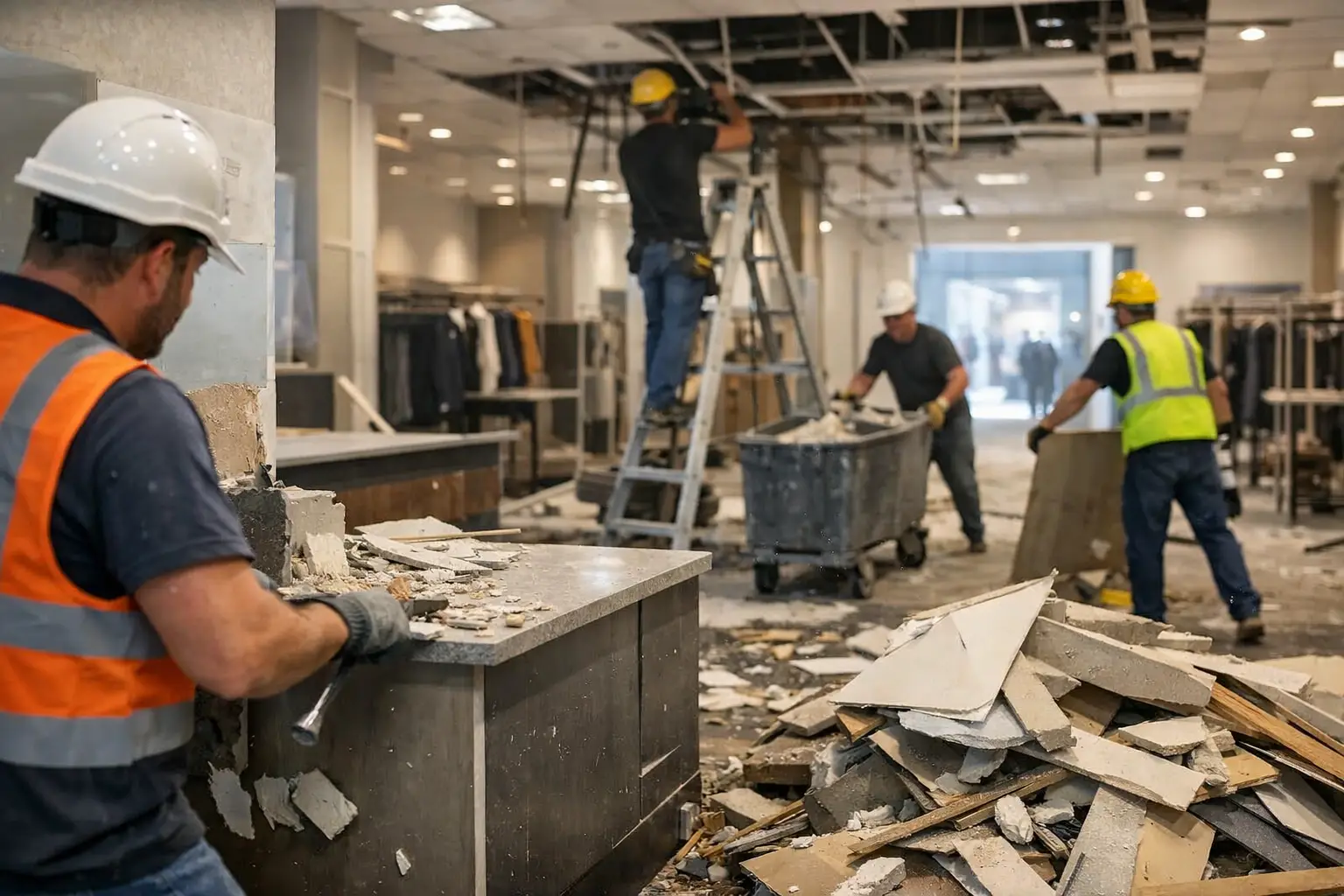
When a tenancy ends, a fit-out changes, or a site needs to be handed back, a proper shop & business de-fit can make or break the next stage of the project. Leave it too late or hand it to the wrong crew, and you end up with blown timelines, hidden damage, stubborn adhesives, and a site that still isn’t ready for builders, landlords, or new flooring.
A de-fit is not just ripping things out. In retail, office, hospitality, and commercial spaces, it is controlled removal with a clear end goal – a clean, safe, renovation-ready site. That means stripping floor coverings, removing glued materials, taking out fixtures where required, dealing with surface contamination, and making sure the substrate is properly exposed for what comes next.
What a shop & business de-fit actually includes
Every site is different, but most commercial de-fit work starts with the floor. Old tiles, vinyl, carpet, timber, epoxy coatings, cork, adhesives, and levelling compounds all need to come off cleanly. On many jobs, the hard part is not the visible flooring. It is the bedding, glue, paint, or damaged substrate left behind.
That is where experience matters. A rushed strip-out can leave gouges in the slab, missed adhesive patches, uneven surfaces, and dust through the whole tenancy. If the next trade has to stop and fix the prep, the job has already gone wrong.
Depending on the site, a business de-fit may also involve removing skirtings, fittings, non-structural internal elements, bathroom or kitchen components, and debris from previous alterations. The aim is simple – clear the space efficiently and leave it ready for reinstatement, renovation, or make-good works.
Why commercial de-fit jobs often run behind
Most delays come from poor planning and underestimating the materials on site. Commercial floors are rarely straightforward. A vinyl floor may have multiple glue layers under it. Tiles may be set over thick mortar beds. Old tenancies often have patch repairs, coatings, or moisture-damaged sections that only show up once removal begins.
Access is another factor. Work inside shopping strips, offices, medical suites, and hospitality venues usually comes with noise limits, waste handling rules, lift access, after-hours requirements, or tight turnarounds between tenants. A crew that only knows general demolition can lose time very quickly in these environments.
The better approach is to treat de-fit work as preparation, not just demolition. That means using the right removal equipment, controlling dust, protecting the areas that stay, and planning for surface preparation as part of the same job.
Floor stripping and surface prep are where the job is won
A commercial de-fit is only half done if the floor still needs major correction afterwards. This is the part many people overlook. Once coverings are removed, the slab or substrate needs to be assessed properly. Adhesive residue, paint, tile glue, epoxy, uneven patches, and old levellers can all stop a new floor from going down correctly.
Mechanical floor stripping and slab grinding solve that problem at the source. Instead of leaving a rough, contaminated surface for someone else to deal with, the site is brought back to a condition that is genuinely ready for the next trade. That saves time, avoids disputes, and reduces the risk of flooring failure later.
On active commercial sites, dust control also matters. Clean execution is not a bonus. It is part of doing the work properly. If you are operating in a live building, shared tenancy, or staged renovation, the de-fit team needs to work with discipline, not create more problems than they solve.
What to look for in a de-fit contractor
If you need a shop or business de-fit, look beyond who can simply start first. Ask whether they handle difficult floor removals, adhesive removal, and surface prep in-house. Ask how they manage dust, waste, and site safety. Ask what the handover condition will actually be.
You want a crew that understands commercial pressure. That means turning up on time, working efficiently, communicating clearly, and finishing with the site in a condition that keeps the whole project moving. For builders, property managers, and business owners, that reliability matters just as much as the removal itself.
There is also a big difference between basic strip-out work and specialist removal. Tenacious tile beds, epoxy-coated slabs, water-damaged flooring, and heavily glued vinyl are not unusual. They need proper equipment and operators who know how to remove them without wasting a day fighting the floor.
When speed matters most
Many shop and office projects work to narrow shutdown windows. Some need to be completed between tenants. Others need overnight or staged works to reduce disruption. In those cases, speed only helps if the finish is right.
That is why specialist operators like Rapid Stripped focus on getting sites cleared fast, with the floor properly stripped and prepared at the same time. For businesses across Brisbane, the Gold Coast, the Sunshine Coast and Northern NSW, that can mean less downtime and fewer hold-ups for the trades coming in next.
A good de-fit should leave you with certainty. The old fit-out is gone, the floor is properly dealt with, the site is clean, and the next stage can start without rework. That is what saves time on commercial projects – not just fast removal, but removal done right the first time.