

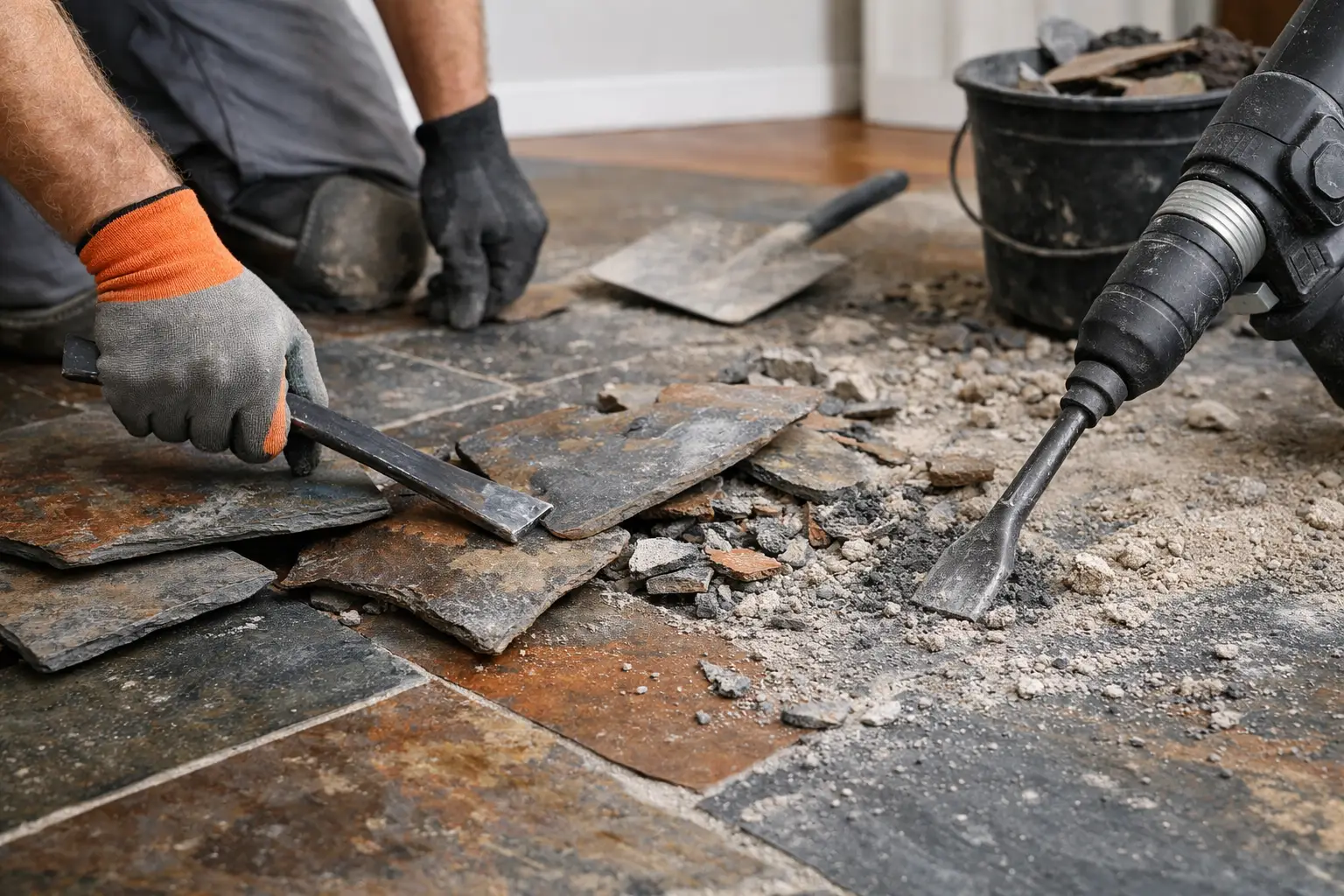
Slate Tile Removal needs the right tools, dust control and prep. Learn what makes the job difficult and how professionals leave slabs ready fast.
Slate looks tough because it is. That is exactly why Slate Tile Removal can turn into a slow, messy job when it is handled without the right gear or experience. Once slate is bonded hard to the substrate, the real work is not just lifting the tile. It is breaking the bond, managing dust, removing bedding and adhesive, and leaving the surface ready for what comes next.
For homeowners and builders, that last part matters most. A floor that still has ridges, loose material or damaged sections in the slab is not ready for new tiles, timber, vinyl or any other finish. Removal is only half the job. Proper preparation is what keeps the next trade moving.
Why slate is harder to remove than standard tile
Slate is dense, brittle and often laid with strong bedding compounds. In many older properties, it was installed to last, which means it does not come up easily. Some jobs involve thick mortar beds. Others have patchy adhesive, uneven substrate conditions or sections that have bonded more aggressively over time.
That is why slate tile removal usually needs more than basic demolition tools. If the wrong method is used, the tile might come up in tiny fragments while the bedding stays put. That slows the job down and creates more clean-up, more airborne dust and more risk of damaging the slab underneath.
In kitchens, entryways, outdoor areas and commercial spaces, slate can also run across large continuous sections. That increases the need for controlled removal, especially when nearby surfaces, walls or fixtures need to stay intact.
What a professional slate tile removal job should include
A proper job starts with assessing the tile, the bedding and the condition of the substrate. Not every slate floor is installed the same way, so the removal method has to suit the material underneath. Concrete slabs, screeds and other bases all need a different level of care.
The next step is controlled mechanical removal. This is where specialist equipment makes the difference. High-impact tools can break the bond efficiently, but they need to be used with precision. The goal is to remove the slate and backing material without turning the site into a blown-out mess.
Dust control is a big part of that. Dry tile removal can spread fine dust through the property if it is not managed properly. In occupied homes, retail sites or office fit-outs, that is a serious problem. Good operators use containment, extraction and disciplined clean-down processes to keep disruption down.
After the slate is lifted, the slab usually still needs attention. Residual adhesive, mortar, levelling issues and rough sections need to be addressed before the floor is ready for installation. In many cases, grinding is required to produce a clean, sound surface.
Slate Tile Removal and surface preparation go together
This is where plenty of jobs go off track. A floor can look cleared, but still be nowhere near ready for the next stage. If high spots, bonded residue or damaged sections are left behind, new floor finishes can fail or take longer to install.
Professional Slate Tile Removal should leave a site renovation-ready, not just stripped. That means checking for remaining material, smoothing problem areas and making sure the surface is suitable for the new finish. For builders and renovators, that saves time. For property owners, it avoids rework and delays.
There is also a structural side to consider. If the substrate has cracks, movement or previous patch repairs, removal can expose issues that need to be dealt with before new flooring goes down. It is better to identify that during strip-out than after installation.
When speed matters, process matters more
Most clients want the floor out fast, and fair enough. Renovation schedules are tight, and dead time costs more than people expect. But speed only helps if the job is done cleanly and properly the first time.
The fastest slate removal jobs are usually the ones with the right equipment, the right crew and a clear process from demolition through to final clean-up. That is especially true in occupied properties or commercial environments where access, noise and downtime have to be managed carefully.
For projects across Brisbane, the Gold Coast, Sunshine Coast and Northern NSW, that practical side of the job matters just as much as the removal itself. A specialist team can often complete difficult floor strip-outs within a day, but only because the method is already dialled in.
Is slate tile removal a DIY job?
For a very small loose section, maybe. For anything larger, bonded hard, or tied into a renovation timeline, it usually makes more sense to bring in specialists. The risk with DIY removal is not just effort. It is damaging the substrate, missing hidden prep work, underestimating dust, and turning one job into three.
Slate is unforgiving. Once removal starts, problems show up quickly – heavy bedding, stubborn adhesive, uneven slabs, tight access or debris that takes longer to clear than expected. That is why experienced operators focus on full removal and site readiness, not just smashing tiles and walking away.
If the goal is a clean strip-out, minimal disruption and a surface ready for the next trade, that is where a specialist service earns its keep. A good slate removal job should leave you with progress, not another problem to solve.