

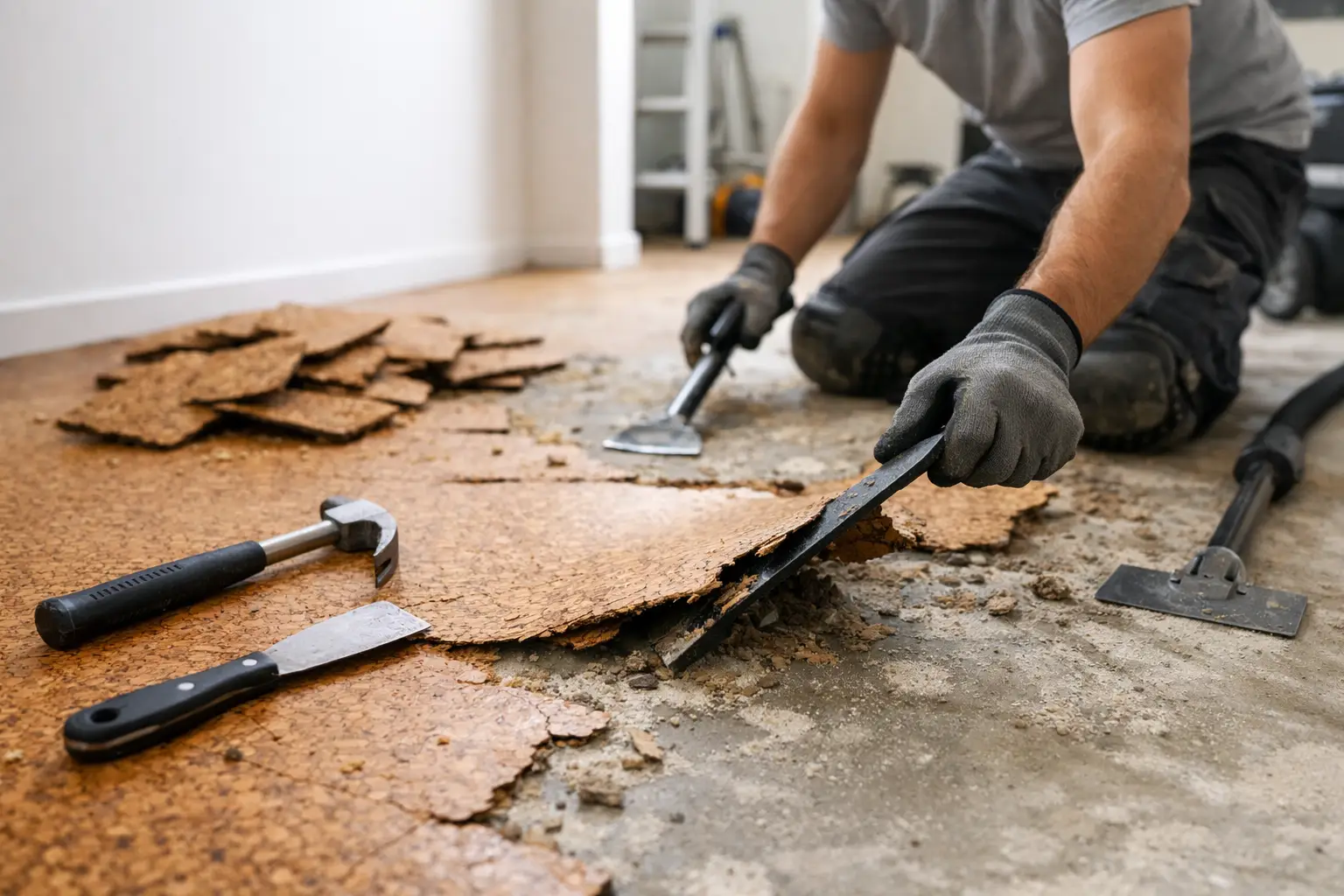
Cork Floor Removal looks straightforward until the first section lifts and leaves half the backing, adhesive and underlay welded to the slab. That is where DIY jobs slow down. Cork can come up in pieces, glue can bite hard into concrete or timber, and what should be a quick rip-out turns into hours of scraping, grinding and cleaning before the real renovation work can even start.
Cork was popular for good reason. It is softer underfoot, quieter than hard tile, and has decent insulation value. The problem starts when it is old, brittle, water-damaged or heavily bonded. Some cork floors were installed as tiles, others as sheets, and many were laid with aggressive adhesives that do not release cleanly. If the floor has been coated, patched or repaired over time, removal gets even more labour-intensive.
Why cork floor removal is rarely a simple lift-and-go job
The top layer is only part of the problem. In many cases, the cork itself is easy enough to break up, but the adhesive beneath it is what holds the job up. Old glue can stay tacky, go rock hard, or tear chunks from the substrate when forced off. On concrete, that often means mechanical removal followed by slab grinding to get the surface back to a condition suitable for new flooring. On timber, the approach needs more control to avoid gouging or delaminating the boards underneath.
There is also the issue of site readiness. Removal is not finished when the cork is in a pile on the floor. The real finish line is a clean, stable surface ready for the next trade. If adhesive residue, uneven patches or damaged substrate are left behind, the installer coming in next inherits the problem, and the project slows down.
What a professional cork floor removal process involves
A proper cork floor removal job starts with identifying the substrate and how the floor was fixed down. That affects the equipment, removal method and clean-up required. Some floors respond well to mechanical stripping machines. Others need a combination of chipping, scraping and grinding to remove both the covering and the glue without damaging the base.
Dust control matters as well. Floor stripping can create fine airborne material fast, especially when adhesives need to be ground back. A professional setup keeps the work area controlled and reduces disruption to the rest of the property. That matters in occupied homes, tenanted units, offices, shops and hospitality sites where mess travels quickly if it is not managed properly.
The final stage is surface preparation. This is where specialist operators stand apart from general demolition crews. Once the cork and adhesive are removed, the substrate is checked for high spots, contamination, loose material and remaining bond breakers. If needed, the slab is ground so the floor is flat, clean and ready for reinstallation.
Common problems after failed cork floor removal
The biggest issue is incomplete adhesive removal. New floor coverings need a sound base. If glue is left behind, it can interfere with levelling compounds, waterproofing, tile adhesives, vinyl installation and timber flooring systems. What looks like a small shortcut at removal stage can create a full rework later.
Another common problem is substrate damage. Overly aggressive tools can scar concrete or tear into timber, which adds repair work before the next stage can begin. In renovation work, time matters. A floor that should have been handed over ready for installation can end up needing patching, grinding or extra drying time because the removal was not handled correctly.
There is also the issue of hidden moisture damage. Cork often shows wear around kitchens, entries and other wet-prone areas. Once it is removed, you may find swollen underlay, mould, weakened timber or deteriorated adhesive beneath. That is not a reason to avoid removal – it is exactly why the job needs to be done properly so underlying issues are exposed and dealt with early.
When speed matters, experience matters more
Homeowners and builders usually want the same thing from floor removal – get it out fast, keep the mess under control, and leave the site ready for the next trade. That only happens when the crew knows how to deal with stubborn coverings and difficult substrates without wasting time.
For commercial spaces, the pressure is even higher. Shop refits, office upgrades and tenancy handovers often run on tight programs. Delays at the strip-out stage ripple through every trade that follows. A specialist team can usually assess the material, remove it efficiently and complete the surface prep in the same visit, which keeps the project moving.
Rapid Stripped handles jobs with that outcome in mind. The goal is not just to remove the old cork. It is to finish with a clean, workable floor and minimal disruption to the rest of the site.
Is cork floor removal worth doing before you renovate?
If the existing cork is loose, stained, dated, uneven or no longer compatible with your new flooring system, the answer is yes. Trying to install over a compromised surface is usually a false economy. Full removal gives you a clear view of the substrate and a better foundation for whatever comes next.
There are a few cases where partial removal or overlay systems are considered, but that depends on the condition of the cork, the adhesive, the floor height and the new finish being installed. In most renovation settings, complete removal and proper prep is the cleaner, safer option.
If you are planning a renovation, the smartest move is to treat cork floor removal as part of the preparation stage, not an afterthought. Get the old material out properly, deal with the adhesive, and make sure the floor is ready before the new installation begins.