

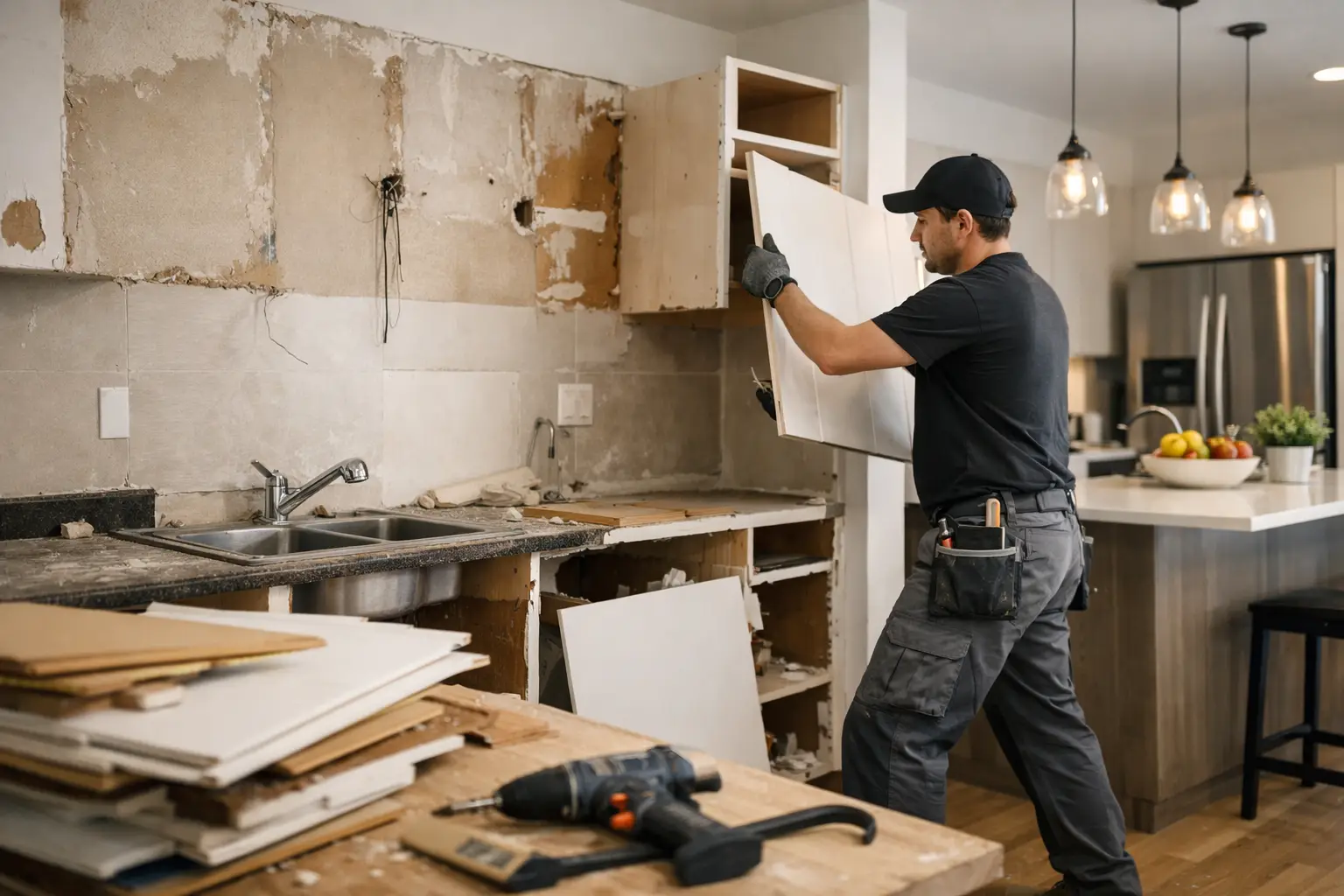
Kitchen removal done right means fast demolition, less mess and a clean site ready for renovation. Know what matters before work starts.
Most kitchen renovations don’t get delayed by the new install. They get delayed by poor kitchen removal – broken walls, damaged slabs, hidden services and a site that still isn’t ready for the next trade.
A proper kitchen strip-out is not just about ripping out cabinets and loading up a skip. It needs planning, clean execution and the right equipment. If the removal is rushed or handled by the wrong crew, the problems show up later when the electrician, plumber, cabinetmaker or tiler arrives and finds the room is not actually ready.
What kitchen removal should actually include
A complete kitchen removal usually covers cabinets, benchtops, splashbacks, appliances, sinks, tapware, wall linings where required, floor coverings and any adhesive or bedding that needs to come off the substrate. In some projects, it also includes partial demolition to open up the room or prepare for a new layout.
That matters because many kitchens are layered. You might have old tiles over old bedding, vinyl under cabinets, damaged screed, or adhesive residue that has bonded hard to the slab. Taking out the visible parts is only half the job. The rest is getting the surfaces back to a condition that allows the next stage to start without rework.
Why kitchen removal needs specialist demolition experience
Kitchen demolition looks straightforward until the hidden issues appear. Water lines, power, petrol, uneven floors and brittle wall finishes can turn a simple strip-out into a messy and expensive setback if they are not handled correctly.
This is where specialist removal crews make the difference. They know how to separate demolition from damage. That means controlled removal around live areas, proper dust management, safe handling of heavy materials and clean preparation of floors and surfaces. For homeowners and builders, the real value is not just speed. It is getting a site handed over in usable condition.
The common problems that slow renovations down
One of the biggest issues after a kitchen strip-out is finding the floor underneath is nowhere near ready. Old tile glue, levelling compounds, timber adhesives and stubborn bedding can hold up the entire renovation. If the slab needs grinding or surface prep and nobody allowed for it, the schedule starts slipping straight away.
Wall damage is another common problem. Some removal work needs full demolition, but often clients only want specific sections removed while keeping surrounding areas intact. That takes care, not brute force.
Then there is waste control. Kitchens generate a lot of mixed material – timber, laminate, stone, tiles, metal, plasterboard and fittings. If the site is left cluttered or unsafe, every trade that follows loses time.
A fast kitchen removal still has to be controlled
Speed matters, especially in occupied homes, rental turnovers, commercial tenancies and renovation programs with tight booking windows. But fast only works when the process is disciplined.
A well-run kitchen removal starts with clear scope. What stays, what goes, what needs isolating first, and what condition the site must be left in. From there, the job should move in the right order – disconnect, strip, remove waste, expose the substrate, then grind or prepare surfaces as needed.
That last step is where many jobs fall short. A room can look empty but still not be renovation-ready. Adhesive removal, slab grinding and detailed clean-up are often what separate a rough demolition job from a proper handover.
When floor removal is part of the kitchen strip-out
In many kitchens, the floor is the hardest part of the job. Tile and bedding removal can be labour-intensive, and older materials often come up unpredictably. Vinyl, cork and timber can leave behind thick adhesive that needs mechanical removal, not just scraping.
If the new kitchen plan includes fresh tiling, hybrid flooring or polished concrete, the substrate condition matters. Uneven patches, residual glue and damaged sections can all affect the finish. This is why kitchen removal and floor preparation are often best handled together rather than as separate jobs.
For renovators and builders, that means fewer handovers, fewer delays and less finger-pointing between trades.
What to look for before booking kitchen removal
The right contractor should be able to explain exactly what the strip-out covers, how they control dust, how waste is managed and what condition the area will be left in. They should also understand the difference between demolition and preparation. Both matter.
Experience across kitchens, bathrooms, full-home strip-outs and difficult floor removal is a strong sign you are dealing with a specialist rather than a general operator. It also helps when the team can move quickly without turning the site into a bigger clean-up job.
For projects across Northern NSW, the Gold Coast, Brisbane and the Sunshine Coast, that combination of speed, control and proper surface prep is what keeps a renovation moving.
Rapid Stripped works on exactly that basis – remove it properly, prepare it properly and leave the site ready for what comes next.
If your kitchen renovation has a fixed schedule, the removal phase is not the place to cut corners. The cleaner the strip-out, the easier every stage after it becomes.