

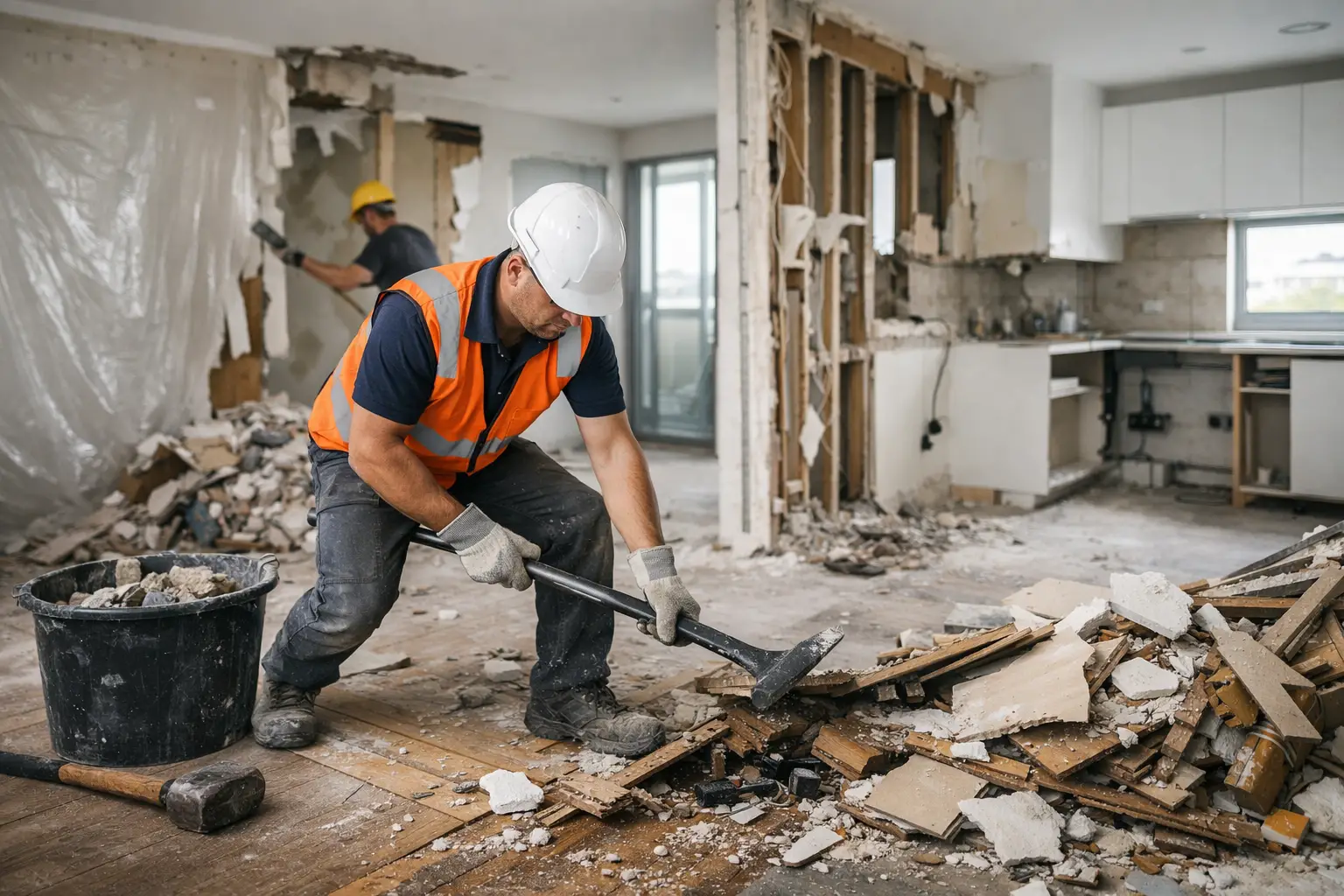
Apartment Stripouts done fast, clean and safely. Learn what is involved, what to expect, and how to keep your renovation moving on time.
Renovations in apartments can go off the rails before the new work even starts. Old tiles won’t lift cleanly, glued timber fights every machine, access is tight, and one messy day can turn into a week of delays. That’s why Apartment Stripouts need to be handled by a team that knows how to work fast, clean, and without creating problems for the next trade.
An apartment stripout is more than demolition. It’s controlled removal. The job is to clear out the materials that need to go, protect what stays, manage dust and noise properly, and leave the site ready for renovation. If that first stage is done badly, every trade after it pays for it.
What apartment stripouts usually involve
Most apartment stripouts start with floor removal, because that’s where a lot of renovation time gets lost. Tiles, timber, vinyl, carpet, cork, slate, marble and old adhesives can all bond differently to the slab or underlay underneath. Some come up cleanly. Others need mechanical removal, grinding, and detailed surface preparation before the floor is actually ready for replacement.
Beyond flooring, stripouts often include bathrooms, kitchens, laundries, internal non-structural removals, wall sheeting, built-ins and fixtures. In apartments, every part of the process has to be tighter. Access through lifts, hallways and shared entries means the work can’t be treated like a standard house demo.
The difference is not just what gets removed. It’s how the job is sequenced so the site is left safe, clean and ready for the next stage.
Why apartment jobs are different
Apartment work comes with restrictions that don’t apply on many standalone homes. Body corporate rules, noise windows, limited parking, shared access and neighbour proximity all affect how the stripout should be planned. A slow, disorganised crew can cause unnecessary disruption fast.
Dust control matters more in this environment. So does containment. If old flooring is being machine-removed or adhesive is being ground back, fine dust has to be managed properly. The same goes for waste handling. Rubbish can’t just pile up in common areas while the job drags on.
That’s why experienced stripout contractors focus on preparation as much as removal. Protection to access paths, efficient waste movement, the right machines for the substrate, and a clear plan for site cleanup all make a real difference.
The real risk of a poor stripout
A rushed or poorly executed stripout usually shows up later. The new floor installer finds uneven adhesive residue. The waterproofer arrives to a bathroom that still needs more prep. The builder has to stop because demolition debris is still on site. What looked like a cheaper or quicker start becomes a delay across the whole project.
This is especially common with stubborn floor coverings and hard-set bedding. Removing the visible surface is only half the job. The slab underneath has to be properly prepared if you want the next installation to go down right.
For renovators and investors, that matters because time is money. For owner-occupiers, it matters because delays stretch out disruption and make the whole project harder than it needs to be.
What to expect from a professional apartment stripout
A proper stripout should start with a clear assessment of materials, access and site conditions. The removal method needs to match the floor type, adhesive strength, slab condition and the finish required for the next trade. There is no one-size-fits-all approach.
On a well-run job, removal is efficient, debris is managed as the work happens, and the site is not left in a half-finished state. If slab grinding or detailed surface prep is needed, it should be part of the plan, not an afterthought once the floor has already been torn up.
You should also expect straight communication. If the substrate is damaged, if extra prep is needed, or if a material is going to take more work than first expected, that should be identified early. Good operators don’t guess their way through difficult removals.
Apartment stripouts and renovation timelines
The best stripout work protects your renovation schedule. That means getting in, removing what needs to go, preparing the surface properly, and handing over a site that’s actually ready. In many cases, a specialist crew can complete the work within a day, which makes a major difference when other trades are booked tightly behind it.
That speed only works when it’s backed by the right equipment and experience. Fast is useful. Fast and incomplete is not. The goal is to reduce downtime, not move the problem to the next contractor.
For apartments across Brisbane, the Gold Coast, the Sunshine Coast and Northern NSW, that combination of speed, clean execution and technical removal skill is what keeps projects moving. It’s also why specialist operators like Rapid Stripped are brought in when the materials are tough, the access is tricky, or the site needs to be renovation-ready without the usual mess and delays.
When specialist stripout work is worth it
If the apartment has old tile bedding, thick adhesive build-up, multiple floor layers, difficult stone removal, or tight body corporate conditions, specialist stripout work is usually the smarter move. The same applies if you need minimal disruption because the property is tenanted nearby, part of a larger complex, or on a strict renovation timeline.
The value is not just in tearing things out. It’s in getting the hard part done properly so the rest of the project can run cleanly. A good stripout sets the pace for everything that follows.
If you’re planning an apartment renovation, the first win is simple: start with a site that’s been stripped clean, prepared properly, and left ready for the next trade to get straight to work.