

Tile glue removal concrete floor jobs need the right method. Learn what works, what damages slabs, and when to bring in specialists.
That layer of old adhesive left behind after tiles come up is where many renovation jobs slow down. Tile glue removal concrete floor work looks straightforward until the slab starts fighting back – with hard-set ridges, patchy residue, old mastics, or glue driven deep into the surface. If the concrete is not cleaned properly, the next floor finish is already at risk.
For homeowners, builders and renovators, the real issue is not just getting the glue off. It is getting the slab ready for what comes next. New tiles, hybrid planks, vinyl, carpet, epoxy and polished concrete all depend on a sound, clean and level substrate. Leave adhesive behind, gouge the slab, or use the wrong removal method, and you create a bigger problem than the one you started with.
Why tile glue removal on a concrete floor matters
Old tile glue is not simply cosmetic. Adhesive residue can interfere with levelling compounds, prevent proper bonding, trap moisture issues and leave high spots that telegraph through new floor coverings. On commercial sites, that can delay fit-out. In homes, it can mean rework after installation.
There is also the question of what type of glue you are dealing with. Some adhesives come away in brittle flakes once the tile is lifted. Others stay rubbery, smear under tools, or bond so tightly to the slab that removal becomes surface preparation work rather than demolition. Age, installation method, moisture exposure and the original adhesive type all affect the result.
That is why experienced operators assess the slab first, not just the residue. A good outcome depends on how much glue is left, how hard the bond is, whether the slab is already cracked or uneven, and what floor finish is going back down.
Not all tile glue removal concrete floor jobs are the same
A bathroom floor with a thin bed of modern adhesive is a very different job from a large commercial area with old glue baked onto dense concrete. Even within one property, kitchens, laundries and living areas can behave differently because moisture, heat and traffic change how adhesives cure and fail over time.
The main variables are adhesive hardness, slab condition and finish requirement. If the goal is to retile, the slab may need full grinding and levelling after glue removal. If the concrete itself will be exposed or coated, surface quality becomes even more critical. What passes for acceptable in one application can be completely wrong in another.
There is also a practical trade-off between speed and finish. Hand tools may remove loose residue in small areas, but they rarely deliver a consistently clean substrate across larger rooms. Aggressive removal can be faster, but if it scars the slab, you may spend more time repairing the damage later.
The common methods and where they fall short
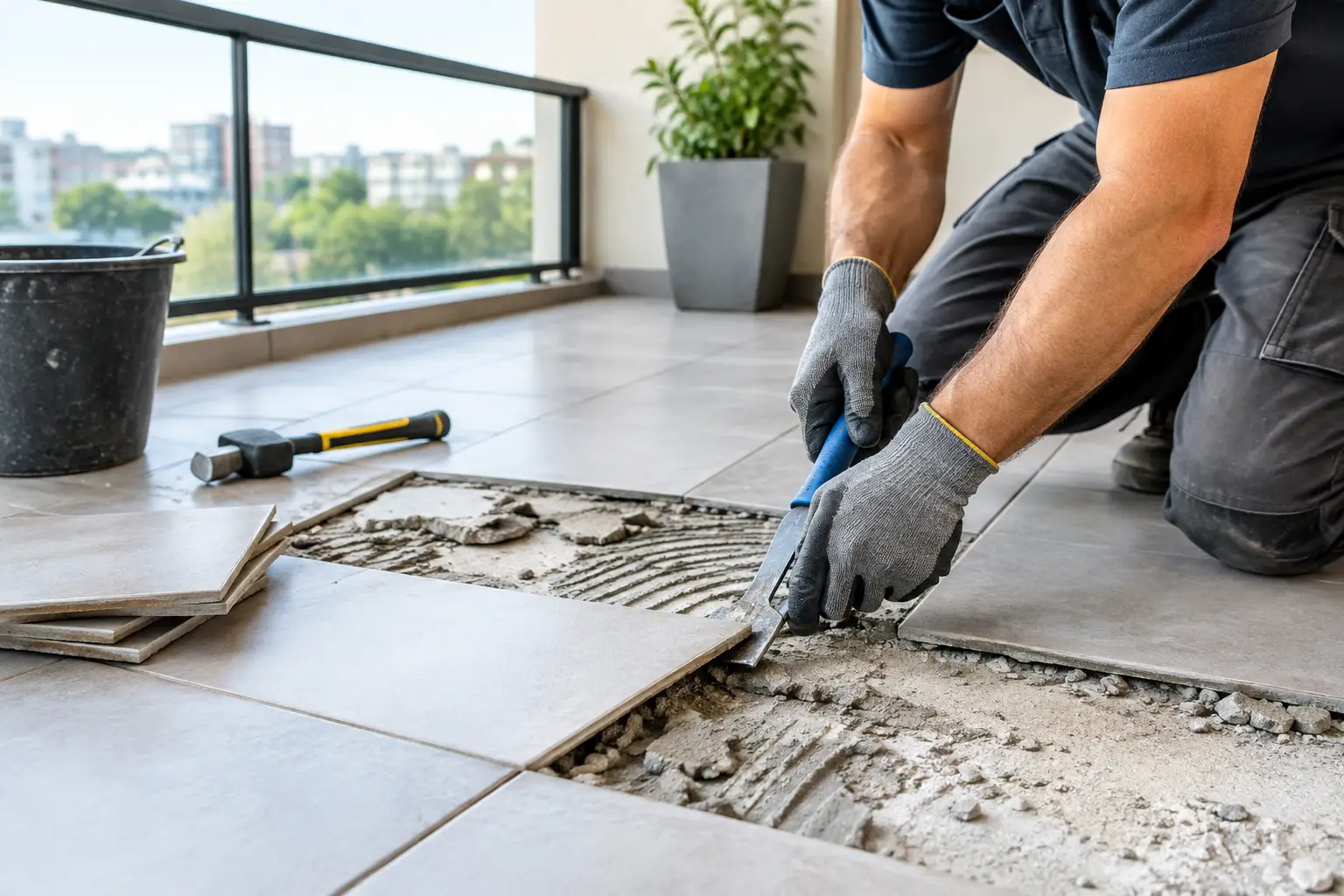
Scrapers and hand chisels have their place, especially around edges or in small residential patches. The problem is they are labour-heavy and tend to leave inconsistent results. They can also dig into softer sections of concrete if too much force is used.
Chemical adhesive removers are sometimes considered, but they are not a universal fix. Some soften the glue enough for scraping, while others create a smeared mess that is harder to clean off. Residue from chemicals can also affect future bonding if the slab is not thoroughly neutralised and cleaned. On occupied sites, odour and ventilation become another issue.
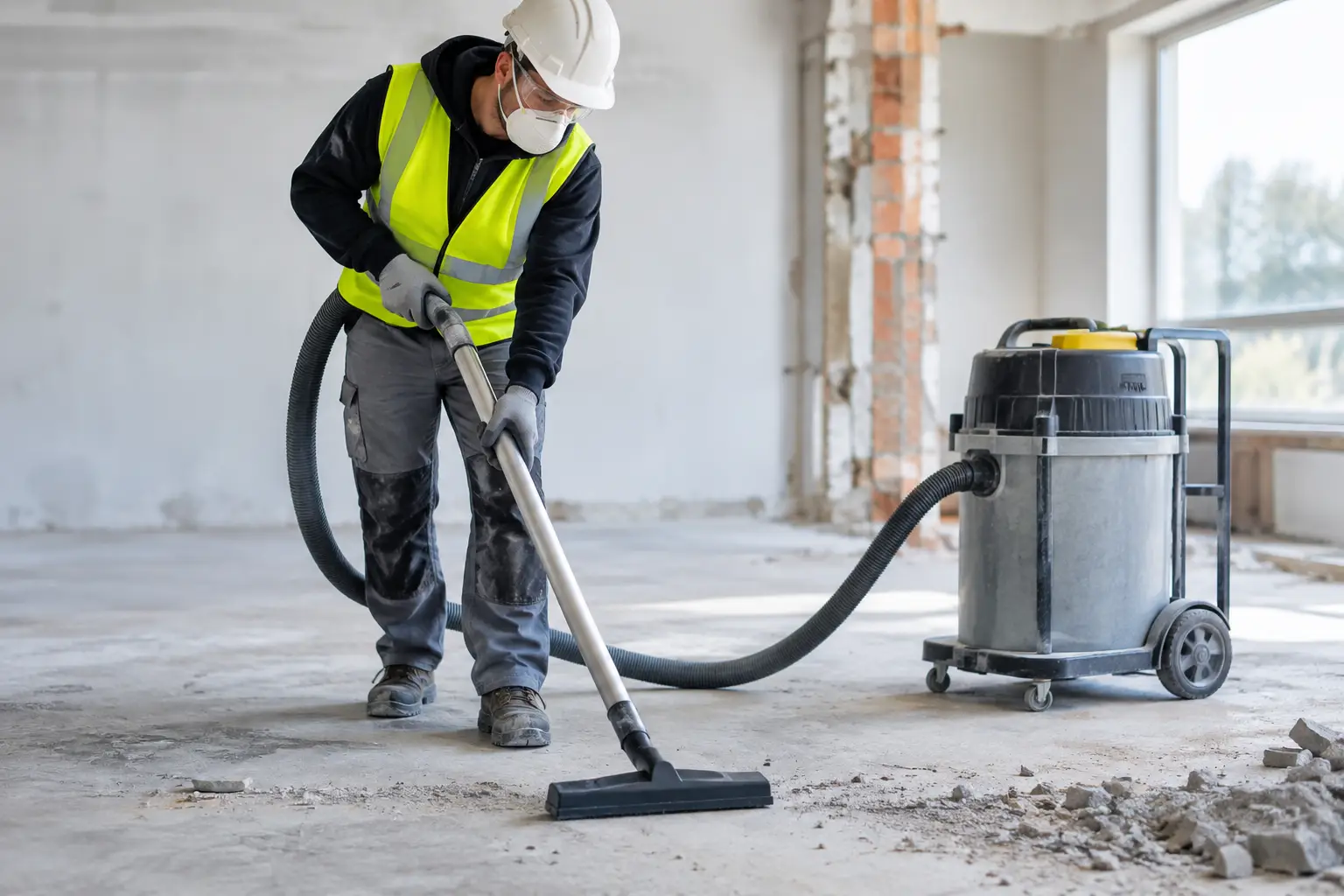
Mechanical grinding is often the most reliable option when the objective is a renovation-ready slab. A properly set-up grinder removes adhesive residue while evening out the surface and preparing it for the next trade. The catch is that grinding needs the right equipment, the right diamonds and proper dust control. Done badly, it can polish one section, gouge another and fill the site with airborne dust.
The risks of getting it wrong
The biggest mistake in tile glue removal on a concrete floor is assuming the job is finished when the visible glue is gone. Many adhesives leave a film or shallow contamination in the top surface of the slab. That may not show up until a new coating fails to bond or a leveller breaks away.
Another common issue is slab damage. Hammering at stubborn glue with the wrong tool can chip the surface, break edges, or expose weak sections that then need patching. If the floor needs to meet tight tolerances for a commercial fit-out, those defects matter.
Dust is another serious factor. Dry removal without effective extraction creates a mess, disrupts other trades and can raise health and safety concerns. In active homes, offices, retail and hospitality spaces, poor dust management turns a floor prep job into a broader clean-up problem.
When DIY stops making sense
Small glue patches near a doorway or in a tiny laundry might be manageable if the adhesive is already loose and the slab condition is not critical. Beyond that, DIY tile glue removal usually becomes a false economy. The tools available to most people are slower, rougher on the substrate and far less effective at producing a consistent finish.
The other issue is time. What looks like a one-day job can easily stretch when glue behaves differently across the slab. That delay affects tilers, flooring installers, painters and cabinet trades waiting behind the prep stage. On renovation sites, lost time often costs more than the removal work itself.
Professional removal is usually the better option when the area is large, the glue is hard-set, the finish standard matters, or the site needs to stay clean and moving. That is particularly true for builders and property managers who need reliable handover between stages.
What a professional process should look like
A proper tile glue removal concrete floor service starts with identifying the substrate and adhesive condition. The floor should be checked for high spots, cracking, previous patching, moisture exposure and any areas where the glue may have penetrated deeply. That determines whether the job needs scraping, grinding, scarifying or a combination of methods.
Next comes controlled removal. This is where specialist equipment matters. Floor grinders with the correct tooling can remove residue efficiently without tearing the slab apart. Edge work should be handled just as carefully so the whole floor is consistent, not just the open middle sections.
Dust control is not optional. Good extraction keeps the site safer, cleaner and easier to hand over. It also protects adjoining areas from unnecessary contamination, which matters in occupied homes and operational commercial spaces.
Once the glue is off, the slab should be assessed again. Some floors are ready for the next finish immediately. Others need minor patching, additional grinding or levelling compound before installation. That final check is what separates basic removal from proper surface preparation.
Choosing the right standard for the next floor
The right finish depends on what is being installed over the concrete. New tiles can tolerate some surface variation, but not contamination that affects adhesive bond. Vinyl and hybrid flooring are less forgiving with ridges and undulations. Epoxy and polished finishes demand a much cleaner, more uniform substrate.
This is where experience matters. Over-preparing the slab can waste time. Under-preparing it can cause failure. The best approach is to match the removal method and finish standard to the actual flooring system going down next.
For projects across Northern NSW, the Gold Coast, Brisbane and the Sunshine Coast, that often means fast-turnaround work with minimal disruption, especially in occupied properties or commercial settings. A specialist team such as Rapid Stripped understands that removal is only one part of the job – the real goal is a slab that is ready for the next trade without delay.
What to look for in a specialist
If you are bringing in a contractor, look for someone who handles both removal and surface preparation, not just demolition. They should be able to explain how they will remove the glue, how they will protect the slab, and what condition the floor will be left in once the work is done.
You also want realistic advice. A dependable operator will tell you when a slab needs extra prep instead of pretending every floor can be cleaned to the same standard in the same way. Old adhesives, weak concrete and previous repairs can all change the process.
Just as importantly, they should work cleanly and stay responsive. Floor removal affects everything that follows, so reliability matters as much as technical skill.
Old tile glue has a way of hanging on longer than expected, but the right method gets the floor back under control. When the slab is properly stripped, cleaned and prepared, the rest of the renovation can move the way it should – without guesswork, delays or avoidable rework.