

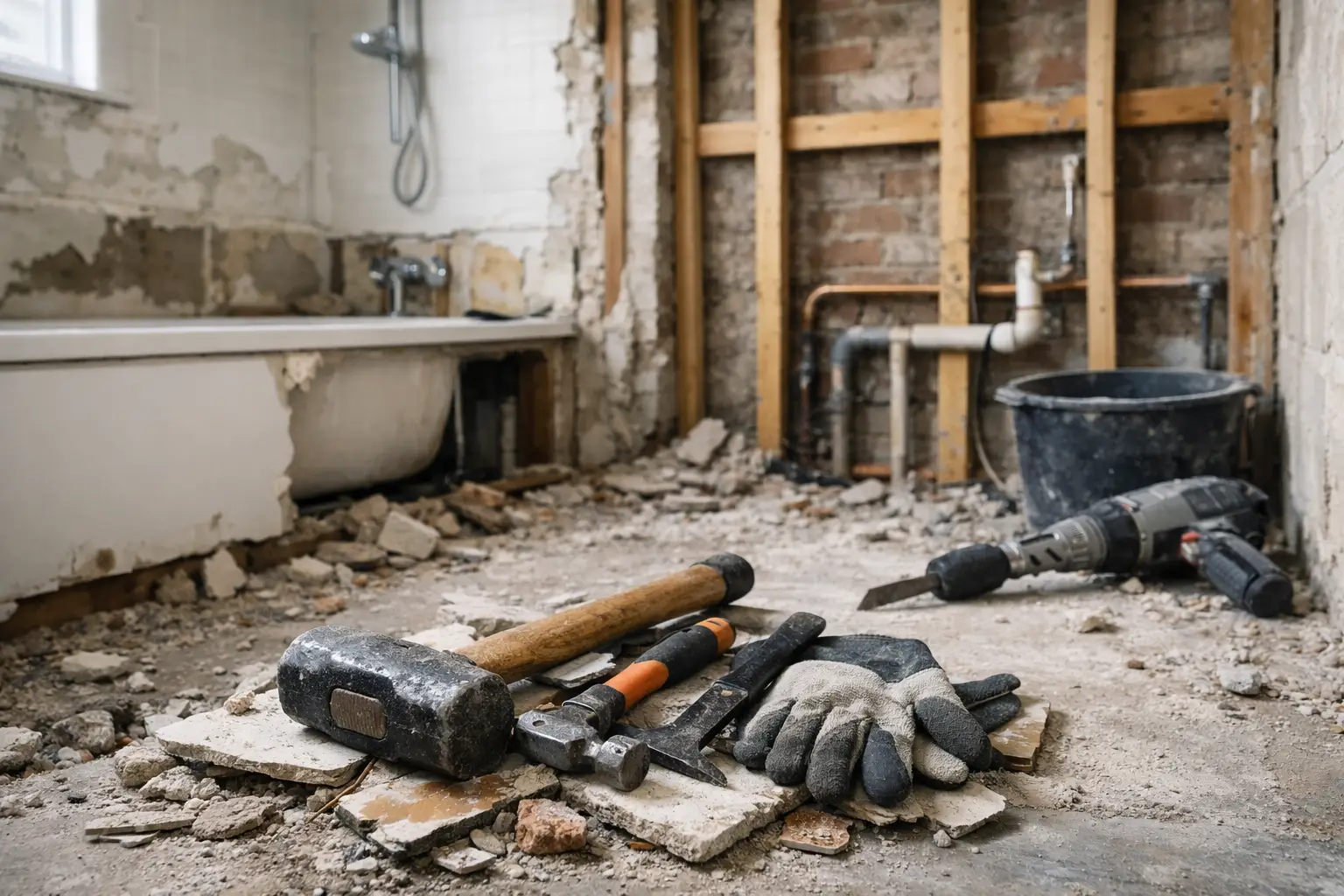
A bathroom strip out clears the way for faster renovations. Learn what’s involved, what can go wrong, and why clean, safe removal matters.
A bathroom strip out looks simple until the first tile comes off and you find cracked bedding, hidden water damage or stubborn adhesive bonded hard to the slab. That is where a quick demolition job can turn into delays, rework and extra trades on site. If the goal is a renovation that starts clean and stays on schedule, the strip-out stage needs to be done properly from the start.
Bathrooms are one of the most compact but technically demanding areas to remove. You are dealing with wall and floor tiles, screed, waterproofing, vanities, shower screens, fittings and often tight access. In older bathrooms, materials can be harder to lift than expected, and once demolition starts, issues behind the finishes become visible. That is why a proper strip-out is not just about tearing out the old room. It is about leaving a safe, clean and renovation-ready site.
What a bathroom strip out should include
A complete bathroom strip out usually involves removing floor and wall tiles, tile bedding, adhesives, fixtures, fittings and unwanted cabinetry. Depending on the scope, it may also include taking the room back to a bare shell so plumbers, waterproofer and tilers can get straight in without spending half a day fixing what should have already been cleared.
The standard matters here. If tiles are removed but adhesive, screed or uneven residue is left behind, the next trade inherits the problem. The same applies when rubble is not properly managed, dust is allowed to spread through the property, or surfaces are damaged beyond what was necessary. A professional strip-out is controlled, not careless.
Why bathroom strip out work often goes wrong
The biggest issue is underestimating what is bonded to what. Bathroom floors are rarely just tile on concrete. There may be thick mortar beds, waterproof membranes, levelling compounds or previous repair work. Wall tiles can be fixed to cement sheeting, render or plasterboard, and each substrate responds differently during removal.
The second issue is mess and disruption. Bathrooms sit inside lived-in homes, tenanted properties, units and active commercial spaces. Uncontrolled dust, noisy grinding and poor waste handling create problems well beyond the bathroom itself. For homeowners, that means more cleaning and stress. For builders and property managers, it means lost time and unhappy occupants.
Then there is the finish left behind. A rushed demolition crew might remove the obvious materials and call it done, but if the slab is gouged, the surface is uneven or debris remains in corners and penetrations, the next phase slows down immediately. Good removal work saves time twice – once during demolition, and again when the reinstatement begins.
Bathroom strip out and site readiness
Site readiness is what separates a basic demolition job from a specialist service. After a bathroom strip out, the space should be cleared, safe to access and suitable for follow-on trades. That may mean removing stubborn adhesive, grinding high spots, cleaning up waste thoroughly and making sure the substrate is exposed properly.
This is especially important when time is tight. Builders, renovators and investors do not want a bathroom half-prepared. They want a room that is ready for plumbing rough-in, waterproofing or new floor preparation without unexpected hold-ups. In many cases, the speed of the entire renovation depends on how well the strip-out was handled.
The value of dust control and clean execution
Dust control is not a small detail. In bathroom demolition, cutting, chipping and grinding can send fine dust into hallways, bedrooms, adjoining retail areas or office spaces if the job is not managed correctly. That affects liveability, cleanliness and safety.
A disciplined crew uses the right equipment, contains the work area and keeps the site under control while the removal is happening. The job moves faster when it is organised, and the client gets a cleaner result at handover. That matters whether you are renovating your own home or coordinating trades across multiple units.
When speed matters, method matters more
Most clients want the job done fast, and fair enough. But fast should not mean rough. The quickest projects are usually the ones handled by a team that knows how to sequence the work, remove difficult materials efficiently and avoid damage that creates extra repairs.
That is where specialist strip-out contractors earn their keep. They understand bonded floor coverings, hard-set tile beds, slab preparation and controlled demolition. They also know how to work in occupied properties and high-disruption environments where keeping the mess down is just as important as getting the materials out.
For clients across Northern NSW, the Gold Coast, Brisbane and the Sunshine Coast, that kind of efficiency can make a major difference to programme timing, especially when other trades are already booked.
Choosing the right team for a bathroom strip out
If you are booking a bathroom strip out, ask a simple question – will the room be genuinely ready for the next stage, or just emptied out. There is a big difference. You want a contractor who can remove more than the visible finishes, deal with difficult substrates and leave the site clean, safe and prepared.
Rapid Stripped works the way renovation schedules need demolition to work – fast, controlled and done right the first time. For any bathroom project, that is what keeps the next trade moving and the job heading in the right direction.