

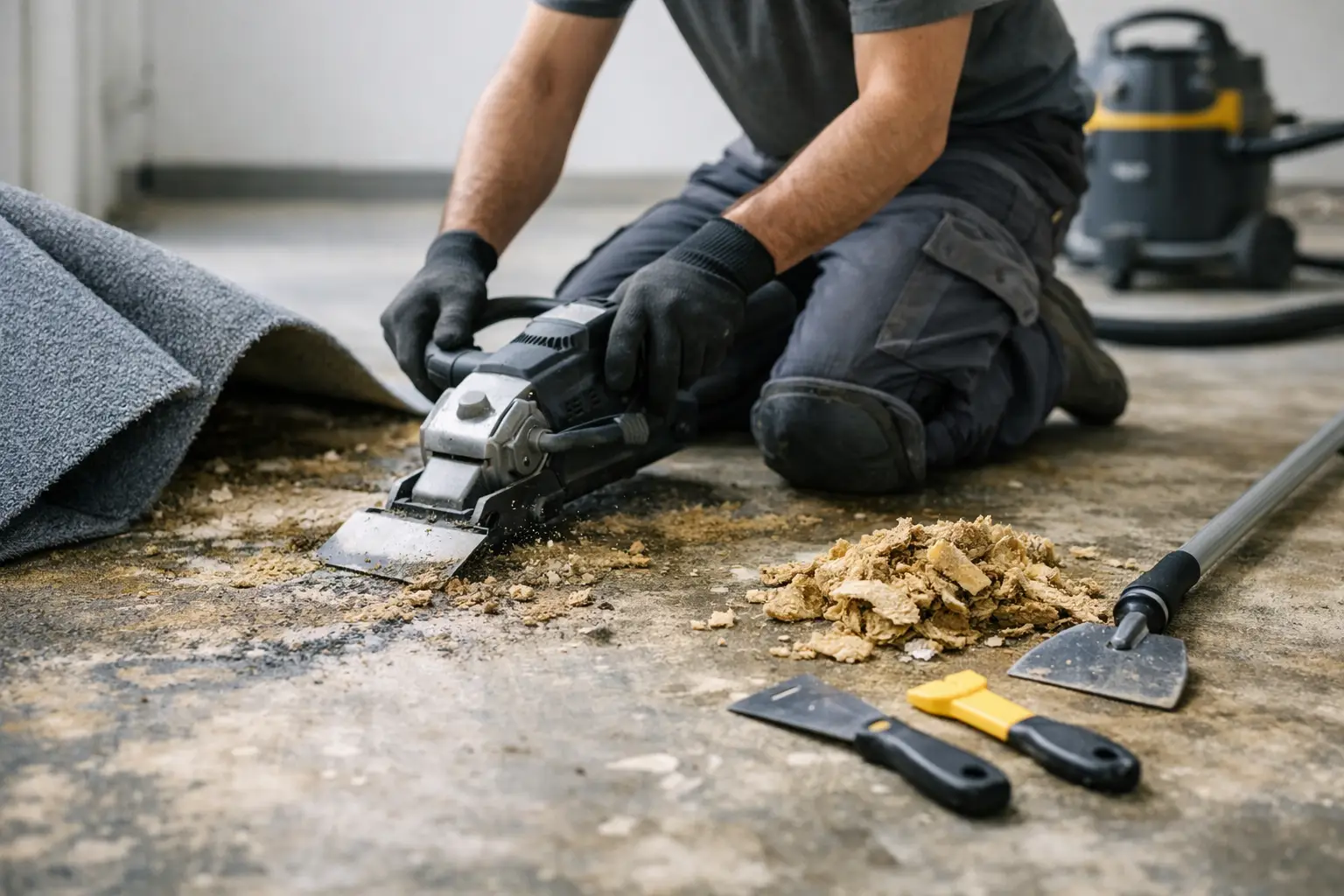
Carpet and Vinyl adhesive removal needs the right method, tools and prep to avoid slab damage, delays and rework before new flooring goes down.
Adhesive residue is where plenty of renovation jobs come unstuck. Carpet and Vinyl adhesive removal might look like a simple scrape-and-go job, but the wrong approach can gouge the slab, leave patches that telegraph through new flooring, or turn a straightforward refit into a costly delay.
If you’re lifting old floor coverings, the adhesive underneath matters just as much as the material on top. Some glues stay soft and tacky for years. Others go rock hard and bond aggressively to concrete. On commercial sites, you can also run into multiple layers from past fit-outs, patch jobs and partial replacements. That is why proper removal is not just about getting the old glue off the floor. It is about leaving the surface clean, sound and ready for what comes next.
Why carpet and vinyl adhesive removal is rarely straightforward
Different adhesives behave differently under pressure, heat, moisture and age. Carpet glue can be thick, rubbery and uneven, especially around joins, edges and high-traffic areas. Vinyl adhesive often spreads in a thinner layer, but it can cling tightly across a wide area and leave a stubborn film behind even after the vinyl itself has been removed.
The subfloor also changes the job. Concrete slabs can usually handle aggressive mechanical removal, but they still need care if you want a smooth finish without unnecessary scarring. Timber substrates are a different story. They can be damaged quickly by heavy grinding or harsh stripping methods. In some properties, there may also be levelling compounds, old sealers or contaminants sitting under or over the adhesive, which complicates the prep.
This is where experience counts. The method needs to match the floor, the adhesive type and the next flooring system. A slab that is being polished, for example, needs a different level of finish from one being covered with new carpet tiles.
What goes wrong when adhesive is not fully removed
The biggest mistake is assuming the new flooring will hide it. In many cases, it will not. Adhesive ridges, soft spots and contamination can interfere with bond strength, cause uneven finishes and reduce the lifespan of the new installation.
On vinyl jobs, leftover glue can show through as surface imperfections. On timber or hybrid installs, high spots and residue can create movement issues. For coatings and epoxy systems, poor surface preparation is one of the fastest ways to end up with adhesion failure.
There is also the time factor. If your installer arrives and finds the slab is not ready, the whole program can stall. Builders, renovators and property managers do not need that kind of hold-up when trades are already booked.
The right way to approach adhesive removal
Good adhesive removal starts with identifying what is on the floor and what is underneath it. That determines whether the best option is scraping, mechanical stripping, grinding, or a combination of methods.
For many residential and commercial concrete floors, mechanical removal is the most reliable path. It is faster, more consistent and better suited to preparing a floor for the next trade. Grinding is often needed after bulk adhesive removal to clean off residue, flatten the surface and create a properly prepared slab.
Dust control matters as well. Adhesive removal can create significant mess if it is handled poorly. On active homes, tenancies, offices and retail sites, that is more than an inconvenience. It affects access, clean up time and the overall condition of the site. Proper equipment and controlled removal methods help keep disruption down and the job moving.
When DIY becomes expensive
Small adhesive patches can sometimes be managed with basic tools, but full-room or whole-site removal is another matter. Hand scraping is slow, inconsistent and physically hard going. General hire equipment may remove some material, but often not cleanly enough for a proper handover to the next stage of works.
The bigger risk is damaging the substrate. Overworking one area can dig into the slab. Using the wrong blade or grinder setup can leave deep marks that then need further patching or resurfacing. That adds labour, delays and frustration to a job that should have been dealt with properly the first time.
For older properties, caution is especially important. Some legacy flooring systems and materials need a more informed assessment before removal starts. Rushing in without checking what is there is not a professional approach.
Why professional floor prep saves time later
A clean floor is not always a floor that is ready. Adhesive removal should finish with the surface in a condition that suits the new installation. That may mean further grinding, edge detailing, smoothing or removal of residual contaminants.
This is where a specialist crew adds value. The goal is not just to strip material. It is to hand over a site that is renovation-ready, safe to work on and free from the kind of hidden issues that slow everyone down later. For homeowners, that means less stress and fewer surprises. For builders and commercial operators, it means better sequencing and fewer interruptions.
Rapid Stripped handles these jobs with the equipment, pace and surface-prep experience needed to remove difficult adhesives properly and leave the floor ready for the next stage.
Carpet and Vinyl adhesive removal before new flooring goes down
If you are replacing carpet, vinyl, timber, tiles or coatings, adhesive removal should be treated as a critical part of the project, not an afterthought. The cleaner the substrate, the better the result. That applies whether you are renovating a house, refreshing an office, or preparing a commercial tenancy for a fast turnaround.
The real measure of a good removal job is simple: no avoidable damage, no unnecessary mess, and no delay for the next trade. Get that part right, and everything after it runs smoother.