

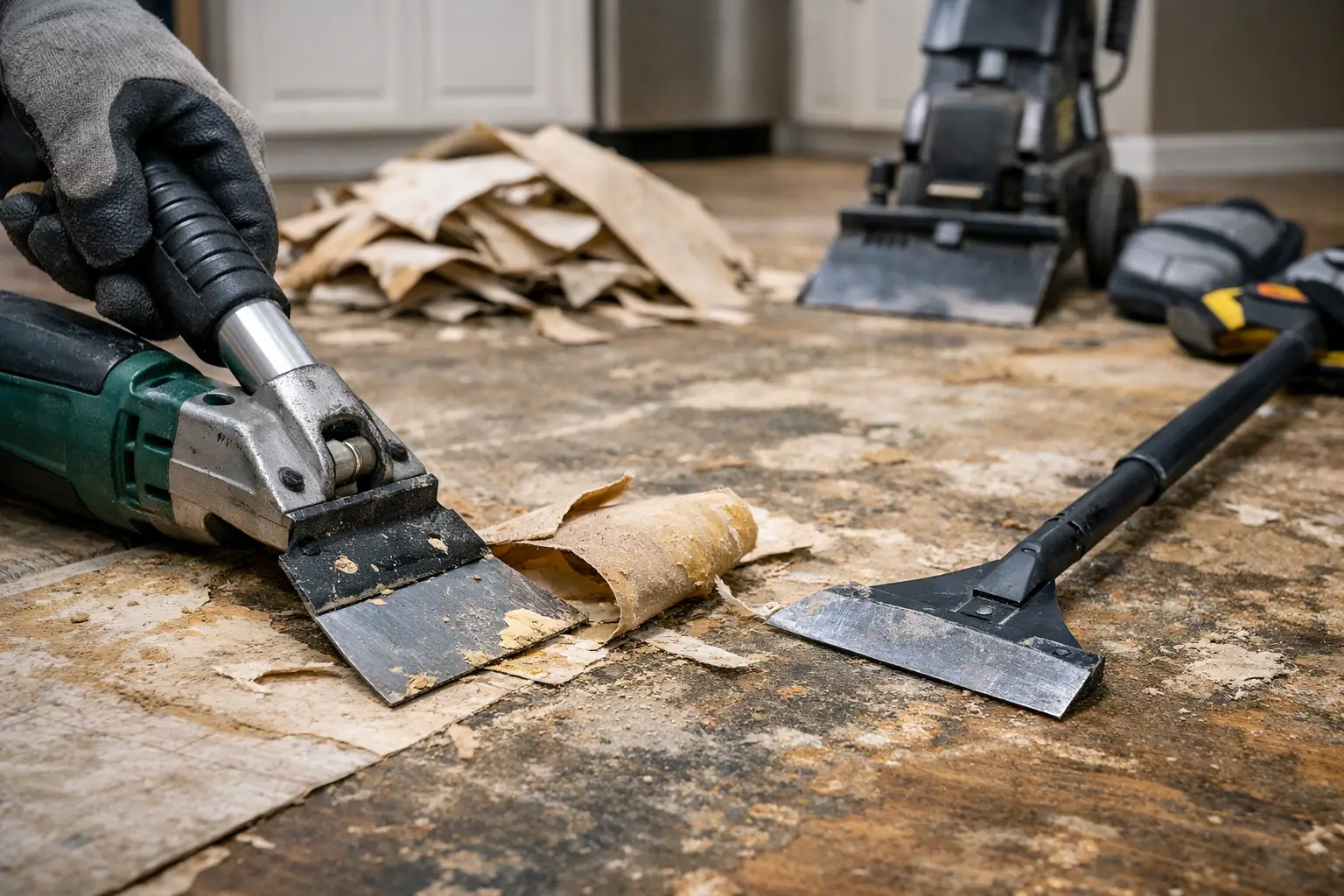
Need a vinyl floor remover that works fast? Learn how vinyl flooring is removed, what causes delays, and when to bring in a specialist team.
Old vinyl flooring can look simple to remove until the first strip tears, the adhesive stays bonded to the slab, and the whole job slows to a crawl. A proper vinyl floor remover is not just about lifting the surface layer. It is about removing the vinyl, dealing with stubborn glue, protecting the substrate, and leaving the floor ready for what comes next.
That matters whether you are renovating a home, preparing a tenancy fit-out, or turning over a commercial space on a deadline. If the removal is rushed or handled with the wrong equipment, the next trade inherits the problem.
What a vinyl floor remover actually needs to do
In practical terms, vinyl removal has two parts. First, the floor covering has to come up cleanly. Second, the backing, adhesive and any residual contaminants need to be stripped back so the substrate is usable.
That is where many DIY attempts fall over. Sheet vinyl, vinyl planks and older commercial vinyl products behave differently. Some peel up in sections. Others break apart and leave a bonded backing layer behind. In many jobs, the real labour is not the top layer at all – it is the adhesive removal and slab preparation underneath.
A professional vinyl floor remover approach uses the right machine for the surface, the age of the material and the condition of the floor beneath. The goal is not simply to get rid of the visible flooring. The goal is to hand over a site that is clean, safe and ready for levelling, grinding or a new installation.
Why vinyl flooring can be harder to remove than expected
Vinyl has a reputation for being easier to remove than tile or timber, but that depends on how it was installed. Direct-stick vinyl can be extremely stubborn, particularly on concrete. Older adhesives may be brittle in one area and heavily bonded in another. In wet areas, kitchens and commercial spaces, moisture and wear can change how the material lifts.
Subfloor condition also changes the job. A concrete slab with old patching compound, multiple glue layers or previous floor coverings will usually need more than simple stripping. Timber substrates need extra care again. Too aggressive, and you risk gouging or damaging the base. Too gentle, and the adhesive stays put.
This is why speed comes from experience, not guesswork. Knowing when to strip, scrape, grind or switch methods saves time and avoids rework.
The main methods used to remove vinyl flooring
For smaller or lightly bonded areas, hand removal may be enough to lift the vinyl. On larger jobs, mechanical floor strippers are usually the better option because they remove material faster and more consistently. They also reduce the physical strain that slows manual work.
Once the vinyl is up, adhesive removal often becomes the main task. Some floors need scraping. Others need grinding to take the slab back to a sound, usable finish. This is especially common where a new floor system needs a clean bond or where the slab has to be levelled.
Dust control matters here. Adhesive and surface prep work can create a mess very quickly if the job is not set up properly. For occupied homes, offices, retail sites and renovation projects running to schedule, clean execution is not a bonus. It is part of doing the work properly.
When you need a specialist vinyl floor remover
If the vinyl is loose at the edges and the substrate is already in good condition, removal may be straightforward. But many jobs are not that clean. You should bring in a specialist when the flooring is glued hard to concrete, when there are multiple layers, when adhesive residue is widespread, or when the site has to be ready for the next trade without delay.
The same applies to commercial projects and high-traffic properties. In those settings, time lost on floor removal usually affects everyone after it – installers, painters, cabinetmakers, shopfitters and handover dates. A specialist team can remove the material, manage debris, control dust and prepare the floor in one run.
That is often the difference between a site that stalls and a site that keeps moving.
What to expect from professional vinyl floor removal
Good vinyl removal is methodical. The site should be assessed properly, including the floor type, adhesive condition, access, waste removal and the finish required afterwards. Not every client needs the same end result. Some need basic removal only. Others need the slab ground and ready for immediate floor installation.
The best outcome is a floor that does not create hidden problems later. Residual glue, uneven patches and damaged substrate can all affect how new flooring performs. They can also cause delays once installers arrive and realise the surface is not ready.
For builders, renovators and property owners, that is why specialist removal work pays off. It reduces downtime, cuts out avoidable mess, and gets the project to the next stage faster.
Choosing the right team for the job
A reliable vinyl floor remover service should be able to explain exactly how the flooring will be removed, what happens with the adhesive, and what condition the substrate will be left in. That clarity matters. So does having the equipment and experience to handle difficult removal without turning a simple preparation stage into a drawn-out problem.
Rapid Stripped handles vinyl removal with the same focus applied to all floor stripping and surface preparation work – fast turnaround, clean execution and a floor ready for what comes next. If your project depends on speed, minimal disruption and getting it done right the first time, specialist removal is usually the smarter move.