

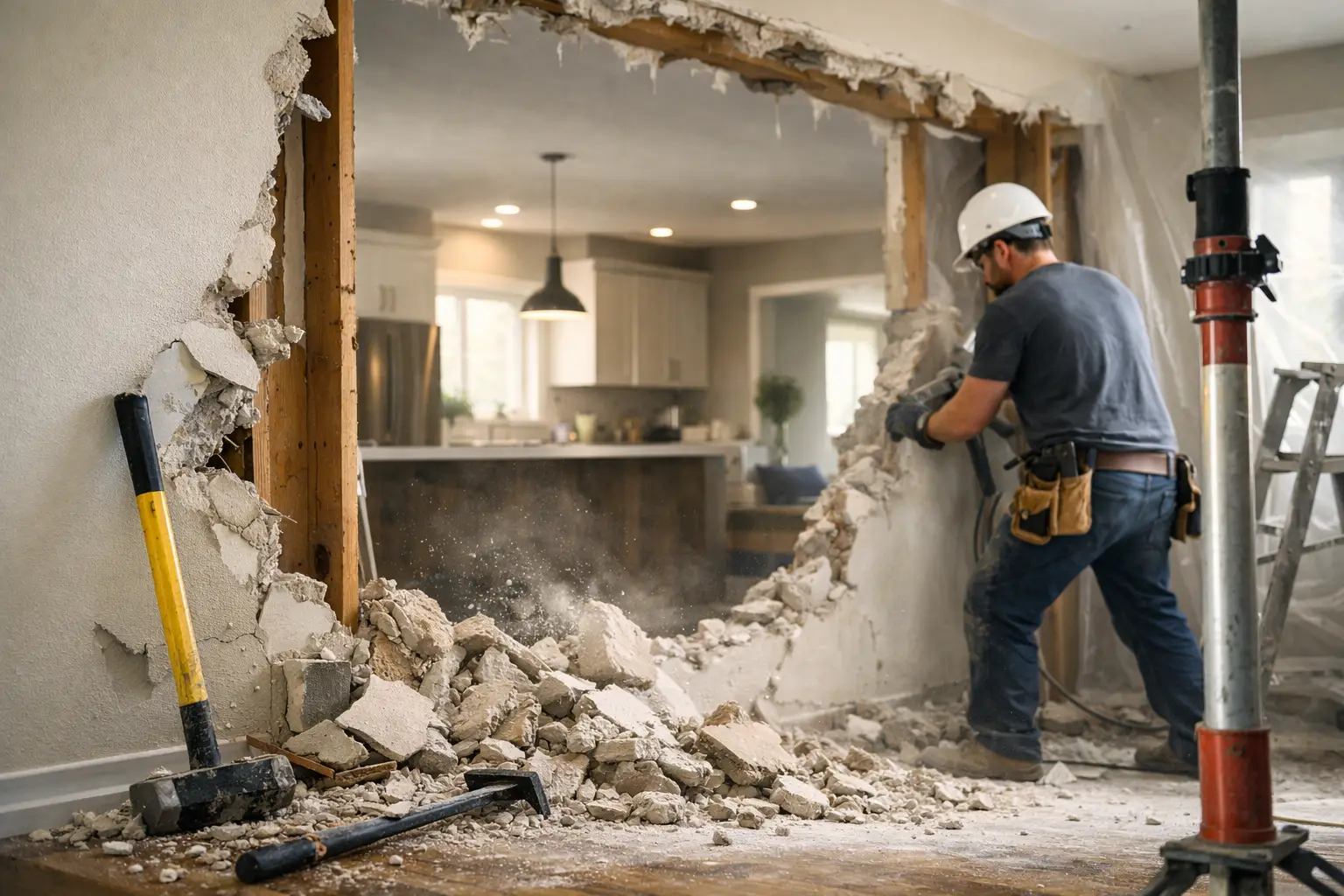
Wall removal & demolition requires planning, safety and clean execution. Learn what matters before work starts and how to avoid delays.
Knocking out a wall sounds simple until the dust starts, the wiring is exposed, and the next trade can’t move in because the site is still a mess. Wall removal & demolition is one of those jobs where speed matters, but control matters more. If the work isn’t planned properly, it can blow out your renovation timeline fast.
For homeowners, builders and commercial clients, the real goal is not just getting a wall down. It’s getting the area cleared safely, cleanly and ready for the next stage without damage to surrounding finishes, services or structure. That’s where specialist demolition makes a difference.
What wall removal & demolition actually involves
Not every wall can be treated the same. Some are non-structural partition walls that can be removed with straightforward demolition methods. Others may be load-bearing, tied into ceilings, bulkheads, cabinetry, plumbing or electrical services. The wall itself is only part of the job. What sits inside it and what relies on it are just as important.
A proper wall removal starts with identifying the wall type, checking for live services, understanding access, and working out how debris will be removed. In homes, this often means protecting nearby floors, kitchen joinery and retained rooms. In commercial sites, it usually means tighter timing, stricter safety controls and minimal disruption to surrounding operations.
When that early planning is skipped, the same problems keep showing up – damaged finishes, exposed services left unsafe, uneven edges, and demolition waste slowing down every trade that follows.
Why experience matters more than brute force
There is a big difference between general demolition and controlled strip-out work. A wall might come out in a few hours, but making the space renovation-ready is what separates a rough job from a professional one.
That means keeping cuts clean where walls meet ceilings and adjoining surfaces, removing fixings and leftover material properly, and leaving the slab or subfloor in a condition that won’t cause issues later. If tiles, vinyl, timber or adhesive removal is part of the same renovation, it makes sense to treat the whole strip-out as one coordinated job rather than a series of separate messes.
On older sites, wall removal can also reveal uneven substrates, hidden patchwork, moisture damage or multiple layers of previous renovation work. Those issues are common, but they need to be dealt with early so they do not become someone else’s delay.
The biggest risks in wall demolition
The most obvious risk is structural. If a load-bearing wall is altered without the right engineering and support in place, the damage can be serious. That part should never be guessed.
But non-structural walls still carry risks. Electrical cables, plumbing, data lines and even redundant services can sit inside the wall cavity. Dust spread is another major issue, especially in lived-in homes, offices, retail spaces and unit complexes where surrounding areas still need to function.
Then there’s waste management. Demolition debris builds up quickly, and if it is not removed efficiently, the site becomes harder and less safe to work in. Clean execution is not just about appearances. It affects access, safety and how quickly the next stage can begin.
What to look for before work starts
If you are planning wall removal & demolition, ask the practical questions first. Has the wall type been identified properly? Are electrical and plumbing services located and isolated where needed? Will adjacent surfaces be protected? Is dust control part of the process, not an afterthought?
You also want to know what condition the site will be left in. This matters more than many clients realise. A demolition crew that removes the wall but leaves rough edges, bonded material, adhesive, or floor damage behind has only done half the job.
The better approach is end-to-end preparation – remove the wall, clear the waste, manage the dust, and leave the area ready for the builder, plasterer, cabinet installer or flooring team to step straight in.
Where wall removal ties into full strip-outs
In kitchens, bathrooms, offices and retail fit-outs, walls are rarely removed in isolation. They are usually part of a bigger strip-out involving flooring, adhesives, fixtures, cabinetry or wet area demolition. Coordinating that work properly saves time and avoids double handling.
For example, if a wall comes out before floor finishes are removed, there may be hidden height differences, broken tile edges or bedding lines that need grinding or preparation. If the floor is stripped as part of the same scope, the whole area can be brought back to a cleaner, more workable base in one go.
That is often the difference between a site that is technically demolished and one that is actually ready for renovation.
The result you want is a site ready for the next trade
Fast demolition is useful. Fast, clean and accurate demolition is what keeps a project moving. Whether the job is in a family home, a unit renovation or a commercial tenancy, wall removal should reduce delays, not create new ones.
That is why specialist operators matter. Teams with the right equipment, dust-control methods and strip-out experience can handle wall removal as part of a broader demolition scope and leave the site in a condition that makes the next step easier. For clients across Northern NSW, the Gold Coast, Brisbane and the Sunshine Coast, that level of preparation is often what keeps a one-day job from turning into a one-week problem.
If you are removing a wall, the smart question is not just how fast it can come down. It is how cleanly the whole area can be handed over once it does.