

Old floor coverings rarely come up cleanly. What looks like a quick rip-up job often turns into broken screed, stubborn adhesive, airborne dust and a slab that is nowhere near ready for the next trade. That is why floor stripping Northern Rivers property owners book is usually less about removal alone and more about getting the site properly prepared for what comes next.
Whether you are renovating a bathroom in a unit, replacing vinyl in a shopfront or stripping tiles from a full house, the real goal is simple – remove the existing material fast, keep disruption under control and leave a surface that is ready for reinstallation. If that part goes wrong, the rest of the project starts slipping.
What proper floor stripping actually involves
Floor stripping is not one job. It is a sequence of tasks that changes depending on the material, the adhesive, the age of the installation and the condition of the substrate underneath. Removing ceramic tile is different from lifting glued vinyl. Pulling up timber boards is different again, especially if moisture or movement has already affected the slab or subfloor.
A professional strip-out starts by identifying what is bonded to what. Tiles may be fixed over concrete, cement sheeting or older floor coverings. Vinyl may come off in sheets, or it may tear into strips and leave heavy glue behind. Carpet is often the easy part. The underlay staples, tack strips and adhesive residue are what slow the job down.
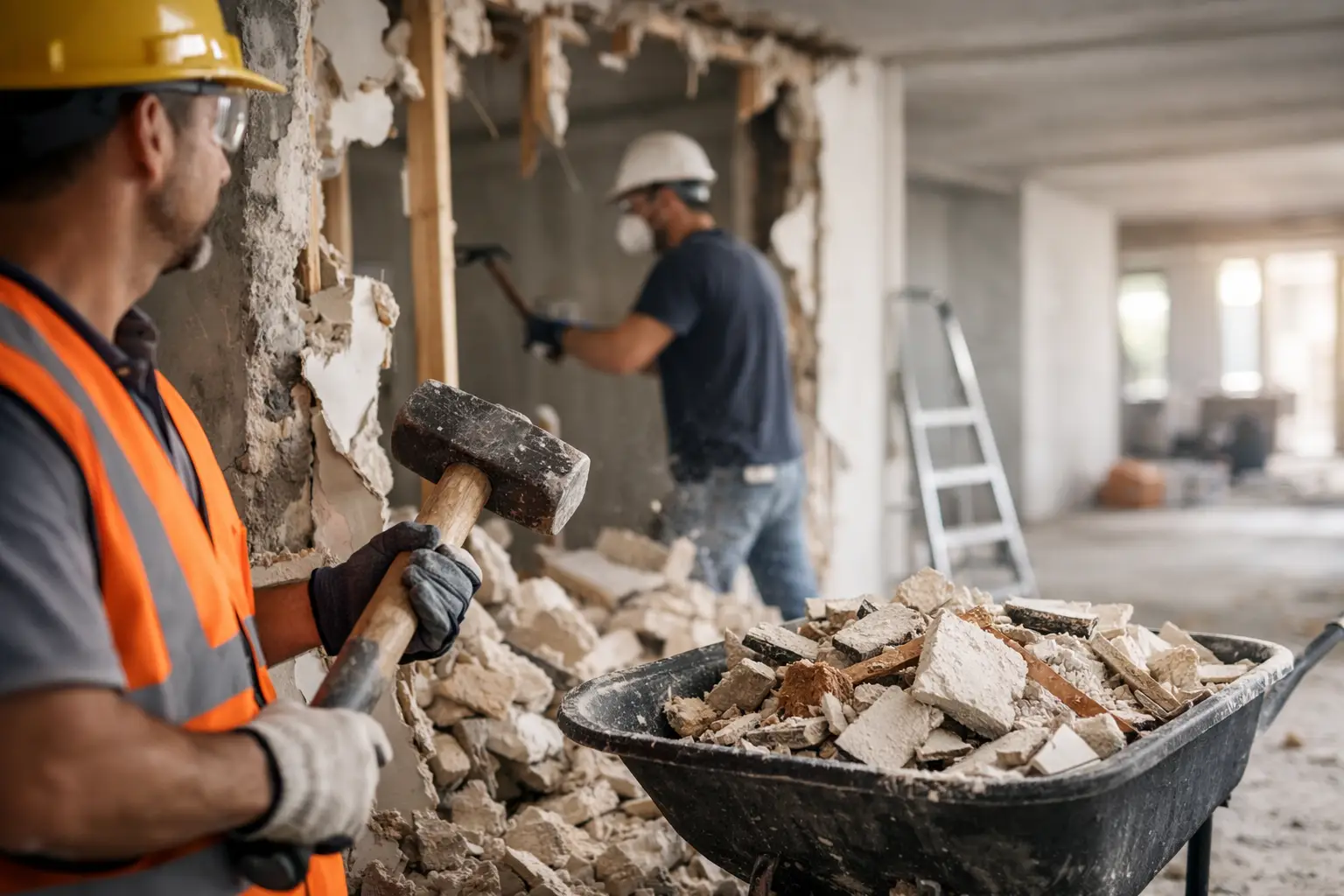
That is where experience matters. A crew that handles floor removal every day knows when to use ride-on equipment, hand tools, grinders or controlled demolition methods. More importantly, they know how to remove the floor without creating avoidable damage that another trade has to fix later.
Floor stripping Northern Rivers projects face different conditions
Northern Rivers renovations are not all the same. Coastal moisture, older homes, flood-affected materials and mixed renovation histories all change the way a floor comes up. A tile floor laid twenty years ago over a solid slab can behave very differently from one patched after previous repairs or water damage.
In residential work, the challenge is often access and containment. Tight hallways, occupied homes and staged renovations mean the work has to be organised carefully. In commercial spaces, the issue is usually downtime. Offices, hospitality venues and retail sites want the floor out quickly and the mess controlled so other trades can move in without delay.
There is also the question of what is underneath. A floor may look sound from the top, but once the covering is removed, you can find hollow sections, brittle topping, cracked levelling compound or thick adhesive build-up. That does not always mean the project is in trouble. It does mean the stripping work has to be done by people who can assess the substrate and prepare it properly rather than just tear the surface off and leave a problem behind.
The materials that cause the biggest headaches
Some floor coverings are straightforward. Others are slow, aggressive and messy if they are not handled with the right equipment.
Tiles and bedding are a common one. It is not just the tile that needs to come up. The bedding layer often remains bonded hard to the slab, and if that is left behind, the next finish will not sit correctly. Terracotta and slate can be even tougher because they are often laid thick and irregular.
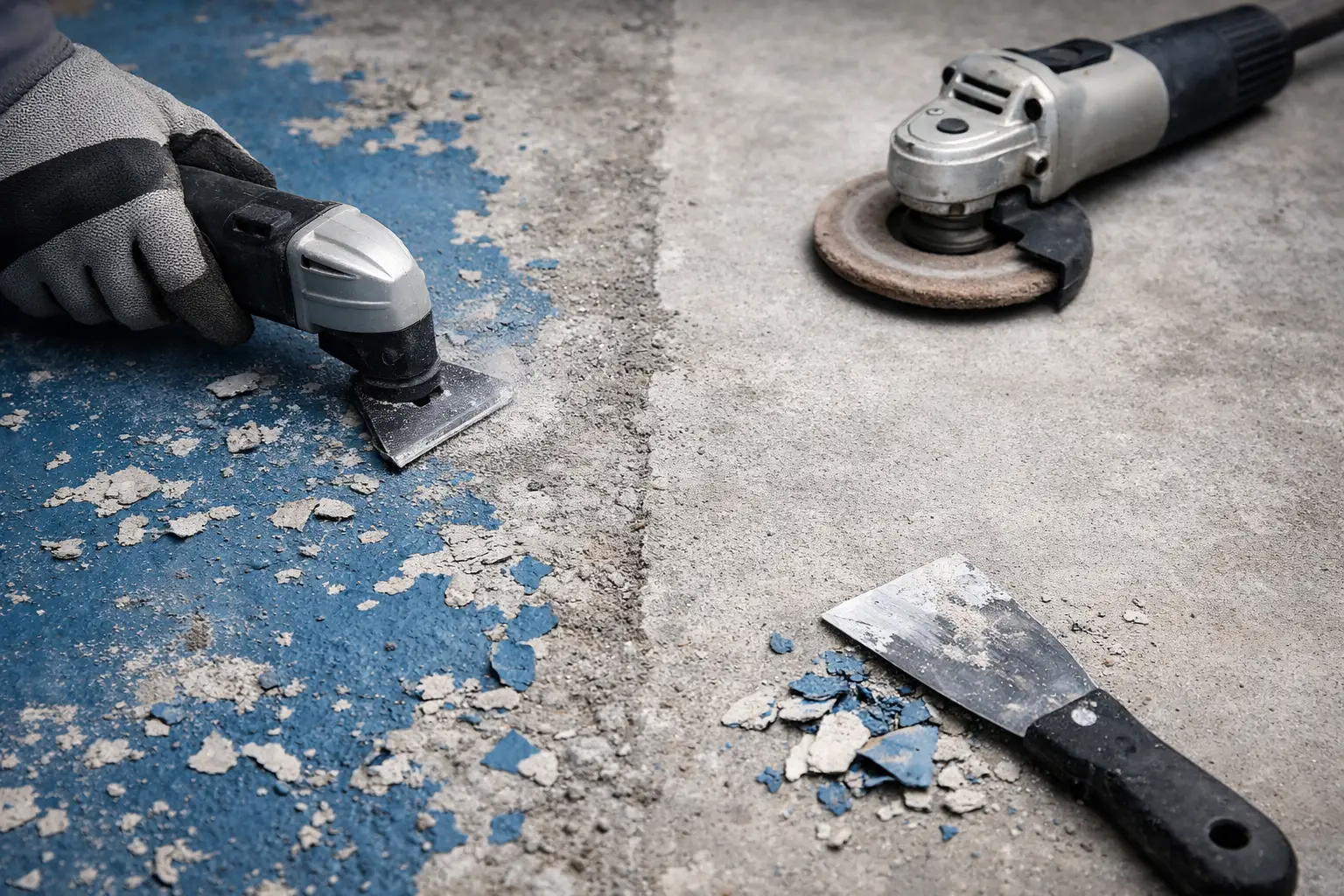
Vinyl can be deceptive. Loose lay or click systems are simple enough, but old commercial vinyl and sheet products are frequently glued down hard. Once the top layer peels away, the remaining adhesive can require grinding or mechanical stripping to get back to a usable surface.
Timber flooring varies widely. Direct-stick timber can leave heavy adhesive residue, while tongue-and-groove boards may need careful dismantling before the subfloor can be assessed. Cork, old epoxy coatings, painted concrete and pool tile removal each bring their own issues as well. The point is not that these jobs are impossible. It is that the method needs to match the material.
Why the slab condition matters more than most people expect
A lot of people focus on the visible floor covering because that is what they want gone. Builders and experienced renovators know the slab is the real story. If the slab is not clean, level and properly prepared, new flooring does not go down properly and it does not last as it should.
After floor removal, the substrate may need adhesive removal, grinding, edge detail work or spot repairs. Even a thin film of glue can interfere with the bond of new finishes. Leftover high spots from tile bedding can throw off levels across the room. Dust from poor grinding practices can also affect nearby finishes and create a bigger clean-up for everyone on site.
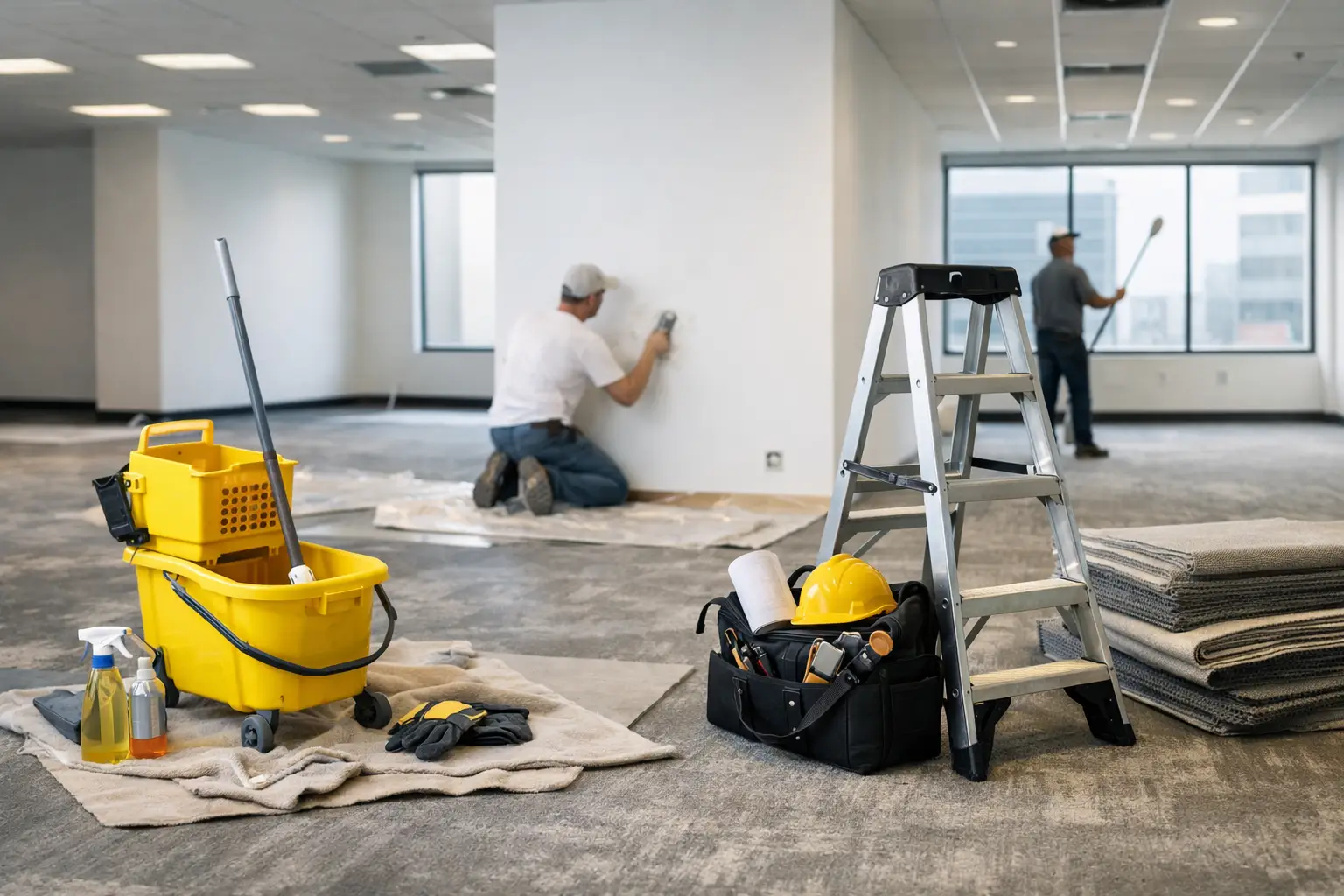
That is why floor stripping should be treated as part of surface preparation, not a separate throwaway task. A clean removal with proper slab prep saves time for tilers, flooring installers and painters. It also reduces the chance of last-minute surprises once the next trade starts.
Speed matters, but only when it is controlled
Most clients want the job done quickly, and fair enough. Floor stripping is noisy, disruptive and usually sits right at the front end of a renovation timeline. The problem is that speed without control creates rework.
A fast crew is not just one that removes material quickly. It is one that arrives with the right machines, plans for waste removal, controls dust and finishes the site in a condition that keeps the project moving. That is the difference between a specialist and a general labour approach.
For many jobs, especially standard residential rooms or targeted commercial areas, same-day completion is realistic. For others, it depends on access, substrate condition and the type of floor being removed. A large tiled area with thick bedding and stubborn adhesive is naturally going to take more effort than a straightforward carpet lift. The right contractor will be direct about that from the start.
Dust control and clean execution are not optional
Anyone can make a mess pulling up a floor. The better question is what the site looks like when the work is finished.
Dust control matters because floor stripping often involves grinding, chipping and breaking bonded materials. Without proper containment and extraction, fine dust travels well beyond the work area. In a lived-in home, that is a major nuisance. In a commercial setting, it can interfere with operations, stock and other trades.
Clean execution also means managing rubble, sharp offcuts and adhesive waste properly. It means protecting access points, communicating clearly about noise and timing, and keeping the work area safe throughout the job. These details are not extras. They are part of doing the work properly.
Choosing the right team for floor stripping Northern Rivers jobs
If you are comparing contractors, look beyond whether they say they do demolition or floor removal. The better fit is a specialist who understands different coverings, substrate behaviour and site preparation requirements.
Ask practical questions. What types of floors do they remove every week? Can they handle difficult adhesives, tile bedding and slab grinding? Do they work cleanly in occupied homes and active commercial spaces? Are they focused on getting the area ready for the next stage, not just getting the old material out?
That matters whether you are a homeowner trying to keep a renovation on schedule or a builder managing multiple trades. The handover condition of the floor affects everyone downstream.
Rapid Stripped works in this space because there is real value in having a crew that can strip difficult flooring, prepare the surface and keep the site moving without unnecessary disruption. That is what most clients are actually chasing – not just removal, but readiness.
When to book floor stripping
The best time to organise floor stripping is before the next trade is locked in too tightly. If your tiler, floor layer or shopfitter is booked to start immediately after demolition, there needs to be enough room for proper removal and slab preparation. Leaving it to the last minute usually creates pressure where you do not want it.
It also helps to think about access, furniture, appliances and any staged work areas in advance. A clear site is quicker to strip and easier to clean. If the property is tenanted or partly occupied, planning becomes even more important.
A good floor stripping job clears the way for everything else. It sets the standard for the renovation from day one. Get that part right, and the rest of the project has a much better chance of running the way it should.