
A bathroom with wall-to-wall tiles, thick bedding and a tight hallway needs a very different approach to an empty commercial tenancy with glued-down vinyl. That is why manual versus machine demolition is not a matter of picking the fastest-looking tool. The right method protects the structure, controls dust and gets the site ready for the next trade without creating avoidable repair work.
For floor removal and strip-outs, the best result is often a planned combination of both. Manual work gives the operator control around vulnerable areas. Machinery delivers the force and speed needed to lift hard floor coverings, break down bedding and remove stubborn adhesive over larger open areas. The decision comes down to the material, the substrate, site access and what needs to stay intact.
What manual demolition does best
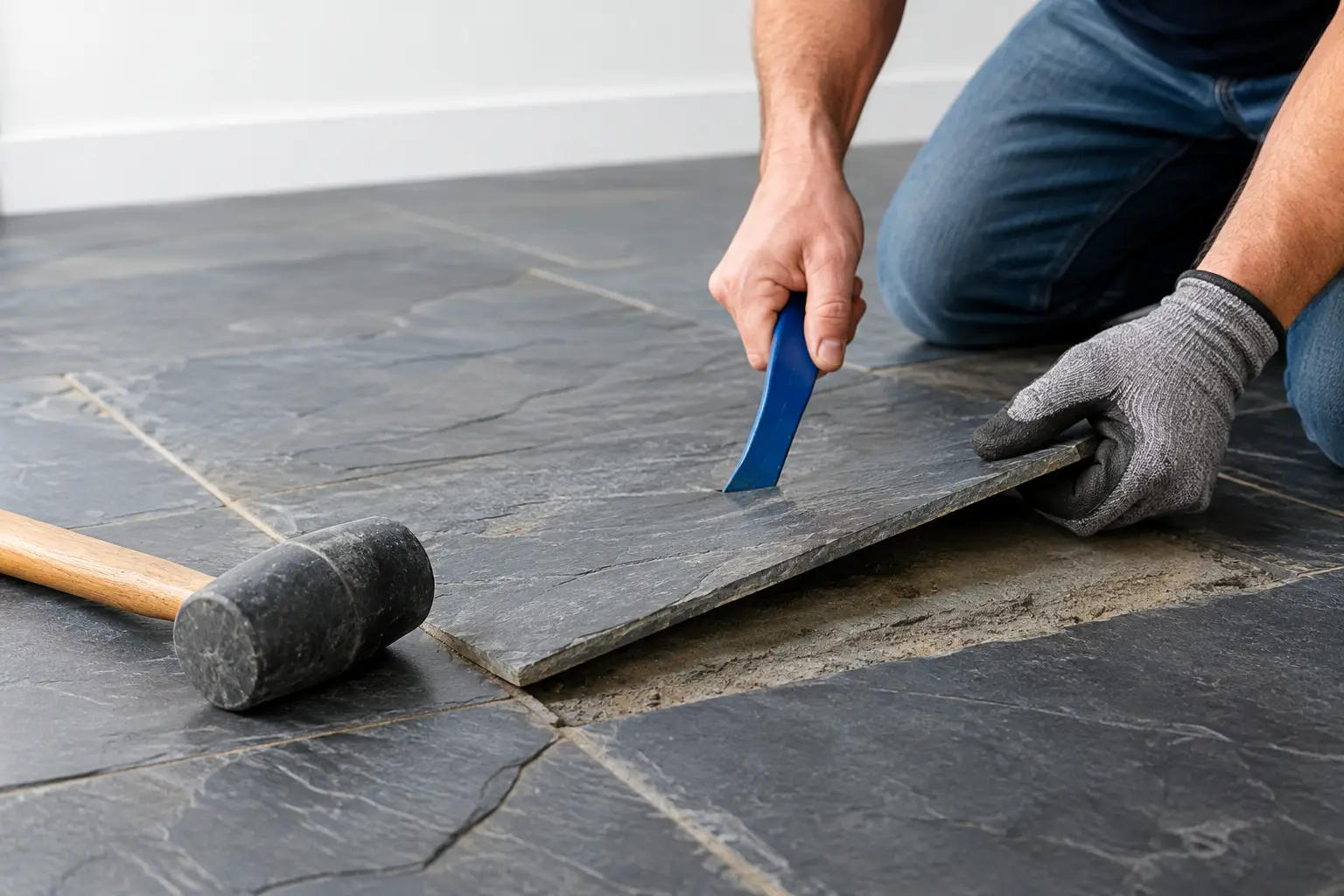
Manual demolition uses hand tools and smaller equipment to remove materials in a controlled way. This may include lifting tiles around a vanity, removing skirting, breaking out a small screed section or stripping fittings from a kitchen or bathroom before heavier removal begins.
Its main advantage is precision. In occupied homes, units and active commercial buildings, there are often surfaces, fixtures and services close to the work area that cannot be damaged. A careful manual approach lets the team work right up to door jambs, cabinetry, glass, plumbing penetrations and retained walls without relying on brute force.
Manual removal is also the practical choice where access is restricted. Upper-level units, narrow side access, stairwells and rooms with limited turning space may not allow larger machinery through. Smaller tools can still remove material effectively while keeping the work contained.
That said, manual work is physically demanding and can take longer across large areas. Removing hundreds of square metres of ceramic tile or thick adhesive by hand is rarely the most efficient option. It can also create inconsistent results if the old bedding or glue is left behind rather than properly removed or mechanically prepared.
Where machine demolition earns its place
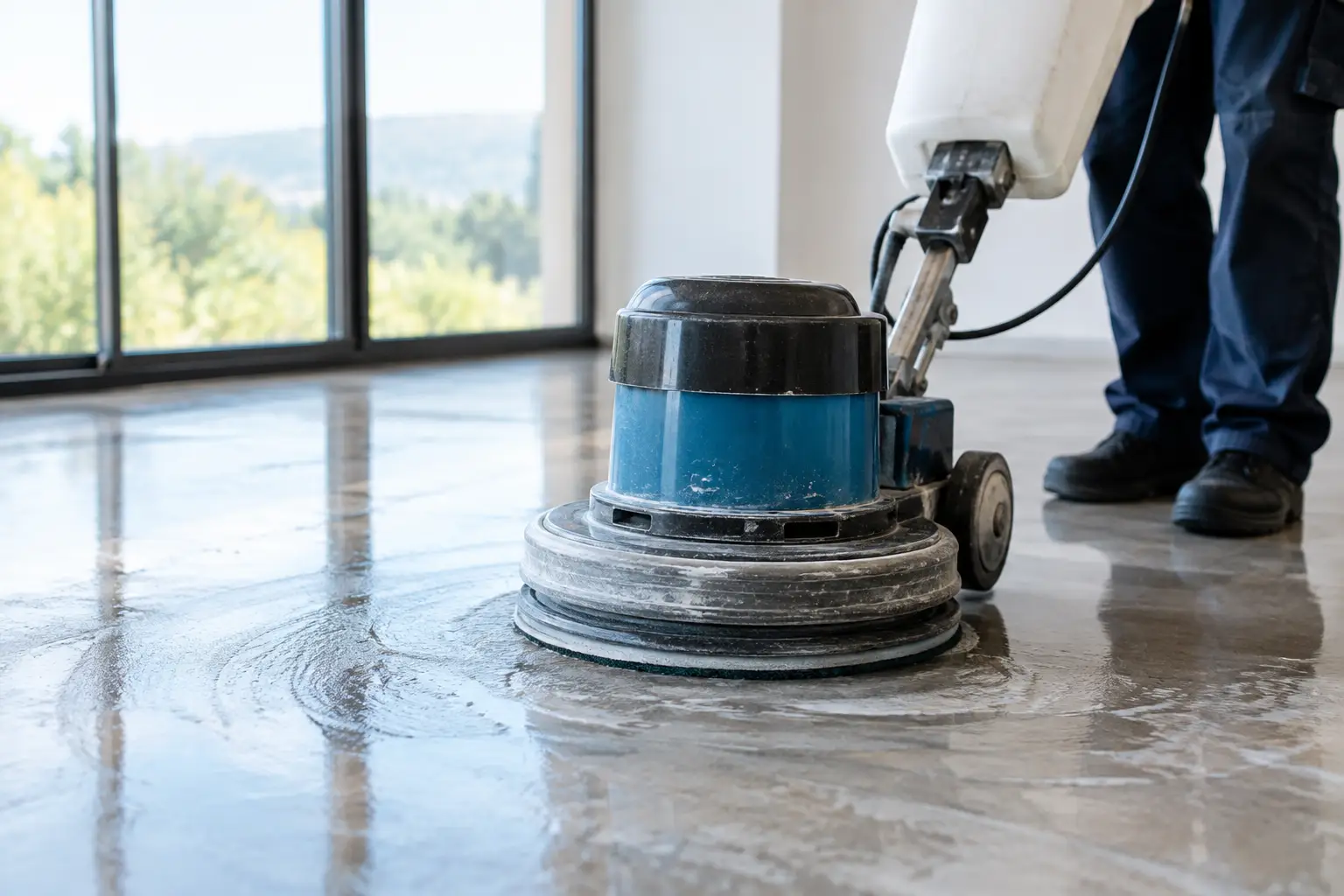
Machine demolition is built for volume, hard substrates and demanding removal work. Floor strippers, jackhammers, breakers, grinders and purpose-built removal equipment can lift tiles, timber, vinyl, carpet, epoxy and adhesives far more quickly than hand tools when there is sufficient access and a clear work zone.
For a large open-plan home, office, shop or hospitality venue, machinery can significantly reduce the time required to remove old flooring. That matters when follow-on trades are booked, a tenancy needs to reopen, or a renovation schedule has little room for delays.
Machines also produce more consistent preparation when used correctly. Removing the visible floor covering is only part of the job. Tile adhesive, carpet glue, vinyl backing, levelling compounds and remaining bedding can prevent new finishes from bonding properly. Grinding and mechanical scraping can bring the slab closer to the condition required for the new floor system.
The trade-off is that machines require room, suitable access and experienced operation. Powerful equipment used too aggressively can damage a concrete slab, crack adjacent finishes or put pressure on areas that need to be retained. The answer is not to avoid machinery. It is to use the right machine, with the right attachment and operator, for the site.
Manual versus machine demolition: the key decision factors
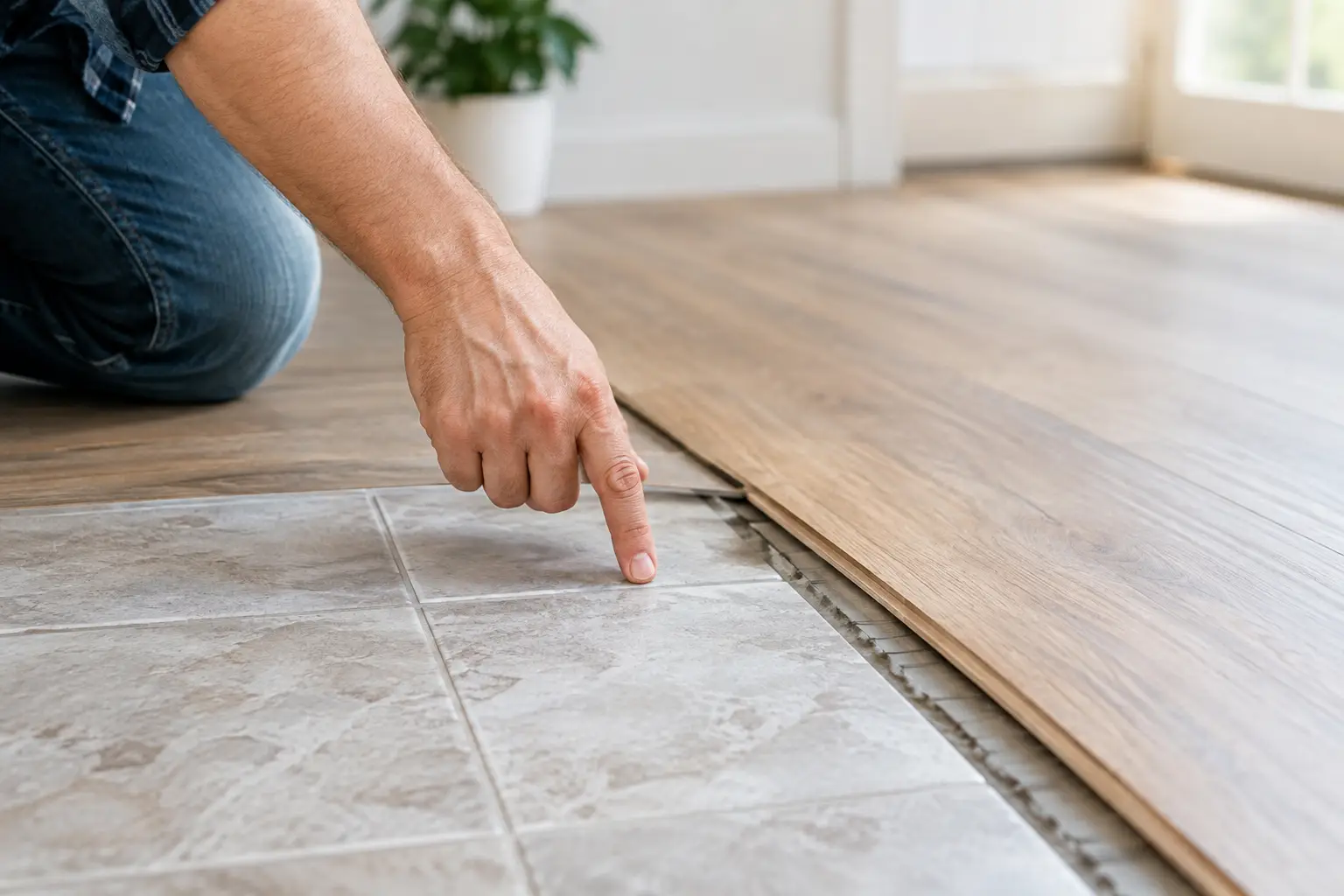
The floor covering is the first consideration. Loose-laid carpet may lift quickly with a floor stripper, while glued-down carpet can require more force and follow-up adhesive removal. Ceramic, porcelain, terracotta, marble and slate tiles vary widely in thickness, bond strength and bedding depth. Timber flooring may be nailed, glued or installed over battens, with each system needing a different removal sequence.
The condition of the substrate matters just as much. A sound concrete slab can often handle mechanical removal and grinding well. A slab with cracks, old patching, moisture issues or weak topping needs more care. In these cases, a skilled operator adjusts the method to remove the existing finish without turning a preparation job into a concrete repair job.
Access can decide the method before work even starts. A ground-floor commercial space with direct entry is ideal for larger equipment and efficient rubbish removal. A high-rise unit with lift restrictions, body corporate requirements and shared corridors calls for tighter containment, smaller equipment and a more staged approach.
The final floor finish should also shape the demolition plan. If new tiles are going down, the slab may need adhesive and high spots removed to create a workable base. If polished concrete, vinyl planks or epoxy is planned, surface preparation becomes even more critical. These finishes show defects and rely on a clean, stable substrate for proper adhesion.
A combined approach is usually the smartest one
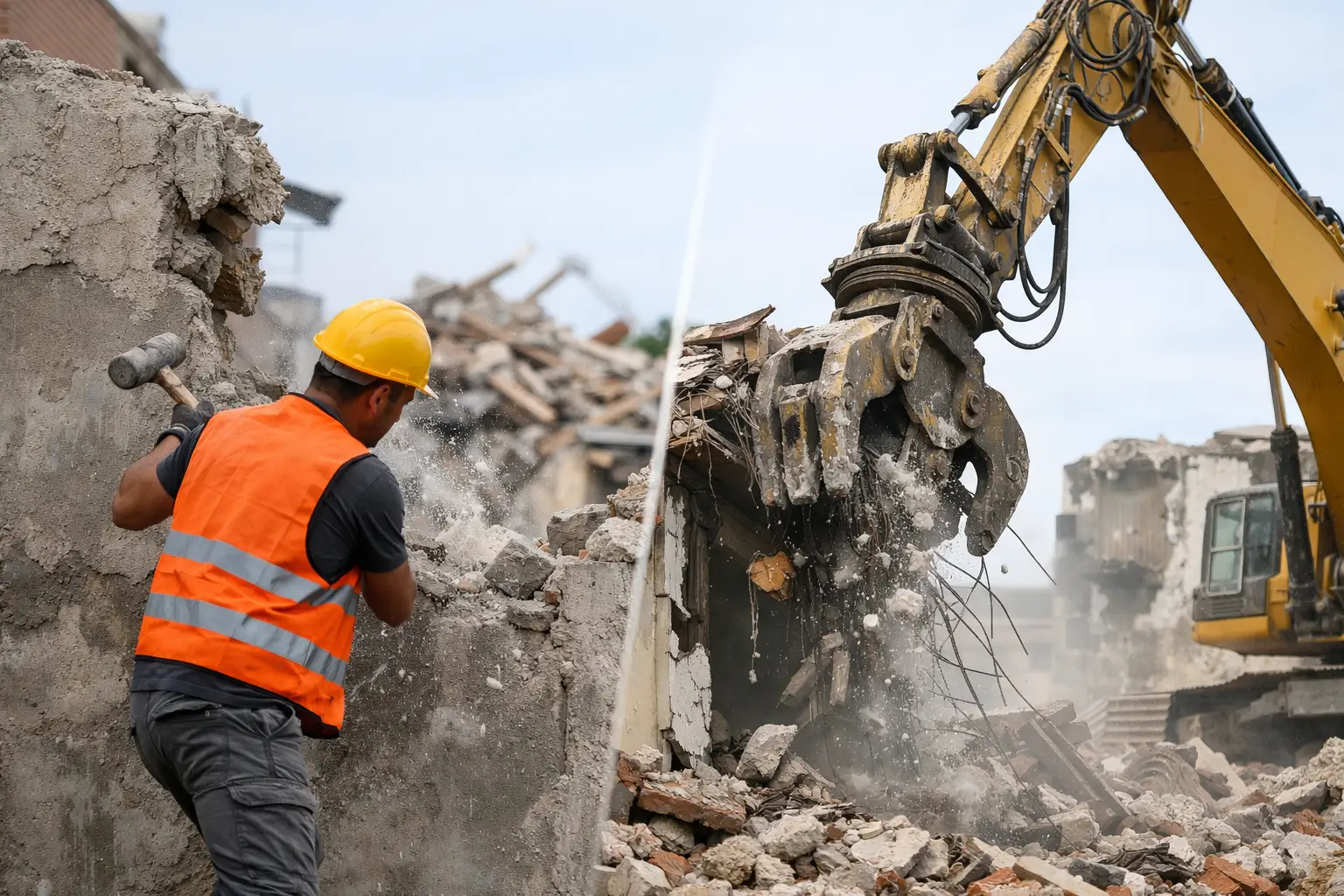
On many jobs, manual and machine demolition work together rather than compete. A team may manually disconnect and remove fixtures, protect retained finishes and clear edges. Machinery can then remove the bulk flooring through the centre of the room. The final pass may involve hand work around walls and services, followed by grinding to deal with residual adhesive or uneven sections.
This staged approach is especially effective for bathroom and kitchen strip-outs. There is no benefit in sending a heavy breaker into an area before cabinets, fittings and vulnerable services have been assessed. Once the space is safely cleared, the right equipment can speed up tile and bedding removal without compromising control.
It is also a sensible approach for occupied or partially occupied properties. Work can be isolated by room or zone, with dust controls and rubbish removal managed as the job progresses. That keeps disruption lower and makes it easier for builders, renovators or business operators to coordinate the next stage.
Dust, noise and site protection are part of the method
Demolition is noisy and dusty by nature, but poor containment is not unavoidable. Both manual and machine methods need proper dust-control practices, including suitable extraction, containment where required and regular clean-up. Grinding old adhesive or concrete without dust management can spread fine material through adjoining rooms and create extra cleaning work long after the removal is complete.
Protection matters too. Floors, benchtops, glazing, doors and common areas should be assessed before work begins. In unit buildings and commercial properties, lifts, corridors and entry points need to be kept clear and protected from damage. A fast strip-out is only a good result if the surrounding property has been respected.
Noise needs planning as well. Machine work may be the quickest option, but building rules, neighbour proximity and operating hours can affect when certain tasks can be completed. A professional demolition team plans the sequence around those constraints rather than discovering them halfway through the job.
Do not treat unknown materials as standard removal work
Older properties can contain materials that need specialist assessment before demolition begins. Suspected asbestos-containing materials, lead-based coatings, concealed services and damaged structural elements are not issues to work around with a bigger machine or more labour. They need to be identified and managed through the appropriate process before general stripping continues.
The same applies to moisture-damaged floors and hidden slab problems. Lifting an old finish can expose failures that were not visible beforehand. Addressing them early gives the renovation team a realistic path forward and avoids installing a new floor over an unstable base.
Choosing the right demolition team
The best question is not, “Will you use machines?” It is, “How will you remove this floor and leave the surface ready for what comes next?” A capable team should assess the covering, substrate, access, retained items and intended finish before recommending the work method.
Look for a clear plan around removal, dust control, site protection, rubbish handling and surface preparation. A crew that understands tile, timber, vinyl, adhesives and slab grinding can make decisions on site without cutting corners when conditions change.
For homeowners and property managers across Northern NSW, the Gold Coast, Brisbane and the Sunshine Coast, Rapid Stripped applies the method that suits the job rather than forcing every site into one process. The aim is straightforward: remove the problem materials efficiently, protect what stays, and hand back a clean site that is ready for renovation.
Before booking demolition, confirm the new flooring requirements with your builder or installer. That one conversation can determine whether the job needs simple removal, full adhesive stripping, slab grinding or a more detailed preparation stage – and helps ensure the next trade can start without delay.