
A new floor can look straightforward on a quote or showroom sample. The hard part is what sits underneath it. Can tiles remain under flooring? Sometimes, yes. But leaving tiles in place is only a sound decision when the existing surface is firmly bonded, level enough for the new product and compatible with the planned installation method.
If those conditions are not met, covering old tiles can shift the problem rather than solve it. Loose tiles, drummy bedding, uneven joints, moisture issues and height changes can all affect the result. Before laying vinyl, hybrid, timber, carpet or new tiles, assess the substrate properly.
When can tiles remain under flooring?
Existing tiles can remain under a new floor where they are stable, clean, dry and well adhered to the slab or subfloor. There should be no cracked sections that move underfoot, no hollow or drummy areas, and no signs that the tiled surface has lifted due to moisture or failed adhesive.
The tile layout also matters. Deep grout lines, uneven edges and lippage between tiles can telegraph through thin flooring products. Sheet vinyl and some glued-down vinyl planks are particularly unforgiving. Even when a floor covering initially looks smooth, unsupported areas can wear prematurely or show visible lines over time.
Floating hybrid or laminate flooring may tolerate minor variation, but that does not mean it can go over any tiled surface. Manufacturers set limits for how much the floor can vary across a given distance. If the base is outside those tolerances, the planks can flex, separate at joints or develop noise underfoot.
New tiles can also be installed over old tiles in some circumstances. This approach requires thorough cleaning, mechanical surface preparation and the correct primer and adhesive system. It also adds weight and height, which needs to be considered before the job starts.
The checks that decide whether tiles should stay
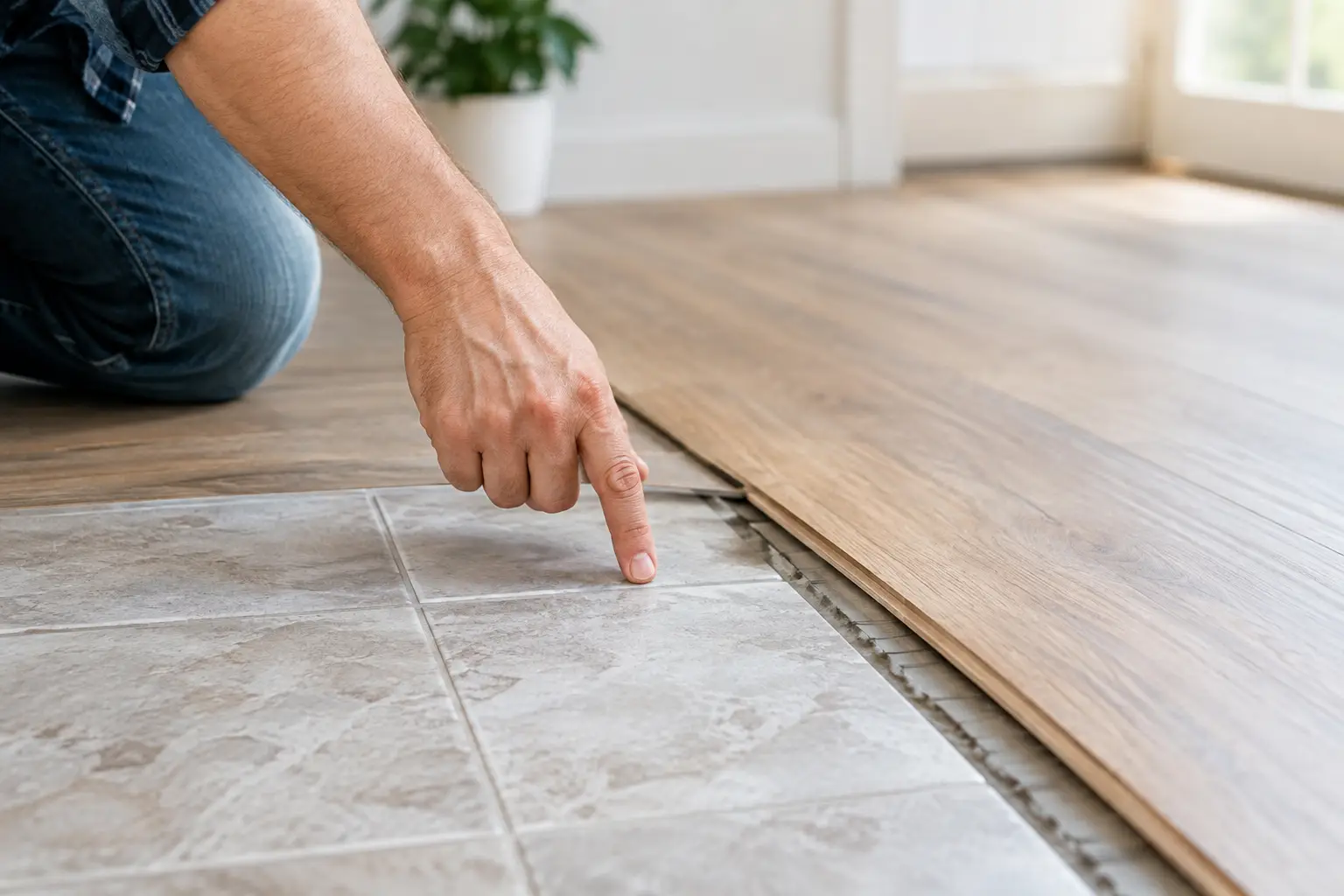
A proper inspection is more useful than a quick visual check. Tiles may appear intact but have poor bonding below the surface. Walking across the area can reveal movement, while tapping tiles may expose hollow sections. Cracks can indicate local impact damage, but they may also point to movement in the substrate beneath.
Height is the other major issue. Adding flooring over tiles raises the finished floor level. That can create problems at doorways, sliding doors, stairs, kitchen kickboards, toilets, cabinetry and transitions into adjoining rooms. In apartments and commercial spaces, thresholds and fire doors may have limited clearance. A few extra millimetres can turn a simple flooring job into extra carpentry, trimming and adjustment work.
Moisture should not be ignored. A tiled floor can conceal moisture coming through a concrete slab, particularly in ground-level rooms, laundries, bathrooms or older properties. The new flooring system needs to suit the conditions. Installing over an unresolved moisture issue risks adhesive failure, mould growth and damaged boards or finishes.
Finally, consider what the tiles are fixed to. Tiles on a sound concrete slab are different from tiles over old timber, fibre-cement sheeting or a damaged screed. The surface below the tiles ultimately determines whether the whole floor is stable.
When tile removal is the better option
Tile removal is usually the right call when the existing floor is loose, cracked, uneven, contaminated or sitting at a height that will compromise the renovation. It is also the safer option where you need access to the original slab for levelling, moisture treatment or a specified flooring system.
Removing the tiles gives the next trade a known starting point. That is valuable when installing polished concrete, epoxy, glued-down timber, commercial vinyl or large-format tiles, where substrate preparation directly affects the finished result.
It also avoids building layers on top of layers. In older homes, it is common to find tiles over previous tiles, thick bedding compounds or multiple adhesive layers. Each layer can add uncertainty. Stripping back to a clean, prepared slab allows defects to be identified and repaired rather than buried.
For bathroom renovations, removal is often necessary to address waterproofing, floor falls and drainage levels. Leaving tiles in place may be possible in a limited cosmetic update, but it is rarely appropriate if the shower area, waste position or waterproof membrane needs work.
The hidden work after tiles come up
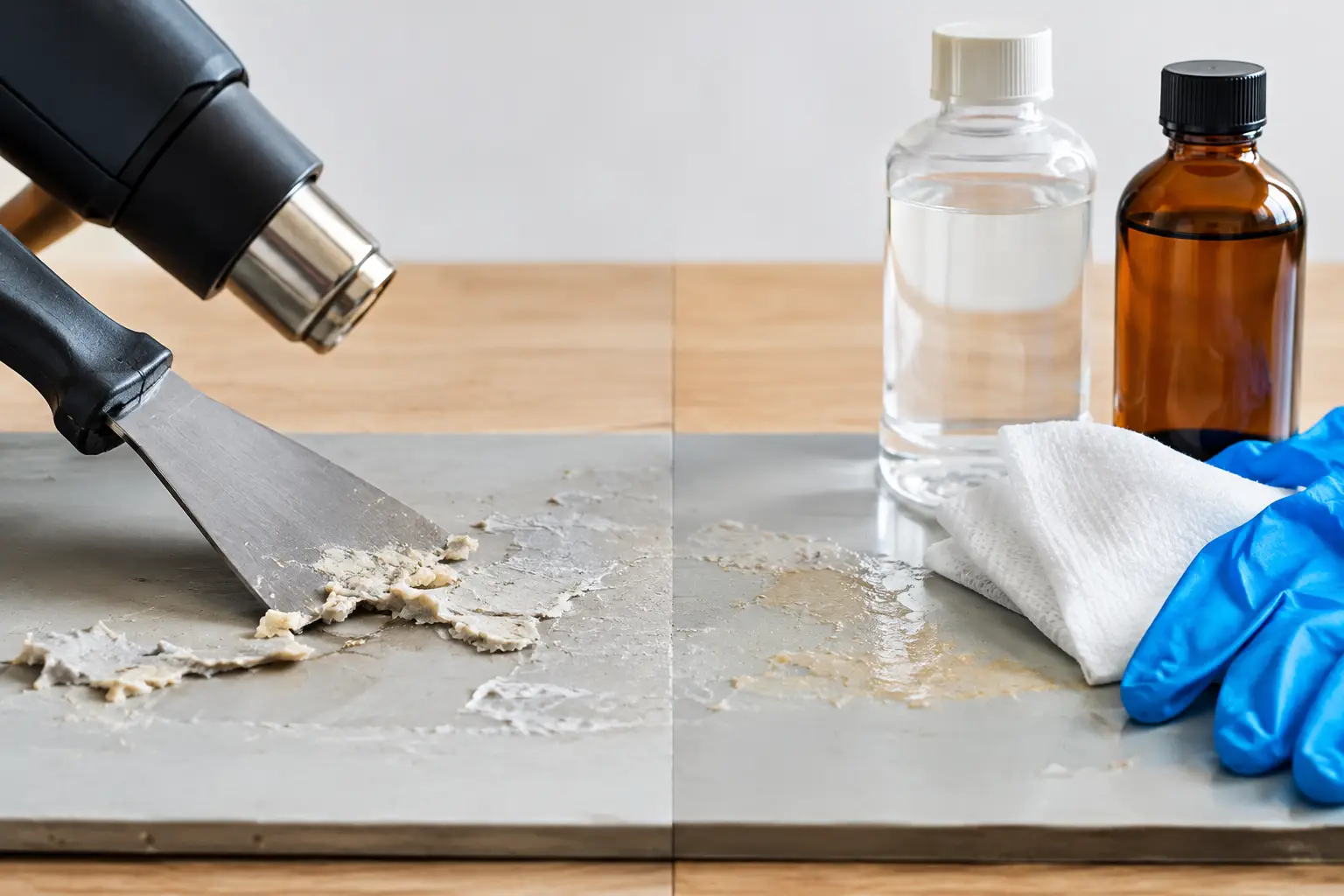
Tile removal is not just about breaking tiles and taking away the rubbish. Once tiles and bedding are lifted, the slab often needs further attention. Adhesive, mortar, levelling compound and high spots can remain bonded to the surface. These residues can interfere with new adhesives and make it difficult to achieve a flat finish.
Professional slab grinding removes stubborn material and opens up the surface where required. It is particularly useful after ceramic, porcelain, terracotta, slate and stone removal. The goal is not simply to make the floor look cleaner. It is to produce a stable, even substrate that is ready for the flooring installer.
Dust control matters during this stage. Tile removal and concrete grinding create fine dust that can travel through a property, affect neighbouring work areas and slow down a renovation if not managed properly. Contained equipment, orderly removal and a clean handover keep disruption down and help the following trades get moving sooner.
Different flooring types have different demands
There is no single answer to whether old tiles can stay because every flooring product works differently. Carpet can hide minor visual imperfections, but the floor below still needs to be dry, secure and reasonably flat. A suitable underlay may help with comfort, not with major level changes or loose tiles.
Hybrid and laminate flooring need a flat base and enough clearance around walls and fixed objects for expansion. They can be installed over stable tiles in many cases, provided grout joints and uneven sections are dealt with first.
Vinyl is less forgiving. Glued vinyl plank, sheet vinyl and commercial vinyl often require a very smooth prepared surface. Tile joints generally need to be filled or the tiles removed and the slab prepared before installation. Otherwise, the tile pattern can show through the finish.
Timber flooring depends on whether it is floating, glued or mechanically fixed. Glued systems require reliable adhesion and careful moisture management. New tile installations need the old surface to be mechanically prepared and assessed for total build-up, door clearances and transitions.
Do not make the decision based on speed alone
Keeping tiles can reduce demolition work, but it is not always the fastest route to a finished floor. Time saved at the start can be lost filling grout lines, correcting levels, modifying doors or repairing failures after installation. The best option is the one that gives the new flooring a stable base and avoids rework.
On the other hand, full removal is not automatically required for every renovation. If the tiles are sound, the levels work and the flooring manufacturer permits installation over tile, an overlay can be practical and durable. The decision should be based on the condition of the floor, the material going over it and the scope of the renovation.
Get the floor ready for the next trade
Before committing to an overlay or removal, inspect the floor with the intended finish in mind. Check for loose or hollow tiles, measure finished heights at every doorway, look for moisture concerns and confirm the flooring supplier’s preparation requirements. These checks are especially worthwhile before ordering materials or booking installers.
Where removal is needed, a specialist strip-out team can remove tiles, bedding and adhesive, grind the slab and leave the area ready for the next stage. Rapid Stripped handles difficult floor coverings and substrate preparation with the focus where it belongs: a clean, sound surface that will not hold up the renovation.
A good new floor starts below the surface. Whether the tiles stay or go, make the call based on what will give the next installation the best chance of lasting.