
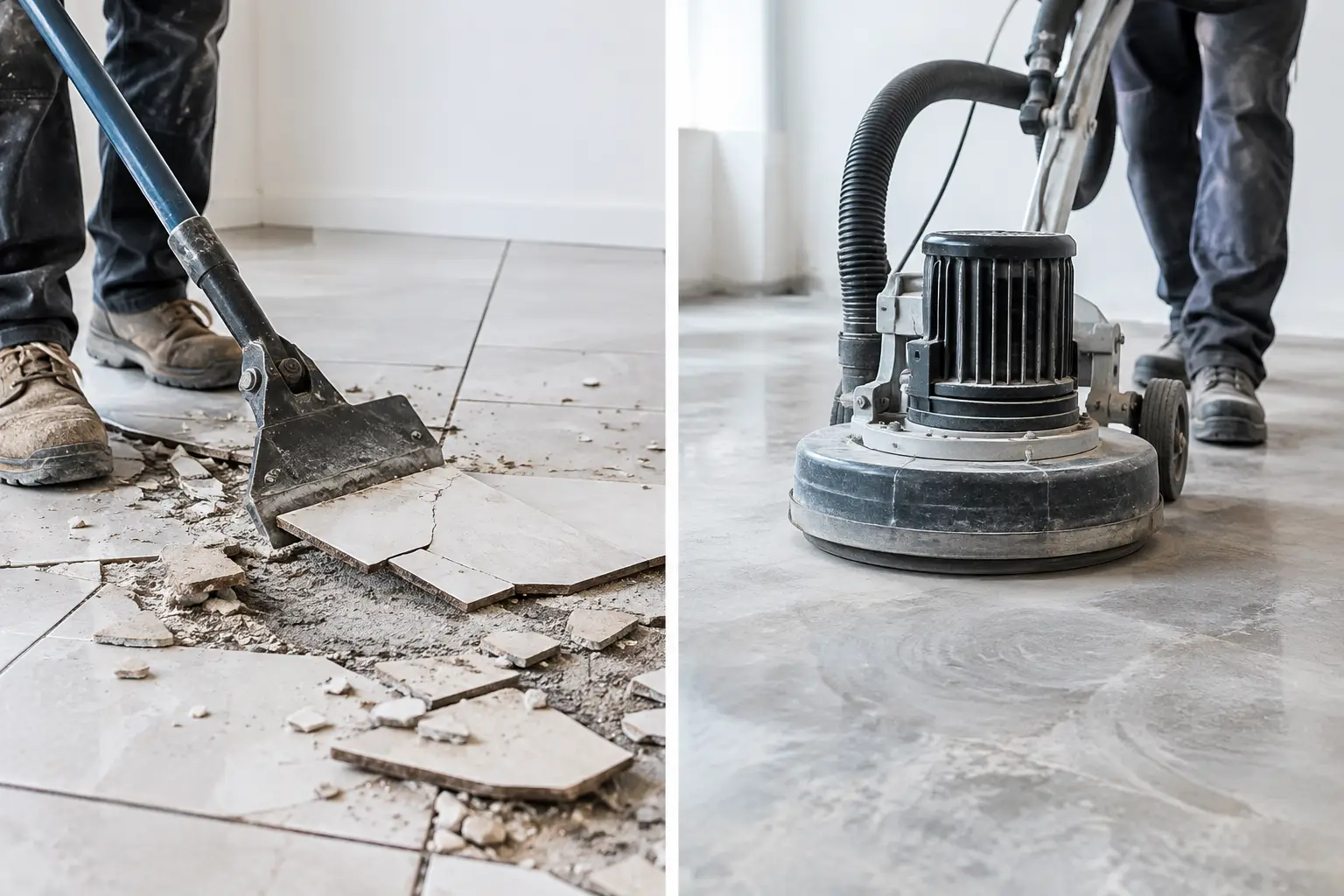
A floor can look clear after demolition and still be nowhere near ready for new finishes. That is where tile stripping vs slab grinding matters. Tile stripping removes the old covering and its bedding, while slab grinding corrects what is left behind on the concrete. They are connected services, but they solve different problems.
For homeowners, builders and property managers, knowing the difference helps prevent a common renovation setback: new flooring being scheduled onto a surface that is rough, contaminated, uneven or carrying old adhesive. The result can be delays, poor adhesion and extra work for the next trade.
Tile stripping vs slab grinding: different jobs
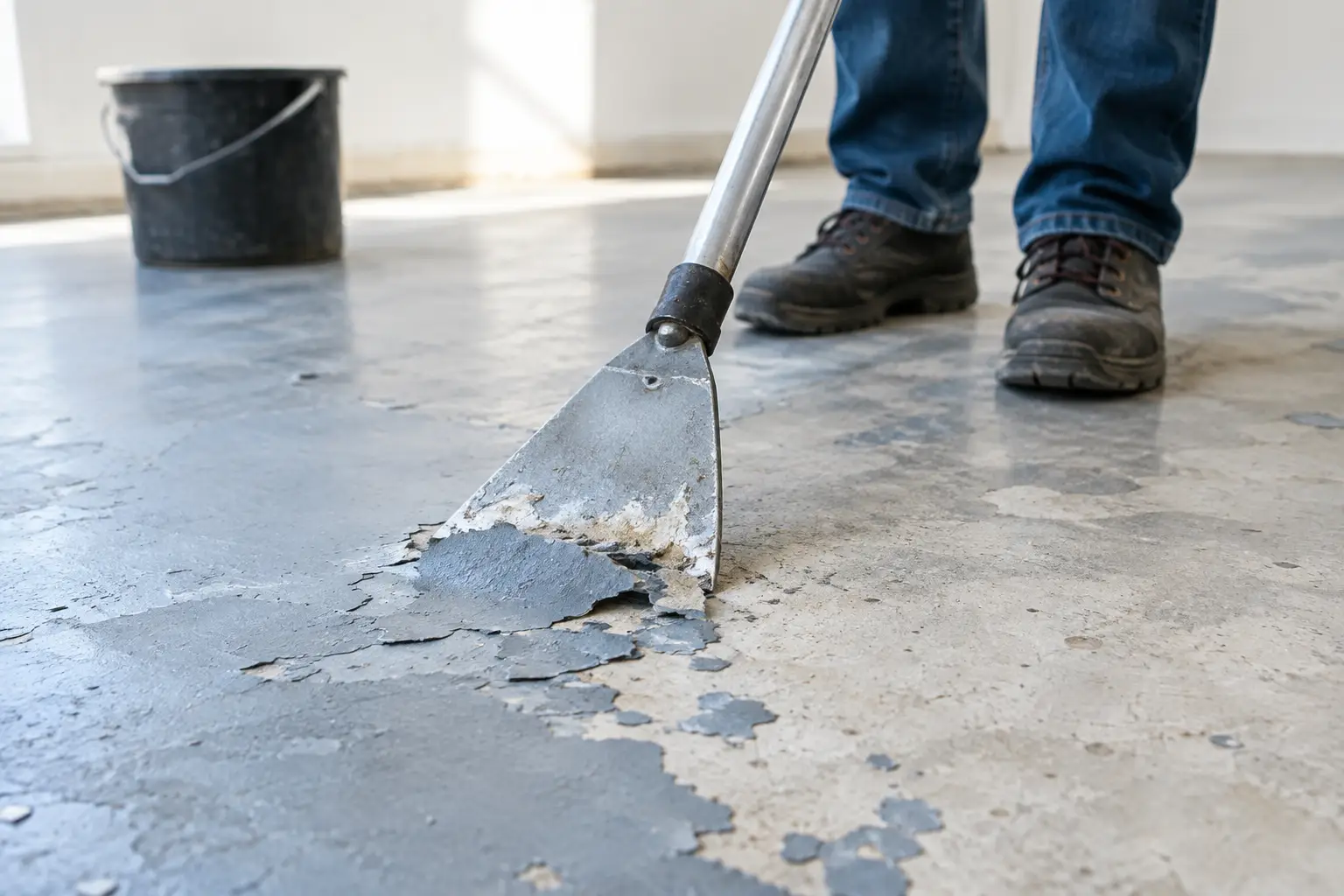
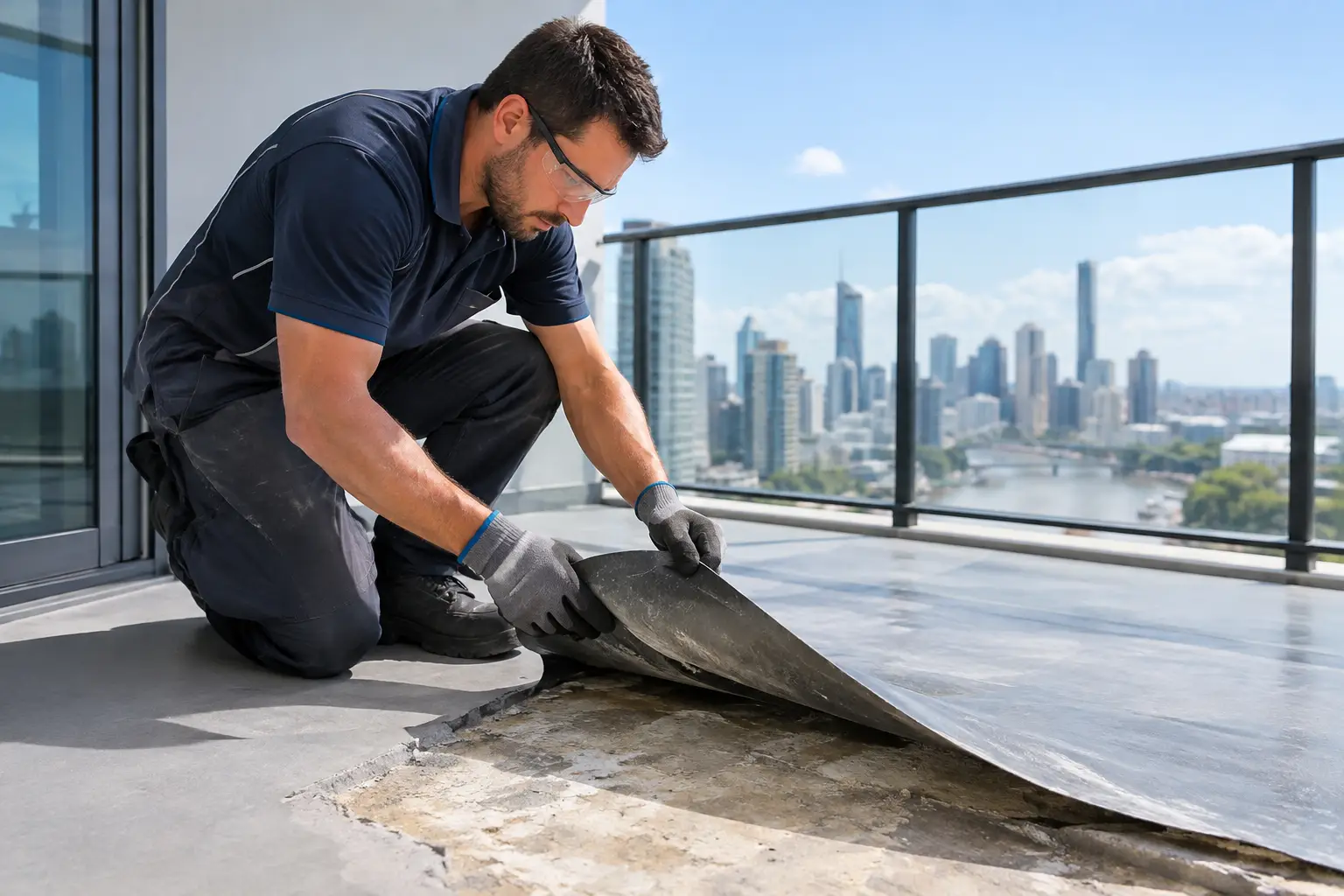
Tile stripping is the removal stage. It involves lifting ceramic, porcelain, terracotta, slate, marble or other tiles, then removing the adhesive, mortar bed or tile bedding that holds them to the slab. Depending on the age of the floor, this material can be thin and brittle or extremely hard, thick and stubborn.
The aim is to remove the existing floor covering efficiently and expose the substrate below. On a bathroom floor, this may also involve careful work around plumbing penetrations, floor wastes and waterproofing zones. In kitchens, entries and open-plan areas, the focus is often on clearing a larger footprint quickly so other renovation works can proceed.
Slab grinding comes after removal when the exposed concrete needs further preparation. A specialist grinder uses diamond tooling to shave down high spots, residual adhesive, thin mortar, paint, levelling compound or other bonded material. It can also open the concrete surface for a new coating, tile adhesive, vinyl system or floor preparation product.
Grinding is not simply a cleaner version of tile removal. It is a controlled surface-preparation process. The goal may be to create a flatter floor, remove contaminants, achieve the right surface profile or reduce the risk of telegraphing imperfections through a new finish.
When tile stripping is enough
Not every stripped floor needs full slab grinding. If tiles have lifted cleanly, the remaining adhesive is minimal and the concrete is sound and relatively flat, the floor may be ready for the next preparation step without extensive grinding.
This is more likely with newer installations, loosely bonded tiles or floors where the previous installer used a light adhesive bed. Even then, the slab should be checked properly rather than judged from a quick look at the doorway. Small ridges, lumps of adhesive and isolated high points can cause trouble once new flooring is installed.
Tile stripping may be the primary requirement when the next stage includes a thicker screed, a significant levelling system or construction work that will alter floor heights. The renovation plan matters. There is no value in grinding a surface to a fine finish if it is about to be built up with another approved system.
When slab grinding is required after tile removal
Slab grinding is usually needed when the tile bed has left a hard, uneven surface. This is common in older homes, commercial spaces and heavily trafficked areas where tiles were installed over a thick cement-based bedding layer. Removal equipment can break up the bulk of the material, but stubborn remnants and raised sections often remain firmly bonded to the slab.
Grinding is also the right response when the new floor has tight tolerances. Large-format tiles, hybrid flooring, vinyl planks, polished concrete systems and epoxy coatings all rely on proper substrate preparation. A high spot that seems minor can create lipping between tiles, gaps under floating flooring or visible flaws in a finished coating.
It is particularly useful where old adhesive has been spread broadly across the floor. Adhesive residue can interfere with bond strength, especially where the new product manufacturer requires a clean, mechanically prepared concrete surface. Covering it over without confirming compatibility is a risk that can come back as drummy tiles, lifting vinyl or coating failure.
The condition of the slab decides the scope
The correct approach is determined by what is under the old floor, not just the type of flooring being removed. Two rooms with the same porcelain tiles can require very different work.
A concrete slab may have cracks, old patch repairs, moisture issues, paint overspray, construction residue or previous levelling compounds. It may also be out of level because of the original build, settlement or alterations made over time. Grinding can remove high material, but it cannot fix every issue on its own. Low areas may still need a compatible levelling compound, while cracks may need assessment and repair before new finishes go down.
Floor height is another practical consideration. In a renovation, the new floor needs to meet door thresholds, cabinetry, stairs, bathroom transitions and adjoining rooms correctly. Removing tiles and grinding the slab can reduce the finished height, while adding levelling products or new tile bedding can build it back up. These decisions should be made before materials are ordered and installers are booked.
Why shortcuts create expensive problems
Trying to lay new flooring over old tile adhesive or rough bedding is tempting when the surface looks mostly clear. It is rarely a good trade-off. New products perform according to the condition of the substrate beneath them, not the speed of the installation above them.
An uneven base can leave voids beneath tiles, which increases the chance of cracking under load. Adhesive residue can affect the bond of new finishes. Sharp ridges can show through resilient flooring, while unprepared concrete can prevent coatings from adhering as intended.
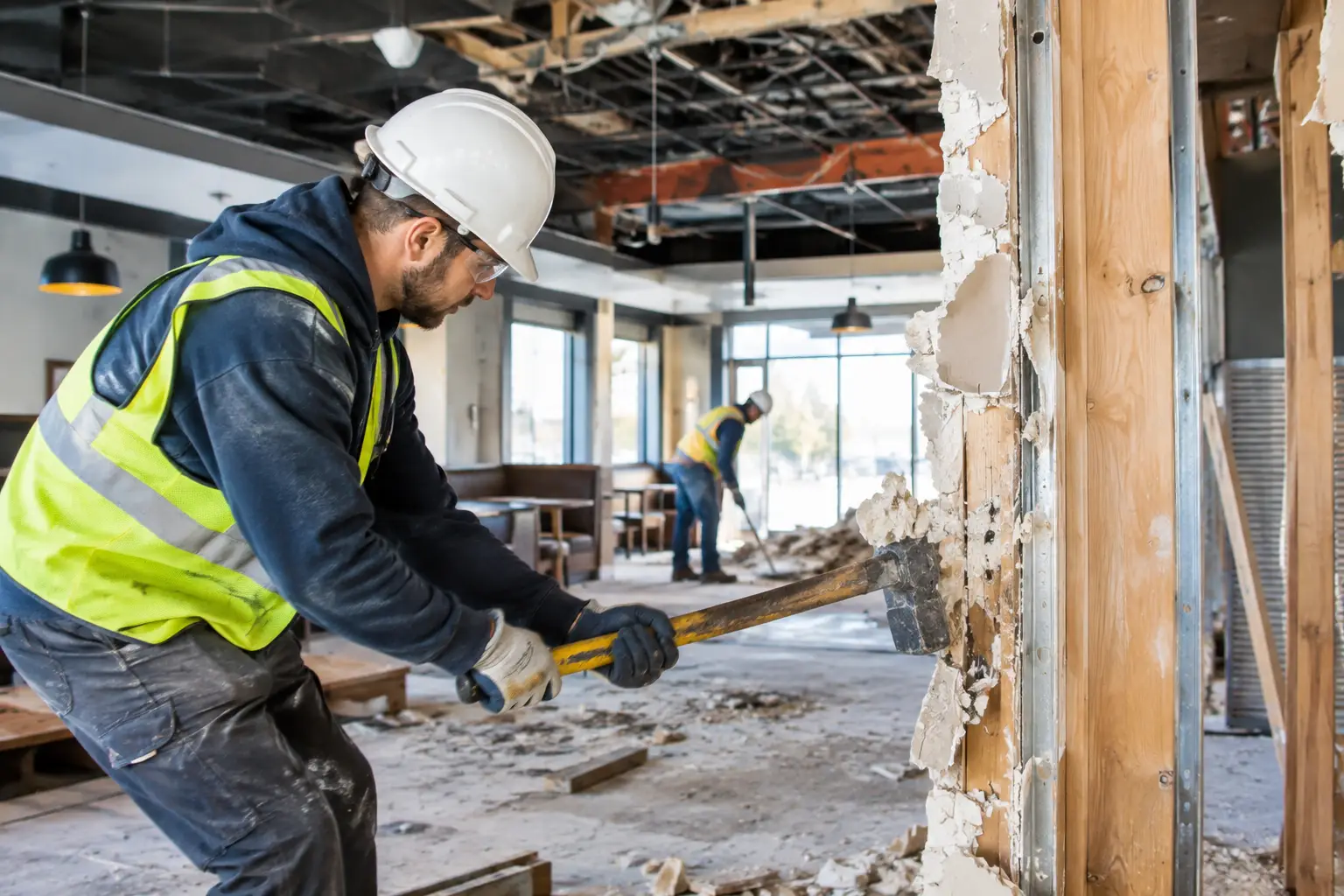
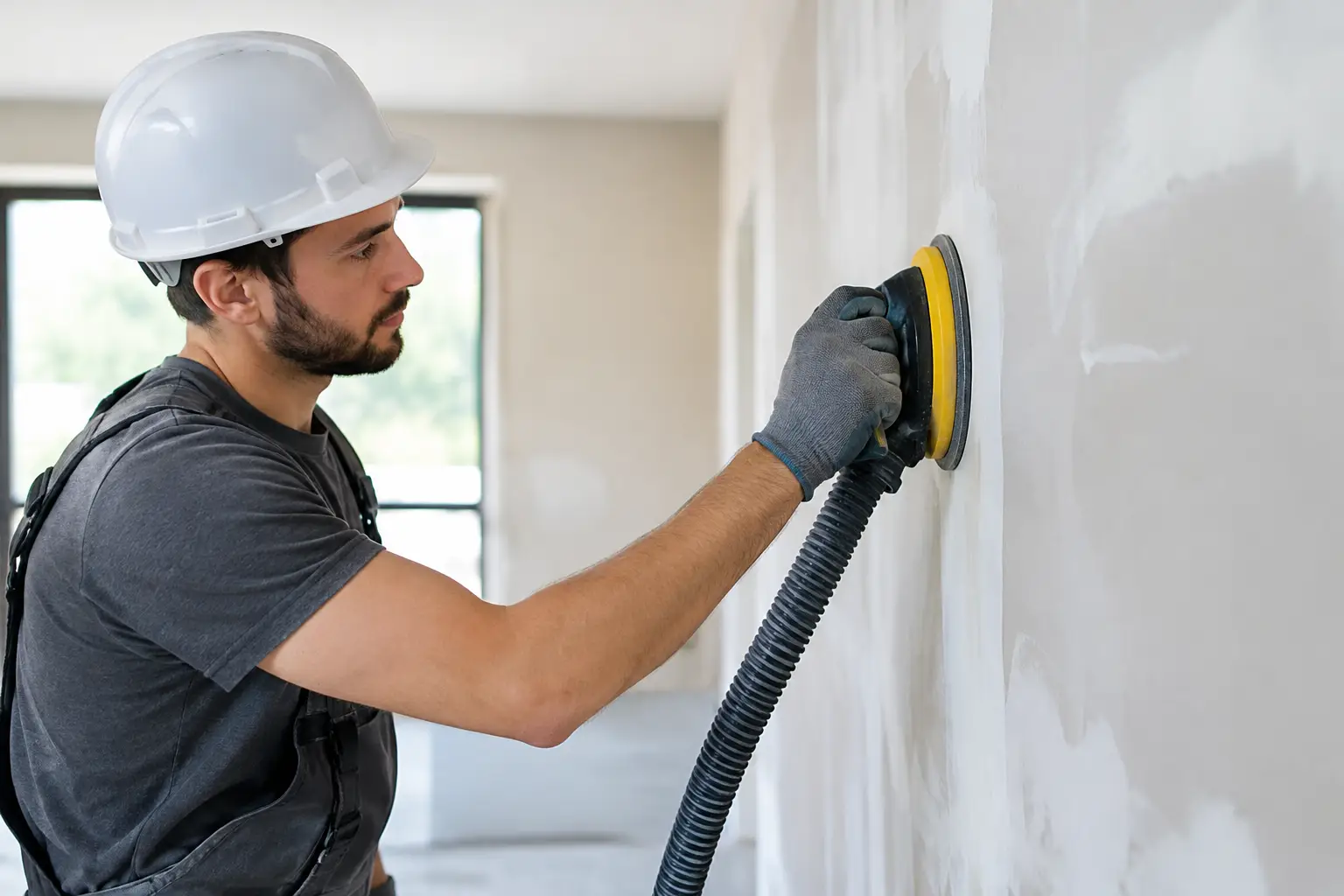
There is also a cleanliness issue. Breaking out tiles creates dust, rubble and loose material. Grinding produces fine concrete dust if it is not managed correctly. Professional removal and preparation should use suitable dust-control equipment, containment where needed and a systematic clean-down so the area is genuinely ready for the next trade.
For occupied homes, units, retail spaces and offices, this matters even more. A fast job is valuable, but only if it leaves behind a usable work area rather than a new clean-up problem.
Equipment and technique make the difference
Tile stripping generally requires mechanical tile lifters, demolition tools and scraper attachments selected for the floor type and access conditions. The objective is to lift material efficiently while avoiding unnecessary damage to the concrete slab and surrounding areas.
Slab grinding requires purpose-built grinding machinery and diamond tooling matched to the material being removed. A light adhesive film, hard tile glue, cementitious mortar and old epoxy do not respond the same way. Using the wrong tooling can be slow, aggressive on the slab or ineffective.
Edges, doorways, corners and areas around fixtures need separate attention because larger machines cannot reach every section. This is where detail work matters. A floor is not properly prepared if the centre is clean but adhesive and high spots remain around the perimeter.
At Rapid Stripped, the focus is on completing removal and preparation work with the equipment, dust control and site discipline needed to keep the next stage moving. For many renovation projects across Northern NSW, the Gold Coast, Brisbane and the Sunshine Coast, that means planning tile removal and slab preparation as one coordinated scope rather than two disconnected jobs.
Plan for the flooring that comes next
The best time to decide on grinding is before tile stripping begins. Let the removal team know what will be installed next and whether a flooring installer has specified a surface-preparation requirement. This gives everyone a clear target.
For replacement tiles, the slab generally needs to be clean, stable and sufficiently flat for the selected tile size. For vinyl or hybrid flooring, smoothness is often more critical because small imperfections can become visible through the finish. For epoxy and other coatings, the concrete normally needs a mechanically prepared profile with contaminants removed. Polished concrete has its own requirements again, with the final appearance depending on the existing slab, aggregate exposure, repairs and grinding sequence.
If the existing floor includes unknown adhesives, sheet flooring remnants or other older materials, do not assume they can simply be ground away. Suitable assessment should come first, particularly where potentially hazardous materials may be present. Safe preparation begins with knowing what is on the slab.
A floor ready for the next trade
The right question is not whether tile stripping or slab grinding is better. It is whether the slab will be ready for the flooring system, coating or renovation work planned next. Sometimes that means stripping only. More often, it means targeted grinding after removal to deal with adhesive, bedding and high spots.
Before booking new flooring, inspect the exposed slab with the end result in mind. A clean, flat and properly prepared base gives every trade after it a better start – and gives the finished floor the best chance of performing as it should.