
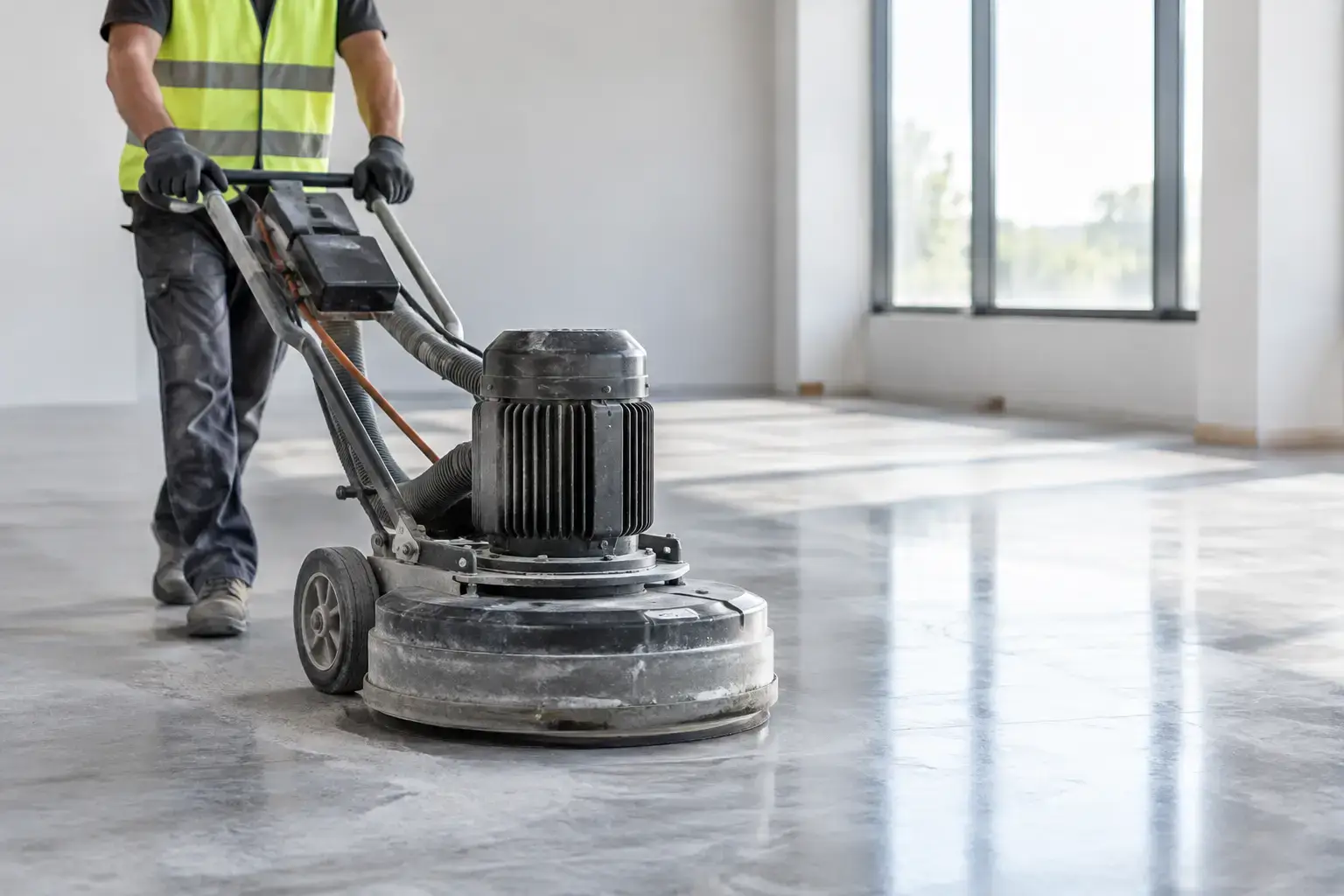
A floor can look stripped and still be nowhere near ready for the next trade. Old tile bedding, carpet glue, epoxy residue, paint overspray and high spots can leave a concrete slab rough, uneven and difficult to work with. Slab grinding is the step that removes those surface problems and leaves a cleaner, more consistent base for flooring, waterproofing, levelling or renovation work.
For homeowners, builders and commercial property managers, it is often the difference between a smooth installation and a job that loses time fixing avoidable defects. The goal is not to grind concrete for the sake of it. The goal is to prepare the slab properly, without damaging the substrate or spreading dust through the property.
What slab grinding actually does
Slab grinding uses purpose-built floor grinding equipment with diamond tooling to cut back the top layer of concrete. Depending on the job, the process can remove remaining adhesive, thin tile bedding, surface coatings, uneven patches and minor slab imperfections.
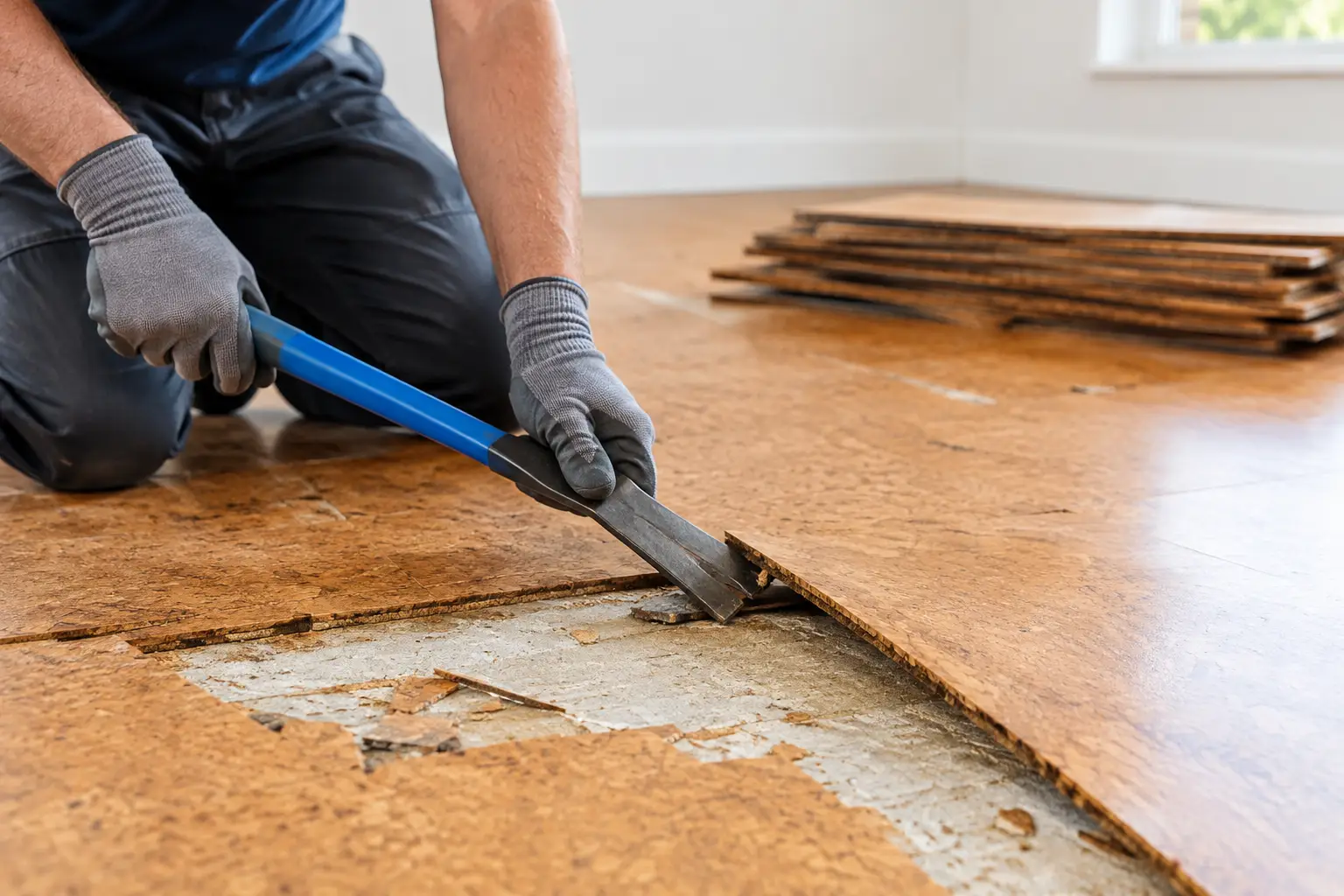
It is commonly required after tiles, vinyl, timber, carpet, cork, epoxy or other coverings have been removed. Even when the old flooring comes up cleanly, there is often residue underneath that will interfere with the next product being installed. Flooring adhesives and levelling compounds need a sound, clean surface to bond to. Waterproofing needs a stable substrate. New tiles need a floor that is reasonably flat before the tiler starts building up adhesive to compensate.
Grinding can also improve the feel and appearance of exposed concrete where that is the intended finish. That is a different standard of work to basic renovation preparation, however. A polished or decorative concrete finish may require multiple grinding stages, repairs, densifiers and sealers. For most strip-out jobs, the practical objective is a clean, fit-for-purpose slab ready for the next stage.
When a concrete slab needs grinding
The need for slab grinding is usually obvious once the floor covering is removed, but not always. A bare-looking slab may still have contaminants or variations that cause problems later.
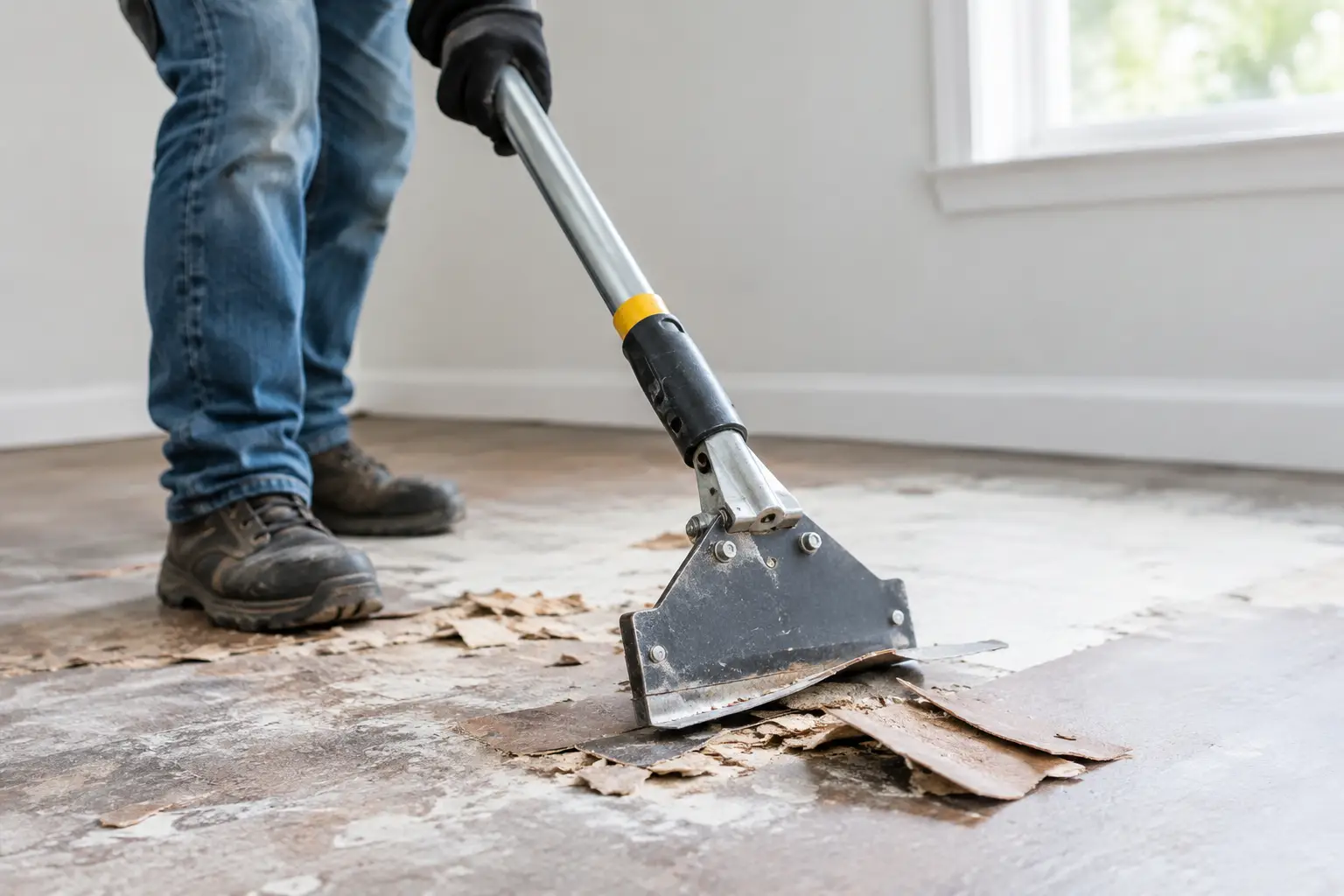
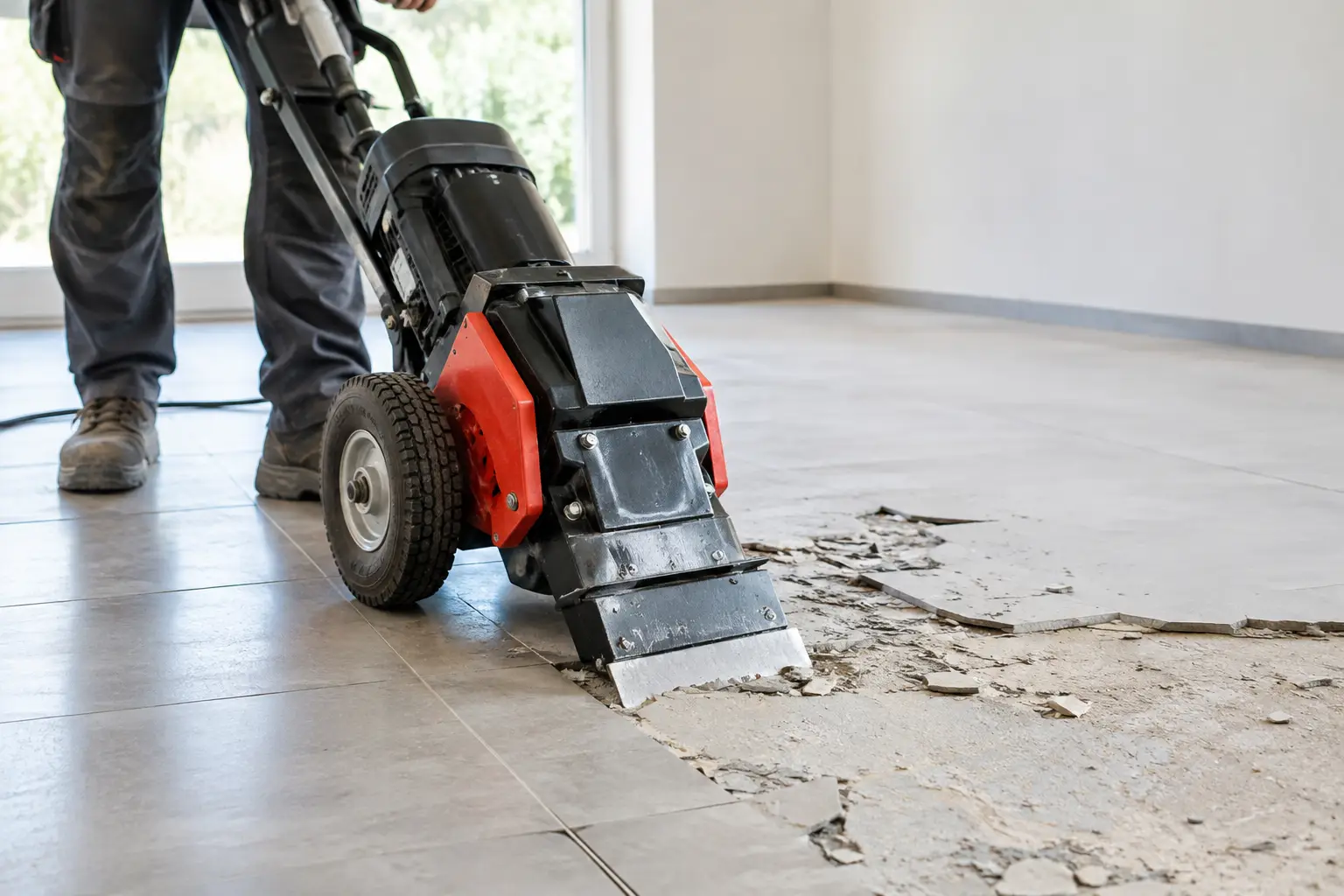
Tile removal is a common example. Lifting tiles can leave hard bedding adhesive bonded to the concrete. If this is left proud of the slab, it can affect floor levels and make new tiles difficult to set out properly. Grinding cuts back the remaining material so the new finish is not fighting the old one.
Carpet and vinyl removal create a different issue. The backing, tackifier or black adhesive beneath the covering can be stubborn and uneven. Some residue may scrape away, while other areas need mechanical grinding to achieve a consistent result. With timber floors, old glue and patching compounds are often the problem.
Grinding may also be needed where a previous renovation has left paint, epoxy, levelling compound or adhesive in isolated sections. Localised repairs can be effective, but only if the surrounding slab is assessed as well. Chasing a few high spots without checking the wider floor can create more work for the installer down the line.
Signs the slab is not ready yet
A floor preparation specialist will look for loose material, adhesive ridges, visible high spots, hollow or damaged areas, coating residue and inconsistent surface texture. They will also consider what is going over the slab next.
For example, a concrete surface that is suitable for carpet may not be suitable for glued vinyl planks. A minor ridge that will disappear under a thick underlay can telegraph through a thin floor finish. The right level of grinding depends on the final flooring system, not just how the slab looks on the day.
Grinding is not the same as levelling
This distinction matters. Slab grinding removes material from high areas and cleans the surface. Floor levelling generally adds material to low areas using a compatible compound. One process cannot always replace the other.
If a slab has isolated adhesive ridges or a raised patch after tile removal, grinding is often the sensible answer. If the entire floor falls away or has broad low sections, grinding alone will not make it level without removing an excessive amount of concrete. In that case, the floor may need grinding first, followed by a levelling product applied by the appropriate trade.
There are also limits to what should be ground. Deep cracks, structural movement, severe moisture issues and major slab failures require assessment before any surface preparation starts. A grinder is a precise tool, but it is not a fix for every concrete problem.
The right equipment keeps the job controlled
Small hand grinders have their place around edges, doorways, stair landings and tight bathroom areas. For open rooms, units, retail spaces and larger commercial floors, walk-behind grinding machines are generally more efficient and deliver a more even result.
The tooling selected matters as much as the machine. Hard adhesive, cement-based tile bedding, epoxy and soft coating residues all respond differently. Using the wrong diamond tooling can slow the work, wear equipment unnecessarily or leave the surface more aggressive than required. Experienced operators adjust the approach as the material and slab condition demand.
Edges need particular attention. Large machines cannot reach right to every wall, corner or penetration, so perimeter work is completed with suitable edge equipment. Skipping this detail leaves a visible strip of residue around the room and creates problems when skirting, cabinetry or new floor finishes are installed.
Dust control is part of proper slab grinding
Concrete grinding produces fine silica-containing dust. It does not belong throughout a home, shop, office or neighbouring tenancy. Proper dust control is not an optional extra or a quick clean-up at the end of the day. It is built into how the work should be carried out.
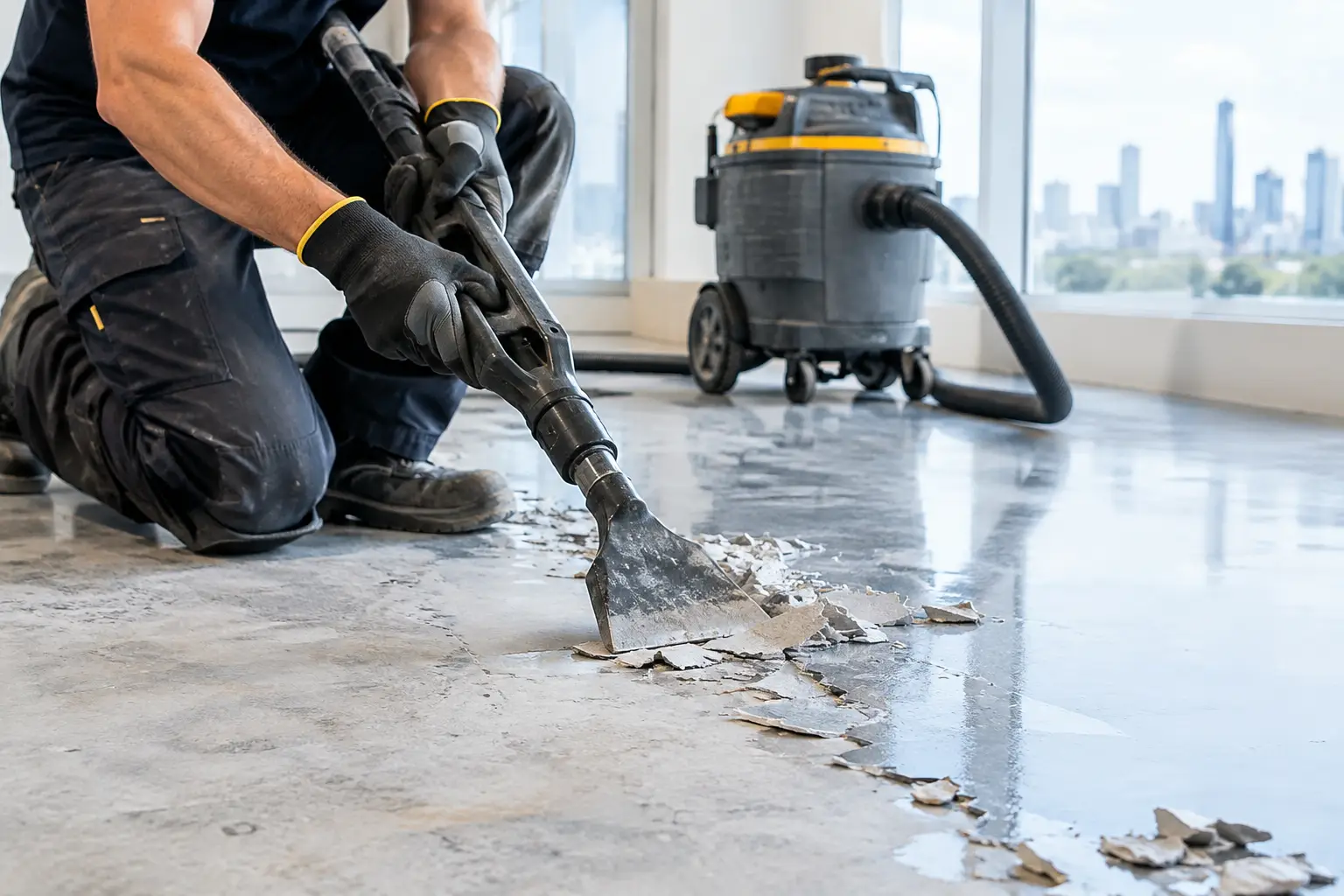
Professional grinding equipment is connected to industrial dust extraction systems designed to capture dust at the source. Work areas may also need to be isolated, entry points managed and nearby surfaces protected, particularly in occupied homes and operating commercial sites.
No grinding job is completely mess-free. Removal and preparation work are physical trades, and some clean-up is always necessary. But there is a major difference between controlled work with effective extraction and a site left coated in concrete dust. Good preparation protects the property, helps keep adjoining areas usable and reduces disruption for everyone on site.
What happens before the grinder starts
The best results begin with an honest inspection of the floor. Before grinding, the area should be cleared of loose rubbish, protruding fixings, remaining flooring and anything that could damage equipment. The team needs to identify transition points, floor penetrations, thresholds, drains and areas where the concrete may be weak or previously repaired.
It is also worth confirming the next trade’s requirements. A tiler, floor layer, waterproofing contractor or builder may have specific expectations around flatness, adhesive removal or surface profile. Knowing that before work starts prevents the common problem of preparing a slab to one standard, then finding the next product requires another.
At Rapid Stripped, the focus is on getting the substrate ready for the real job ahead, not simply making it look cleaner. That means matching the grinding scope to the existing floor condition and the finish that is being installed next.
Slab grinding after floor removal
Floor removal and slab grinding often belong in the same scope because the condition underneath cannot be judged properly until the old covering is gone. Removing tiles without addressing the bedding can leave the site half finished. Pulling up carpet but leaving heavy glue can shift the problem to the floor installer. Stripping epoxy without preparing the concrete may compromise the replacement coating.
Combining removal, rubbish clearing and surface preparation also reduces handovers between trades. It gives the builder or homeowner one clear point of responsibility for getting the floor from outdated covering to usable substrate. On many projects, that work can be completed quickly with the right machines, access and preparation, although larger areas, difficult adhesives and restricted working conditions can extend the timeframe.
For occupied properties, access and timing can be just as important as the grinding itself. Units, offices, hospitality venues and retail sites may need work staged around other trades, residents or trading hours. A disciplined crew plans for access, dust containment, waste removal and a clean handover rather than treating those details as an afterthought.
A ready slab saves time later
The cheapest-looking approach is not always the fastest route to a finished renovation. Leaving adhesive ridges, weak patches or uneven bedding for the next trade can lead to extra products, delayed installation and arguments about who owns the problem.
A properly ground slab gives the next contractor a fair starting point. It improves bonding conditions, makes floor levels easier to manage and helps new finishes sit as intended. Most importantly, it allows the renovation to move forward instead of stopping at the point where the old floor was removed.
Before booking your next flooring trade, inspect the concrete underfoot. If it is uneven, contaminated or still carrying the evidence of the old finish, slab grinding is the practical step that gets the site ready to build on.