
A new kitchen, bathroom or commercial fit-out can only perform as well as the surface beneath it. It is common to focus on the new tiles, hybrid boards or epoxy finish, then discover late in the project that the old floor is loose, contaminated, uneven or impossible to bond to properly. These five signs floor removal is needed can help you make the call before a flooring issue turns into a renovation delay.
Why removing the old floor can be the right call
Not every existing floor needs to come out. A sound, dry and level surface may be suitable for preparation and a new finish, depending on the material being installed and the manufacturer’s requirements. In other cases, covering a problem floor simply hides it until the new installation starts to crack, lift or fail.
Floor removal is about more than getting rid of an outdated look. It gives the next trade a clean, stable substrate to work from. That may mean removing ceramic tiles and bedding, lifting vinyl and adhesive, pulling up timber, grinding a slab, or stripping multiple layers built up over decades. The correct approach depends on what is there, what sits underneath it and what will be installed next.
Five signs floor removal is needed
1. Tiles are loose, cracked or sound hollow
A cracked tile is sometimes just a single impact point. But a growing number of cracks, rocking tiles, missing grout or hollow sounds when tiles are tapped can indicate a broader bond failure. The issue may be poor original adhesion, movement in the substrate, moisture, ageing adhesive or inadequate preparation when the floor was first laid.
Laying new flooring over loose tiles is rarely a reliable fix. The movement below can transfer through to the new surface, particularly with rigid tiles, stone and other hard finishes. Even if an overlay is technically possible, the floor height, door clearances, cabinetry and transitions into adjoining rooms all need to be considered.
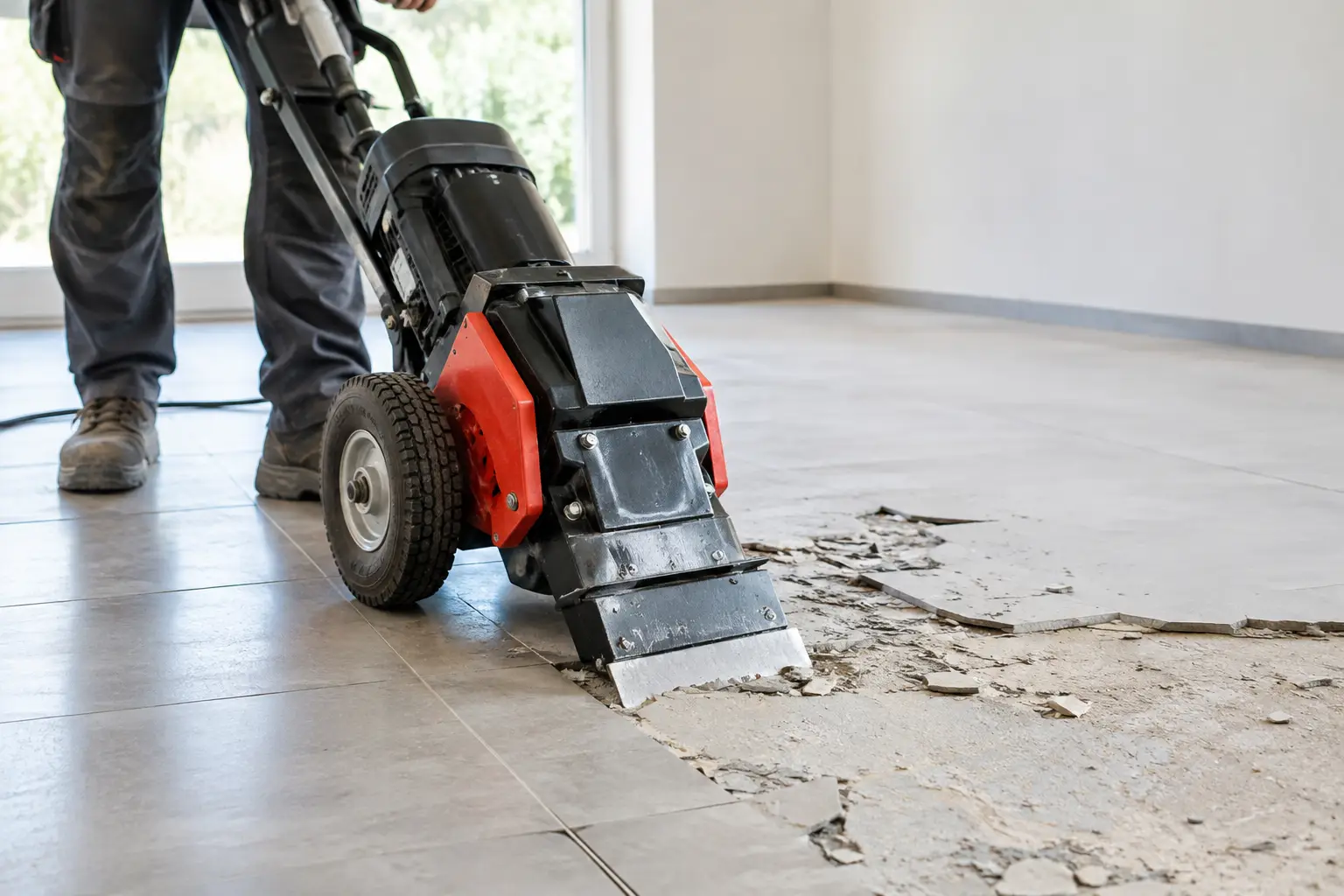
Where tiles are failing across an area, complete removal back to the slab or subfloor is generally the dependable option. The old bedding and adhesive then need to be assessed and mechanically removed or ground where required, rather than left as an uneven base for the next stage.
2. There is moisture damage, mould or a musty smell
Water leaves clues. Darkened timber, swollen boards, lifting vinyl, stained grout, bubbling coatings and a persistent musty smell should not be treated as cosmetic defects. They can point to water entering from a leaking bathroom, failed waterproofing, plumbing issue, poor drainage or moisture rising through the slab.
Removing the affected floor may be necessary to find the full extent of the problem and allow the structure to dry properly. Installing a new floor too early can trap moisture beneath it, leading to mould, adhesive failure, buckling or staining. In bathrooms, laundries, kitchens and ground-level commercial spaces, this step is especially important.
The source of moisture must be fixed before reinstatement. Floor removal resolves access and exposes the substrate, but it does not replace waterproofing repairs, plumbing work or moisture testing. A good renovation sequence deals with the cause first, then prepares the floor for the new system.
3. Adhesive residue is thick, uneven or breaking down
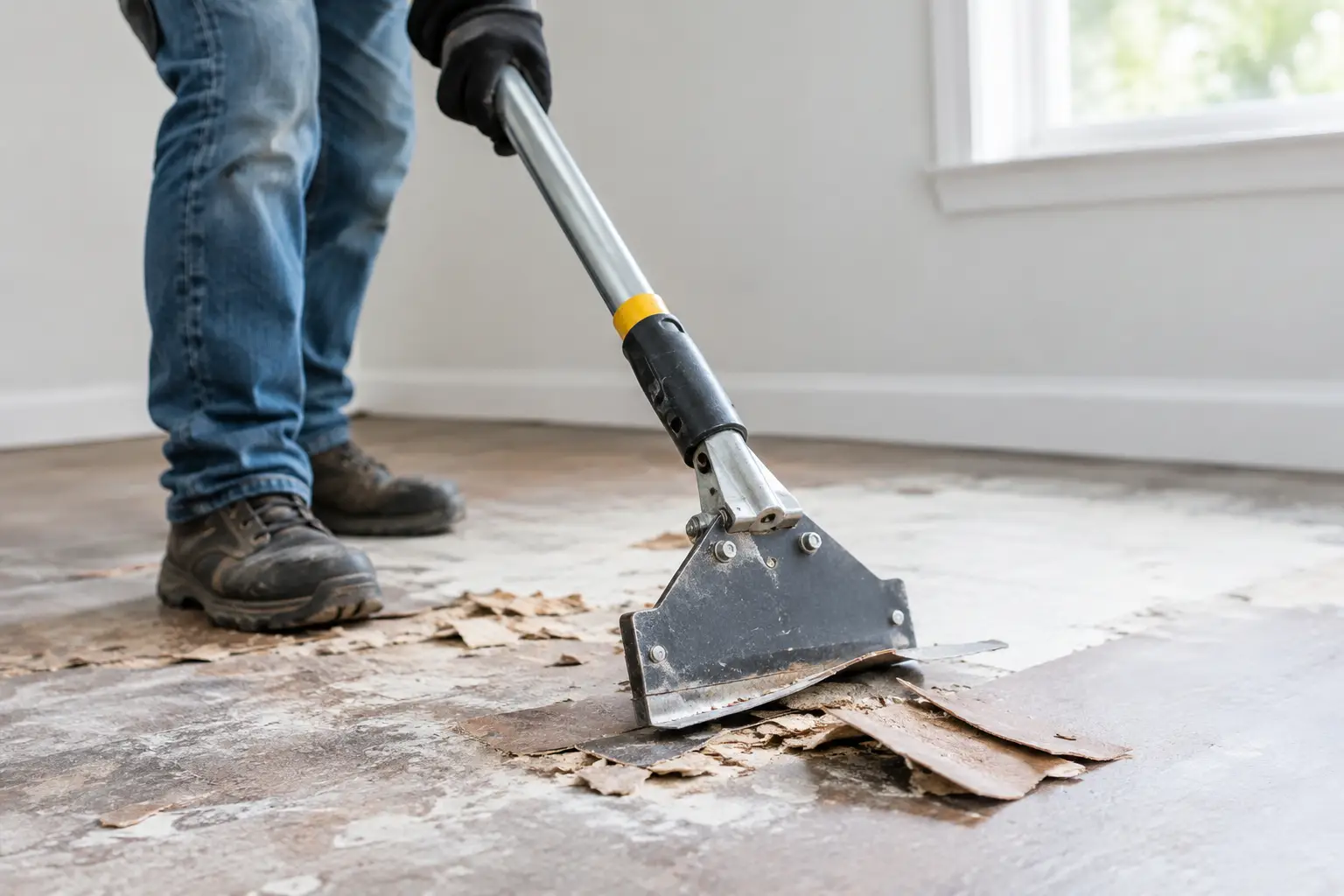
Old vinyl, carpet, cork and timber floors often leave behind adhesive that looks manageable until new flooring is being installed. Black cutback residue, brittle yellow glue, thick mastic and patchy layers of levelling compound can all interfere with adhesion and create an uneven finish.
Some adhesives soften with heat, react with moisture or fail under modern flooring products. Others are simply too thick to provide a flat, stable surface. A quick scrape may remove the visible material while leaving high spots, contaminated areas and embedded glue behind.
Professional stripping and slab grinding are often required to bring the surface back to a condition suitable for the next trade. This is particularly relevant when installing glued-down vinyl, engineered timber, epoxy coatings or large-format tiles, where small imperfections can affect bond strength and final appearance.
If the building is older and the material is unknown, do not start grinding or breaking it up blindly. Some older flooring products, adhesives and backing materials may require specialist assessment before disturbance. Safety comes before speed.
4. The floor is uneven or the new layout needs a lower level
A floor can appear flat until cabinetry, doors or large-format tiles expose the problem. High spots in a concrete slab, old tile bedding, uneven timber boards and previous patch repairs can make it difficult to achieve a clean finish. You may notice furniture rocking, visible lipping between tiles, doors dragging or inconsistent floor levels from room to room.
Removal is often needed where the existing build-up has pushed the finished floor too high. This happens regularly when several layers have been installed over time, such as vinyl over tiles or carpet over old sheet flooring. Adding another layer can create awkward transitions, reduce clearance under doors and cause issues around kickboards, toilets and appliances.
Once the old materials are removed, the substrate can be checked properly. It may only need targeted grinding and patching, or it may need more extensive levelling work. Either way, starting from a clean base gives the installer control over the finished height and makes the renovation easier to coordinate.
5. Your renovation scope has changed
Sometimes the existing floor is not visibly failing, but it no longer suits the work planned. Moving walls, changing a bathroom layout, replacing a kitchen, converting an office or preparing a retail tenancy can expose flooring that needs to be removed for access, services or a consistent finish.
For example, old tiles may continue beneath removed cabinets, walls or fixtures. Trying to patch around those areas can leave mismatched levels and weak joins. In a commercial space, different floor coverings from previous tenancies may conceal layers of adhesive, damaged slab sections or old fixings that need to be cleared before the new fit-out begins.
A full removal can also be the practical choice when time matters. Chasing small repairs across a mixed or heavily patched floor can take longer than removing it cleanly and preparing the substrate once. The trade-off is more upfront demolition work, but the benefit is a predictable base for every contractor who follows.
What proper floor removal should achieve
The aim is not simply to leave an empty room. A properly completed removal job should leave the site safe, clear and ready for the next agreed stage of work. That means selecting equipment that suits the material, containing dust as far as practical, removing rubbish, and addressing adhesive or bedding residue where the project requires it.
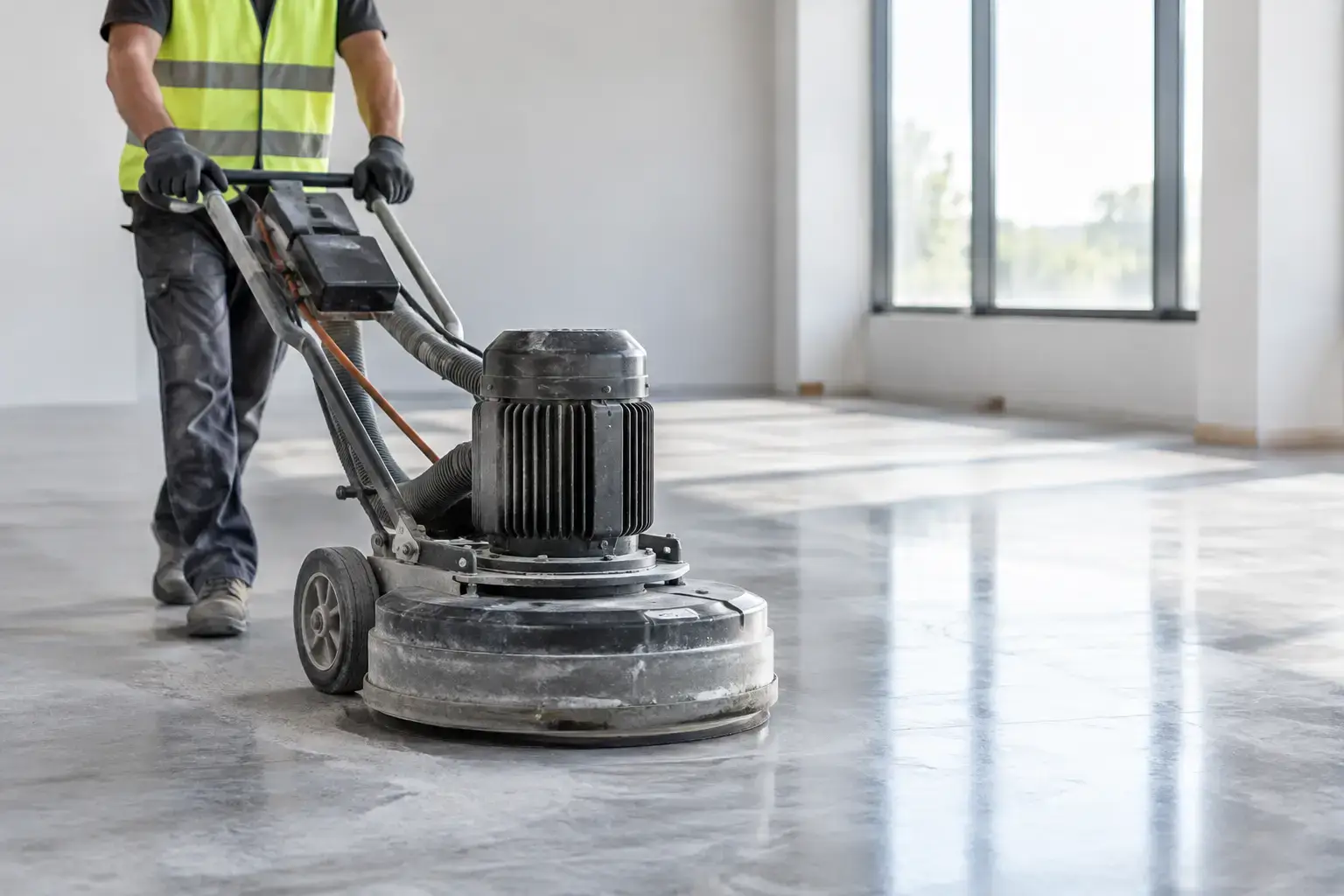
Hard coverings need different methods. Tile and terracotta removal can involve heavy-duty breakers and floor scrapers. Timber may need controlled lifting to protect the subfloor. Vinyl and carpet adhesives often require stripping and mechanical grinding. Epoxy and coatings can require specialised grinding equipment to expose a clean concrete surface without unnecessary damage to the slab.
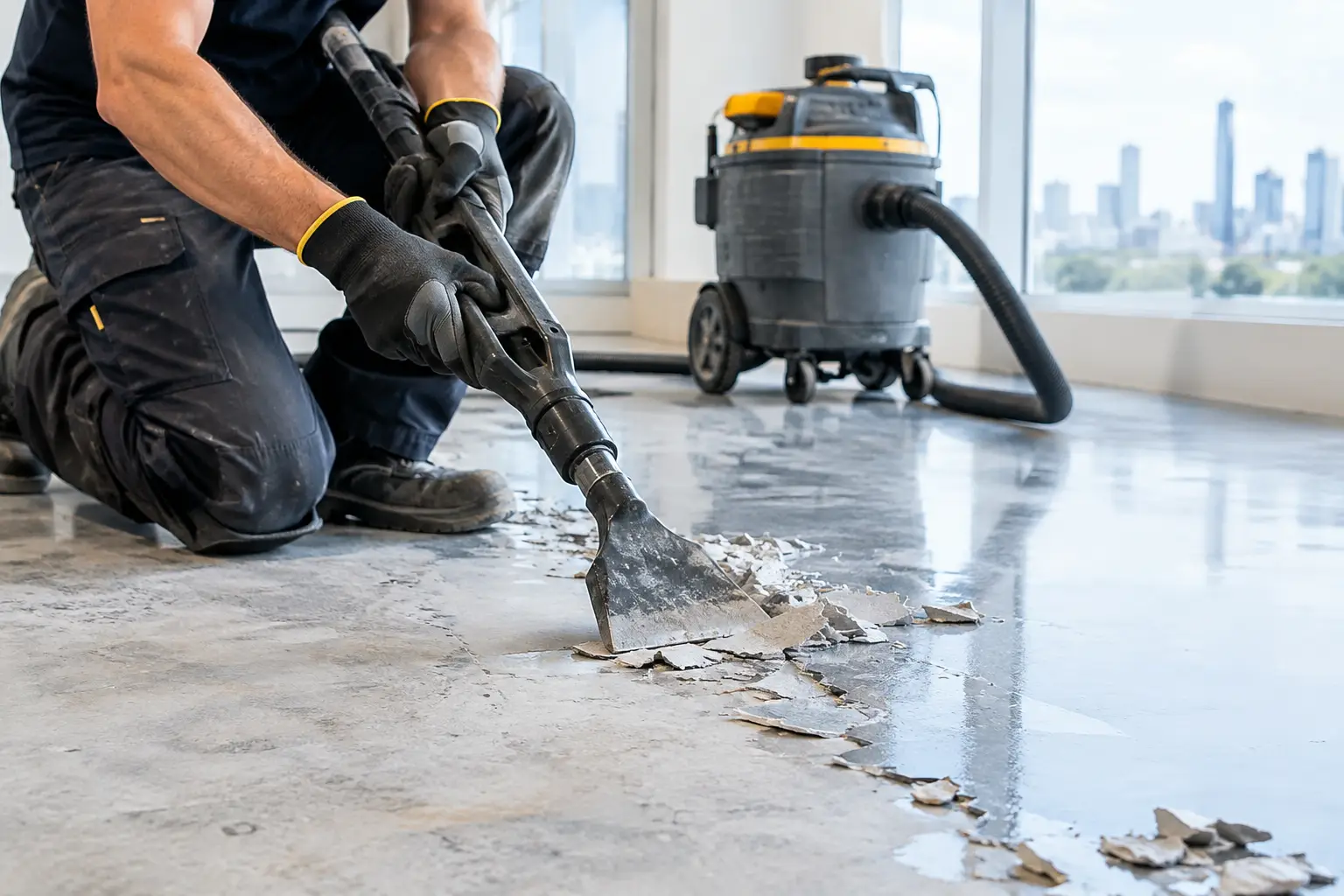
Dust control is a major part of the job, particularly in occupied homes, units, offices and retail sites. No removal work is completely dust-free, but equipment with suitable extraction, contained work areas and a disciplined clean-up process can significantly reduce the mess that reaches adjoining spaces. In occupied properties, access, noise and timing should also be planned around the people using the site.
Before work begins, confirm what needs to be removed and what needs to stay. This includes cabinetry, skirting, fixtures, thresholds, electrical services and nearby finishes. Clear instructions avoid accidental damage and help the removal team work efficiently. If the floor will be covered by a particular product, ask the installer what substrate standard they require. A slab prepared for carpet may not be suitable for a polished concrete finish or glued timber without further work.
Make the call before the new floor arrives
The best time to identify a failing floor is before materials are ordered, installers are booked and cabinets are fitted. Check for movement, moisture, residue, uneven levels and changes to the renovation layout early. A site inspection can then determine whether targeted removal, full stripping or slab preparation is the sensible path.
For homeowners and project managers across Northern NSW, the Gold Coast, Brisbane and the Sunshine Coast, Rapid Stripped handles difficult floor coverings and preparation work with the focus where it belongs: a clean site, a sound base and the next stage ready to move. Removing the problem properly now gives your new floor the start it needs to last.