
If you have ever started lifting old tiles and realised the grout is harder to remove than the tile itself, you already know the problem. A tile grout removal machine can speed the job up, but only when it matches the tile, the bedding, the substrate and the finish you need at the end.
That matters more than most people expect. Grout removal is not just about cutting out lines between tiles. On renovation and strip-out jobs, it is often tied to full tile removal, adhesive cleanup, slab preparation and making sure the site is ready for the next trade without extra delays.
What a tile grout removal machine actually does
The term gets used broadly, and that is where confusion starts. In one job, a tile grout removal machine might mean a handheld oscillating tool fitted with a grout blade. On another, it could mean a powered saw, a grinder with dust control, or specialist demolition equipment used as part of a full tile strip-out.
The right machine depends on what you are trying to achieve. If the goal is to remove grout only and keep surrounding tiles intact, precision matters most. If the tiles are being demolished anyway, speed and clean separation from the substrate become more important than preserving each edge.
This is why experienced operators do not choose equipment by name alone. They choose it by material, access, dust sensitivity and what the surface needs to look like when the removal is finished.
When a tile grout removal machine is the right choice
For small repair work, grout removal can be done by hand. That can make sense if you are replacing a cracked tile or cleaning out a short run in a splashback. Once you move into bathrooms, kitchens, commercial amenities, entry areas or larger tiled floors, hand tools become slow and inconsistent.
A machine becomes the better option when the grout is cement-based and hard-set, when there is a lot of linear metreage to cover, or when time on site matters. It is also useful where access is tight and you need controlled removal without smashing adjacent finishes.
That said, machine removal is not automatically low-risk. Too aggressive, and you can chip tile edges, mark waterproofing, gouge screed or scar the slab underneath. Too light, and you waste hours making little progress. Good results come from matching the machine and attachment to the actual condition on site.
Small repair work versus full removal
There is a big difference between removing grout for regrouting and removing grout as part of tile demolition. In repair work, the machine needs to stay controlled and accurate. The operator is trying to preserve surrounding tiles and create a clean channel for new grout.
In a full strip-out, grout removal is often just one stage in breaking the tile field apart efficiently. The aim is not to leave neat grout lines. The aim is to release the tile system, manage dust, protect the substrate where possible and keep the site moving toward reinstallation.
The machines and tools commonly used
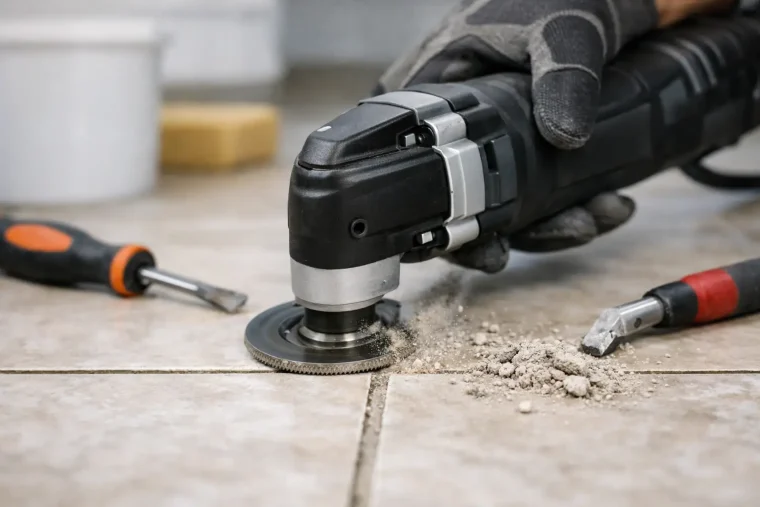
Most grout removal jobs fall into a few categories of equipment. Oscillating multi-tools are common for detail work and smaller areas. They are slower, but they give good control around corners, wall junctions and tight spaces.
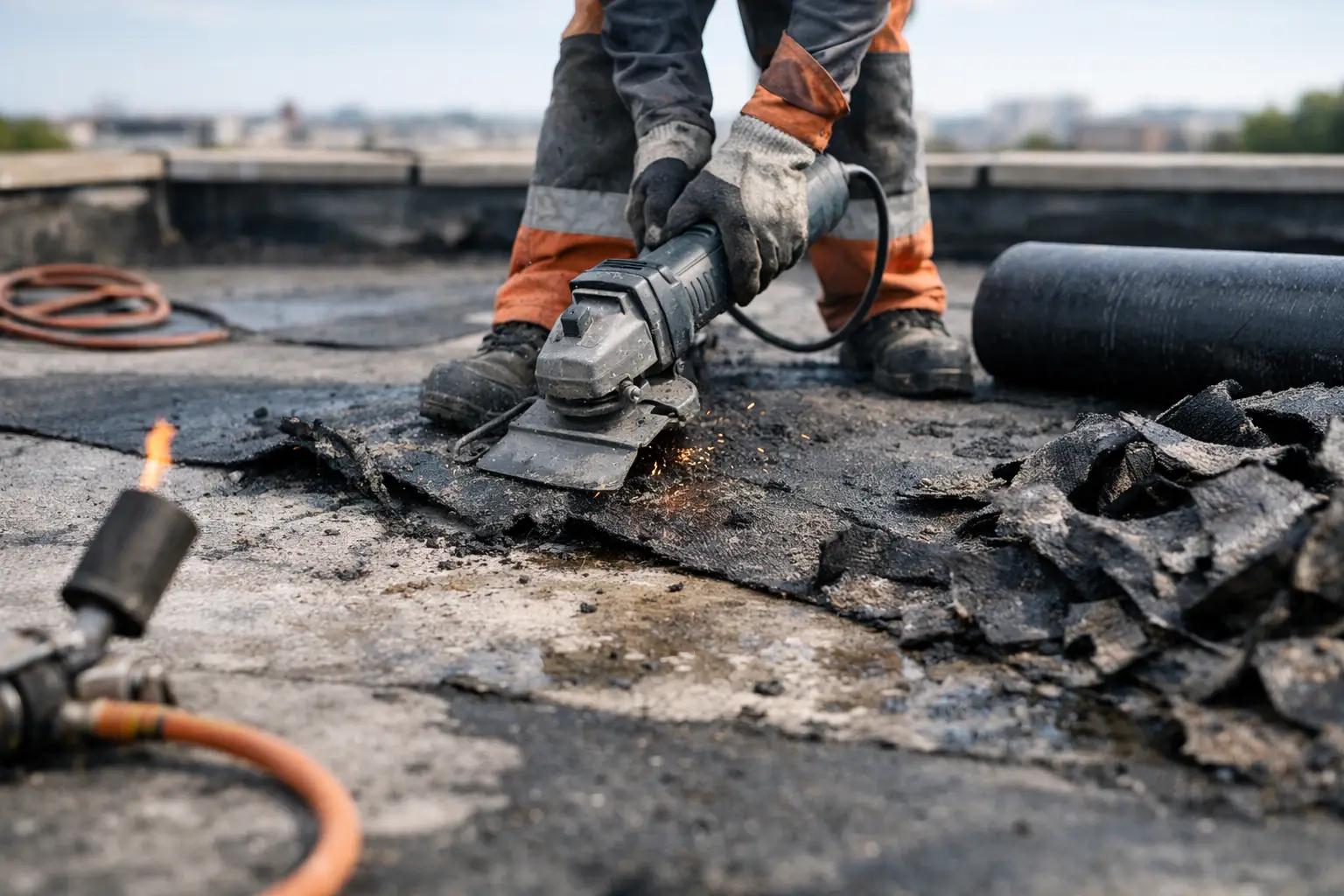
Rotary tools and grinders can remove grout faster, especially on harder joints, but they need a steadier hand and proper dust control. They are more likely to mark tile edges if the operator pushes too hard or uses the wrong blade depth.
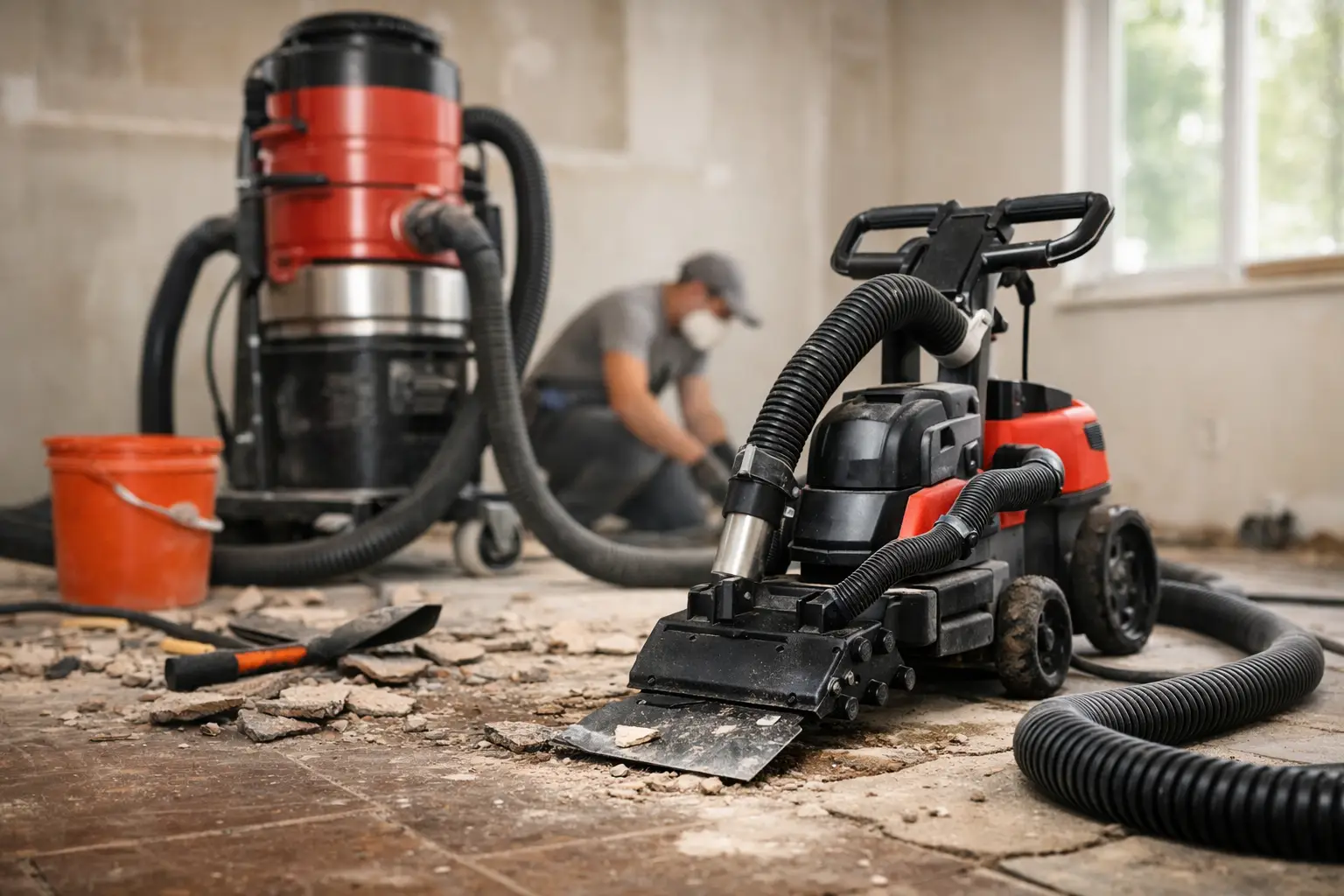
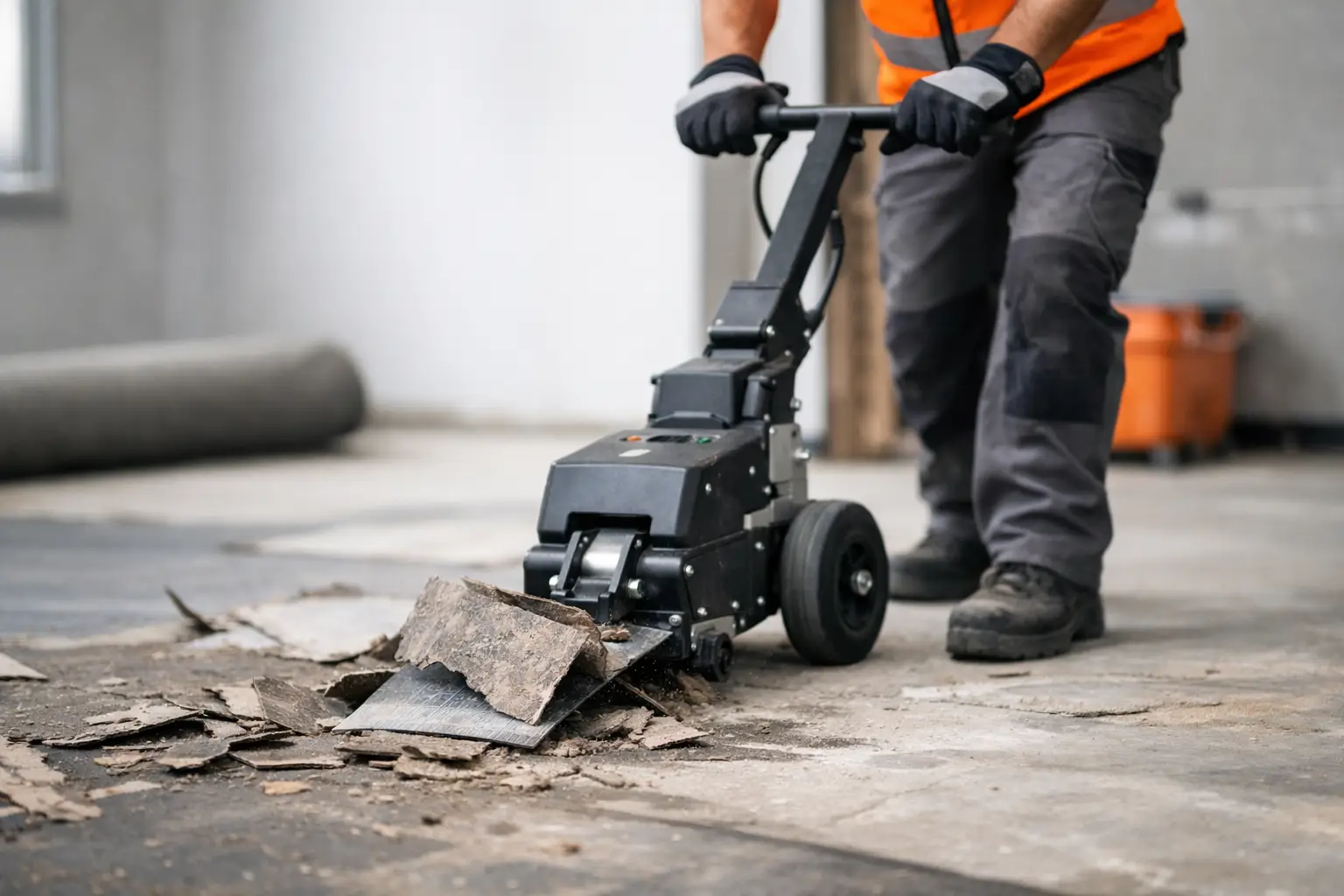
For larger demolition jobs, the process may move beyond a dedicated grout tool altogether. Tile strippers, chipping hammers and floor preparation machines can be the better choice once the tile field is being lifted in full. At that point, the grout is just one part of a larger bonded system that includes adhesive, bedding and substrate condition.
Dust control is not optional
Dry cutting grout creates fine dust quickly, especially on older cementitious materials. In occupied homes, offices, retail spaces and managed properties, that can become the main issue before the removal itself.
That is why dust-controlled equipment and proper extraction matter. It keeps the site cleaner, reduces spread into adjoining rooms and makes the workspace safer. On professional strip-out work, this is part of the planning, not an afterthought.
What affects performance on site
No two grout removal jobs behave exactly the same. Tile type changes everything. Porcelain, ceramic, natural stone and older terracotta all respond differently. Some edges are more prone to chipping. Some joints are shallow. Some have been repaired before with mixed materials that do not cut evenly.
Then there is the substrate. A grout line over a stable concrete base is one thing. A tiled floor over brittle screed, old underlay remnants or compromised bedding is another. If the base is weak, an aggressive approach can cause extra breakout and leave more prep work behind.
Moisture exposure also plays a role. Bathrooms, laundries and pool surrounds can have hidden issues under the surface. Once tiles start moving, you may find loose bedding, failed waterproofing or damaged underlayment that changes the scope of the removal process.
Why the substrate matters after grout removal
People often focus on getting the grout out and forget what comes next. But if the area is being retiled or resurfaced, the quality of the slab or base underneath matters just as much as the removal itself.
A fast removal that leaves high spots, adhesive ridges, gouges or fractured screed is not a clean result. It can hold up the next trade and create avoidable rectification work. Proper floor preparation is what turns demolition into a renovation-ready site.
DIY versus professional removal
There are cases where DIY grout removal is fine. A small area, spare tiles on hand, no urgent programme and no risk to waterproofed or finished surfaces can make it a reasonable weekend task.
The problem starts when the job is bigger than it first looked. Homeowners and renovators often hire a machine expecting a quick result, then lose time managing dust, fighting hard-set grout, damaging neighbouring tiles or realising the issue was never just the grout. Once tile bedding and adhesive come into play, the work becomes heavier, louder and more technical.
Professional operators bring more than the machine. They bring the judgement to know when to cut, when to lift, when to grind and when to change method entirely. That is what keeps the job moving and reduces the chance of turning a straightforward strip-out into a repair problem.
Choosing the right tile grout removal machine for the job
If you are comparing options, do not ask only which machine is best. Ask what the finished result needs to be. Are you preserving tiles, replacing isolated sections, removing a whole bathroom floor, or stripping out a commercial area that needs to be handed over quickly?
For precision work, a smaller controlled machine usually makes sense. For broad floor removal, the better solution may be a combination of tools and equipment rather than one dedicated grout machine. That is often the difference between getting the grout out and actually getting the site ready.
This is where specialist floor removal teams have an advantage. They are not locked into one tool or one approach. They can assess the tile system, remove what needs to go, control dust and finish the surface to the standard the next stage requires.
When speed matters, the method matters more
On active renovation sites, speed is not about rushing. It is about using the right equipment in the right order so the area can be handed over without rework. That is especially true in bathrooms, kitchens, tenanted properties and commercial spaces where disruption needs to be contained.
A tile grout removal machine can absolutely save time, but only if it is part of a proper removal strategy. If the grout comes out cleanly but the tiles still will not lift, or the slab still needs heavy grinding afterwards, you have not really saved anything.
For that reason, the smartest approach is usually to look at the full scope early. Grout, tile, adhesive, bedding and substrate prep are all connected. Treat them that way, and the job stays cleaner, faster and easier to finish properly.
If you are facing a tiled floor or wall that needs more than a quick patch-up, think beyond the tool itself. The right machine helps, but the real result comes from choosing the right method from the start.