
If you’re staring at an old tiled floor with patches of stubborn adhesive still stuck to the slab, the question comes up fast – do I need glue removed before retiling, or can the new tiles go straight over it? In most cases, the glue needs to be removed or at least mechanically reduced so the new tile system bonds properly. Anything less can leave you with poor adhesion, uneven levels, cracked tiles, drummy spots, or a floor that fails long before it should.
This is one of those renovation steps people try to save time on, and it often costs them more time later. Retiling only works when the substrate underneath is sound, clean, and ready to accept the new adhesive. Old glue can get in the way of all three.
Do I need glue removed before retiling on every job?
Not every surface needs to be taken back to perfectly raw concrete, but every surface does need to be assessed properly. That is the difference.
If the existing glue is soft, brittle, flaking, contaminated, water-damaged, thickly ridged, or reacting to moisture, it should come off. If it has created high and low spots across the floor, it should come off or be ground back. If no one can confirm what the adhesive is, treating it as suitable to tile over is a gamble.
There are limited cases where a residual adhesive layer may be encapsulated or tiled over with the right preparation system, but that depends on the adhesive type, the substrate, the condition of the floor, and the tile adhesive being used next. It is never a default shortcut.
For most residential and commercial retiling work, proper adhesive removal is the safer path because it gives you a predictable surface. That means better bond strength, more accurate floor levels, and fewer surprises once the tiler starts.
Why old glue causes problems
Tiles do not just stick because there is adhesive on the floor. They stick because the new adhesive forms a reliable bond with a stable substrate. Old glue often breaks that chain.
Some adhesives become weak with age. Others stay rubbery and move under load. Some absorb moisture and soften again. Even if the glue looks hard enough, that does not mean it will hold up under a new tile system, foot traffic, cleaning, and seasonal movement.
There is also the issue of compatibility. A cement-based tile adhesive may not bond well to old vinyl glue, pressure-sensitive adhesive, bitumen residue, or unknown compounds left from previous floor coverings. You might get initial grab, but that is not the same thing as long-term performance.
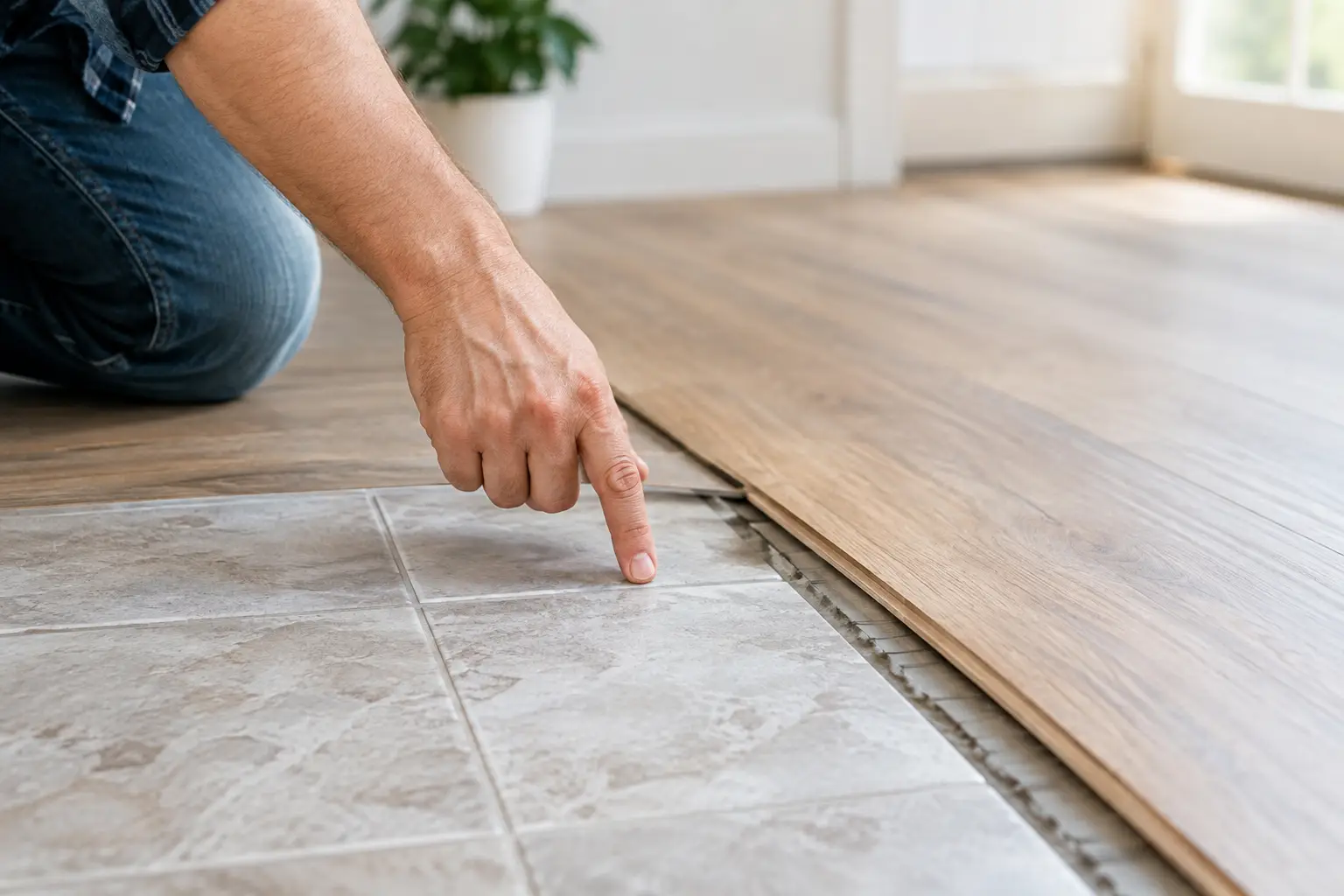
Then there is flatness. Retiling over lumpy glue ridges can create lip edges, rocking tiles, and extra adhesive build-up just to compensate. That slows the install and makes it harder to achieve a clean finish.
When glue removal is non-negotiable
There are jobs where the answer is simple – yes, remove it.
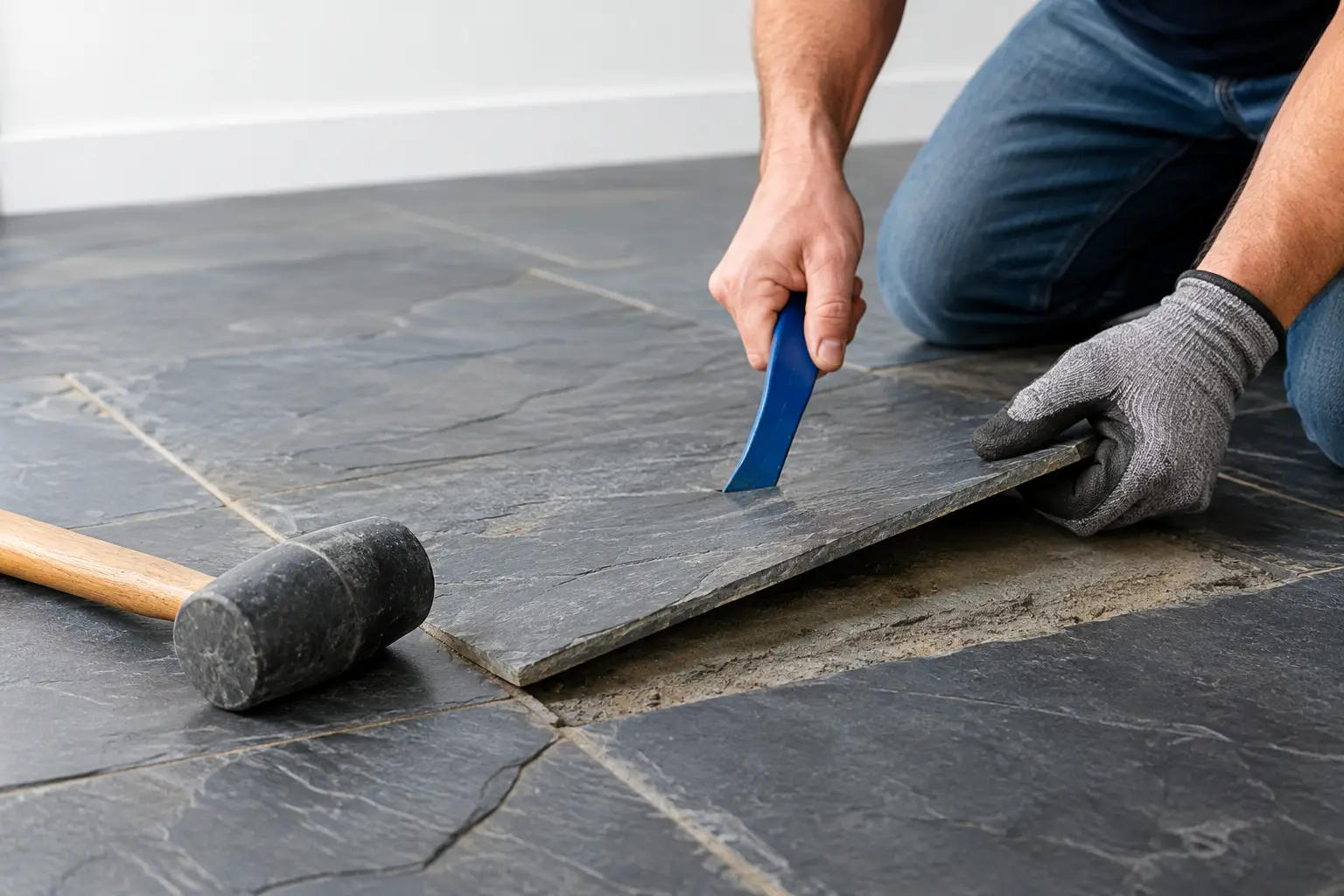
If the old adhesive is coming loose by hand or scraper, it has no business staying under a new tiled floor. If the slab has visible contamination from paint, levelling compounds, old waterproofing, grease, or dust trapped into the glue, removal is the right call. The same applies where there are thick adhesive beds left from vinyl, cork, carpet, timber or old tile bedding.
Bathrooms, laundries, kitchens, and other wet areas deserve extra caution. These spaces rely on proper substrate preparation and, where required, compliant waterproofing. Leaving questionable glue in place under a new tiled surface is asking for trouble.
Commercial sites are no different. In offices, retail tenancies, hospitality fit-outs, and high-traffic areas, weak prep becomes obvious quickly. Once tiles start sounding hollow or lifting in a busy space, the disruption is worse than doing the prep properly from day one.
What if the glue seems solid?
This is where people get caught. Solid does not always mean suitable.
An old adhesive may feel firmly attached to the concrete, but if the new tile adhesive cannot bond to that surface with confidence, the whole system is compromised. Some residues also leave a smooth or chemically resistant film that reduces mechanical grip. In those cases, the slab usually needs grinding, scarifying, or adhesive removal to expose a sound profile.
A proper assessment looks at more than whether the glue is stuck down. It also considers thickness, coverage, age, moisture history, and what floor covering was there before. Old black adhesive, for example, needs careful handling and should never be treated casually.
Do I need glue removed before retiling walls as well as floors?
Yes, the same principle applies to walls, although the risks can be even higher. Wall tiles rely on a strong bond without the support of gravity working in your favour. If there is old glue, mastic, or loose bedding left behind, the wall should be stripped and prepared properly before new tiles go on.
In shower areas, this matters even more. Residual adhesive can interfere with waterproofing systems, create uneven tile lines, and undermine the bond over time. A freshly prepared wall gives the tiler a clean start and helps the finished job stay straight, secure, and watertight.
The right way to prepare a floor for retiling
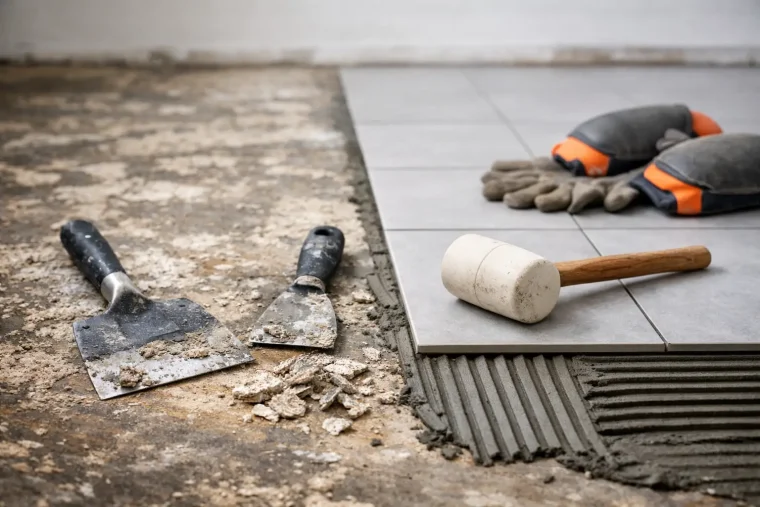
The best retiling jobs start well before the first new tile is laid. Old finishes need to be removed cleanly, adhesive residues dealt with properly, and the slab checked for damage, movement, moisture issues, and level problems.
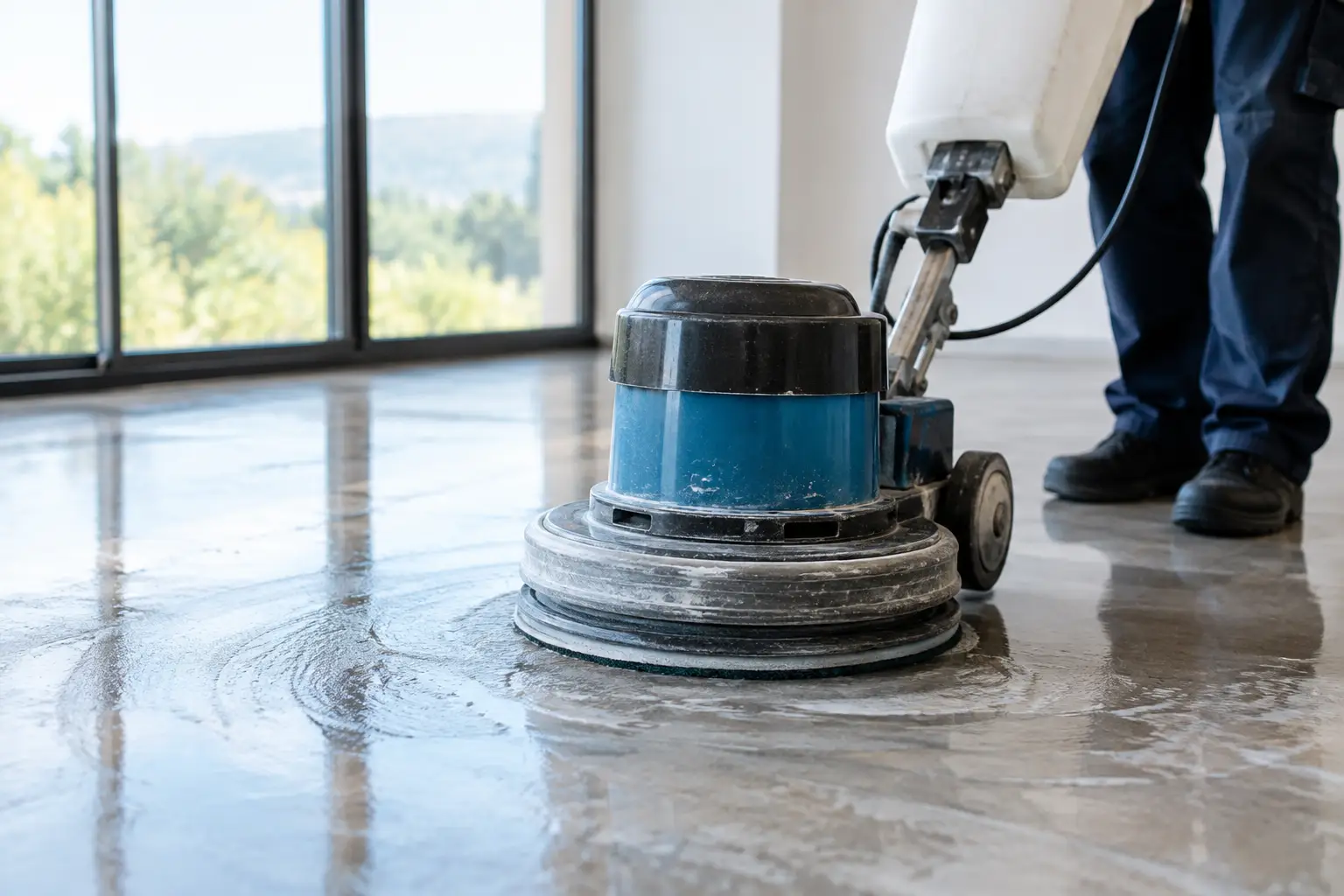
Mechanical removal is usually the most reliable method. That can involve floor scrapers, grinders, scarifiers, or specialised stripping equipment depending on the material and the condition of the substrate. The goal is not just to make the floor look better. It is to leave it structurally suitable for the next stage.
After removal, the surface may still need grinding to take down remaining residue and open up the slab. Cracks, holes, or low areas can then be repaired or levelled as needed. Once that is done, the tiler is working on a floor that is ready rather than one that needs to be fought every step of the way.
Can you tile over glue to save time?
Sometimes people ask this because the adhesive is hard to remove and the renovation timeline is already tight. The problem is that tiling over glue often shifts the delay instead of removing it.
If the old adhesive causes a bond failure, the new tiles may need to come back up. If it creates uneven floor levels, adjoining finishes and fixtures can be affected. If moisture reacts with the residue, the issue may not show up until after handover.
Saving a few hours on prep is not much of a win if it costs you weeks in rectification. On a properly managed job, removal and surface preparation are part of getting the site ready, not optional extras.
That is why specialist floor stripping crews are often brought in before the tiler. It keeps the sequence clean and gives the next trade a surface they can trust.
Signs your floor needs professional glue removal
Some jobs are obviously beyond a quick scrape and clean. Thick glue ridges, widespread residue, mixed flooring layers, cracked bedding, or adhesive bonded hard to concrete usually call for proper removal equipment. The same goes for large floor areas where speed, dust control, and surface consistency matter.
If you are renovating a home, unit, shop, office, or hospitality space and need the site turned around quickly, bringing in a specialist can save a lot of downtime. Rapid Stripped handles this kind of prep work so the area is cleared, cleaned up, and ready for the next stage without dragging the job out.
The real answer depends on the substrate, not the shortcut
So, do I need glue removed before retiling? Most of the time, yes – or at the very least reduced and mechanically prepared so the new system bonds to a sound surface. The right answer depends on what the glue is, how well it is attached, what is going over it, and whether the substrate underneath is actually fit for purpose.
If you want the new tiles to last, the floor underneath has to earn them. Good prep is not wasted effort. It is what makes the finished job hold together when the renovation dust settles.
If you are unsure, do not guess based on how the adhesive looks. Get the surface checked, get the substrate prepared properly, and give the tiler a clean start. That is how you avoid redoing the same floor twice.