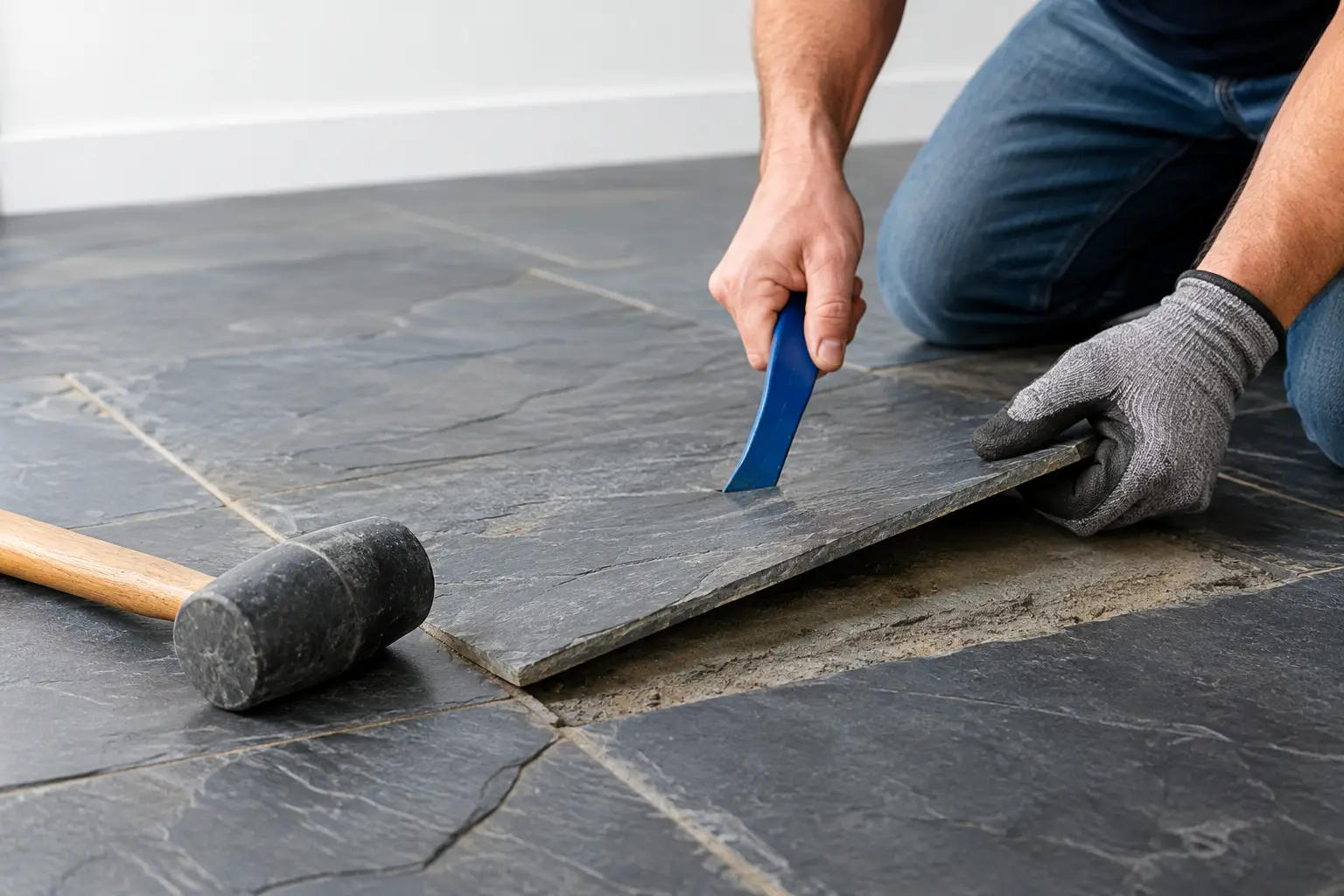

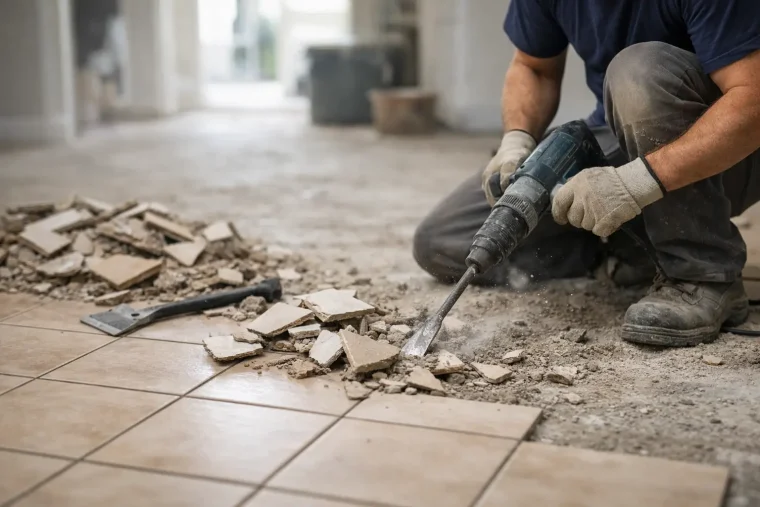
If your tiler, builder or kitchen installer is booked for tomorrow, one question matters more than anything else: can floor tiles be removed in one day? The honest answer is yes – many jobs can be completed inside a day – but only when the tile type, bedding, access and site conditions line up properly. When they do, the job moves fast. When they do not, even a small area can turn into a stubborn strip-out.
That is why experienced floor removal crews never promise speed based on square metres alone. Tile removal is not just about lifting the tile off the slab. It is also about what is underneath, how hard it was laid, what the subfloor needs to look like afterwards, and whether the site must stay clean and workable for the next trade.
When can floor tiles be removed in one day?
In a lot of residential and light commercial jobs, the answer is yes. Standard ceramic or porcelain tiles in a laundry, kitchen, small office or open-plan living area can often be removed, cleared and mechanically cleaned up within the same day. That is especially true when the team has direct access, the area is empty, and the substrate does not need major repair after the strip.
The jobs that move quickest usually have a few things in common. The tiles are not laid over multiple old floor layers. The adhesive or mortar bed is consistent rather than patchy and unpredictable. There is room to get the right removal equipment in, and there are no access issues like tight lifts, occupied tenancies, fixed joinery or restricted work hours.
For owners and project managers, that is the key point. Same-day tile removal is realistic, but it depends more on site conditions than on optimism.
What makes a one-day tile removal possible?
The biggest factor is the bond between the tile system and the subfloor. Some tiles come up cleanly in sheets or break away with manageable effort. Others are locked into a heavy screed bed or stuck down with aggressive adhesive that leaves the slab covered in hard residue. In those cases, removing the visible tile is only the first part of the job.
The second factor is the finish required after removal. If you only need the old surface gone, the work is faster. If you need the slab ready for waterproofing, levelling compound, hybrid flooring, polished concrete preparation or retiling, the standard is higher. That often means grinding, adhesive removal and detailed edge clean-up, not just demolition.
Site setup also matters. Vacant homes are generally quicker than occupied ones. Ground-floor access is easier than carrying gear through units or trading around other contractors in a live commercial fit-out. Even details like skip placement, stair access, rubbish movement and power supply can affect whether the work runs straight through or loses time.
What slows tile removal down?
Not every floor is a clean, simple strip. Some are hard work from the first metre.
Older properties often hide surprises. You may find tiles laid over previous tiles, thick mortar beds, damaged slab sections, movement cracks or patched repairs from earlier renovations. Bathrooms, kitchens and entry areas can be especially inconsistent because they have often been altered over time.
Natural stone, terracotta and heavily bedded tiles can also take longer than standard ceramic floors. The same applies when tiles are tied into skirtings, cabinetry, island benches, thresholds or wall bases that need to stay intact. Precision takes time. Fast work is only useful if the surrounding finishes are not smashed in the process.
Another common delay is adhesive residue. A lot of people assume once the tiles are gone, the floor is ready. It often is not. Leftover glue, mortar ridges and bedding material can stop the next trade from starting. If the brief is to leave a renovation-ready slab, the removal crew may need to grind and clean the surface properly before packing up.
Can floor tiles be removed in one day in occupied properties?
Yes, but expectations need to be practical. Occupied homes, shops and offices can still be completed within a day if the work area is controlled properly and the access is clear. The main difference is that dust control, protection and staging become more important.
A professional team will usually isolate the work zone, protect adjacent surfaces and manage debris as the job progresses rather than leaving a full-site mess behind. That matters if the rest of the property is still in use or if other trades are due in immediately after removal.
For commercial sites, timing windows can make or break the day. Work in retail, hospitality and offices often has to fit around operating hours, noise restrictions or building access rules. In those settings, the removal process has to be organised from the start. There is no room for guesswork once demolition begins.
The difference between DIY speed and specialist speed
This is where many timelines blow out. A homeowner might spend a full day removing a small patch of tiles with a hand chisel and still be left with half the adhesive on the slab. The issue is not effort. It is equipment, technique and knowing how the floor system is likely to behave.
Specialist crews work faster because they arrive set up for removal, not experimentation. They know when to use ride-on or handheld demolition gear, when controlled grinding is needed, and how to shift from bulk removal to detailed clean-up without losing hours. They also know how to protect the site and keep the job safe while heavy material is being broken out and removed.
That is the real value in same-day work. It is not just getting the old tiles off the floor quickly. It is finishing the strip-out properly so the next stage can start without delay.
What to check before expecting same-day tile removal
If you are trying to lock in a renovation timeline, a few early checks make a big difference. First, identify the tile type and where it is laid. A small ensuite is not the same as a large open-plan area, and neither behaves like a commercial kitchen or pool surround.
Second, think about what must remain untouched. Joinery, walls, waterproofed areas, glazed doors and neighbouring floor finishes all affect how aggressively the floor can be removed. Third, be clear on the end result. Do you need rough demolition only, or a cleaned and prepared substrate?
Photos help, but site inspection is better when the job is complex. Experienced contractors can usually spot likely issues early – thick beds, poor access, layered flooring systems or signs of slab preparation work – before those issues become delays on the day.
Why the substrate matters as much as the tile
A lot of scheduling mistakes happen because people focus on the tile surface and ignore the slab underneath. The substrate decides what happens next. If it is concrete and remains sound after removal, same-day completion is much easier. If it is damaged, uneven or contaminated with adhesive and old levelling products, more preparation may be needed before the area is ready.
That is especially relevant for builders and renovators working to tight handover dates. A floor stripped badly can create problems for every trade that follows. A floor stripped properly keeps waterproofers, tilers, flooring installers and cabinetmakers moving.
For that reason, tile removal should be treated as preparation work, not just demolition. The cleaner and more consistent the finish, the smoother the renovation runs.
So, can floor tiles be removed in one day?
Yes – in many cases, they can. Straightforward jobs with good access, standard tile systems and a clear run at the work are often completed in a day. More complex floors can still move quickly, but they need proper assessment, the right equipment and a crew that understands both removal and substrate preparation.
If the goal is to keep your renovation on track, the better question is not just how fast the tiles come up. It is whether the floor will be genuinely ready for what comes next. That is where experience earns its keep, and that is what saves time where it counts.