
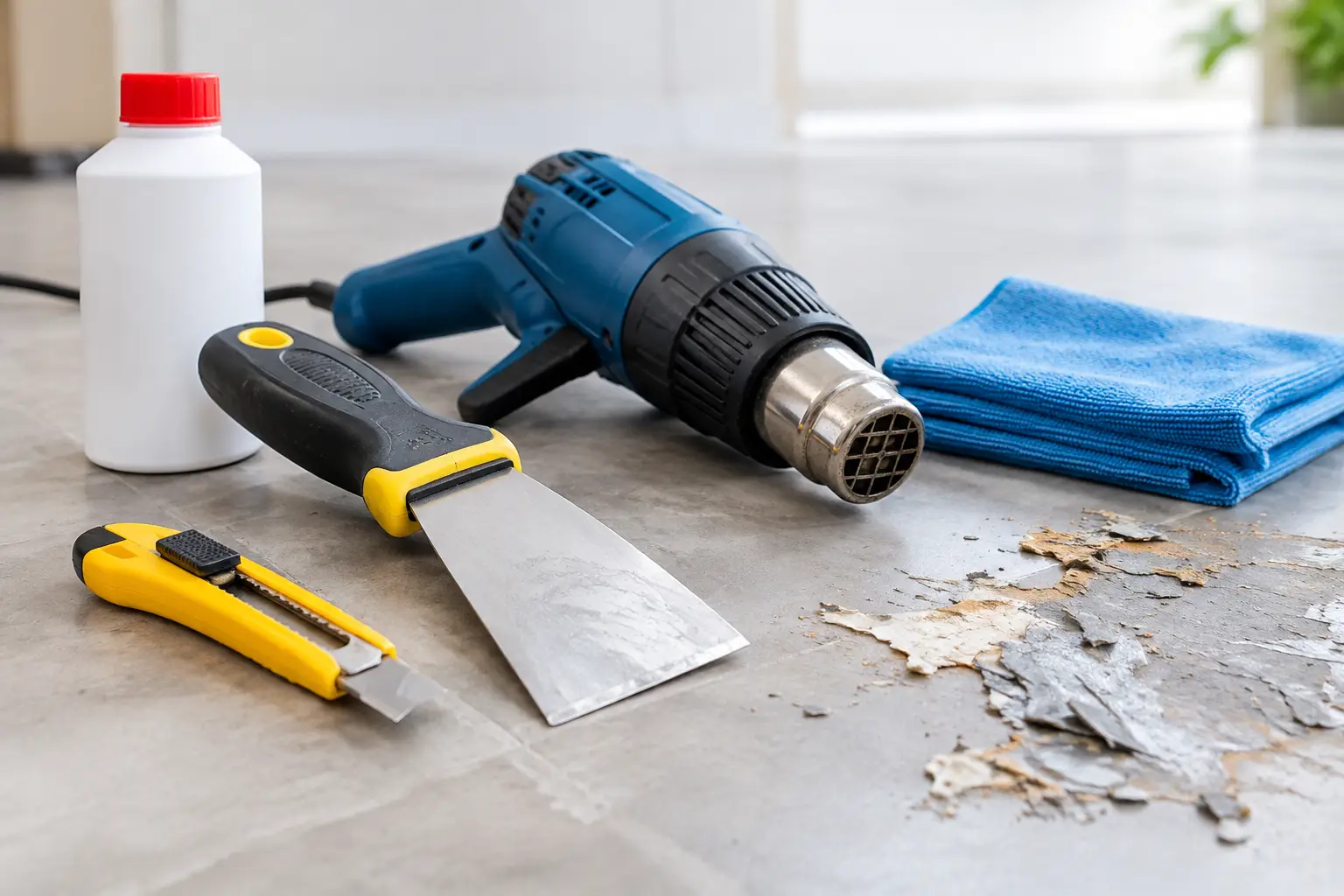
A floor can look stripped once the tiles, vinyl or carpet are gone, but the adhesive left behind is often what holds up the renovation. The best tools for removing adhesives from floors depend on what is stuck to the slab, how thick it is, and what needs to go over the surface next. Get the method wrong and you can waste days, damage the substrate or leave a floor that will not accept new finishes.
For small, light residues, hand tools and the right remover may be enough. For old carpet glue, black mastic, vinyl adhesive, epoxy or thick tile bedding, the job quickly becomes a mechanical removal task. This is where specialised equipment, dust control and experienced operators make a real difference.
Start with the adhesive, not the tool
Adhesive removal is not a one-tool job. A scraper that works well on softened vinyl glue can skate across rock-hard epoxy. A grinder that clears a slab quickly can cause unnecessary surface damage if the wrong diamond tooling is used.
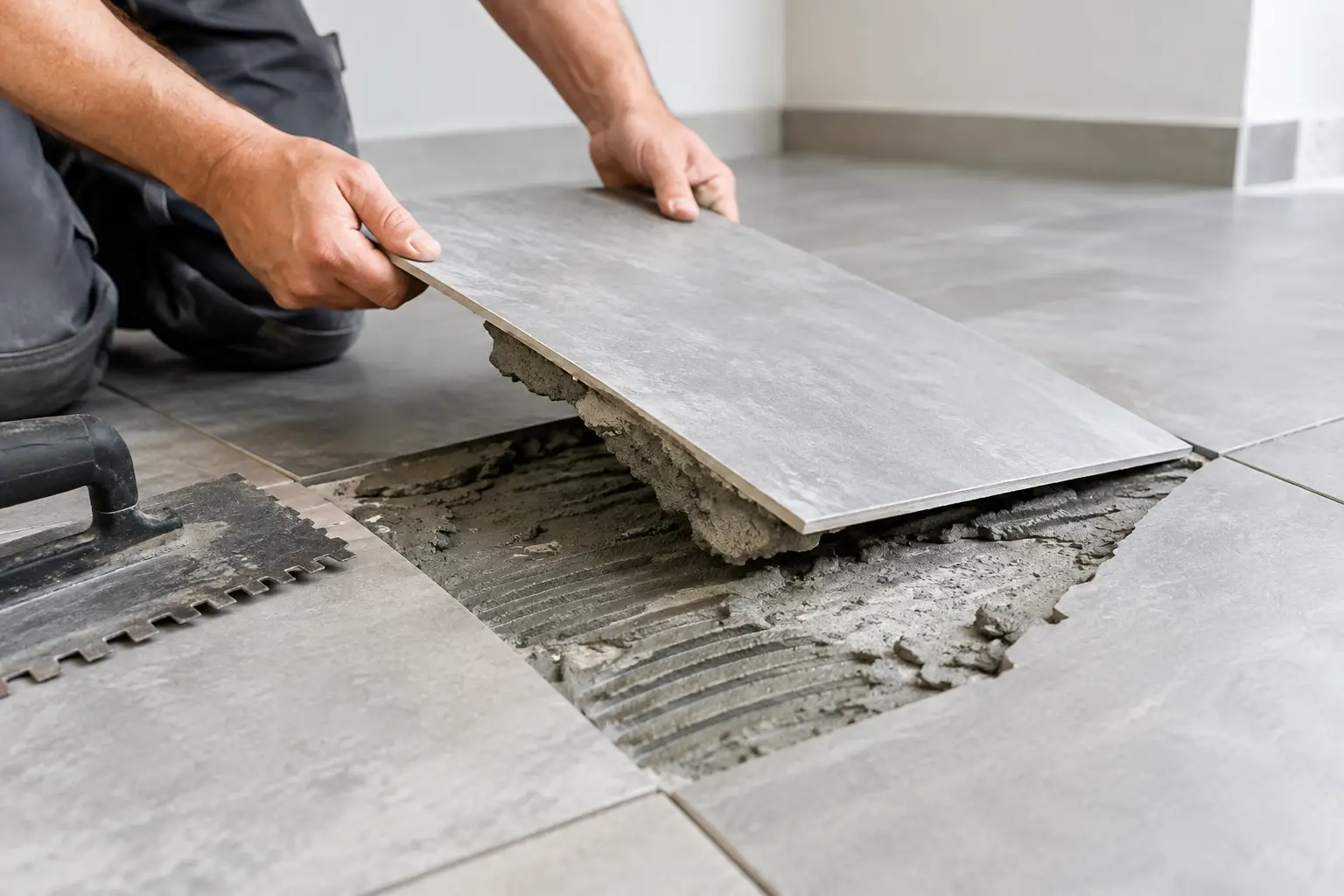
Before selecting equipment, identify the floor covering that was removed and the condition of the concrete beneath it. Carpet adhesive is often patchy and may respond to scraping or grinding. Vinyl and lino glues can be soft, gummy or brittle depending on their age and exposure to heat. Tile adhesive and cement-based bedding are harder again, while epoxy and polyurethane coatings demand more aggressive mechanical removal.
The required finish matters just as much. If new tiles are going down, a sound, clean and suitably profiled slab may be all that is needed. If the floor is being polished, coated or covered with thin vinyl planks, every ridge, contaminant and uneven patch becomes more critical.
The best tools for removing adhesives
Floor scrapers and ride-on stripping machines
Long-handled floor scrapers are useful for lifting loose adhesive, softened glue and thin residues from small areas. They are straightforward, quiet and give the operator control around doorways, walls and fittings. They are not, however, the answer to a large commercial floor coated in stubborn glue.
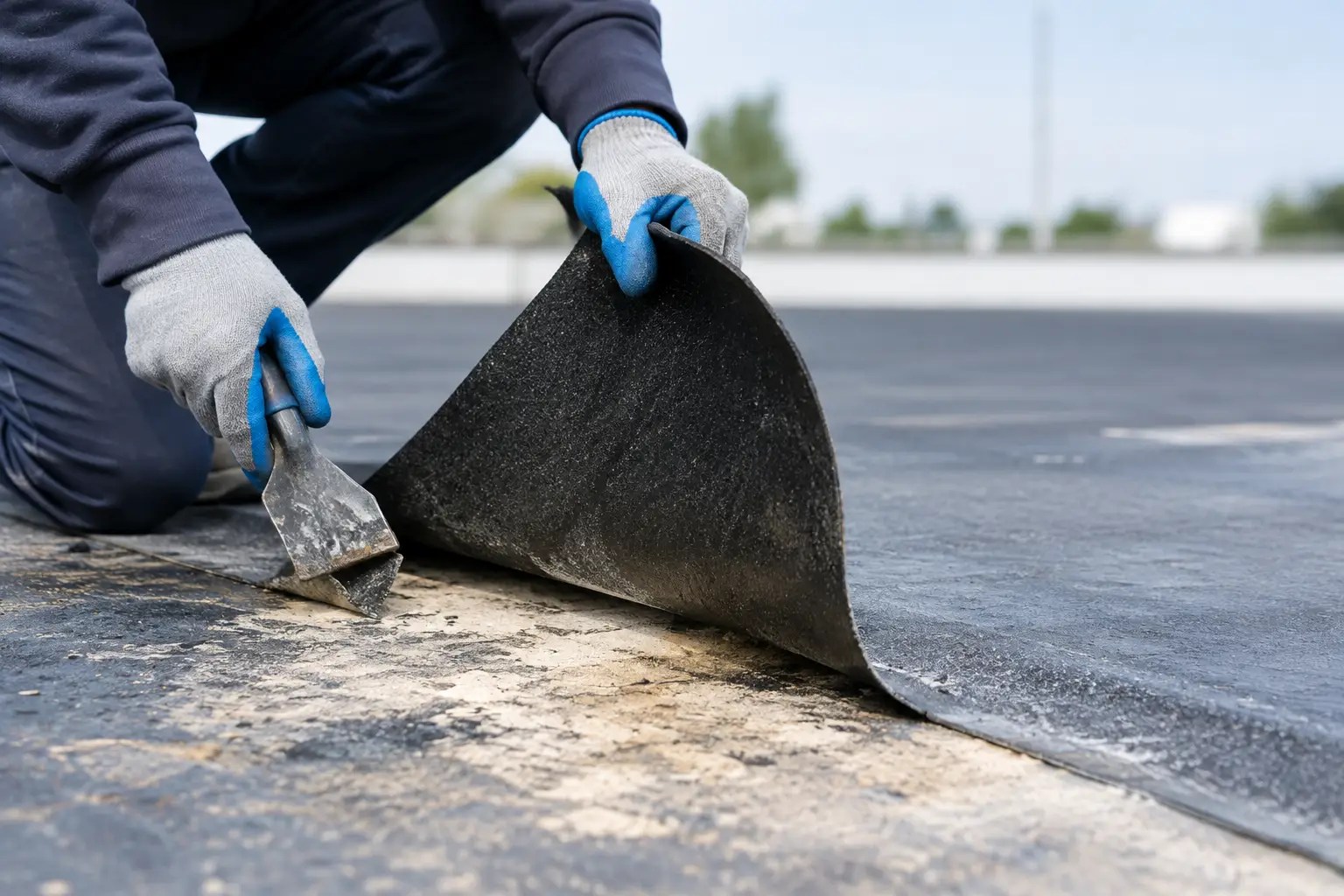
For carpet, vinyl, cork and sheet flooring, powered floor strippers are often the first serious tool on site. These machines use an oscillating blade to separate the covering and its adhesive from the substrate. Walk-behind units suit bathrooms, kitchens, units and tighter rooms. Ride-on stripping machines can make short work of broad open areas such as offices, retail spaces and halls.
The limitation is that stripping machines are designed to lift material. They can leave adhesive smears, high spots and bonded patches behind. In many removals, stripping is the first stage, not the finished result.
Rotary floor machines
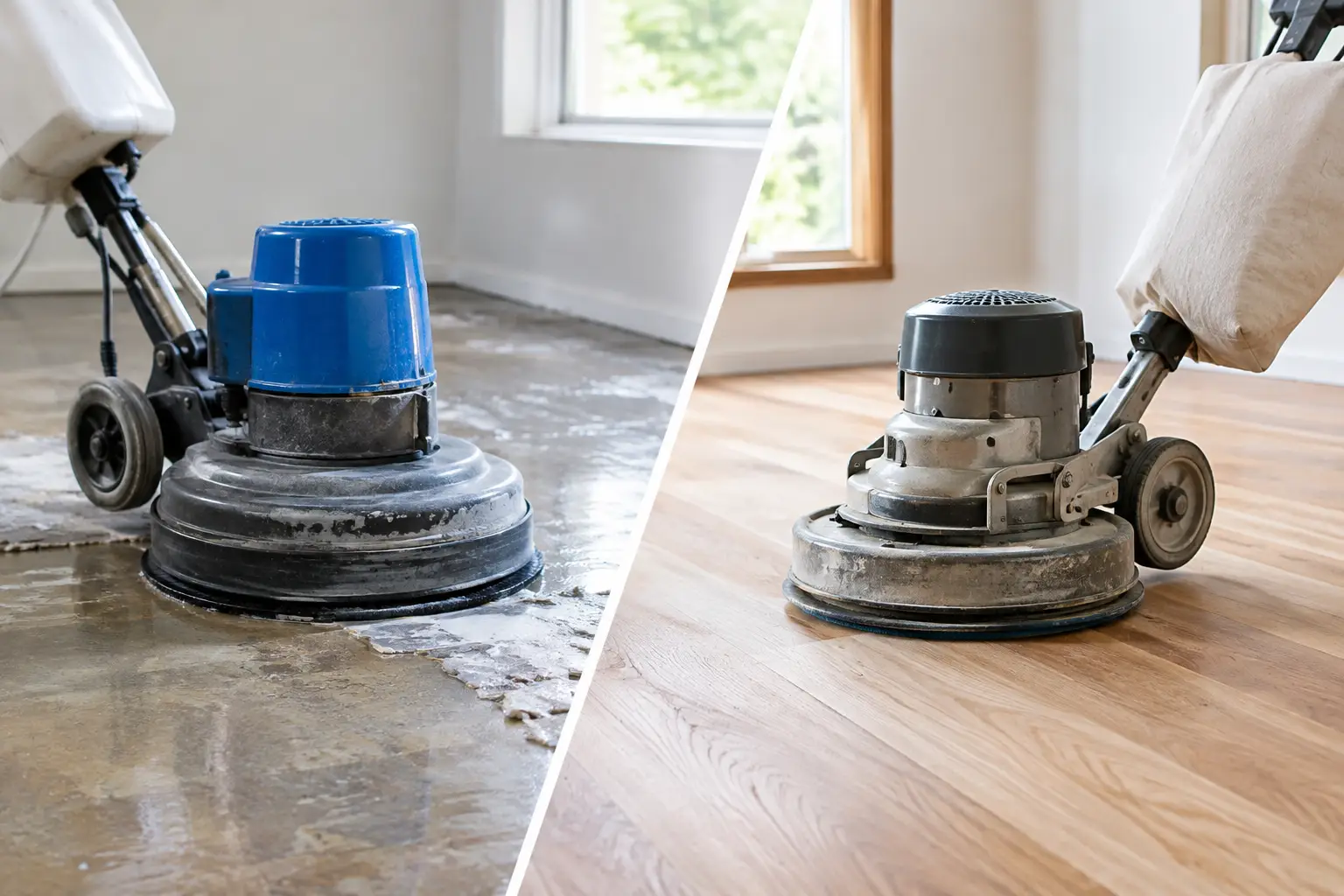
A rotary floor machine with the correct pad or abrasive can help remove softer glue, mastics and surface residue. It can be a sensible option where the adhesive is thin and the slab is generally sound.
This method has limits. Heat from friction can soften some adhesives and turn a dry removal job into a sticky mess. It is also slower on thick build-up and does not reliably remove hard-set products or level a rough substrate. Rotary equipment is best treated as a targeted preparation tool, not a cure-all.
Concrete grinders with diamond tooling
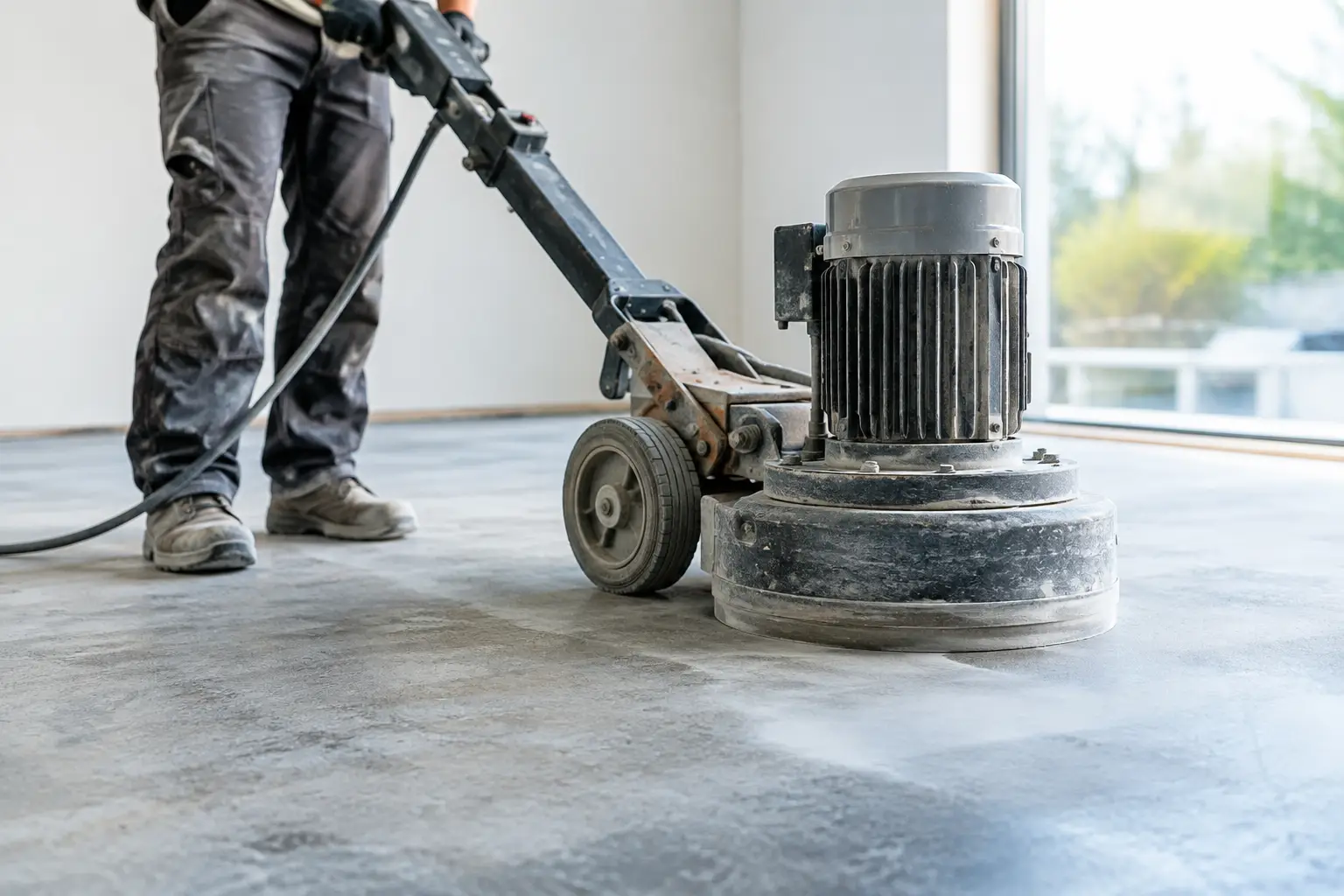
For stubborn adhesives, concrete grinders are among the most effective tools available. They remove residue mechanically while cutting back high spots and preparing the slab for the next trade. The real advantage is not simply speed. It is the ability to leave a consistent, clean surface rather than an uneven slab with traces of glue still bonded to it.
Diamond tooling needs to match the material. Softer adhesive residues may require specialised adhesive removal segments or PCD tooling. Harder cementitious adhesive, tile glue and thinset may need diamond cup wheels or grinding segments selected for the slab condition. The wrong tooling can glaze over, wear too quickly or leave a poor finish.
Hand grinders are practical for edges, stairs, bathrooms and areas where larger machines cannot reach. For larger rooms, a planetary or heavy-duty floor grinder delivers faster, flatter results. It also reduces the temptation to attack the floor in patches, which can create visible low spots that need repair later.
PCD tooling for thick, sticky coatings
PCD, or polycrystalline diamond, tooling is purpose-built for stripping thick coatings and difficult adhesives. It is particularly useful on hard-wearing residues such as epoxy, polyurethane, paint, membranes and stubborn mastics.
PCD tools scrape and shear material away rather than relying only on abrasion. That makes them effective where ordinary diamonds clog up or simply polish the adhesive instead of removing it. They are aggressive, so they need to be used with care. On a softer slab, poor technique can leave gouges or excessive texture.
For a renovation floor, the usual approach is to remove the bulk of the coating with PCD tooling, then follow with appropriate diamonds to refine the surface. That staged process is often faster and cleaner than trying to achieve the final finish in one pass.
Shot blasting for large commercial slabs
Shot blasting is a high-production method for removing coatings, adhesives and contaminants from large, open concrete floors. The machine propels steel shot at the surface, breaking away residue and creating a profile suitable for coatings or new flooring systems.
It is highly effective in warehouses, retail tenancies and commercial refurbishments where access is open and a specified concrete profile is required. It is not the right choice for every job. Shot blasting is less suited to tight rooms, detailed edge work and slabs with uneven build-up that first need grinding or stripping.
The finish also needs to suit the next flooring system. A shot-blasted surface can be ideal for certain coatings, but may be too textured for thin floor coverings without further preparation.
Chemical adhesive removers have a place, but not everywhere
Solvent-based and water-based adhesive removers can soften glue so it can be scraped away. On a small residential patch, especially around the perimeter of a room or beneath a removed vinyl section, this can be practical.
The trade-off is contamination. Chemical products can soak into porous concrete and leave residue that interferes with primers, levelling compounds, waterproofing or new adhesives. They also create extra clean-up, fumes and waste handling requirements. Applying a remover across a large floor may appear easier at first, then create a bigger surface-preparation problem afterwards.
Mechanical removal is generally the more reliable choice when the floor needs to be ready for tiles, timber, vinyl, carpet or a coating system. If chemicals are used, the slab must be properly cleaned, neutralised where required and checked before the next material is installed.
Dust control is part of the equipment
Grinding concrete and adhesive without effective dust extraction is not professional surface preparation. Fine silica dust can travel through a property, settle on finished areas and create a serious health risk. It also makes it harder to see the slab clearly enough to inspect the result.
A proper setup pairs grinders and hand tools with industrial HEPA dust extraction. This keeps the work area cleaner, improves visibility and reduces disruption for occupied homes, offices and commercial sites. Containment may also be needed where work is close to cabinetry, walls, occupied tenancies or sensitive equipment.
Dust control does not mean a completely dust-free job in every circumstance. It means using the right extraction capacity, maintaining the equipment and working in a controlled way rather than treating airborne dust as unavoidable.
Watch for hidden risks in older floors
Old adhesive is not always just adhesive. Some older vinyl tiles, backing materials, mastics and flooring products may contain hazardous materials. If there is uncertainty about the age or composition of the flooring, testing should happen before grinding, scraping or demolition begins.
Moisture is another issue that can be missed. Removing adhesive may reveal a slab with dampness, cracking, laitance or failed levelling compound. Covering those problems with new flooring without addressing them can lead to debonding and costly rework.
A professional removal team assesses the whole surface as work progresses. The goal is not simply to remove what is visible. It is to hand over a stable substrate that the next trade can work with confidence.
When professional adhesive removal is the sensible option
A homeowner can often handle a small patch of loose glue with a scraper. The equation changes when the adhesive covers multiple rooms, the product is hard-set, access is difficult or a tight renovation schedule is involved. Hiring and operating grinders, stripping machines and dust extractors also requires time, transport, safety knowledge and the ability to choose the correct tooling.
Rapid Stripped handles difficult adhesive removal as part of complete floor removal and surface preparation work across Northern NSW, the Gold Coast, Brisbane and the Sunshine Coast. The focus is on clearing the old material efficiently, controlling dust and leaving the site ready for the next stage rather than creating more work for the installer.
If the floor has stubborn residue, do not judge the job by how clean it looks from the doorway. Check whether the slab is flat, sound, contaminant-free and suited to the flooring planned next. That is the difference between a stripped floor and a renovation-ready one.