

A unit renovation can come unstuck before the new materials arrive. Old tiles that will not lift, concrete bedding stuck hard to the slab, adhesive residue, restricted lift access and neighbours metres away all make unit demolition a job that needs proper planning. The aim is not simply to tear out the old. It is to clear the right areas quickly, protect the building and hand over a clean, sound surface ready for the next trade.
For owners, investors, builders and property managers, that means choosing a demolition crew that understands both the physical work and the constraints of apartment living. A fast job matters, but controlled work matters just as much.
What unit demolition actually involves
Unit demolition is a targeted strip-out, not a knock-down job. It may involve removing a dated bathroom, kitchen, internal flooring, built-in cabinetry, wall linings, fixtures or non-structural partitions. In many cases, the hardest part is below the visible finish: tile bedding, levelling compounds, old glues, waterproofing remnants and damaged coatings bonded to the concrete slab.
Every unit is different. A ground-floor apartment with direct access is one thing. A top-floor unit in a busy complex, with booking windows for lifts and limited loading zones, is another. The demolition scope needs to match the renovation plans, building rules and access conditions from the outset.
A professional strip-out team works methodically. Items are removed in a sequence that protects services and avoids unnecessary damage to surfaces that are staying. Flooring is stripped back properly rather than patched around. Rubbish is managed as the work progresses, not left piled in corridors or common areas.
The result should be a site that your builder, tiler, waterproofer, cabinetmaker or flooring installer can start on without losing time to leftover demolition work.
Why unit demolition needs more control than a house strip-out
The close quarters of unit living change the way demolition must be done. There are common walls, shared entry points, body corporate requirements and neighbours who reasonably expect consideration. Poor preparation can lead to dust migrating beyond the work zone, damaged lifts, blocked access or complaints that slow the renovation down.
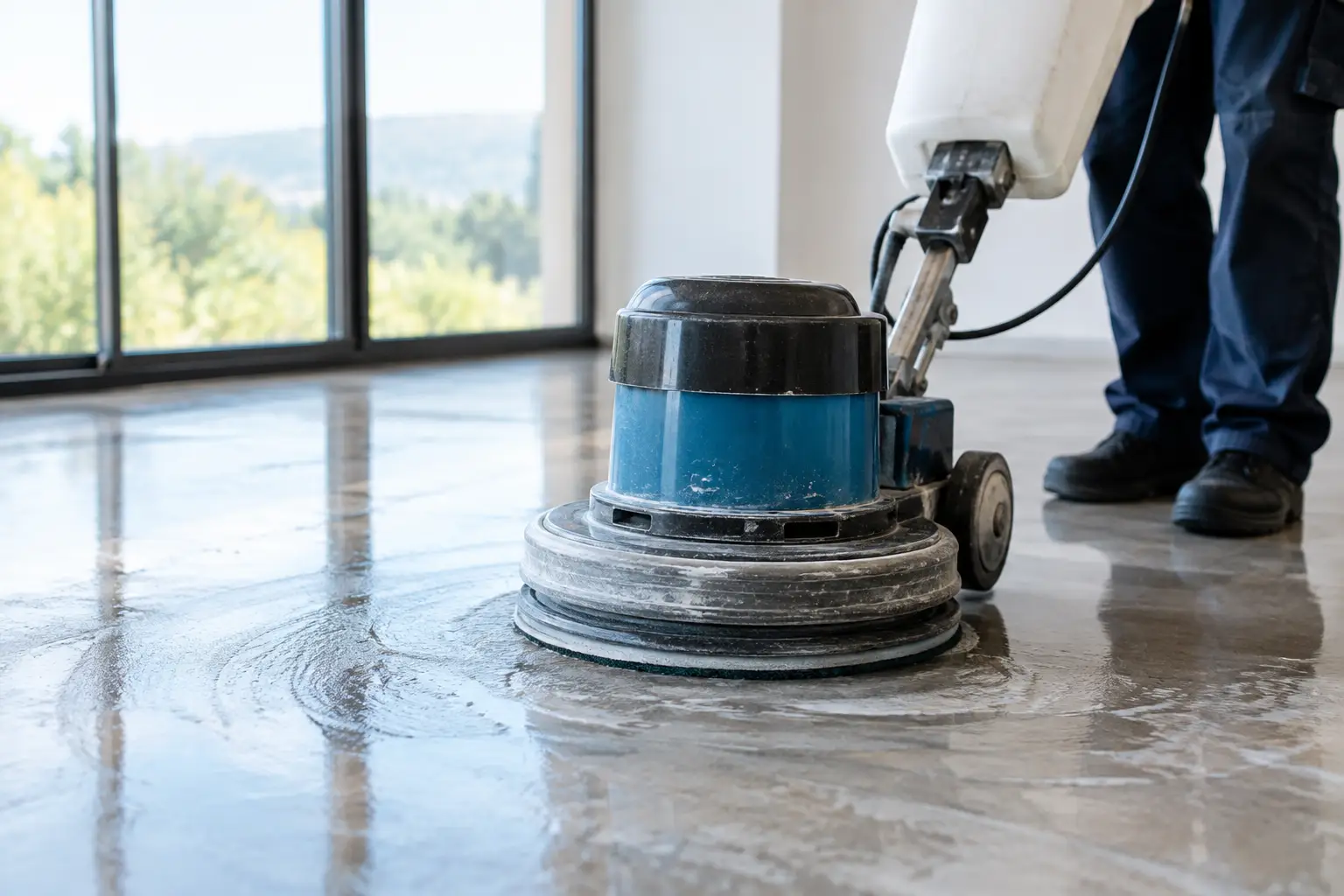
Dust control is a major factor, particularly when removing tiles, grinding concrete or stripping stubborn adhesive. Fine dust does not stay where it is made. It can travel through hallways, settle in nearby rooms and affect common property if the work area is not properly contained. Using the right removal equipment, controlled grinding methods and site protection helps keep the mess under control.
Noise and timing also need attention. Most complexes have approved work hours and procedures for contractors. A crew that arrives unprepared, misses a lift booking or has no plan for moving waste creates pressure for everyone involved. Good unit demolition is organised around those limits, not disrupted by them.
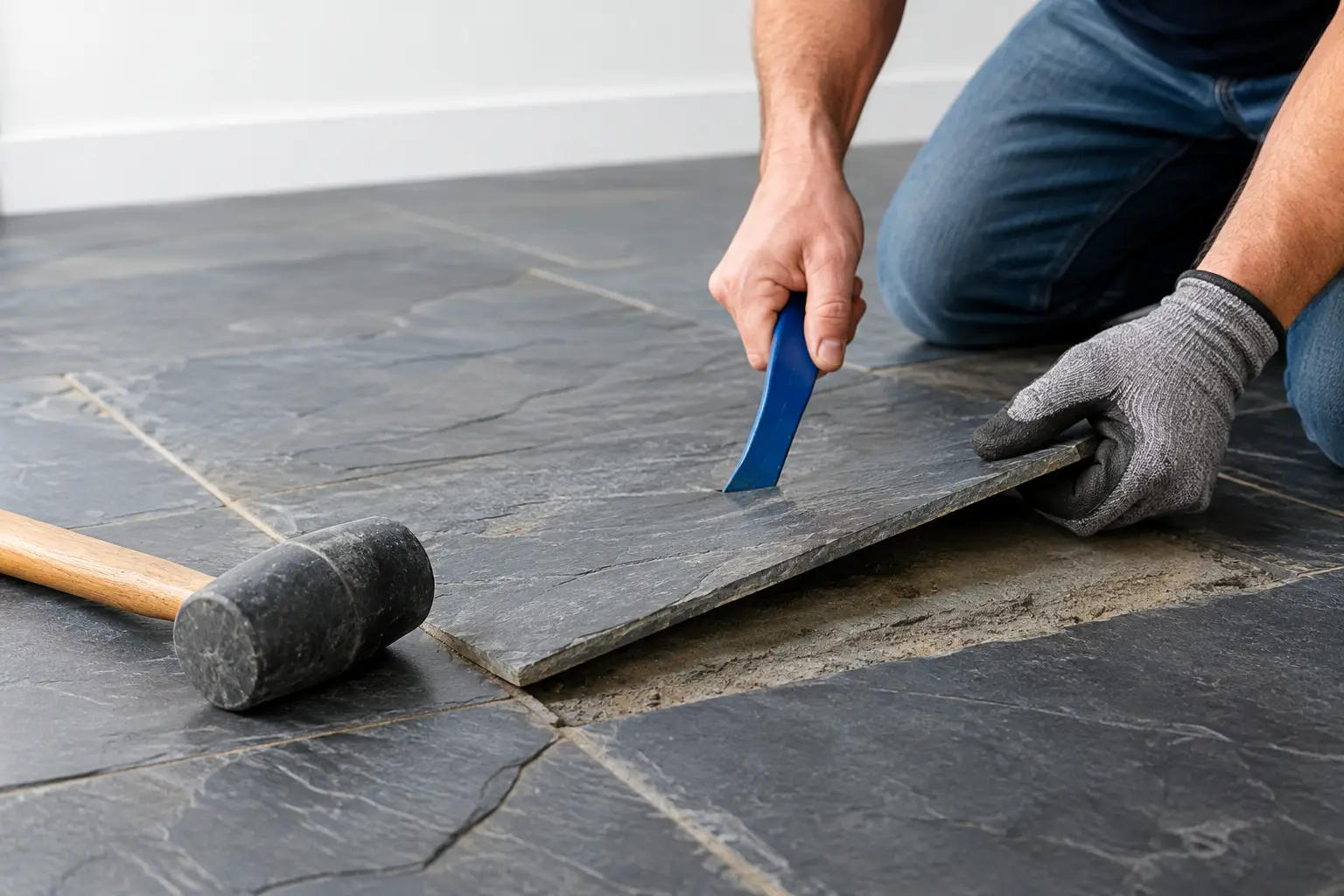
There is also a practical reason to use specialists. Concrete slabs are not all the same, and neither are floor coverings. Removing marble, slate, terracotta, ceramic tile, vinyl, timber, carpet or epoxy calls for different tools and techniques. Aggressive removal can gouge a slab or leave it uneven. Weak removal leaves old bedding and glue behind for the next trade to deal with.
Start with the renovation scope, not the demolition tools
Before any material comes out, be clear about what is being retained. Are the internal walls staying? Is the existing kitchen being removed in full? Will the bathroom be rebuilt from the slab up? Is the flooring being replaced throughout, including inside cupboards and under old cabinetry?
These decisions affect the sequence of work. For example, removing floor tiles before fixed cabinetry is taken out can leave hidden sections of old flooring behind. Keeping a wall may require more careful removal along its base to avoid damage. If new hybrid flooring, tiles or polished concrete are planned, the slab condition needs to be assessed early so the correct preparation can follow.
It also pays to confirm which services need to be isolated by qualified trades before demolition begins. Plumbing, electrical and gas services are not areas for guesswork. Demolition should proceed only once the site is made safe and the required disconnections are in place.
If the property is older, allow for the possibility of hazardous materials. Suspect materials should be assessed and handled through the appropriate process before general strip-out work starts. Rushing into demolition without checking can stop a project abruptly and create a much bigger problem.
Building access and body corporate requirements
Body corporate approval is often a practical requirement, even for internal renovation work. Check the rules on work hours, lift protection, contractor insurance, loading access, waste removal and use of common areas. Some buildings require notice to residents or bookings for lifts and loading bays.
Get these details sorted before scheduling the crew. It keeps the job moving and avoids a situation where workers and equipment are waiting downstairs because access has not been arranged.
For occupied buildings, protect the route in and out of the unit. Floor coverings, corner guards and clear rubbish runs help prevent scuffs and damage in shared spaces. It is a simple part of professional site management, but it makes a real difference in high-traffic complexes.
The floor removal stage can make or break the programme
Floor removal is often underestimated in unit renovations. Lifting carpet or floating floors may be straightforward, but tile removal, glued timber, vinyl, cork, epoxy and heavy adhesive can take serious mechanical effort. The visible floor covering is only one layer. Underneath may be mortar, patching compound, old waterproofing or multiple generations of glue.
The goal is to remove those materials without compromising the slab. Where tile bedding is hard or uneven, slab grinding may be required to produce a flat, clean substrate. This is particularly important when the new finish has tight tolerances. Large-format tiles, vinyl planks and hybrid flooring will show up lumps, ridges and adhesive residue that have been ignored.
A clean slab also gives the next trade a truthful starting point. It reveals cracks, low spots, moisture concerns and previous patch repairs before new finishes cover them. Finding those issues early is far better than discovering them after installation has begun.
There is a trade-off between speed and finish quality. If the plan is to install thick carpet, a minor slab imperfection may not matter. If the project is moving to polished concrete or glued vinyl, preparation needs to be much more exact. The demolition scope should reflect the finish being installed, not just the material being removed.
What a well-run unit strip-out looks like
A good result is easy to recognise. The work area is contained, access paths are protected and rubbish is removed efficiently. Demolition is limited to the agreed scope, with no careless damage to retained walls, windows, doors or shared property.
Inside the unit, old flooring, cabinetry, fixtures and debris are gone. Adhesive and bedding are removed to the required standard. The slab has been prepared where needed, and the site is swept and ready for inspection or the next stage of construction.
That level of finish saves time. Builders are not forced to organise extra labour for missed flooring sections. Tilers do not lose a day chipping off residual mortar. New cabinetry is not delayed because old materials are still under the kickboards. The project moves forward because the demolition phase was completed properly.
Rapid Stripped handles unit strip-outs and difficult floor removal for renovations across Northern NSW, the Gold Coast, Brisbane and the Sunshine Coast. The focus is on fast, controlled removal work, clean handover and preparing the surface for what comes next.
When to book unit demolition
The best time is after the renovation design and service plan are settled, but before your installation trades are locked into tight dates. This gives enough room to coordinate building access, complete the strip-out, inspect the exposed slab and address any preparation work required.
Avoid treating demolition as a last-minute task between trades. In a unit, access restrictions and substrate surprises can affect the schedule. Allowing the work to be done properly protects the programme rather than adding to it.
A cleared unit is more than an empty room. It is the starting point for every finish that follows. Get the old materials removed cleanly, safely and to the right depth, and the renovation has a far better chance of running the way it should.