
A warehouse floor can look serviceable right up until the old coating starts lifting under forklifts, holding grime in worn patches or breaking away at the joints. At that point, applying another coating over the top is rarely the answer. This warehouse coating removal case study shows what is involved in taking a tired industrial floor back to a sound, clean slab that is ready for its next use.
The job described is representative of the commercial preparation work Rapid Stripped handles across Northern NSW, the Gold Coast, Brisbane and the Sunshine Coast. Every slab, coating system and operating warehouse is different, but the same principle applies: remove the failed material properly, inspect what is underneath, and leave the surface ready for the next trade.
Warehouse coating removal case study: the brief
The warehouse was still operating, so disruption had to be controlled. The existing coating had deteriorated across high-traffic lanes and loading areas, while sections around the perimeter remained firmly bonded. There were also old patch repairs, tyre marks and adhesive-like residue where equipment had previously been fixed to the floor.
The client needed the old coating removed before a new floor finish could be installed. They did not need a rough strip-out that shifted the problem to the coating contractor. They needed a clean, consistently prepared slab with no loose edges, no hidden contamination and no piles of dust left for other trades to manage.
That distinction matters. Coating removal is not simply about making a floor look bare. The finish needs to be removed without damaging the concrete unnecessarily, while leaving the right surface profile for the product that follows. What is right depends on the new system, the slab condition and the manufacturer’s preparation requirements.
The condition under the coating
The first challenge was that the floor did not fail evenly. In the forklift lanes, the coating was worn and partly delaminated. In quieter areas it was still tightly adhered. A machine that removes loose coating quickly may not be suitable for the firmly bonded sections, particularly if it causes chatter marks or digs into the concrete.
The slab also showed signs of previous repairs. That is common in active warehouses. Small cracks, patched areas and changes in texture can all affect how a grinder tracks across the floor and how a replacement coating performs. Removal work exposes these issues early, which is far better than discovering them after the new system has started going down.
Why a scraper-only approach would have failed
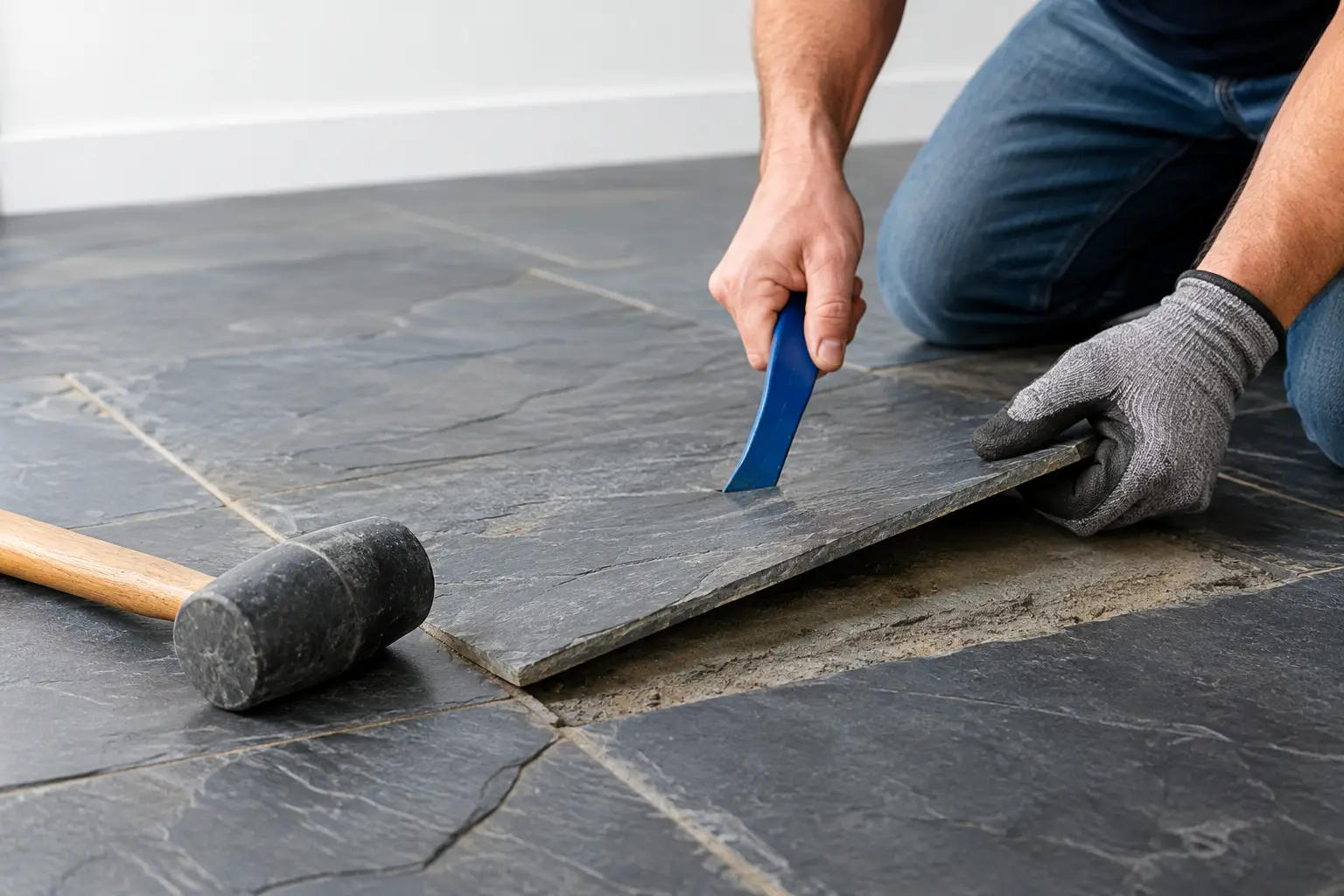
Mechanical scraping can be useful when coatings are thick, soft or already lifting. It is often a good first pass because it removes bulk material efficiently. But it is not a complete solution for a floor with hard-bonded epoxy, paint, adhesive residue or varying layers from past maintenance work.
On this type of job, a scraper-only approach would have left bonded material in the slab texture and created an inconsistent surface. That can interfere with adhesion and leave the incoming flooring contractor with extra preparation work. It can also make a warehouse floor look patchy even if the coating is technically covered later.
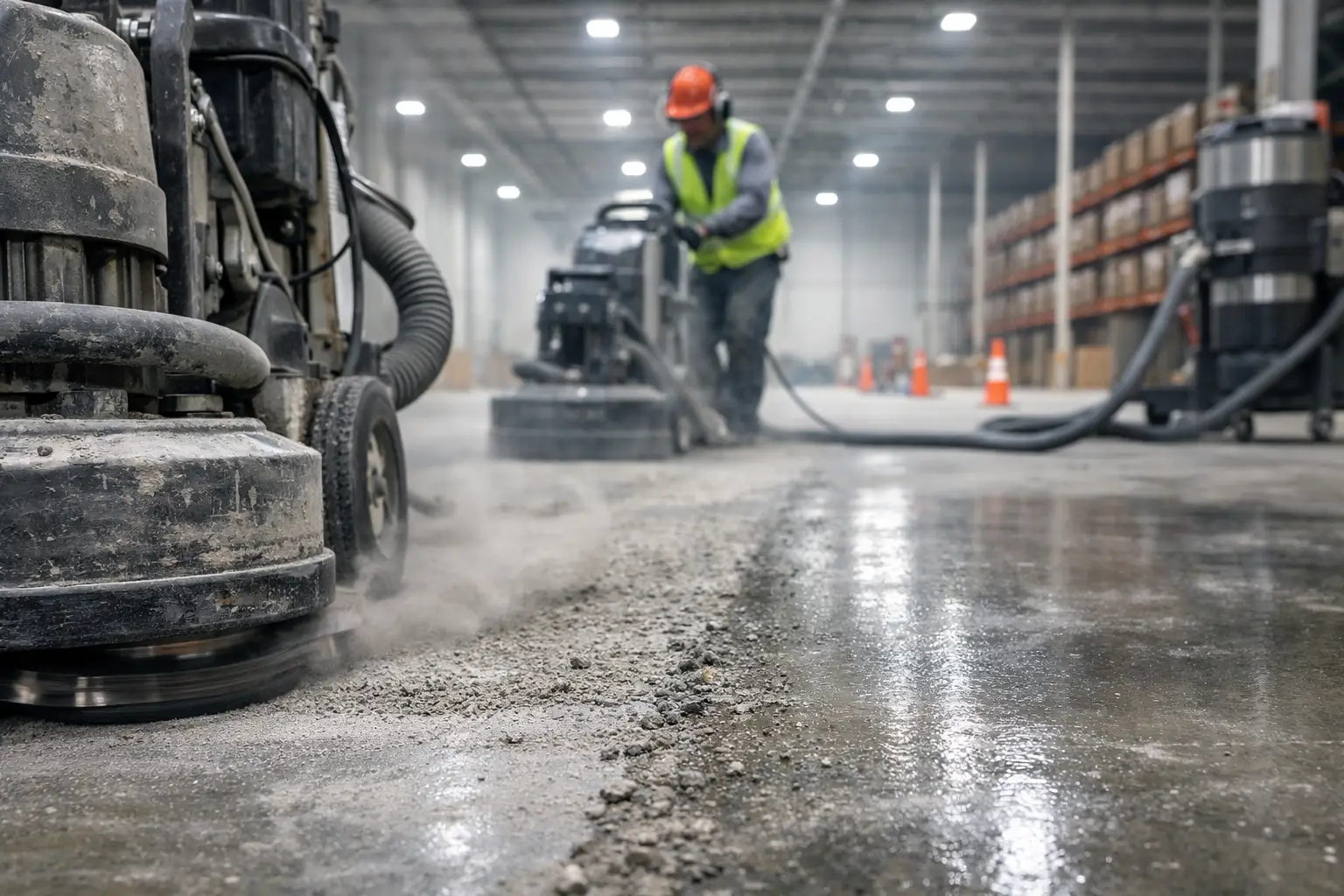
The better approach was to match the removal method to the material and condition of each zone. Heavy removal equipment handled the broad areas, while diamond grinding was used to clear remaining coating and refine the concrete surface. Edges, doorways and hard-to-reach sections were completed with smaller equipment so the preparation did not stop short of the walls.
The removal plan
Before machinery was brought onto the floor, the work area was checked for access, stock movement, services and safe separation from warehouse staff. In a working commercial site, planning the job properly is as important as selecting the right grinder. A fast result is no help if it blocks dispatch, creates avoidable hazards or leaves other workers exposed to dust.
The floor was then divided into practical work zones. This allowed the team to complete and clean one area before moving to the next, rather than spreading debris across the full warehouse. Where operations need to continue nearby, staged work can make a major difference to disruption. In a vacant warehouse, a larger continuous work area may be more efficient. It depends on the site programme.
Removing the bulk coating
The first pass focused on lifting the weakest and thickest sections of the old coating. This reduced the amount of material that needed to be ground away and made the hard-bonded sections easier to identify. It also exposed areas where the coating had concealed minor slab defects.
The team avoided treating every square metre as if it had the same bond. That is how concrete gets damaged and production slows down. Experienced removal work is about reading the floor as the job progresses. If the coating comes up cleanly in one area but remains tenacious in another, the equipment and technique need to change with it.
Grinding to a consistent finish
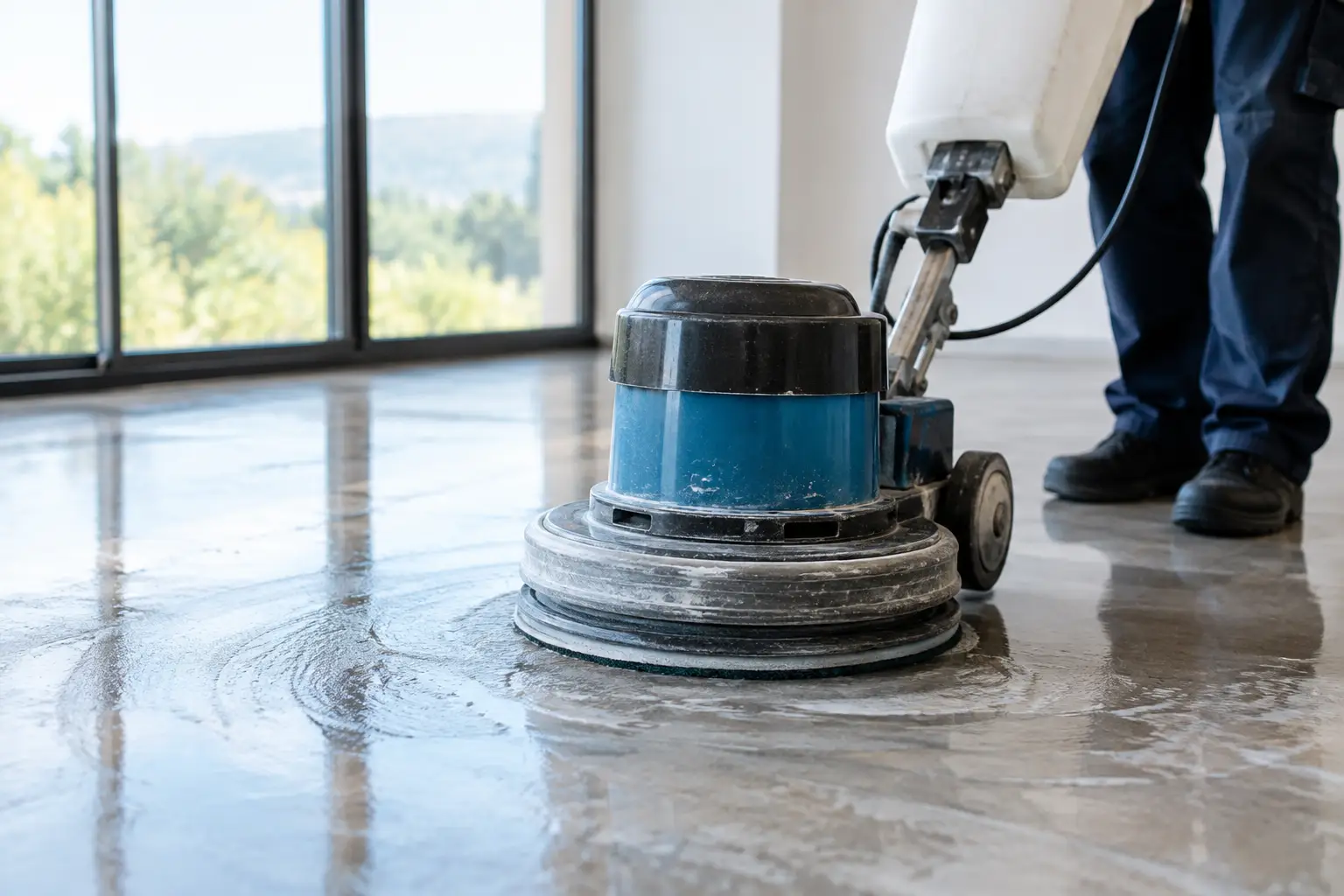
After the bulk material was removed, the slab was mechanically ground to remove residual coating and provide an even preparation standard. This is where the difference between stripping a floor and preparing a floor becomes clear.
Grinding needs to remove contaminants without polishing the slab too smooth or cutting excessively deep. The aim is a clean, open concrete surface that suits the specified replacement system. If a new epoxy, urethane cement or other commercial coating is planned, the installer may have particular profile requirements. Confirming those requirements before removal starts prevents unnecessary rework.
The perimeter work was just as important as the open floor. Coatings often remain tucked along walls, around columns and beneath racking lines. Leaving those strips in place may save time on the day, but it creates visible weak points and can complicate the next stage of the project.
Dust control was part of the job, not an add-on
Concrete grinding and coating removal produce fine dust. In an enclosed warehouse, that dust can travel well beyond the work zone if it is not controlled properly. It can settle on stock, enter equipment and create a clean-up problem that lasts longer than the removal work itself.
The removal equipment was connected to appropriate industrial dust extraction, with work areas kept contained and progressively cleaned. This does not mean a site will be completely dust-free – no removal contractor should promise that on a heavy mechanical job – but it does mean dust is actively managed at the source rather than swept up after it has spread.
Good dust control also supports visibility and safety. Operators can assess the slab more accurately, identify remaining coating and maintain a cleaner work environment. For warehouse managers, it means fewer surprises when the site is handed back.
What the team found after stripping
Once the coating was removed, several slab repairs required attention before the new finish could be installed. This was not a failure of the removal process. It was one of its most valuable outcomes. The old coating had masked variations that needed to be addressed for a quality replacement floor.
The exposed slab also made it possible to check for oil contamination and weak concrete at the surface. Where contaminants have penetrated deeply, simply grinding the visible coating away may not be enough. Additional treatment, local repair or advice from the incoming coating contractor may be required. This is why an honest assessment matters more than rushing to call a floor ready.
By the end of the work, the warehouse had a clear, mechanically prepared concrete surface, with waste removed and the floor cleaned for the next trade. The client could move from demolition and removal into repairs and recoating without carrying old material, loose edges or hidden residue into the new system.
What warehouse managers can take from this job
The main lesson is simple: coating removal should be planned around the floor that is going back down, not just the coating coming up. The existing material, slab condition, site access, dust requirements and warehouse operations all affect the right method.
If the warehouse will stay live during works, staged zones and clear communication are essential. If the building is empty and the programme is tight, a larger crew and continuous mechanical removal may be the better path. If the slab has heavy contamination or previous patching, allow time for inspection and repairs after stripping. There is no one-size-fits-all machine or method.
A properly prepared slab gives the next contractor a fair starting point. That protects the finish, reduces the risk of avoidable adhesion issues and keeps a commercial project moving. Before a new coating goes down, make sure the old one has been removed with the same level of care expected from the new floor.