
A new floor is only as reliable as the concrete beneath it. This guide to concrete surface profiling explains what needs to happen after old tiles, vinyl, timber, epoxy or adhesive come up, and before the next finish goes down. The aim is not simply to make a slab look cleaner. It is to create the right surface texture, soundness and cleanliness for the product being installed.
For renovators, builders and property managers, getting this stage wrong can mean adhesive failure, hollow tiles, peeling coatings, uneven finishes and delays when trades cannot start as planned. Getting it right gives the next contractor a clean, properly prepared slab that is ready to perform.
What concrete surface profiling actually means
Concrete surface profiling is the controlled mechanical preparation of a concrete slab. It removes weak material, old coatings, adhesive residue, laitance and contaminants while creating a texture that allows the next layer to grip properly.
Laitance is the weak, dusty film that can sit on the top of concrete after it has cured. It may not be obvious until a coating or adhesive fails with the laitance still attached underneath. Paint, levelling compounds and tile adhesives need to bond to sound concrete, not a fragile surface layer.
The required profile depends on the finish. A slab being prepared for polished concrete has very different requirements from one receiving thick epoxy, waterproofing, tile adhesive or a cement-based levelling compound. A profile that is too smooth can leave a coating without enough mechanical grip. One that is too aggressive can create unnecessary repair work, high spots and extra material use.
That is why surface preparation should be planned around the specified floor system, not treated as a generic grinding job.
Why profiling matters after floor removal
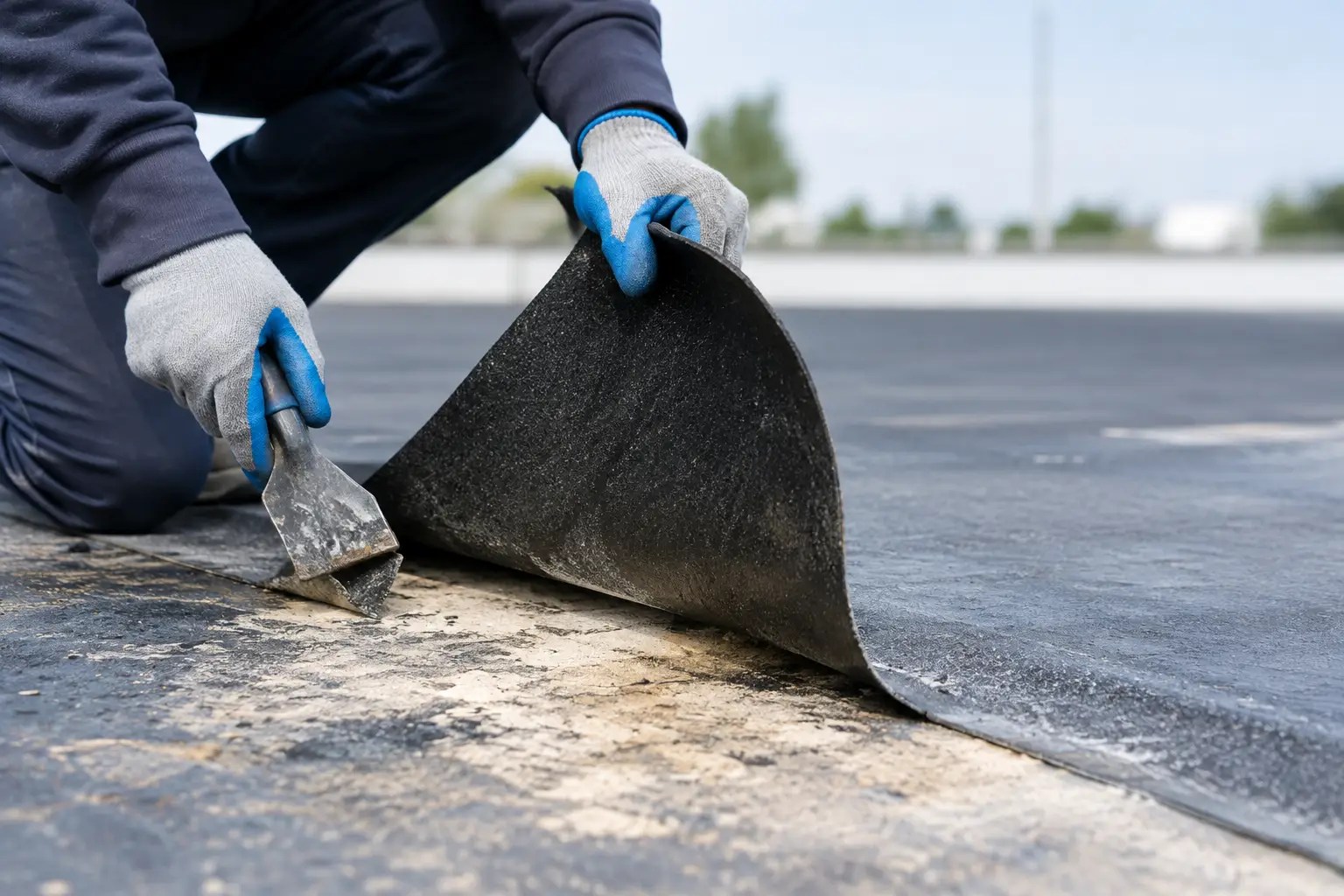
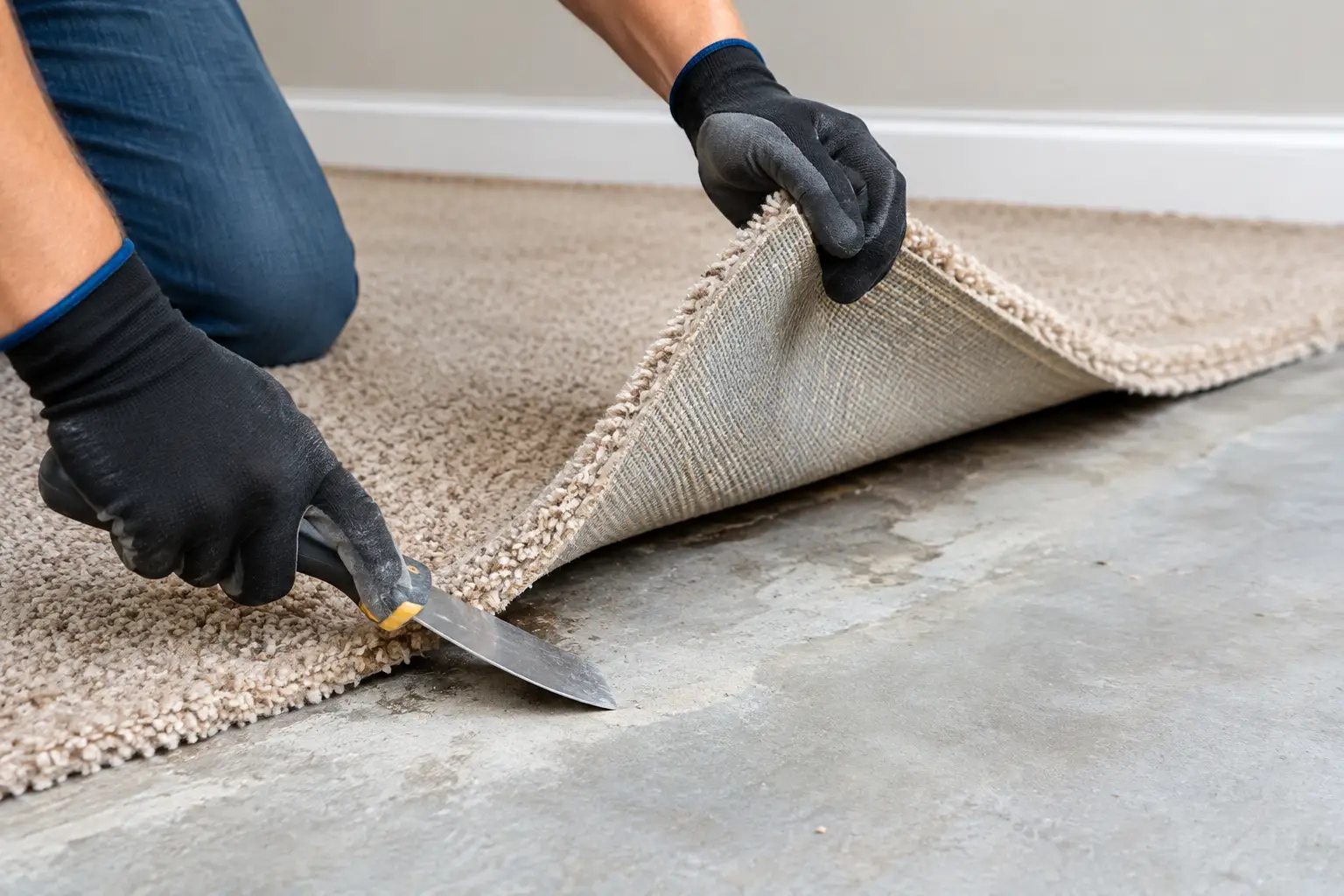
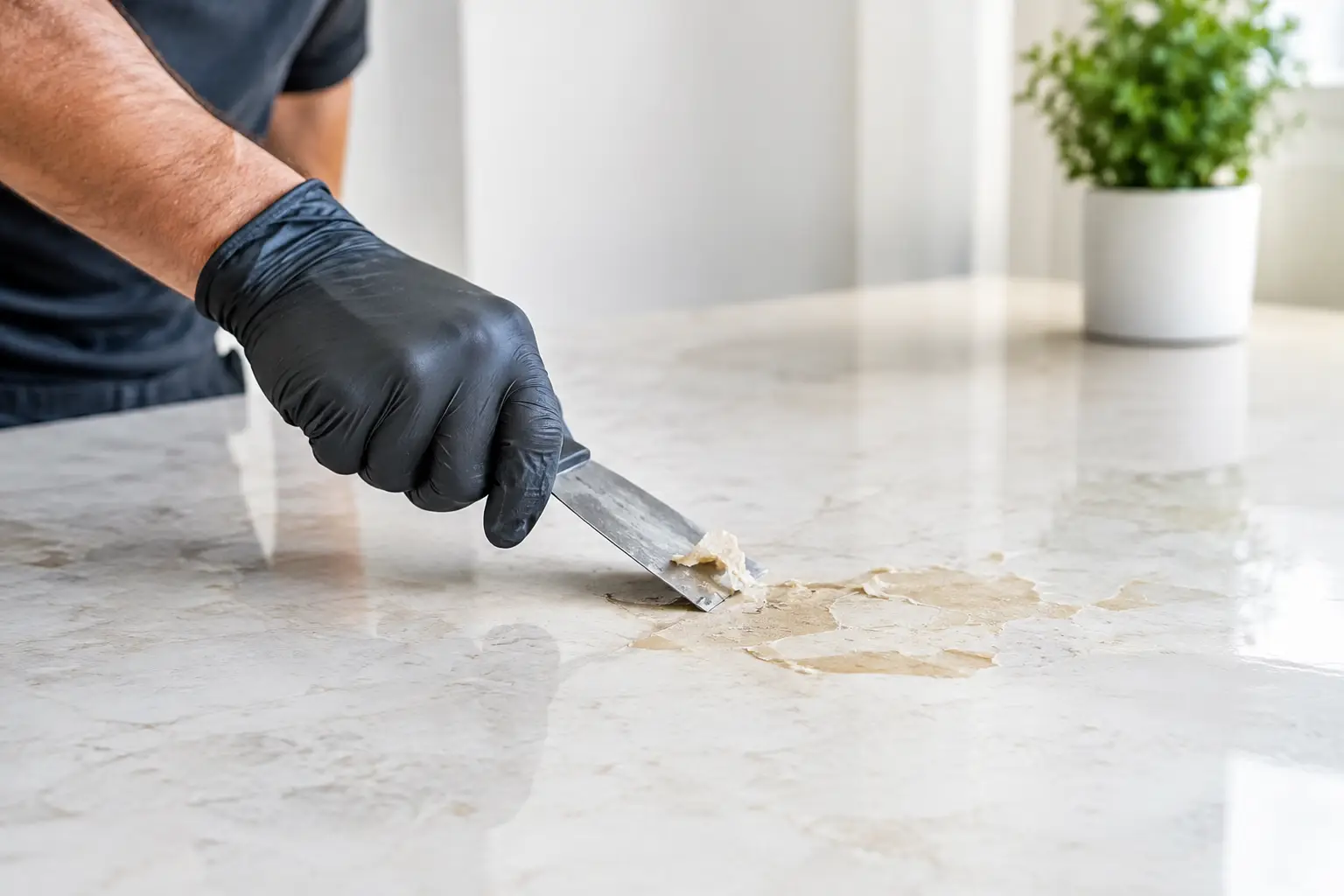
Removing a floor covering is only the first part of the job. Tile bedding, carpet glue, vinyl adhesive, epoxy, paint and self-levelling products often remain bonded to the slab. Even when the floor looks clear, residues can affect adhesion or alter how a new finish dries and cures.
A concrete slab can also reveal problems once coverings are removed. There may be cracks, patch repairs, uneven sections, old floor penetrations, moisture staining or areas where previous adhesives have pulled away. These issues are easier to assess when the surface is exposed and properly cleaned.
For a residential renovation, profiling may be needed to take up tile adhesive and create a consistent base for new tiles, hybrid flooring or levelling compound. In a commercial tenancy, it may involve removing failed epoxy or paint and preparing concrete for a new coating system. The method changes, but the principle stays the same: expose clean, sound concrete and leave the surface in the condition the next trade needs.
A guide to concrete surface profiling methods
The right machine is selected based on the existing material, slab condition, access, required finish and dust-control needs. There is no single method that suits every floor.
Diamond grinding
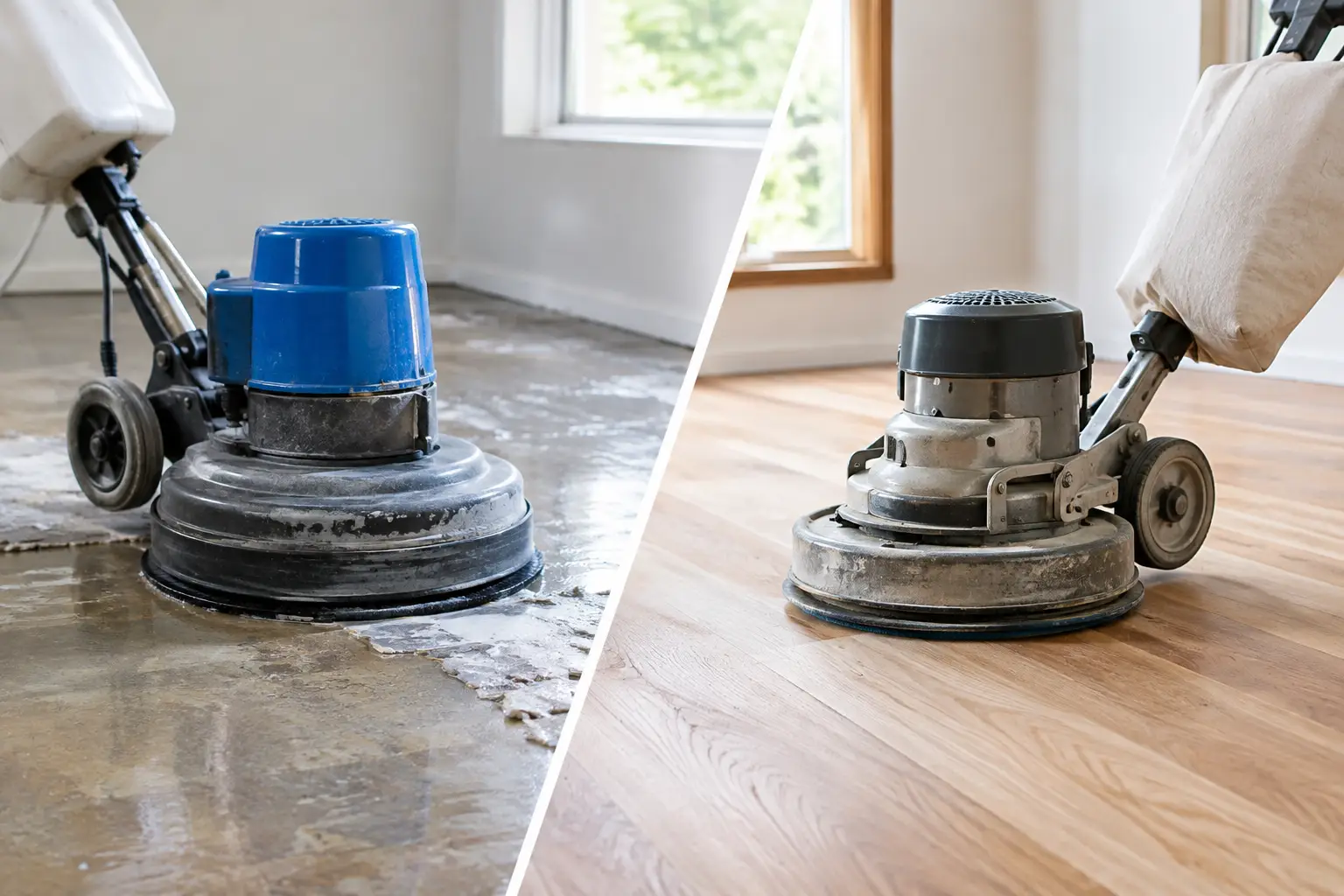
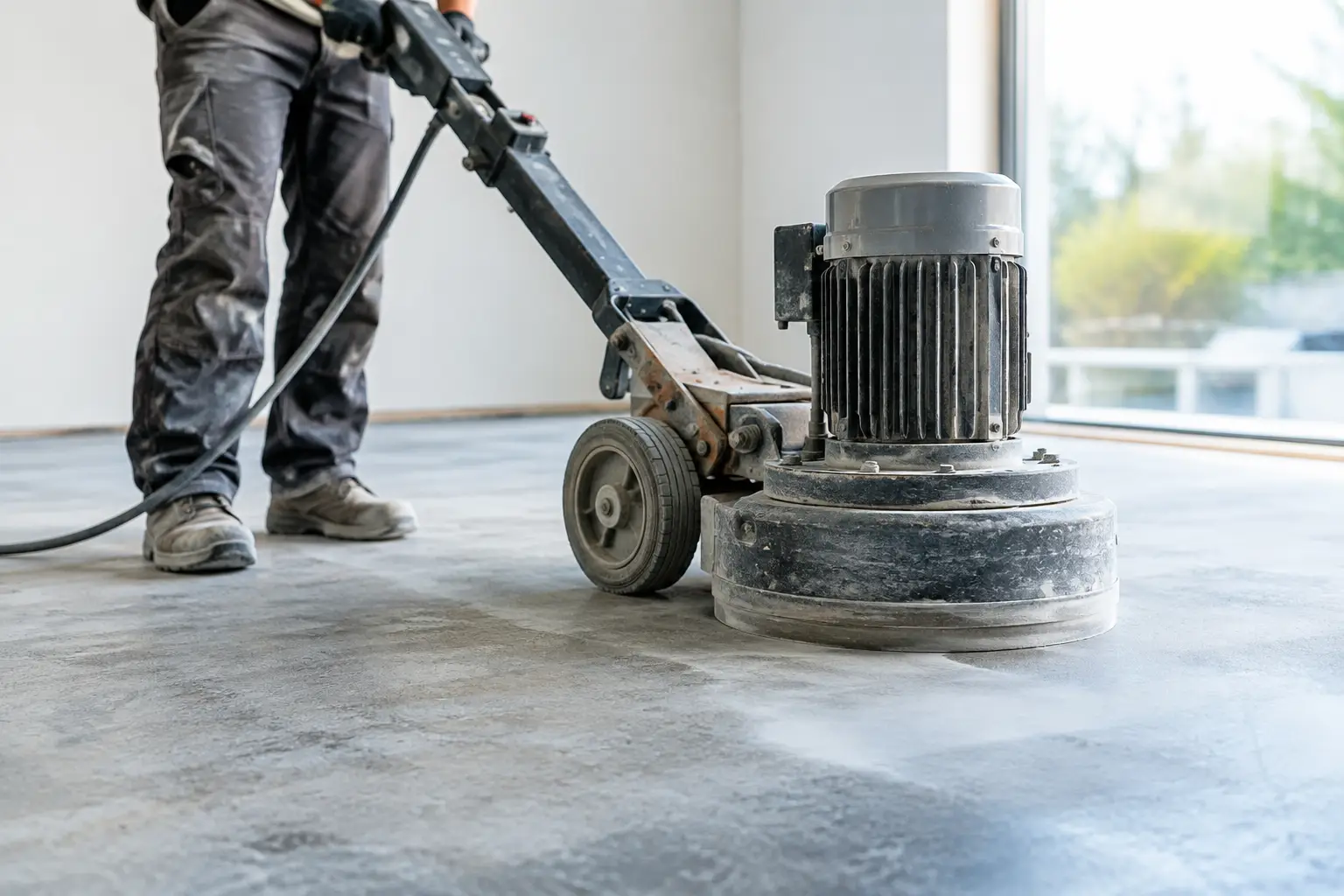
Diamond grinding is one of the most common profiling methods. A floor grinder fitted with diamond tooling cuts through adhesive, thin coatings, tile bedding residue, uneven patches and the upper layer of concrete. It is highly effective for producing a controlled, even profile across large areas.
Grinding is often the best option where a slab needs to be flattened as well as prepared. It can reduce high spots, remove stubborn adhesive and blend transitions between old and repaired concrete. Different diamond bonds and grits are used according to the hardness of the slab and the material being removed.
The trade-off is that grinding can expose more aggregate or leave swirl marks if the wrong tooling or sequence is used. For this reason, it should be carried out by operators who understand the finish required, rather than simply making repeated passes until the surface looks clean.
Scarifying
Scarifying uses rotating cutters to chip and plane concrete. It is more aggressive than standard diamond grinding and is suited to thicker coatings, heavy build-up, trip hazards, raised sections and surfaces that need a deeper profile.
This method can remove material quickly, but it leaves a rougher finish. That can be ideal beneath thick toppings or certain industrial coating systems, yet unsuitable where a smooth levelling layer or a finer finish is required. Scarifying is often followed by grinding to remove ridges and bring the slab back to a more consistent condition.
Shot blasting
Shot blasting propels small steel shot at the concrete surface, stripping contaminants and creating an even textured profile. The shot is recovered inside the machine, while dust and debris are collected through an attached vacuum system.
It is an efficient option for open commercial areas where coatings, sealers or surface contaminants need to be removed without adding water. Shot blasting does not flatten a slab or remove thick adhesive as effectively as grinding, so it is usually selected for surface preparation rather than levelling.
Hand-held grinding and edge work
Large machines cannot reach every area. Edges, corners, door jambs, bathroom perimeters, stair landings and spaces around penetrations require hand-held grinders. This detail work matters. Leaving adhesive or weak concrete around the perimeter can create failures exactly where flooring meets walls, skirtings or transitions.
A properly prepared floor should not have a well-profiled centre and untouched edges. Consistency across the whole installation area is what allows the new system to perform as intended.
Match the profile to the finish being installed
Surface profile is often described on a scale from relatively smooth through to heavily textured. The manufacturer of the adhesive, coating, waterproofing membrane or topping will generally specify what it needs. Their instructions should lead the preparation process.
For thin floor coatings and many levelling compounds, the slab usually needs a clean, lightly textured surface with no loose material or contaminants. Tile adhesive generally needs sound, absorbent concrete with enough texture for mechanical bond, while still being flat enough to avoid excessive adhesive build-up.
Thicker epoxy systems, repair mortars and cementitious toppings may need a more open profile. They need something substantial to key into. If a thick system is applied over a slab that has merely been swept or acid-washed, the risk of debonding rises sharply.
Acid washing is sometimes assumed to be a shortcut for preparation. It is not a replacement for mechanical profiling. It can leave residues, does not reliably remove contaminants and creates wastewater that must be managed correctly. Mechanical preparation gives a more controlled result and makes it easier to see the actual condition of the concrete.
Check the slab before calling it ready
A clean-looking slab is not automatically ready for installation. Before the next stage begins, inspect it for soundness, flatness, contamination and moisture.
Soundness means checking for drummy areas, loose patches, weak concrete and cracks that require repair. Flatness matters where large-format tiles, vinyl planks, polished finishes or level-sensitive flooring are planned. A grinder can reduce high spots, but low areas may need an approved repair or levelling product.
Contamination can include oil, grease, curing compounds, silicone, paint residues and old adhesive. Some contaminants sit below the visible surface and can interfere with bonding even after the floor appears clean. Where there is uncertainty, test patches and adhesion testing can prevent a much bigger failure later.
Moisture is a separate issue from surface profile. Grinding opens the concrete and prepares it for bond, but it does not solve excessive moisture vapour. If the specified flooring system requires moisture testing or a moisture barrier, complete that process before installation. Skipping it can put a new floor at risk regardless of how well the slab was profiled.
Dust control is part of a professional preparation job
Concrete grinding and removal work create fine silica dust. It does not belong drifting through a home, occupied office, retail space or adjoining work area. Proper dust extraction, sealed equipment where practical, work-zone control and thorough clean-up are essential.
Dust control also improves the quality of the job. It keeps the slab visible during preparation, reduces contamination on surrounding surfaces and allows other trades to return sooner. In active renovation sites across Northern NSW, the Gold Coast, Brisbane and the Sunshine Coast, this can make a real difference to programme timing and disruption.
The same applies to rubbish removal. Broken tile, bedding, adhesive and demolition debris should be cleared from site so the floor can be inspected properly. A floor is not ready because the machine has stopped. It is ready when the surface, edges and work area are clean enough for the next trade to take over.
When to bring in a surface preparation specialist
Straightforward slabs can still become difficult when thick adhesive, multiple old finishes, failed coatings or uneven concrete are involved. The job may also need specialist equipment where access is tight, dust must be tightly controlled or the installation deadline is close.
A specialist floor removal and preparation team can assess the existing floor, remove the covering and residue, profile the concrete, manage dust and leave the area ready for the specified next step. This avoids the common handover problem where one contractor removes the floor but the installer inherits an uneven or contaminated slab.
If you are planning a renovation or commercial refit, confirm the required floor system early and prepare the slab to suit it. The best result is a surface that does not just look stripped back, but gives the next finish every chance to stay put for years.