
A concrete slab can look clean until grinding, chasing, drilling or tile removal starts. Then the air can fill with fine dust fast – including respirable crystalline silica, the fraction small enough to travel deep into the lungs. Concrete dust hazards are not just a housekeeping issue. They affect the people doing the work, other trades on site, occupants nearby and the condition of the property being renovated.
For homeowners and project managers, the practical question is simple: can the removal or surface-preparation work be completed without turning the rest of the site into a dusty clean-up job? The answer depends on the material, the method, the equipment and how well the work area is controlled from start to finish.
Why concrete dust hazards need proper control
Concrete, mortar, screed, grout, engineered stone and many tile-bedding products can contain crystalline silica. When these materials are intact, the silica is generally contained. The risk rises when a surface is mechanically disturbed – particularly during dry grinding, cutting, scabbling, drilling or demolition.
The finest particles are the concern. They may be too small to see clearly, which means a room can appear clear while respirable dust remains in the air. Repeated or high-level exposure to respirable crystalline silica can cause serious long-term lung disease, including silicosis, and can increase the risk of other respiratory conditions.
There is also an immediate site impact. Concrete dust settles through open doorways, air-conditioning returns, cabinetry, electrical fittings and adjoining rooms. It can delay painters, cabinetmakers, flooring installers and other follow-on trades. On an occupied commercial site, it can interrupt operations well beyond the actual work zone.
Where silica dust is commonly created
Not every concrete-related task produces the same amount of dust. A small anchor-hole drilled with the right capture system is very different from dry-grinding adhesive across an entire slab. The volume of material removed, the duration of the task, ventilation and the condition of the equipment all matter.
Slab grinding and levelling
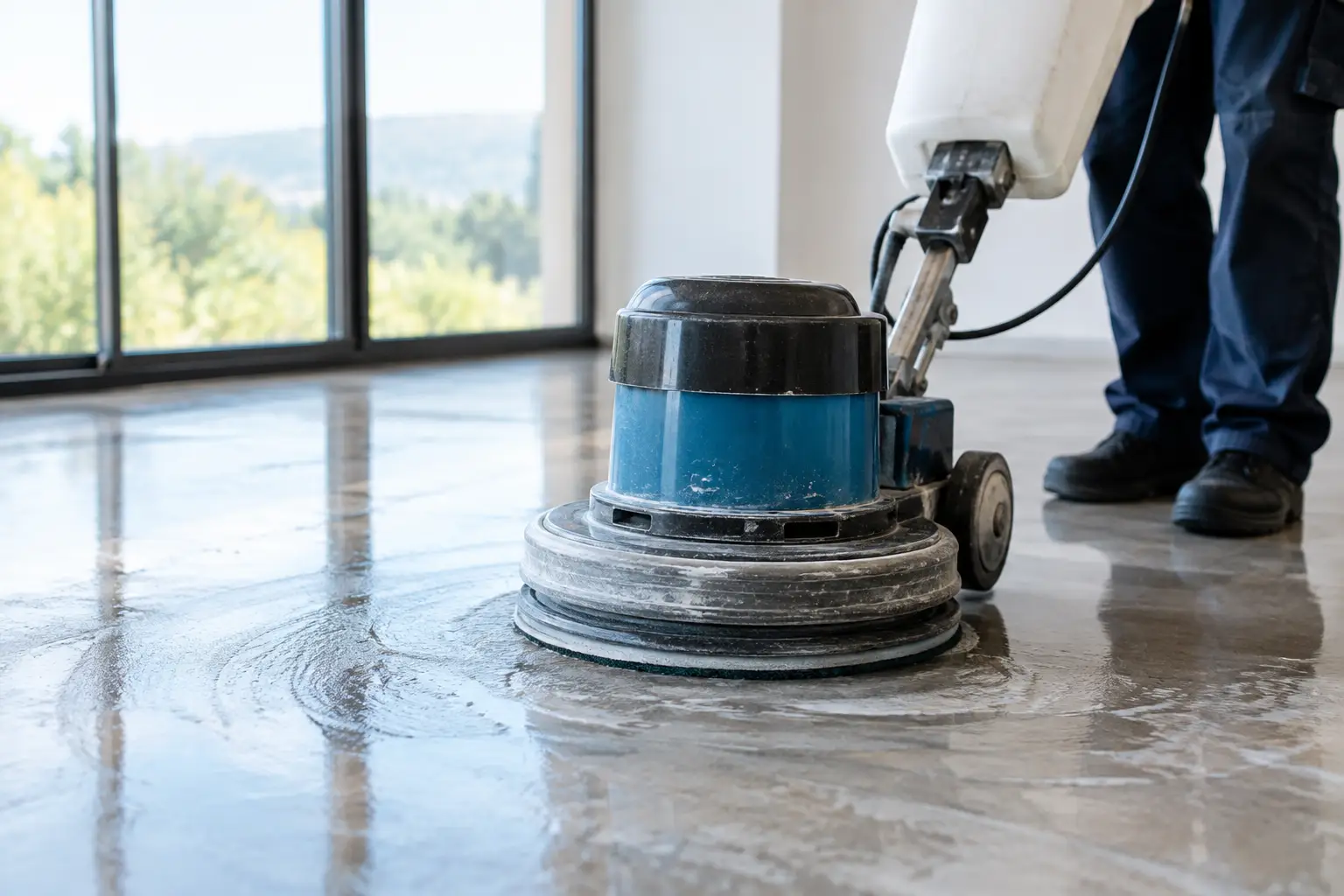
Grinding high spots, removing glue residue or preparing a slab for new flooring can produce substantial fine dust if it is done dry or with poor extraction. This is one reason floor preparation needs purpose-built grinders connected to correctly rated industrial dust extractors, rather than a general vacuum pushed into service.
Tile and bedding removal
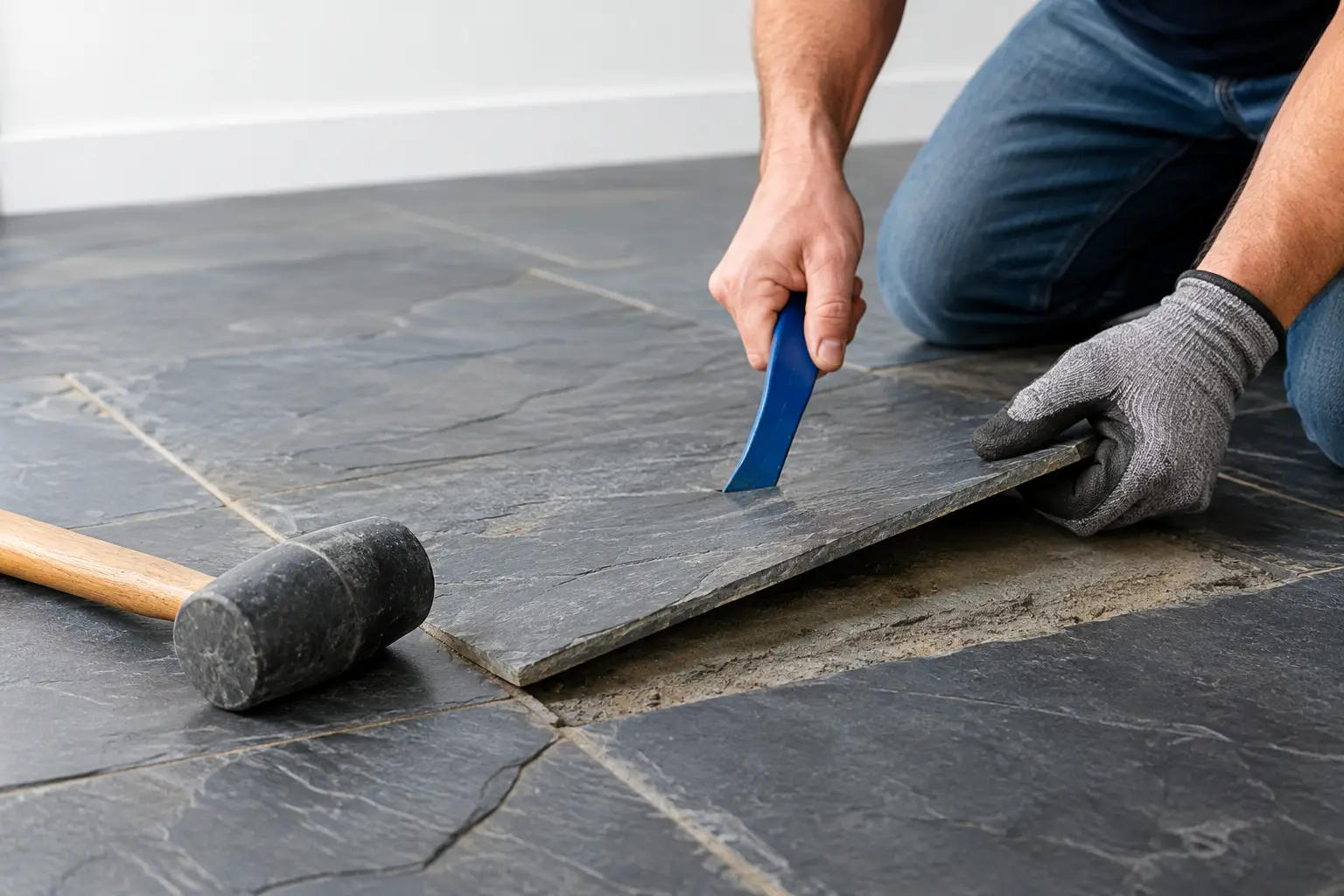
Lifting tiles can release dust from grout, bedding and the substrate below. The dust load often increases when stubborn bedding is mechanically removed or when a slab is ground to achieve a clean, level finish. Older adhesive layers can add another complication, as they may smear, bond tightly or require controlled mechanical removal.
Concrete cutting, chasing and drilling
Cutting control joints, chasing walls or floors for services, and drilling multiple penetrations are all high-risk dust tasks when controls are not in place. These jobs are often completed in confined areas such as bathrooms, units and occupied offices, where dust migration is harder to manage.
Demolition and strip-outs
During a kitchen, bathroom or full-property strip-out, concrete dust can be created alongside plaster, tile, grout, render and general demolition debris. The work needs to be staged. Breaking out materials without containment or extraction may be quick for a few minutes, but it usually creates a much bigger problem afterwards.
The controls that make a real difference
Personal protective equipment matters, but it is the last line of defence. The best approach is to control dust at its source before it has the chance to spread.
For many tasks, wet cutting or wet grinding can significantly reduce airborne dust. Water must be delivered where the tool contacts the material, not sprayed generally around the room. Wet methods also create slurry, which needs to be contained and removed properly. Allowing slurry to run into drains, across finished surfaces or into neighbouring areas simply swaps one site problem for another.
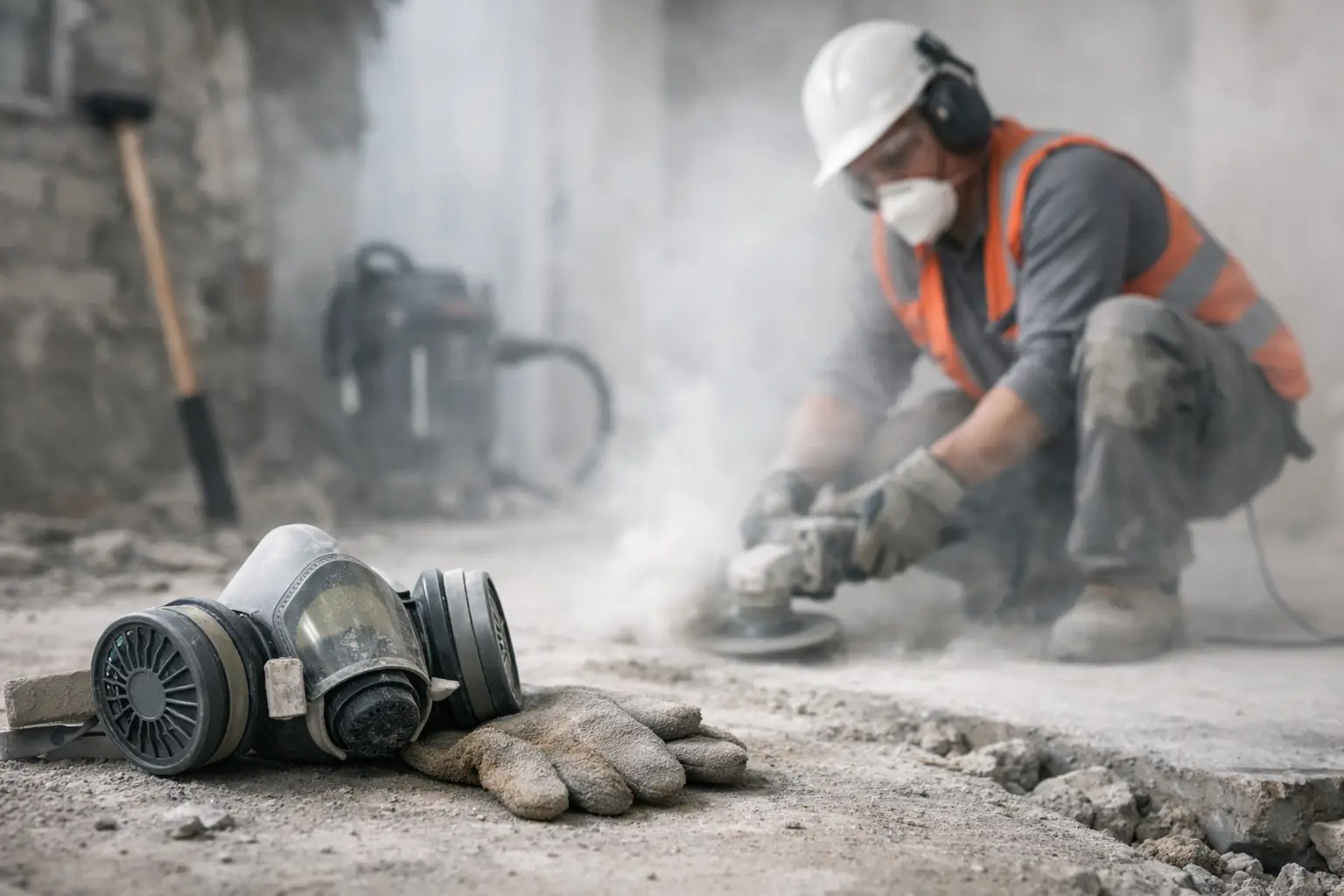
On many floor-preparation jobs, local extraction is the more practical solution. A grinder shroud connected to a HEPA-filtered dust extractor captures material as it is generated. The machine needs enough airflow, suitable filtration and well-maintained seals. A domestic vacuum, even a powerful-looking one, is not a substitute for equipment designed to manage fine concrete dust.
Containment is equally important. Work zones should be isolated using appropriate barriers, with access points planned so workers are not walking dust through the property. In occupied homes, offices, retail spaces and unit buildings, protecting air pathways and nearby finished areas can be as important as the removal itself. Depending on the layout and the job, controlled ventilation or negative air management may also be needed.
Respiratory protection is still required where there is a remaining dust risk. Workers need properly selected, fitted and maintained respiratory protective equipment for the task. A mask worn loosely, used beyond its service life or taken off during the dustiest part of a job offers false confidence rather than meaningful protection.
Clean-up is part of dust control, not an afterthought
A common mistake is to finish the grinding or removal, then dry sweep the floor. That puts fine dust straight back into the air. Using compressed air to clean tools, clothing or corners causes the same problem.
A controlled clean-up uses HEPA-filtered vacuuming and damp methods where suitable. Surfaces beyond the immediate work zone should be checked, especially ledges, window tracks, skirting areas and ventilation points where dust can settle unnoticed. Waste should be bagged or contained before it is carried through clean areas.
This standard of clean-up does not mean a demolition or removal site will look like a finished living room. It means the job is left orderly, controlled and ready for the next stage – without a preventable layer of dust spreading through the building.
What property owners should ask before work starts
You do not need to become a dust-control expert to assess whether a contractor has a sound plan. Ask how the team will remove or grind the material, whether dust extraction or wet methods will be used, and how adjoining rooms will be protected. For work in an occupied property, ask how access will be managed and whether the site can remain functional while the work is underway.
It is also worth confirming what the final substrate should look like. A floor installer may need adhesive removed, a level tolerance achieved or a slab profile suitable for the new finish. Rushing the removal stage can leave contamination or uneven areas that cost time later. The right outcome is not simply getting the old floor out. It is handing over a surface that is genuinely ready for the next trade.
When DIY dust control is not enough
Small, isolated jobs can sometimes be managed safely with the right tools, controls and knowledge. But large tile-removal projects, slab grinding, difficult adhesive removal and internal demolition are different. The dust can become difficult to contain quickly, especially in homes with open-plan layouts, furnished rooms, shared hallways or air-conditioning systems.
There is a trade-off to consider. Doing the work yourself may appear to save time, but hiring equipment, setting up containment, handling slurry, cleaning thoroughly and protecting surrounding finishes can turn a simple plan into a lengthy job. If the slab needs proper preparation for new flooring, inconsistent grinding can also create a costly rework issue.
A specialist team brings the machinery, extraction systems and work sequence needed to remove materials efficiently while keeping the site under control. Rapid Stripped approaches floor removal and slab preparation with that end result in mind: fast progress, minimal disruption and a clean substrate ready for renovation.
Concrete dust is manageable, but only when it is treated as a real site hazard from the first cut to the final clean. Choose a work method that controls dust at the source, protects the surrounding property and leaves the next trade with a proper starting point.