
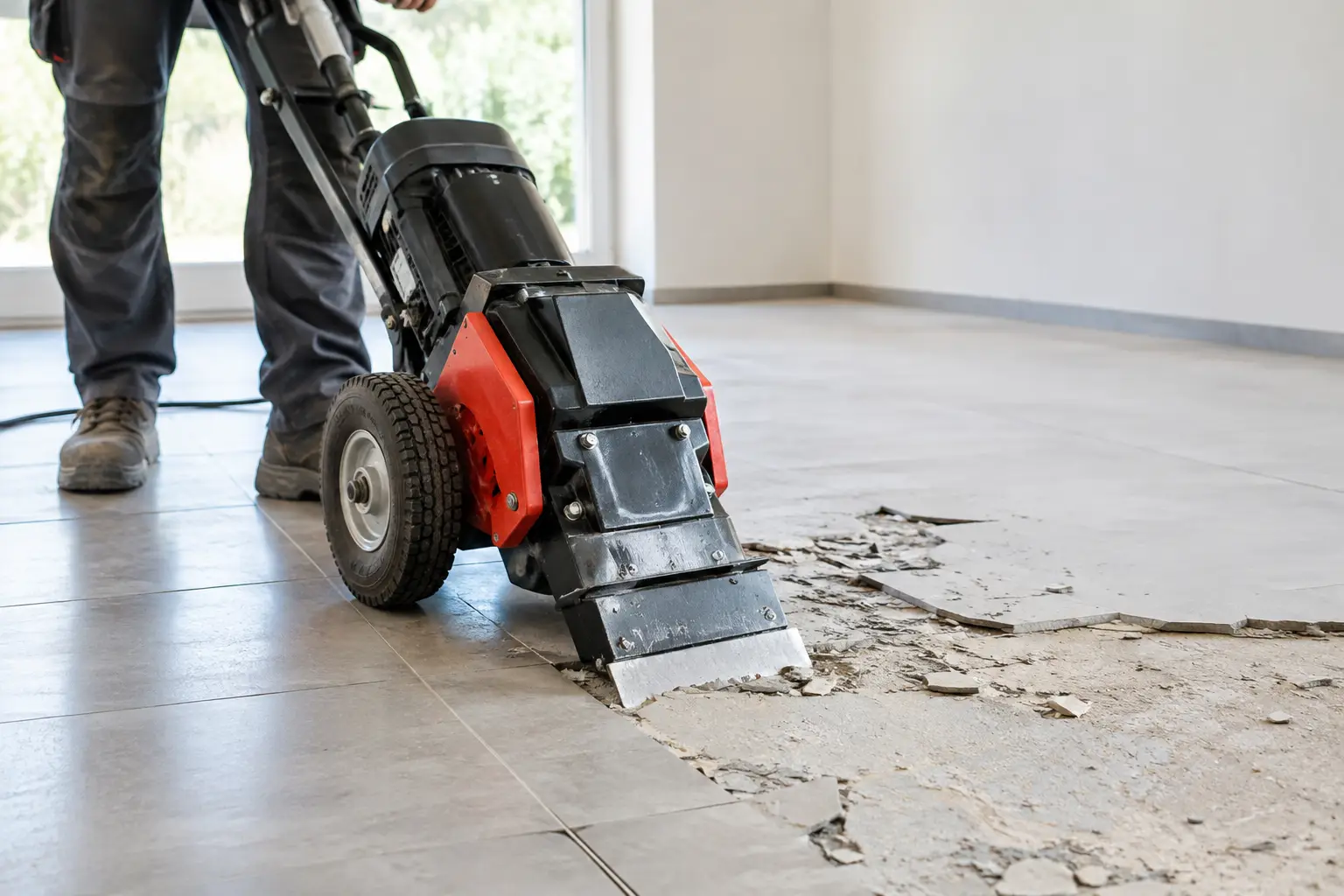
A tile floor can look straightforward until the first few tiles come up. Then the real job shows itself: hard bedding, stubborn adhesive, loose sections beside tiles bonded like concrete, and a slab that still has to be fit for the next trade. This tile removal machine review looks at the equipment that earns its place on site, where each machine falls short, and why the fastest option is not always the best one.
For homeowners and renovators, the main question is usually, “What machine will get these tiles out?” For a professional removal team, the better question is, “What machine will remove the tiles, protect the substrate, control dust and leave the floor ready for what comes next?” That difference matters.
Tile removal machine review: what matters on a real job
There is no single machine that is best for every tiled floor. Ceramic wall tiles in a small bathroom need a different approach from porcelain tiles bonded to a concrete slab across an open-plan home. Natural stone, terracotta, marble and pool tiles each present their own challenges as well.
A useful machine must have enough impact to break the bond without turning the slab into a repair job. It also needs to be manageable around doorways, fixtures, stairs and occupied areas. Weight, blade angle, vibration, access, noise and dust generation all affect the outcome.
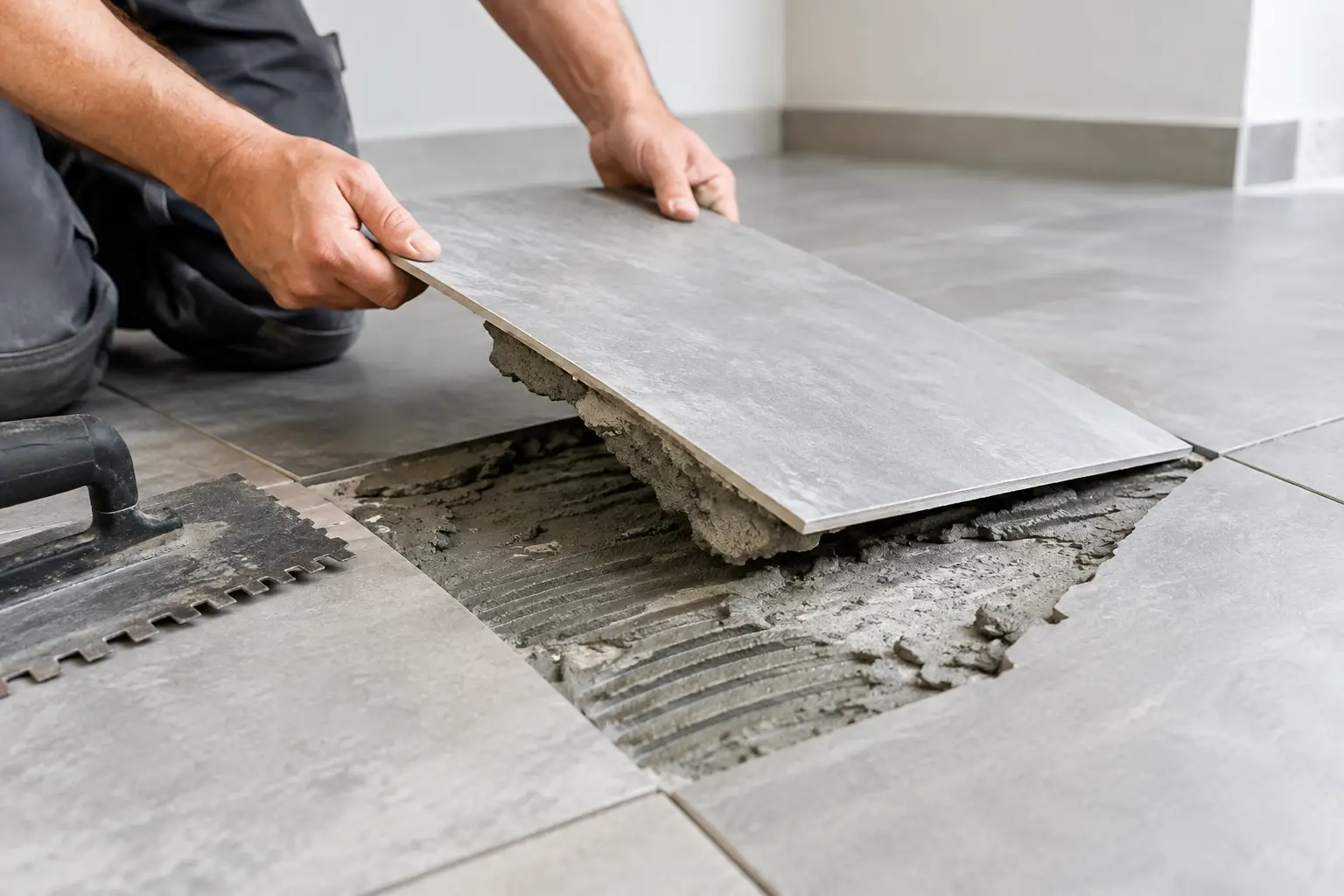
The condition below the tile is just as important. A machine may lift tiles quickly but leave heavy adhesive, bedding mortar or gouges behind. If new flooring needs a flat, clean substrate, the removal stage is only part of the work. Grinding and surface preparation are often what make the site genuinely renovation-ready.
Electric demolition hammers: strong all-rounders
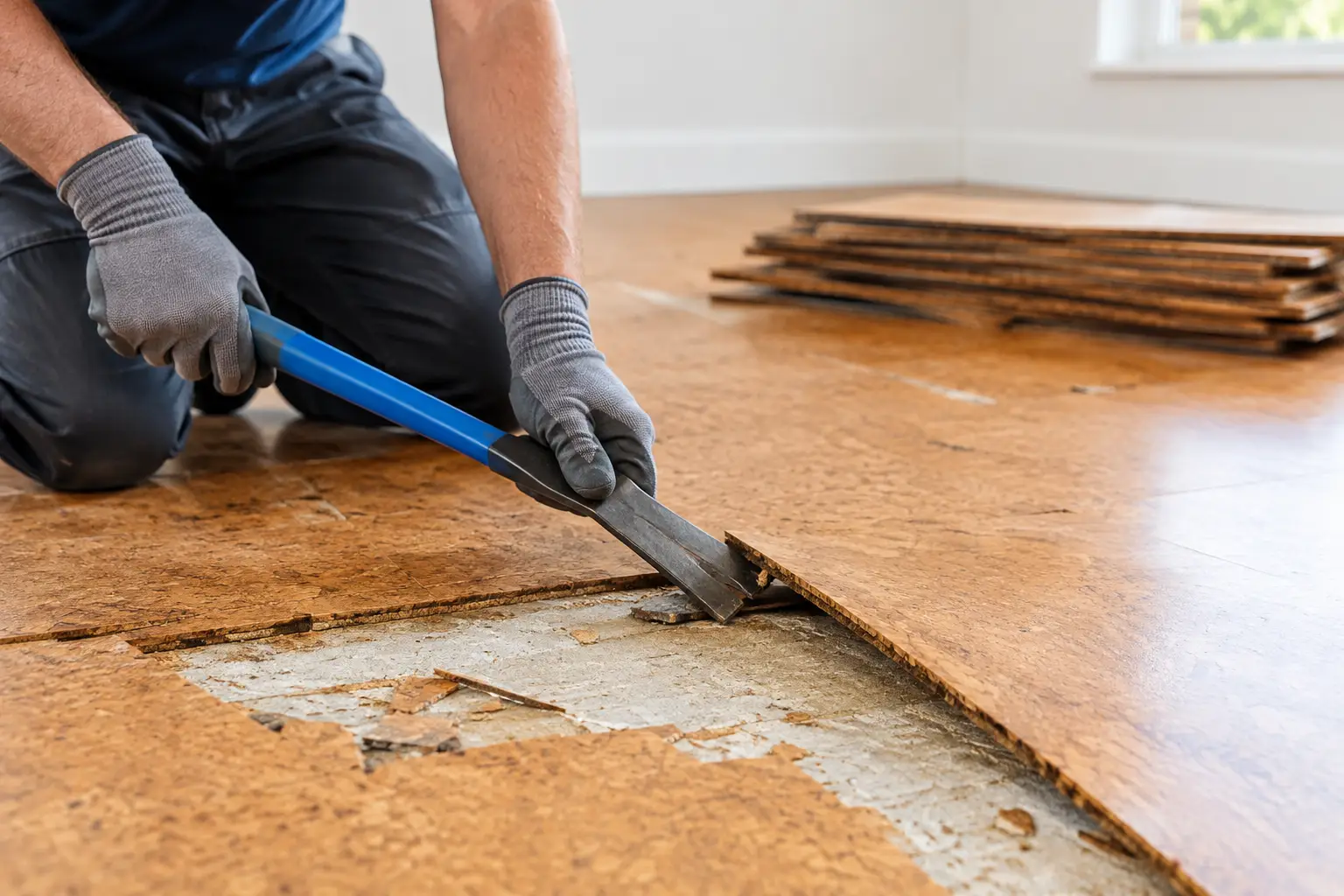
A quality electric demolition hammer with a wide tile chisel is one of the most common tools for tile removal. It is effective on ceramic, porcelain, terracotta and many stone floors, particularly where the tiles are firmly bonded to a concrete slab.
The operator works from the edge of a tile or an existing break, holding the blade at a low angle to get underneath the tile rather than driving straight down into the slab. That technique makes a major difference. Used correctly, an electric hammer can move quickly through tough areas while limiting unnecessary slab damage.
Its advantage is flexibility. It can work in bathrooms, kitchens, hallways and small rooms where larger equipment cannot turn or gain access. It is also useful for detail work around cabinetry, walls, drains and thresholds.
The trade-off is that it is labour-intensive. On large open areas, hand-guided demolition hammers can be physically demanding and slower than purpose-built floor equipment. They also create vibration and airborne dust if the job is not managed properly. This is not a tool to hand to an inexperienced operator and hope for a clean result.
Pneumatic breakers: serious power for hard bedding
Pneumatic breakers are built for difficult removal. Where thick bedding, old mortar or heavily bonded tiles refuse to release, an air-powered breaker has the impact needed to keep work moving. They are particularly useful on commercial jobs, large tiled areas and floors with thick, stubborn material build-up.
The power comes with a clear risk: too much force in the wrong hands can chip, crack or gouge the concrete substrate. That may mean additional grinding, patching or levelling before the next floor covering can be installed. More power does not automatically mean a better finish.
Pneumatic equipment also requires an appropriate air supply, hoses and room to work safely. Hoses across a renovation site create trip hazards and need to be managed carefully. In tight residential rooms, an electric demolition hammer may be the more practical choice despite having less outright force.
Walk-behind tile strippers: productive in open spaces
Walk-behind tile strippers use a wide blade under the tile to lift material across a broad area. On the right floor, they can remove tiles far faster than a handheld machine. They are most effective in open rooms with clear access and consistent tile installation.
These machines are worth considering for large homes, retail spaces, offices and other commercial areas where productivity matters. A wide blade can reduce the number of passes needed and helps maintain a steady removal rhythm across a flat slab.
However, a floor stripper is not a magic answer for every tile job. Very hard porcelain, thick stone, uneven surfaces and tiles with heavy mortar beneath them can reduce its effectiveness. Blades need to be selected and maintained properly, and edges, corners and confined areas still require handheld tools.
Walk-behind machines can also struggle where the floor is uneven or where tiles have been laid over older finishes. When layers start separating unpredictably, an experienced operator needs to adjust the method rather than forcing the machine and damaging the slab.
Ride-on machines: fast, but only when the site suits
Ride-on floor removal machines are designed for large, accessible commercial areas. They bring substantial weight, operator comfort and high output, making them valuable for warehouses, shopping tenancies, big offices and broad open slabs.
For tile removal, their value depends heavily on the floor system. They are often more suited to lifting resilient coverings and adhesives than breaking through heavily bonded tile and bedding. Some tile projects benefit from them, but they should not be chosen simply because they are the largest machine on site.
Access is the deciding factor. A ride-on unit needs clear entry, suitable floor loading, turning room and a work area free of obstructions. It is not a practical option for a standard bathroom, a unit with narrow access or a home renovation where cabinetry and internal walls remain in place.
Grinders are not tile removal machines, but they finish the job
A common mistake is to judge a tile removal machine only by how quickly it lifts tiles. In reality, the condition of the exposed slab determines whether the next stage can begin. Adhesive ridges, mortar remnants and high spots can stop new flooring from being installed correctly.
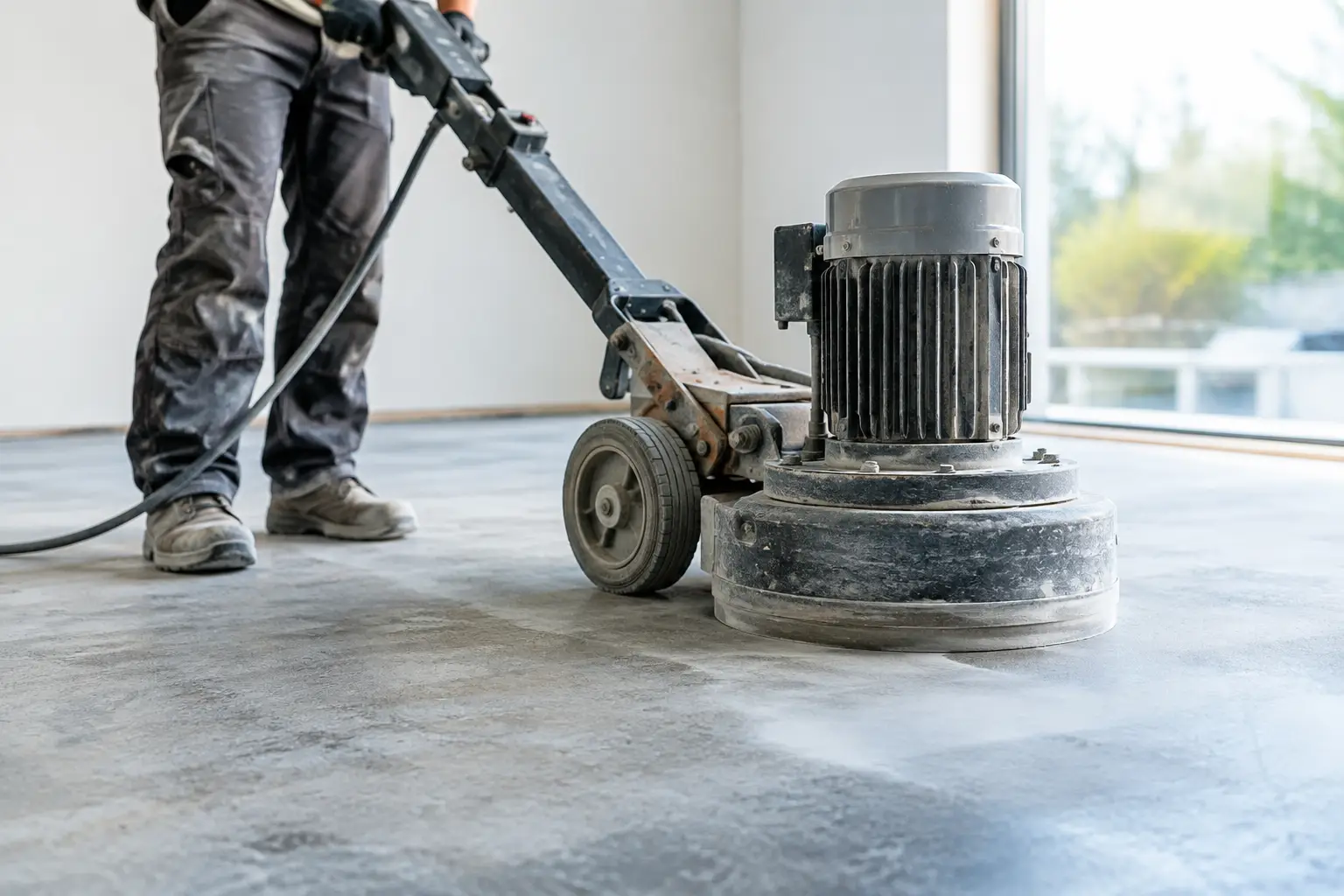
Concrete grinders remove remaining adhesive and level rough sections after tile removal. They are particularly important when the new finish is vinyl, hybrid flooring, timber, polished concrete, epoxy or large-format tile. These products rely on a properly prepared substrate.
Grinding must be carried out with suitable dust extraction. Concrete and tile dust can contain respirable crystalline silica, which is a serious health risk when airborne. Proper dust-control equipment, controlled work practices and site containment are not optional extras. They protect workers, occupants and adjoining areas of the property.
The best machine depends on the tile and the site
A proper tile removal machine review has to account for the material being removed, not just the machine itself. Ceramic tiles may fracture and lift relatively easily, while dense porcelain often requires more controlled impact. Marble, slate and other stone can be thick, brittle and laid on heavy mortar beds.
Older homes can bring further complications. Tiles may be installed over a screed, fibre cement sheeting, timber substrate or earlier layers of flooring. Pulling up the visible tile is only the first layer of the problem. The wrong machine or technique can damage the layer beneath and expand the scope of repairs.
Bathrooms and kitchens also require greater care around waterproofing, plumbing, cabinetry and floor wastes. A fast approach that ignores these details can create delays well beyond the removal work. In some strip-outs, controlled hand work around sensitive areas is the most efficient choice overall.
What separates a clean removal job from a messy one
The machinery matters, but the operator and process matter more. Good removal work starts with inspecting the tile type, bonding method, substrate condition, access and the finish planned for the floor. That assessment determines which tools are brought in and how the work is staged.
A disciplined crew also plans for containment, dust extraction, rubbish removal and protection of retained surfaces. On an occupied property or active commercial site, that planning reduces disruption and keeps the project moving. A floor does not need to look perfect once tiles are out, but it should be clean, safe and prepared for the next trade.
At Rapid Stripped, the aim is not simply to break up flooring quickly. It is to remove the full system – tiles, bedding and adhesive where required – then prepare the slab to suit the renovation ahead. That is how a difficult floor removal becomes a productive first step rather than a problem passed down the line.
When professional removal is the sensible call
Hiring or buying equipment can seem attractive for a small area, especially where tiles are already lifting. But hard-bonded floors, large areas, upper-level units, commercial spaces and jobs with adhesive or mortar residue are rarely simple DIY work. The physical effort is significant, and poor dust control or substrate damage can quickly derail a renovation schedule.
The right machine is the one that suits the material, the room and the required finish – backed by an operator who knows when to apply force and when to change approach. If your renovation needs the old floor gone and the substrate ready to move forward, focus on the finished slab, not just the pile of broken tiles.