
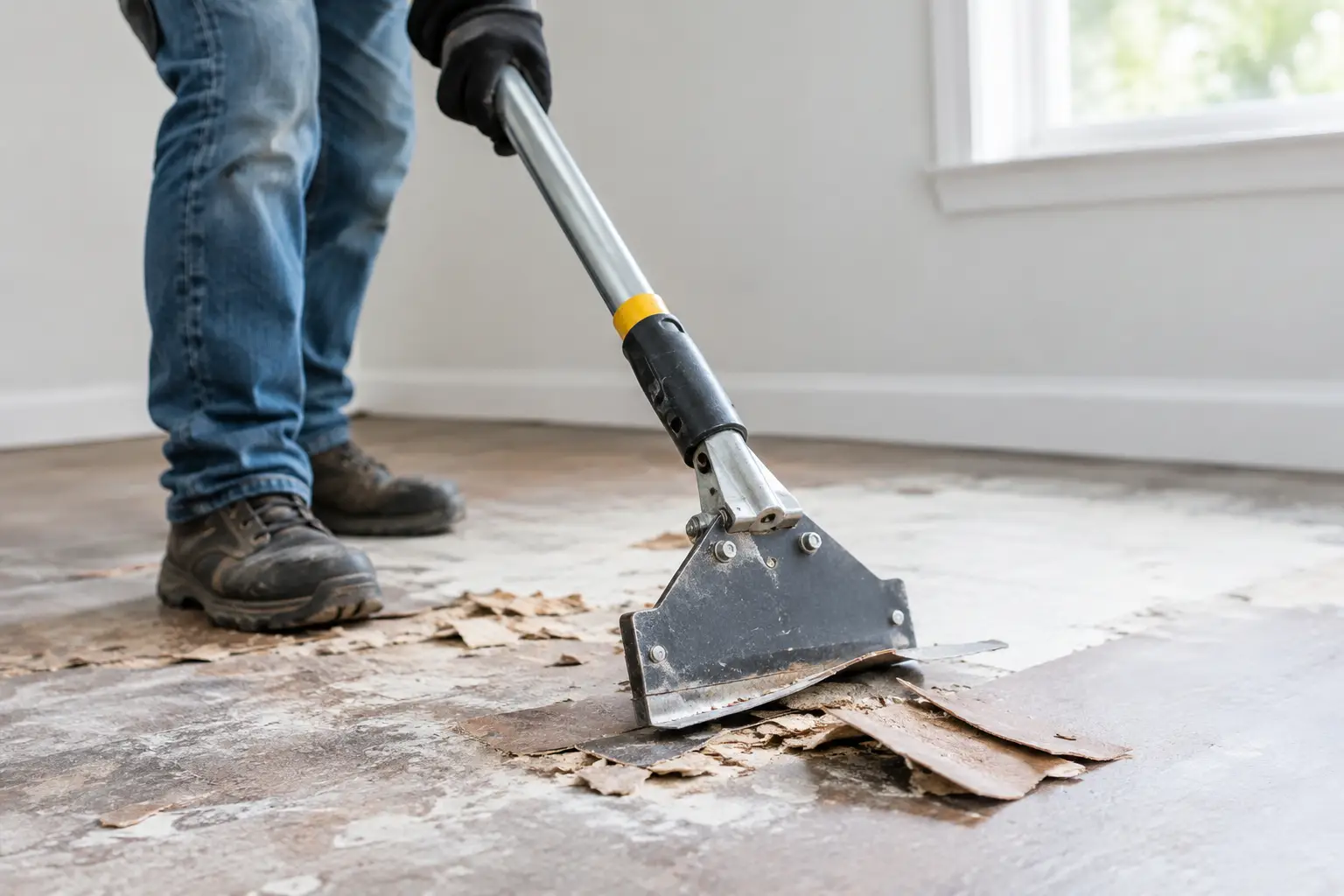
A floor scraper can look like a simple bit of gear until it meets old vinyl glued hard to concrete, ceramic tiles set in thick bedding, or carpet adhesive that has baked into a slab for decades. This floor scraper review looks at what different scraper types can realistically handle, where they fall short, and why the right removal method matters before new flooring goes down.
For homeowners and renovators, the goal is not just getting the old covering up. It is leaving a clean, sound surface that is ready for the next trade. That means protecting the slab, controlling dust, removing residues properly and avoiding a job that drags on for days.
Floor Scraper Review: Manual vs Powered Equipment
The best scraper is not always the biggest machine. It depends on the floor covering, the adhesive, the condition of the substrate and the access to the site.
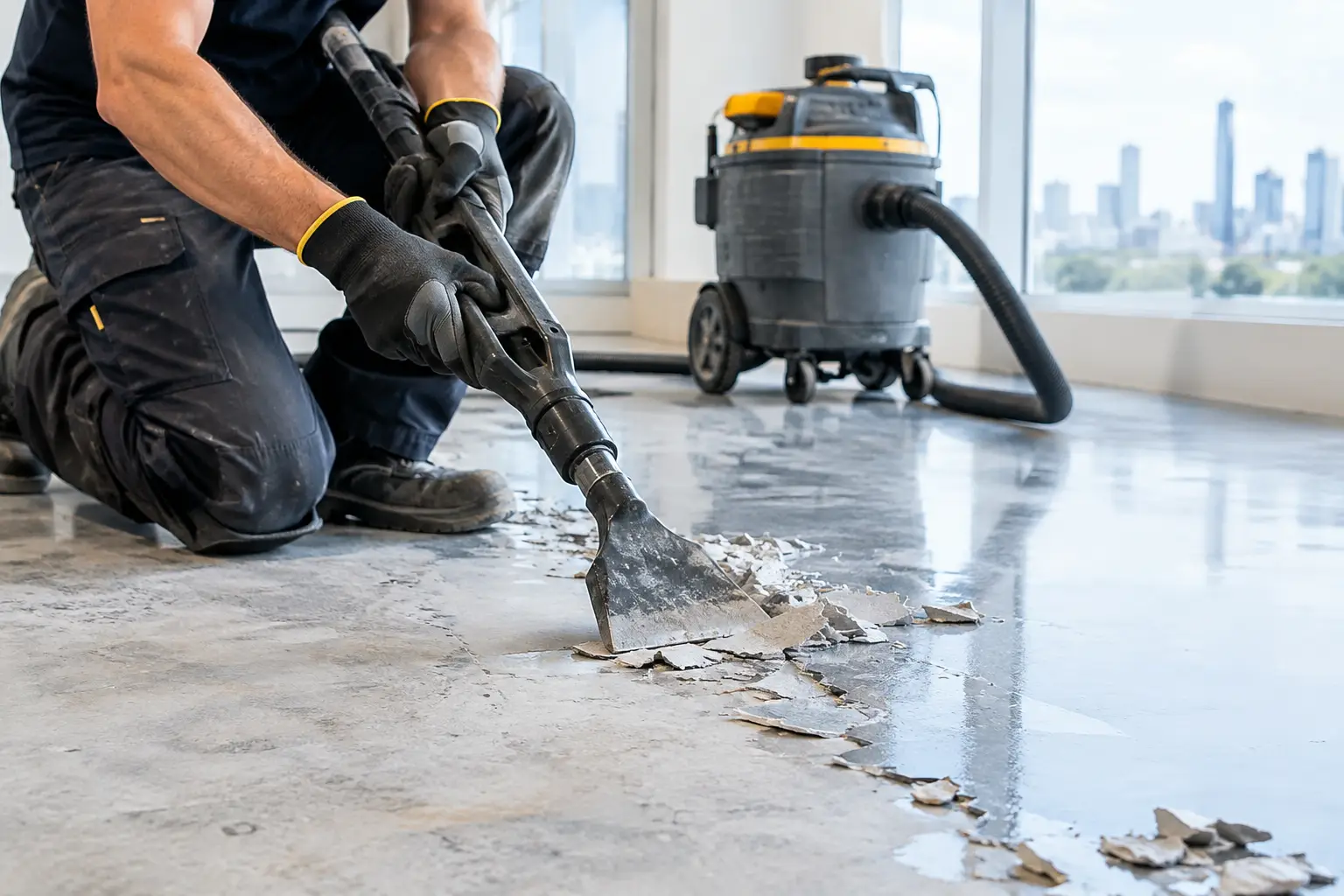
A manual long-handle floor scraper is useful for small areas and loose materials. It can lift carpet underlay, peel sections of vinyl, remove light adhesive residue and tidy edges where a larger machine cannot reach. A sharp blade and the right attack angle make a major difference. If the blade is blunt, the operator starts forcing it, which can gouge a timber substrate or chip concrete.
Manual scrapers are affordable and easy to carry into tight rooms, units and upstairs spaces. The trade-off is production speed. On a small laundry, they can be enough. On a whole house, retail tenancy or commercial kitchen, manual scraping quickly becomes hard physical work with inconsistent results.
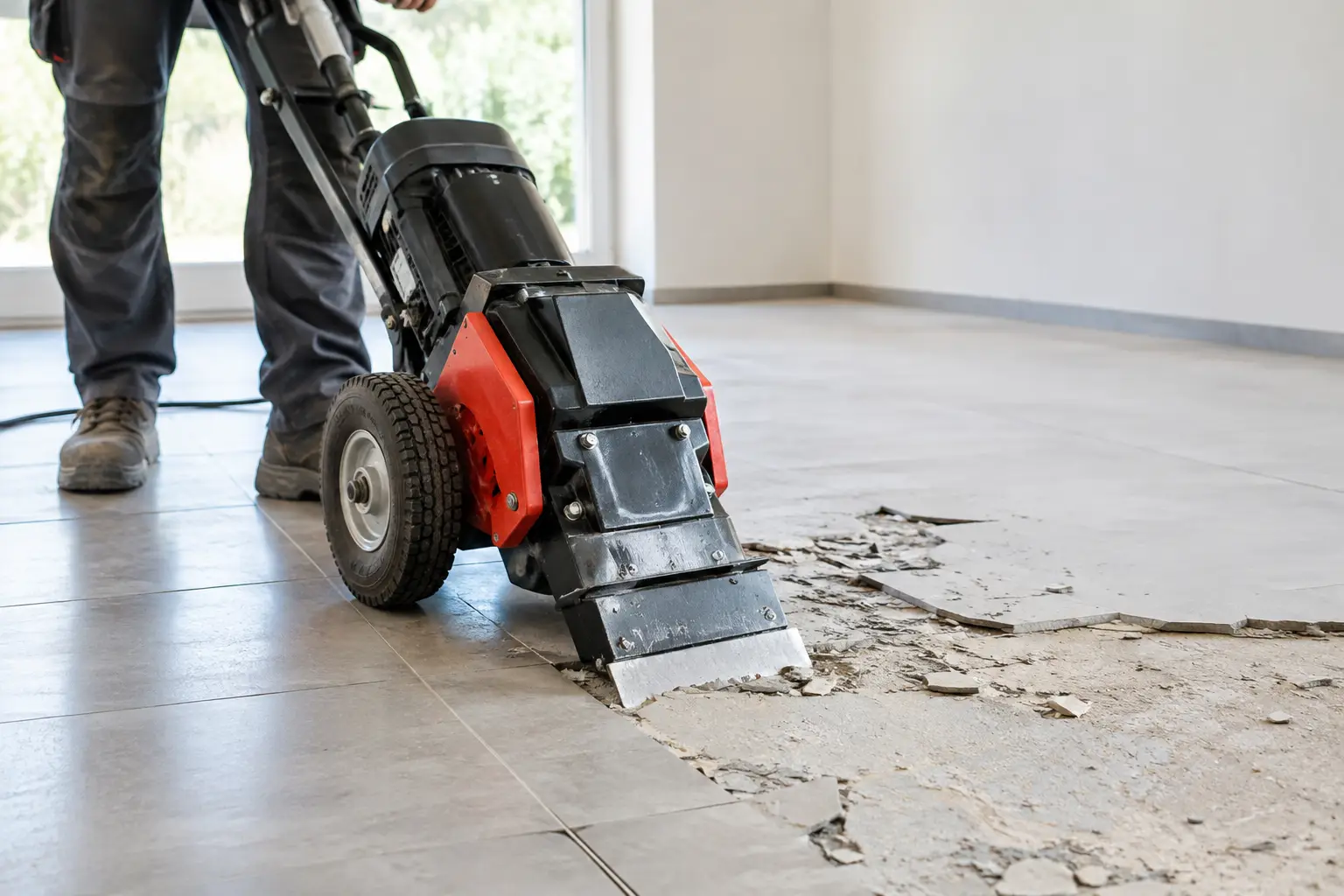
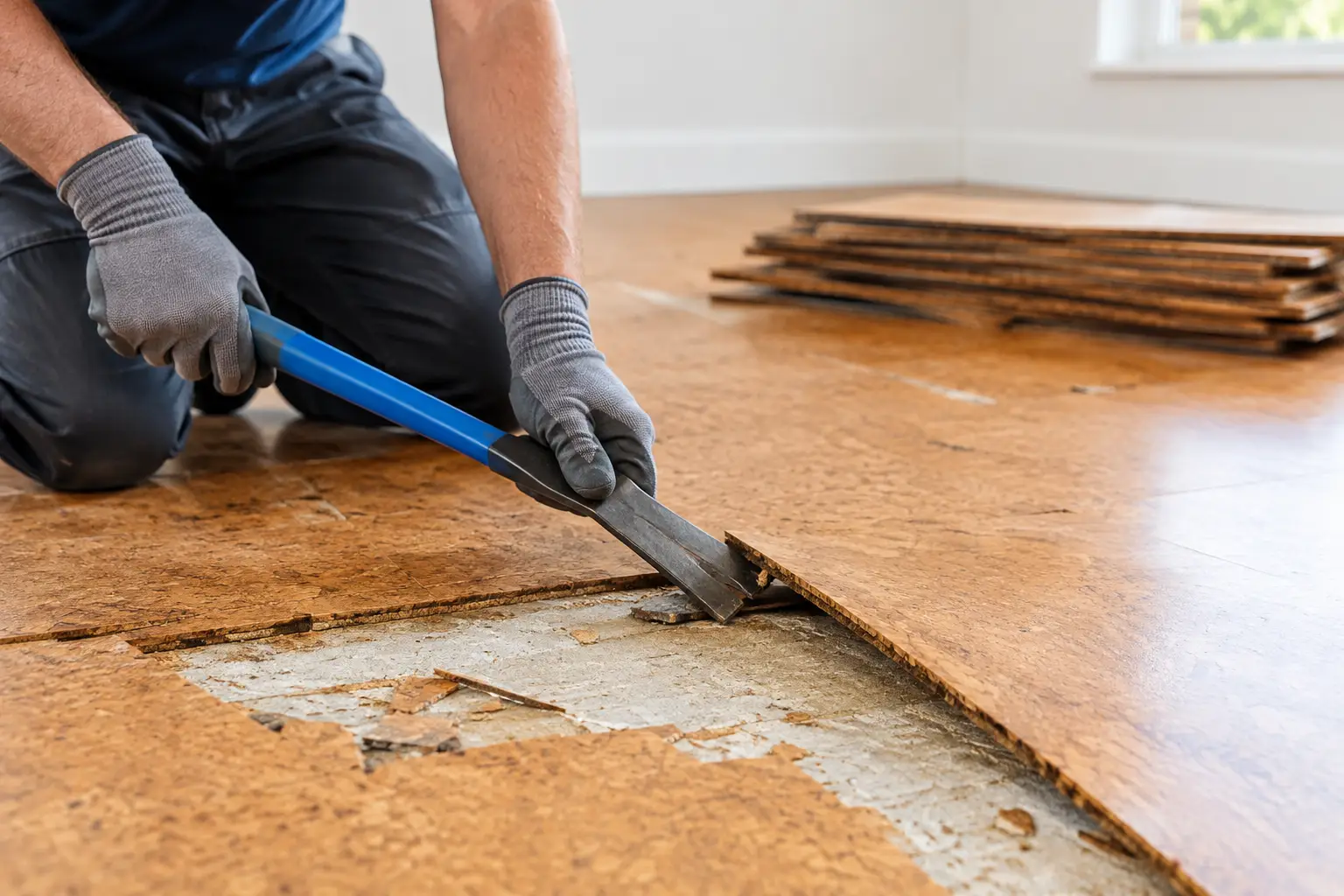
Powered floor scrapers use a reciprocating blade or heavy-duty oscillating action to break the bond between the covering and the substrate. They are far more effective on firmly bonded vinyl, carpet, cork, timber overlays and some adhesive-backed materials. The machine does the repetitive impact work while the operator controls direction, pressure and blade choice.
For thick tile bedding, natural stone, epoxy coatings or stubborn glue, a scraper alone may not be the complete answer. Removal can require jackhammer work, specialist stripping equipment and slab grinding afterwards. Trying to force one tool to do every part of the job is where unnecessary damage and delays start.
What Makes a Floor Scraper Effective?
Scraper performance comes down to more than motor size. Blade width, blade sharpness, machine weight and operator control all affect how cleanly the material comes away.
A wider blade can remove more material across open areas, but it is not automatically better. If a floor is uneven or the adhesive bond varies, a blade that is too wide may ride over high spots or catch aggressively. Narrower blades are slower over large areas but can be more controlled around doorways, walls, floor penetrations and damaged sections of slab.
Blade angle matters just as much. A low angle helps the blade travel under sheet materials such as vinyl or carpet backing. A steep angle can dig into the substrate instead of lifting the material. Experienced operators adjust their approach as the floor changes, rather than applying the same pressure from one end of the room to the other.
Machine weight is another trade-off. Heavy equipment has the force to get under difficult coverings, particularly on concrete, but it needs careful handling and suitable access. Lighter units are easier to manoeuvre in occupied homes and confined areas, though they may struggle when the adhesive is exceptionally tough.
The condition of the slab should guide the removal plan. Cracked concrete, weak screeds, old levelling compounds and moisture-damaged timber subfloors all need a measured approach. Fast removal is valuable, but not if it creates repairs that were not required before work began.
How Different Floor Coverings Respond to Scraping
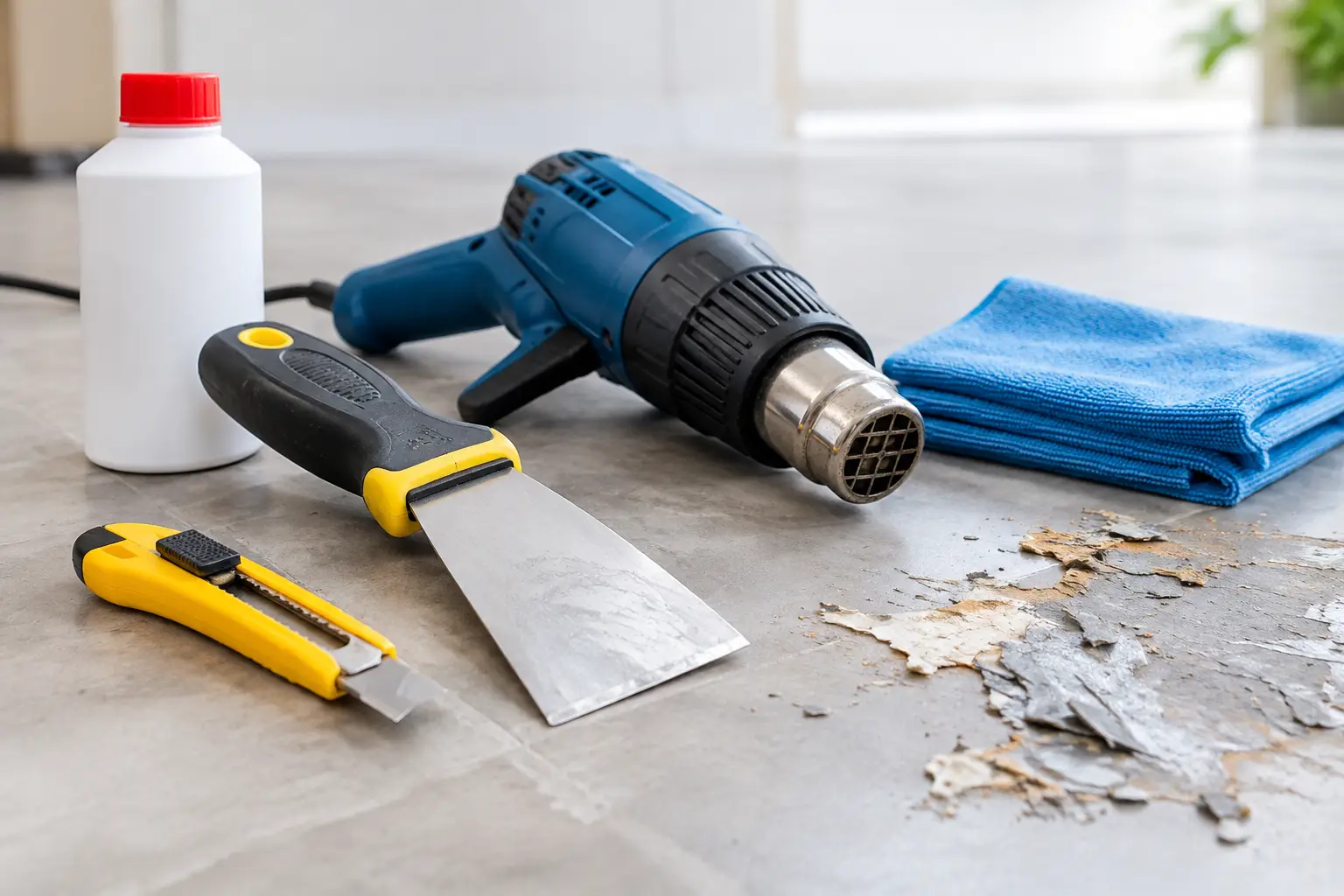
Vinyl is one of the most common materials people attempt to remove with a scraper. Older sheet vinyl can peel up in sections while leaving a thick adhesive layer behind. Newer products may be tightly bonded and come away in narrow strips. Heat, blade selection and controlled mechanical scraping can help, but the final finish often requires adhesive removal or grinding before replacement flooring is installed.
Carpet is usually straightforward to pull up, but the work is not finished when the carpet is in the rubbish pile. Underlay staples, tack strips, carpet glue and uneven residue can all hold up the next stage. A scraper is useful for adhesive and underlay remnants, while edge work needs care to avoid damaging the slab or subfloor.
Ceramic, porcelain, terracotta and slate tiles are a different category. The tile itself may break quickly, but the bedding underneath often remains firmly attached. A standard scraper may lift loose areas, yet a demolition hammer and subsequent slab grinding are commonly needed to achieve a usable surface. Tile removal is noisy, dusty and physically demanding without the right equipment and dust-control measures.
Timber flooring varies widely. Floating boards can come up efficiently once the first rows are released. Direct-stick timber can leave adhesive across the entire floor, and that adhesive must be assessed before grinding. Some products smear under heat or friction; others become brittle. The removal method needs to suit both the glue and the subfloor below it.
Epoxy coatings, paint build-up and commercial-grade adhesives are often more stubborn than they look. These jobs call for purpose-built preparation equipment rather than repeated scraping and hope. The aim is to remove the coating without leaving a contaminated or uneven surface that compromises the new finish.
The Hidden Part of Every Scraper Job: Surface Preparation
A floor can look clean after scraping and still be unsuitable for new tiles, vinyl planks, carpet or coatings. Residual glue creates high spots. Chipped bedding leaves hollows. Fine dust and loose fragments can interfere with primers, adhesives and levelling products.
This is why proper floor removal includes a final assessment of the substrate. Are there traces of adhesive? Has the slab been scarred? Are there raised edges at the perimeter? Is the surface flat enough for the flooring being installed? Those questions affect the quality of the renovation far more than how quickly the old material was lifted.
Slab grinding is often the finishing step after hard removal. It can remove stubborn residue, smooth rough areas and prepare concrete for the flooring contractor. Done correctly, it produces a cleaner, more consistent base. Done without dust extraction or proper control, it sends fine dust through the property and creates disruption well beyond the work area.
For occupied homes, offices, shops and strata units, dust control is not an optional extra. Containment, commercial vacuum systems and a tidy work process protect adjoining areas and make the site easier for other trades to use straight after removal.
When a DIY Scraper Makes Sense
A manual scraper is a sensible option when the area is genuinely small, the material is loose and the substrate is not at risk. Removing a lifted corner of vinyl in a utility room or cleaning minor adhesive residue before a repair can be manageable with basic gear and patience.
The job changes when there are large floor areas, hard-bonded finishes, thick tile bedding, stubborn glue or a deadline for follow-on trades. The physical effort alone can be underestimated. More importantly, a poor result may mean paying for repairs, levelling or additional preparation before the new floor can proceed.
There is also the issue of unknown materials. Older flooring systems can contain products that should not be disturbed without proper assessment and controls. If the age or composition of the material is unclear, stop before cutting, grinding or breaking it up.
Choosing the Right Approach for Your Site
Before choosing a scraper, identify the floor covering, estimate the area, check the substrate and consider access. A ground-floor open-plan room allows for different equipment than a top-level unit with limited parking, lifts and shared hallways. A vacant renovation site also allows for a different workflow than a business that needs to reopen quickly.
For demanding removals across Northern NSW, the Gold Coast, Brisbane or the Sunshine Coast, a specialist crew can assess the material and bring the right equipment from the outset. Rapid Stripped handles the heavy removal, adhesive residue and surface preparation work needed to hand back a site ready for its next stage.
The right floor scraper earns its keep by doing one job well: separating the old floor from the surface below without creating a bigger problem. If the material is tough, the area is large or the slab must be ready on a tight renovation schedule, treat removal as the first quality step of the new floor, not the messy job to rush through.