
If you have pulled up old tiles and found a hard, patchy layer of adhesive underneath, you already know the real job starts after the tiles are gone. When people ask, what can I use to remove tile glue from floor, the honest answer is this – it depends on the glue type, the subfloor, and how clean the surface needs to be before the next stage of your renovation.
Some tile glue will lift with basic scraping. Some will fight all the way and need grinding or mechanical removal. Get the method wrong and you can waste hours, damage the substrate, or leave enough residue behind to cause problems with new flooring. The right approach is about speed, control and leaving the floor properly ready for what comes next.
What can I use to remove tile glue from floor surfaces?
There is no single product or tool that works on every floor. Tile glue can be cement-based, mastic, polyurethane, epoxy-based or a mix of old adhesive layers from previous renovations. Each behaves differently once it has cured.
On concrete, the most common options are a floor scraper, rotary hammer with a wide chisel attachment, adhesive remover, or concrete grinder. On timber, the job needs more care. Aggressive scraping or grinding can gouge the surface, so lower-impact scraping, heat in some cases, and controlled sanding may be more appropriate. For stubborn commercial-grade residue or thick bedding, mechanical removal is usually the only efficient way through it.
If the floor only needs to be roughly cleared for demolition, a basic scrape might be enough. If the surface needs to be smooth for vinyl, hybrid planks, tiles or polished finishes, the standard is much higher. That is where a lot of DIY jobs come undone.
Start by identifying the adhesive and the subfloor
Before choosing tools or chemicals, look at what you are removing. A brittle, grey adhesive is often easier to break down mechanically. A yellow or tan adhesive can be softer, gummy or heat-sensitive. Black adhesive on older floors should be treated with caution, particularly in older properties, because specialist assessment may be needed before disturbance.
The subfloor matters just as much. Concrete slabs can generally handle scraping and grinding, although poor technique can still leave chatter marks, divots or uneven spots. Timber floors are less forgiving. Compressed sheeting, particleboard and older hardwood all respond differently, so the method has to match the material.
Moisture also changes the job. Some adhesives soften with water or remover. Others barely react and just smear further across the floor. That is why testing a small section first is worth doing before you commit to one method across the whole room.
Manual scraping for lighter glue residue
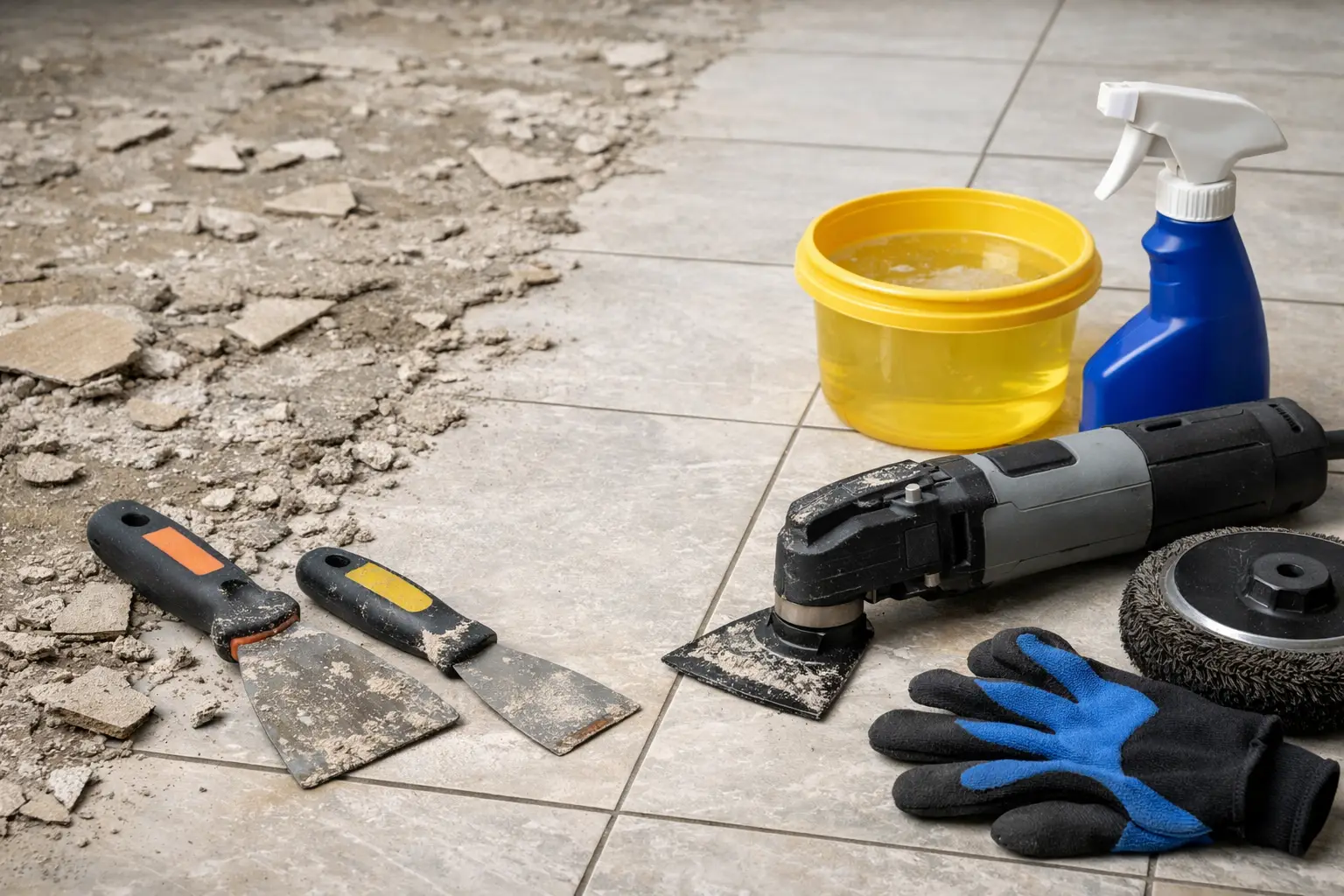
For small rooms or thin adhesive, a long-handled floor scraper is often the first tool to try. It is straightforward, cheap and gives you a good feel for how well the glue is bonded. If the adhesive is brittle and already losing its grip, scraping can remove a surprising amount without much setup.
The downside is time and labour. Manual scraping is slow on larger areas and hard going if the glue is still firmly bonded. It also rarely leaves a floor smooth enough for immediate reinstallation. In most cases, scraping is a first pass, not the full solution.
A handheld scraper can help around edges, doorways and tight corners where bigger equipment cannot reach. Keep the blade sharp and work at a low angle to reduce damage to the substrate.
Heat and chemical removers – useful, but not always the answer
When people search what can I use to remove tile glue from floor, they often expect a liquid remover to do all the work. Sometimes it helps. Sometimes it creates more mess.
Heat guns can soften certain mastics and older adhesives, making them easier to scrape. This works better on small sections than on full-house removals. It is also risky on timber, painted surfaces and enclosed areas if heat is not controlled properly.
Chemical adhesive removers can break down some glue types, especially softer residues. They are more useful for spot treatment or smaller residential areas than for heavily bonded commercial floors. The problem is that chemical removers can leave the surface oily or contaminated, which may affect new adhesives, levelling compounds or coatings if the floor is not cleaned properly afterwards.
There is also the practical side. Chemicals take dwell time, ventilation matters, and disposal has to be handled correctly. If the glue is thick, cementitious or fully cured, a remover may barely touch it.
Mechanical removal for stubborn tile glue
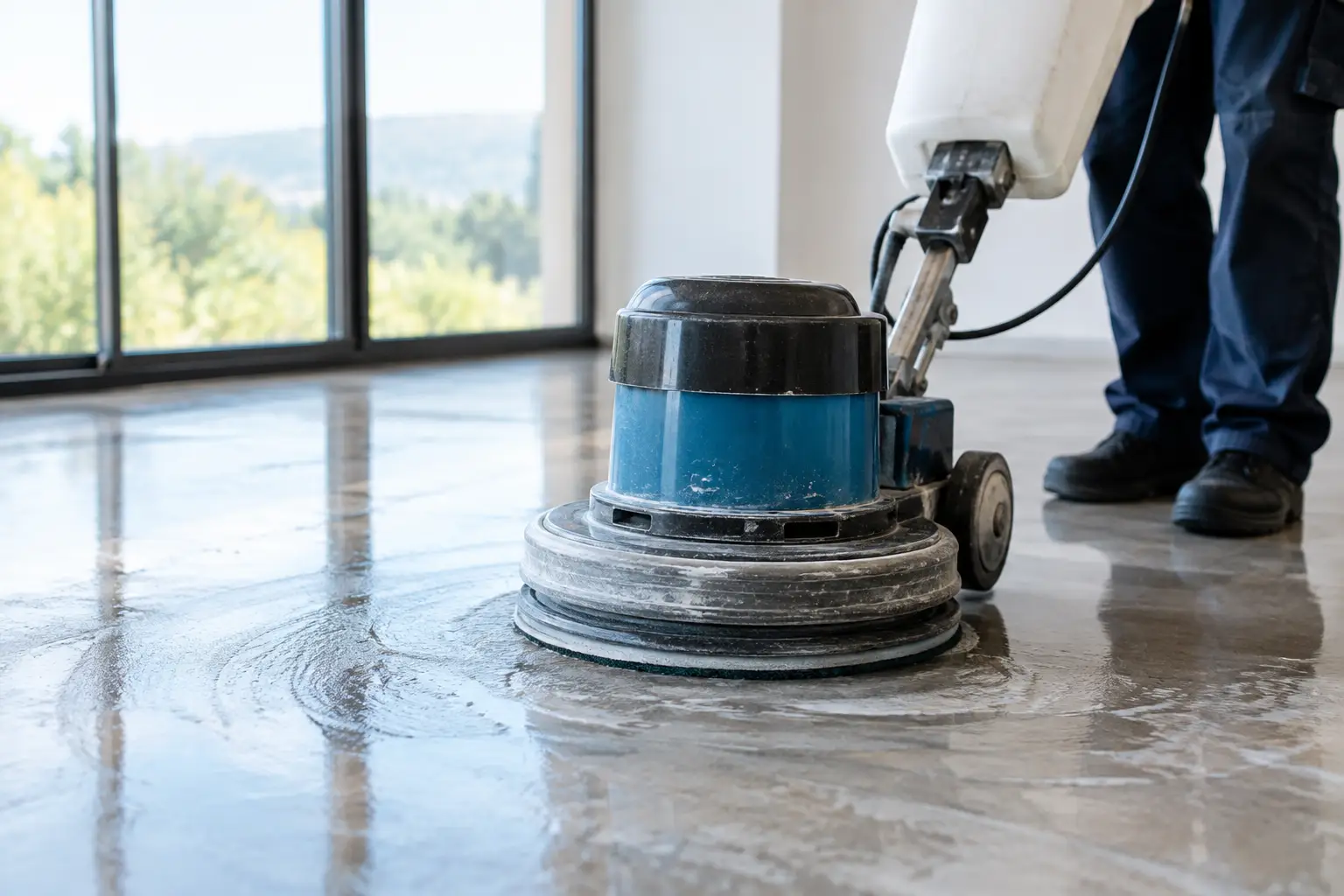
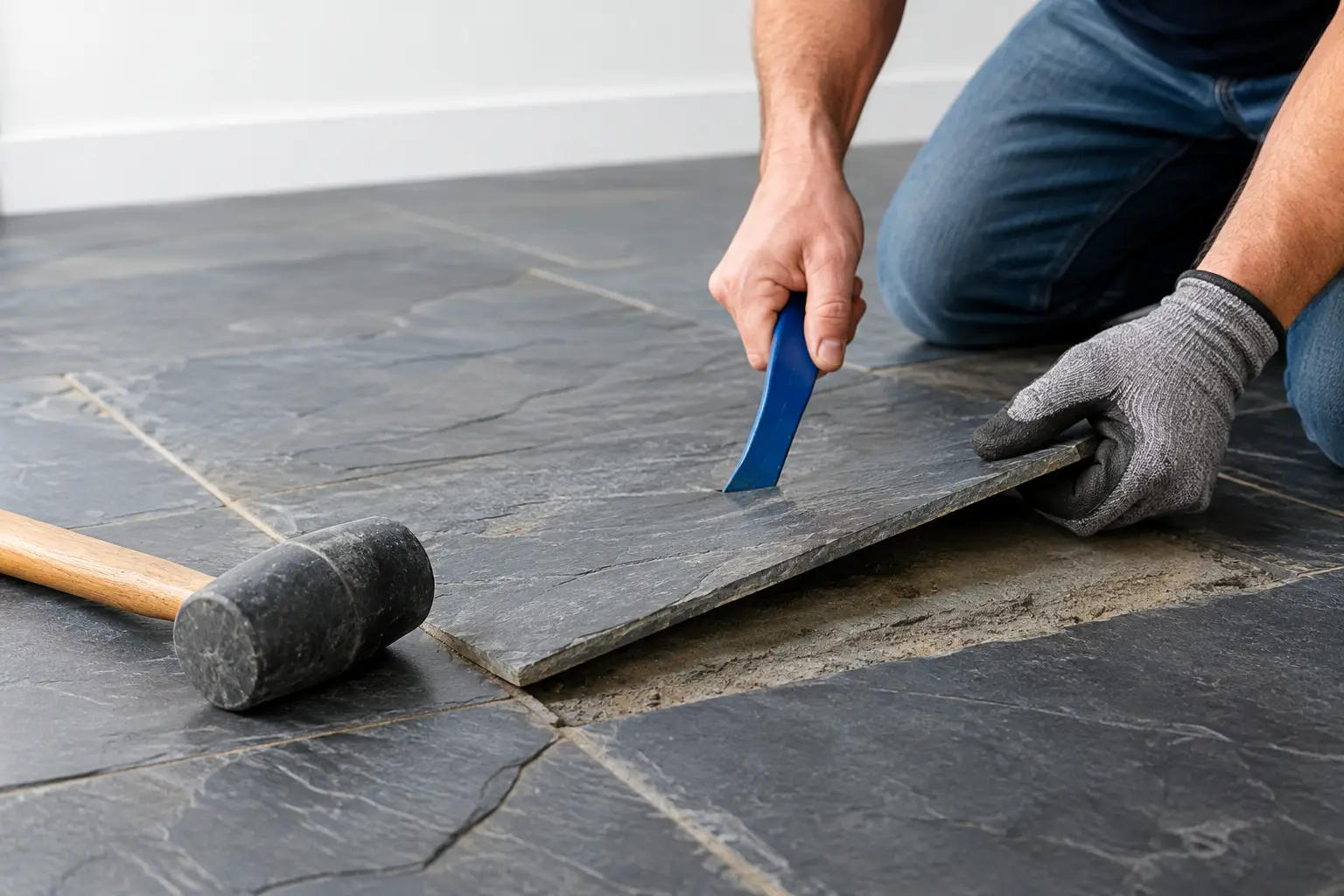
This is where most serious jobs are won or lost. Thick tile glue, old bedding and hard-set adhesive usually need mechanical removal. That can mean a jackhammer-style tile stripper, a rotary hammer with a chisel blade, or a grinder fitted for adhesive and surface preparation work.
Mechanical removal is faster and far more effective on difficult floors, but it is also where skill matters. Push too hard and you can damage the slab. Use the wrong tooling and the machine will bounce, smear glue, or leave the surface patchy. Grinding in particular needs proper dust control and the right sequence so the floor is not just stripped, but actually prepared for the next trade.
For renovation projects on tight schedules, this is usually the difference between a floor that looks cleared and a floor that is genuinely ready. A clean slab with minimal residue helps prevent failures later, especially under new tiles, vinyl or levelling compounds.
Concrete floors versus timber floors
Concrete gives you more removal options. Scraping, chiselling and grinding are all viable depending on how stubborn the glue is. If the adhesive is thin, a grinder may finish the floor quickly. If the adhesive is thick and ridged, scraping or chiselling first often makes more sense before final grinding.
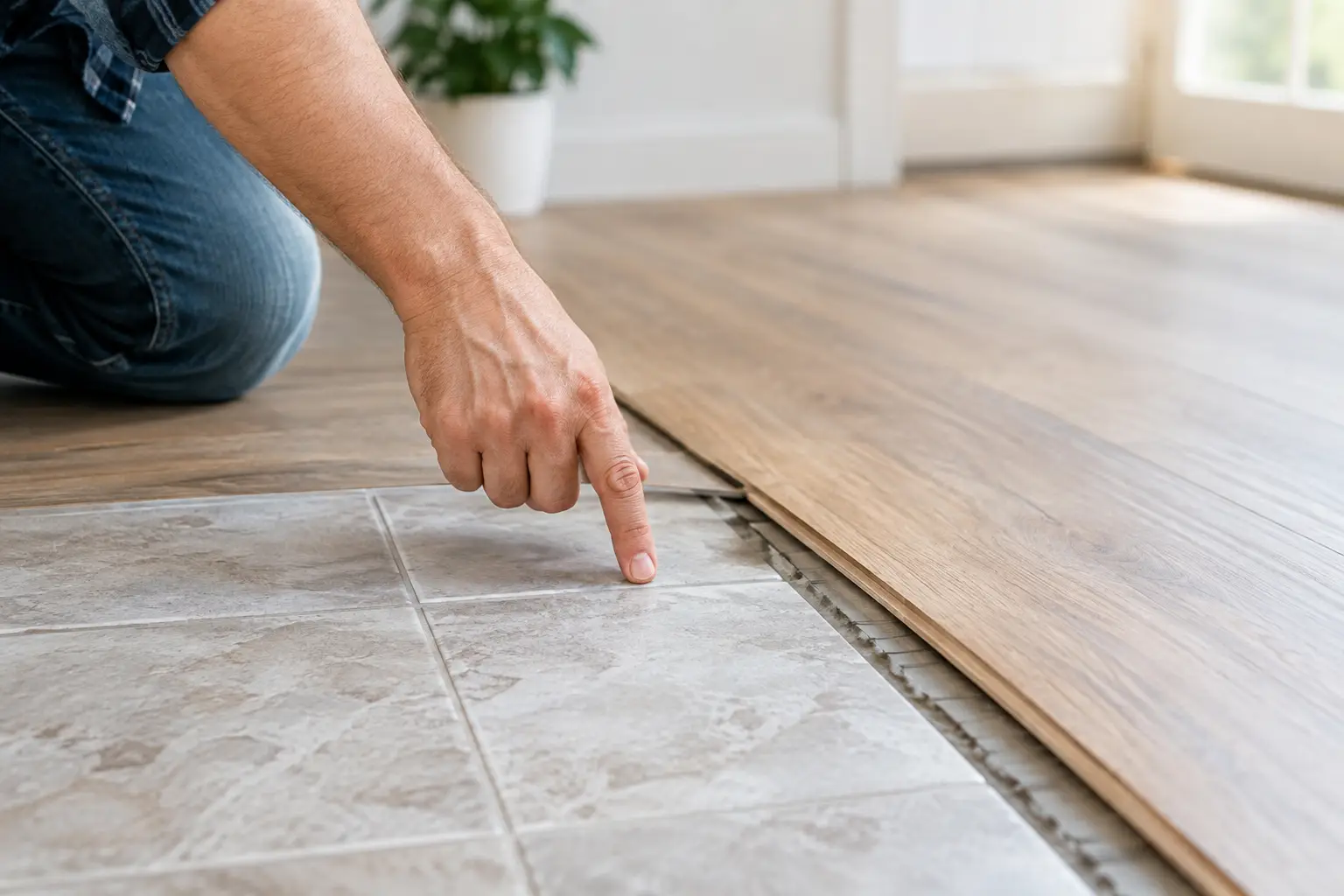
Timber floors need a more controlled approach. If the floor will be covered again, the goal is usually to remove the adhesive without tearing up the substrate. If the timber itself is being retained or refinished, every mark counts. In that case, testing is critical, and sometimes the better option is to remove the affected sheeting or boards rather than force adhesive removal that damages the surface.
There is no value in saving the glue layer if the process ruins the floor underneath.
When DIY stops being efficient
A lot of property owners start this job thinking it is just elbow grease. Then they hit a room where the glue is bonded like concrete, the scraper stops moving, and the timeline blows out.
The tipping point usually comes down to three things – area size, adhesive type and finish standard. A small laundry with light residue is one thing. A kitchen, hallway and living area with mixed glue layers is another. If the next contractor needs a clean, level and contamination-free surface, half-done removal becomes an expensive delay.
This is also one of those jobs where dust, noise and waste build up fast. Without the right equipment and containment, the mess spreads through the rest of the property. For occupied homes, retail sites, offices and fast-turnaround renovations, that disruption matters.
What a proper finish should look like
Removing glue is not just about getting rid of visible lumps. The floor should be assessed for ridges, smearing, low spots, remaining contamination and any damage caused during removal. Depending on the next floor finish, the slab may also need grinding, patching or levelling.
That last part gets missed all the time. A floor can look clean enough at first glance but still be unsuitable for new adhesives or coverings. Residue left behind can affect bond strength, create unevenness, or telegraph through thinner flooring products.
This is why specialist removal crews focus on substrate readiness, not just strip-out speed. At Rapid Stripped, that means removing difficult adhesive properly and leaving the floor ready for the next stage, not handing over a site with hidden problems still in it.
The best answer depends on the result you need
So, what can I use to remove tile glue from floor? For light residue, start with a scraper. For small stubborn patches, heat or a suitable adhesive remover may help. For hard-set glue on concrete, mechanical chiselling and grinding are usually the most effective route. For timber, use far more caution and match the method to the finish you are trying to preserve.
If the job is large, the glue is tough, or the floor needs to be properly prepared for reinstallation, specialist removal is often the faster and safer option. You are not just removing glue. You are protecting the schedule, the substrate and the quality of everything that follows.
A floor is only ready when the next trade can walk in and get straight to work.