
Rip up an old floor and the covering often comes away first. What stays behind is the real problem – a black, brown or yellowish adhesive stuck hard to the slab or timber. If you are wondering, can floor glue contain asbestos, the short answer is yes, it can, particularly in older properties and older flooring systems.
That does not mean every old adhesive is asbestos. It does mean you should treat unknown floor glue with caution until you know what you are dealing with. The risk usually starts when people scrape, grind, sand or break up the adhesive without checking it first.
Can floor glue contain asbestos in older homes?
Yes. Some older flooring adhesives and mastics were manufactured with asbestos because it added strength, durability and heat resistance. It turned up in a range of building products for decades, including vinyl flooring systems, backing materials and certain adhesives used beneath tiles and sheet flooring.
In practical terms, the highest concern is usually in homes, units, offices and commercial sites built or renovated before asbestos was phased out. In Australia, asbestos-containing materials were used widely until the late 1980s and were not fully banned until 2003. That gap matters. A building from the 1970s may have original floor glue. A building from the 1990s may still have adhesive from an older fit-out underneath newer layers.
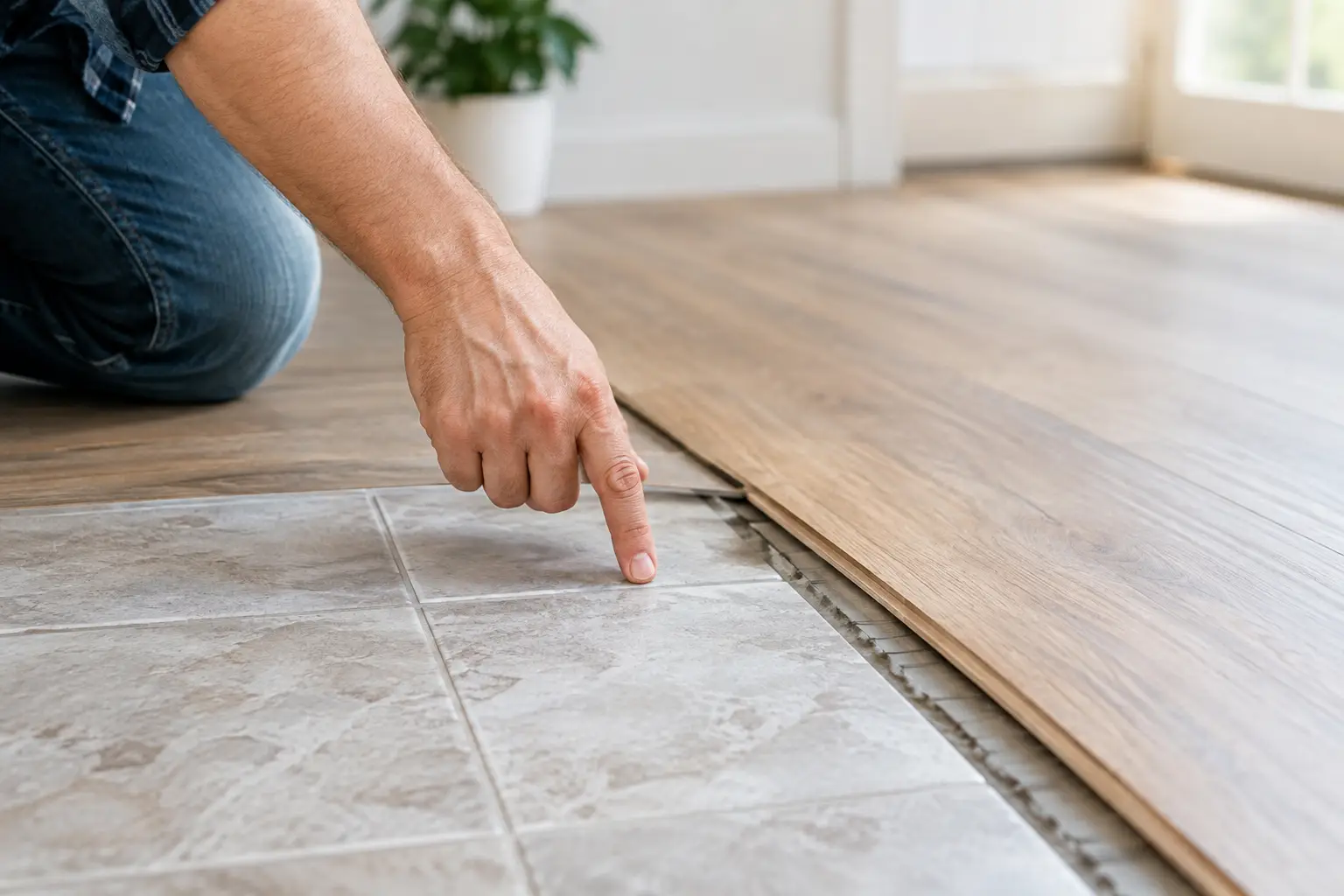
This is why age alone is not a perfect guide. We regularly see floors with multiple renovations stacked on top of each other. What looks like a fairly recent floor can be sitting over much older adhesive residue.
What floor glue is most likely to be a problem?
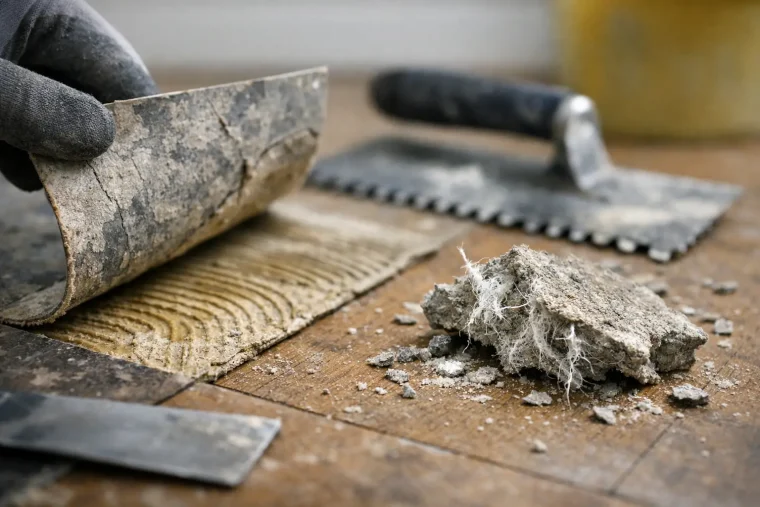
The adhesive most people worry about is old black mastic, often found under vinyl tiles, sheet vinyl and sometimes other floor coverings. Black does not automatically mean asbestos, but black mastics are one of the better-known materials associated with it.
Other older adhesives can also be suspect, including brittle glue beneath lino, cork, carpet underlay and tile systems. Sometimes the glue has gone hard and flaky. Other times it stays tar-like and stubborn. Appearance helps, but it is not enough to confirm anything.
That is the part many renovators get wrong. They try to identify asbestos by colour, smell or texture. You cannot reliably do that on site. Two adhesives can look almost identical, with only one containing asbestos.
Common situations where asbestos glue turns up
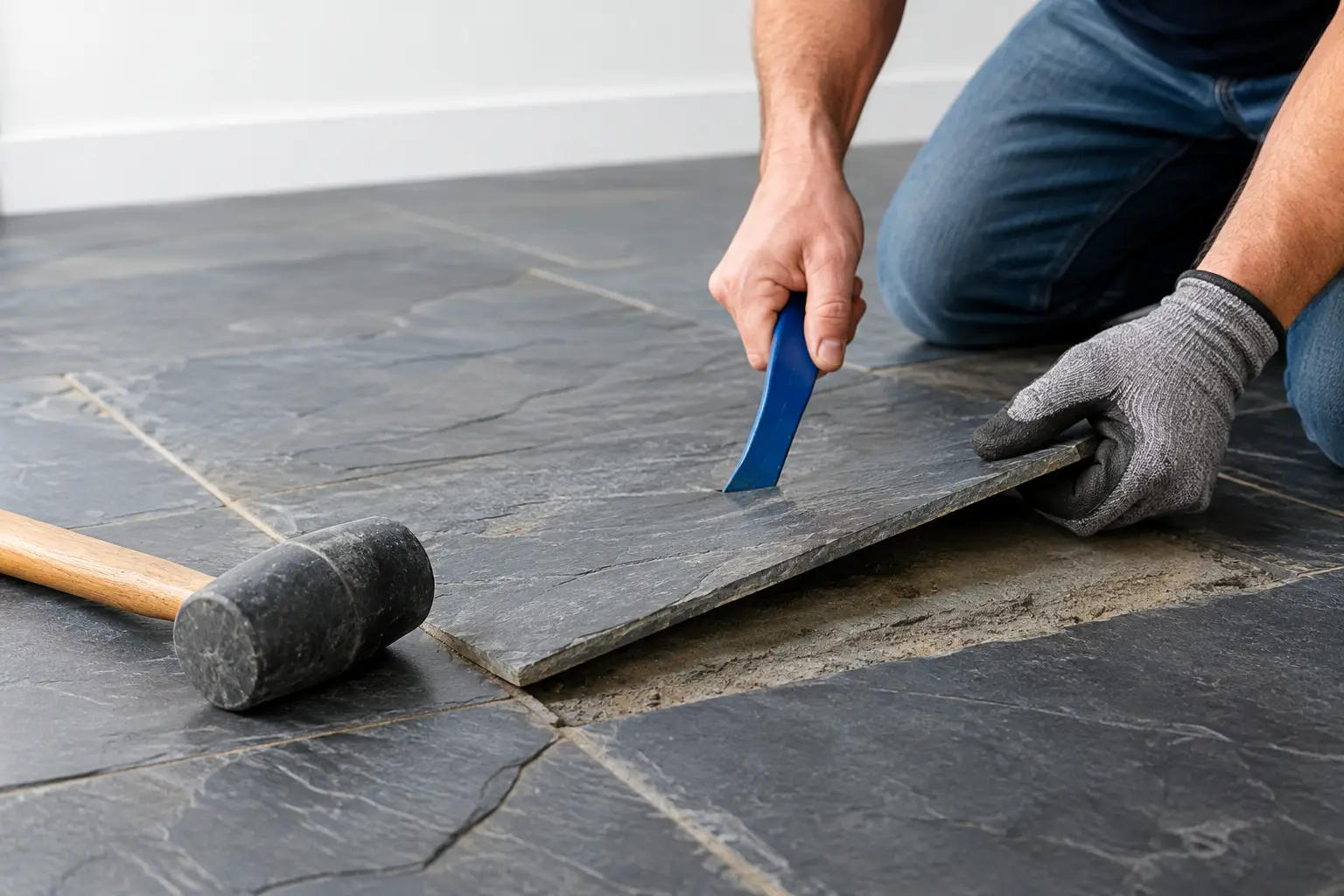
It is often found under old vinyl tiles, under lino in kitchens and laundries, beneath commercial sheet flooring, and under layers of replacement flooring where nobody removed the original adhesive properly. It can also remain on concrete after tiles or vinyl have already been lifted, which gives people a false sense that the risky part is gone. In many cases, the residue left behind is the material that needs the most care.
Why old floor adhesive becomes risky during removal
Asbestos is most dangerous when fibres become airborne and are breathed in. Intact material that is left undisturbed is one thing. Aggressive removal is another.
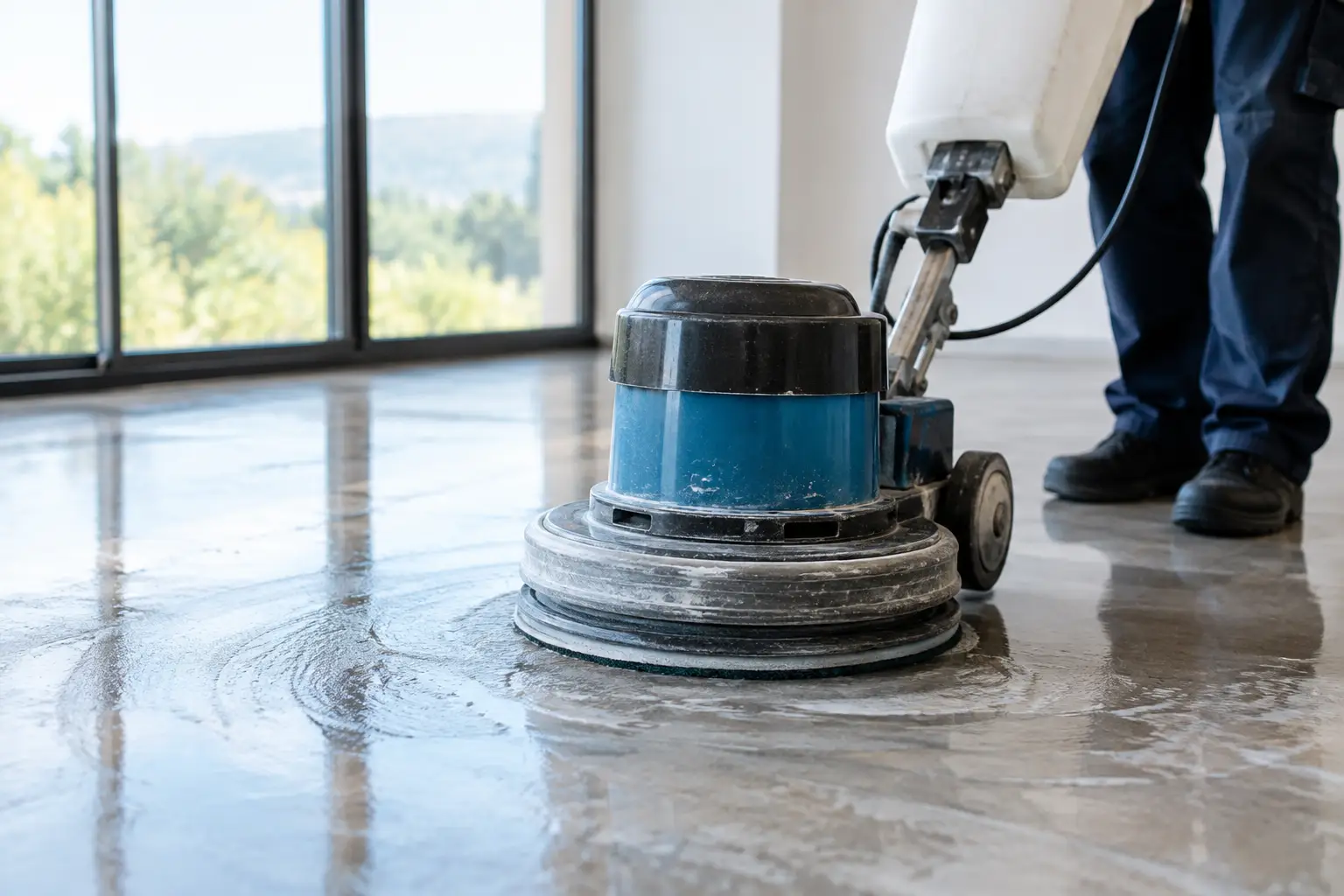
That matters with floor prep because adhesive removal often involves the exact activities that can create dust and contamination – grinding, sanding, jackhammering, chipping and mechanical scraping. Even dry sweeping a disturbed area can spread fibres around the site.
This is where a lot of DIY jobs go sideways. Someone pulls up old vinyl, sees stubborn glue, grabs a grinder and starts chewing into it. Fast way to create a bigger problem. Once contamination is spread through a house, unit or tenancy, the clean-up becomes much more serious than the original flooring job.
For builders and project managers, the issue is not just health. It is delay. If asbestos is discovered halfway through demolition or floor removal, work can stop while the site is assessed and managed properly.
Signs that mean you should slow down
If the building is older, if the glue is under old vinyl or lino, if there are several flooring layers, or if the adhesive is black and tar-like, it is worth treating the material as suspect until tested. The same goes for glue left on a slab after previous renovations.
None of those signs confirm asbestos. They are simply enough to justify caution.
A clean-looking site can still carry risk. Adhesive residue is often thin, patchy and easy to underestimate. The fact that it covers only part of the floor does not make it safe to grind.
How to confirm whether floor glue contains asbestos
The only reliable way to know is testing. That means having a sample taken and analysed by a qualified laboratory. For any suspect adhesive, that step should happen before removal begins, not after dust has been created.
If you are planning a renovation, this is one of the smartest checks you can make early. It gives you a clear path forward. If the result is negative, the removal plan can proceed normally. If it is positive, the work can be managed the right way from the start.
Sampling also needs care. Breaking, scraping or bagging material without proper controls is not a casual job. If the adhesive is in poor condition or the area is occupied, the safest move is to have it assessed professionally.
Testing matters even when the flooring is already gone
A common mistake is assuming there is no issue because the old floor covering has already been removed. In reality, the remaining glue can still be the asbestos-containing material. If you are about to mechanically strip the slab to get it ready for new finishes, the residue matters just as much as the original covering.
What not to do with suspect floor glue
Do not grind it. Do not sand it. Do not use a heat gun and start peeling it up in an enclosed room. Do not dry scrape it aggressively and then sweep the dust around. And do not assume a quick coat of leveller will solve the problem without knowing what is underneath.
There are times when encapsulation or covering over a material may be considered, but that depends on the product, its condition, the substrate, and the renovation plan. It is not a shortcut decision. If the floor still needs to be stripped back for new works, the underlying risk has to be addressed properly.
The safest next step before renovation
If you suspect asbestos in floor glue, stop the removal work and get the material assessed. That one decision can protect everyone on site and save major disruption later.
For homeowners, that means not letting a flooring job turn into a contamination issue through guesswork. For builders and commercial operators, it means keeping the program under control by identifying hazards before the strip-out escalates.
Once the material is identified, the right removal method becomes much clearer. Safe site control, proper equipment, dust management and suitable removal procedures matter because floor preparation is rarely just about lifting a surface. It is about leaving the area ready for what comes next, without creating a bigger problem in the process.
Why floor removal experience matters on asbestos-risk jobs
Older floor systems are rarely straightforward. You might have vinyl on top of old tile, adhesive over paint, leveller over black mastic, or a concrete slab that needs further grinding once the residue is dealt with. Every layer affects the removal approach.
That is where specialist floor removal crews bring real value. The job is not just to get the material up. It is to assess what is bonded to what, avoid unnecessary disturbance, keep the site controlled and prepare the substrate properly for the next trade.
On renovation and strip-out work across older properties in Brisbane, the Gold Coast, Sunshine Coast and Northern NSW, this kind of sequencing makes a big difference. It keeps projects moving and avoids the usual mess of partial removal, damaged slabs and preventable hold-ups.
If you are staring at stubborn old glue and wondering whether to attack it or leave it alone, leave the guesswork out of it. Get it checked first, then move forward with a plan that protects the site as well as the schedule.