
An epoxy floor can look indestructible until it is time to renovate. Then it becomes clear why the question of how to strip epoxy flooring needs more than a scraper and a free weekend. Epoxy is designed to bond hard to concrete, resist chemicals and tolerate heavy traffic. Removing it properly means breaking that bond without gouging the slab, filling the building with dust or leaving residue that ruins the next floor finish.
For a small, worn coating in a well-ventilated shed, removal may be manageable with the right equipment. For garages, workshops, retail spaces and homes where the slab needs to be ready quickly, mechanical removal by an experienced floor stripping team is usually the cleaner, more reliable option.
Start by identifying what is on the slab
Not every shiny floor coating is epoxy. It could be epoxy paint, a two-pack epoxy coating, polyurethane, acrylic sealer or a multi-layer commercial resin system. The distinction matters because thickness, adhesion and flexibility determine the right removal method.
A thin epoxy paint may soften with a suitable coating stripper or come away with grinding. A thick, broadcast epoxy system containing coloured flakes or sand generally requires mechanical removal. If the coating has failed, lifted at the edges or started to bubble, sections may come up more readily. A well-bonded epoxy floor is a different job altogether.
Check the floor for previous repairs, cracks, moisture issues and areas where the concrete is already weak. Coating removal can expose old patching, adhesive stains and uneven concrete that were hidden for years. That is not a reason to avoid stripping – it is a reason to allow for correct surface preparation before the new finish goes down.
Choose the removal method to suit the epoxy
There is no single best way to remove epoxy flooring. The right method depends on the coating, the slab condition, the area size and what will be installed next.
Mechanical grinding
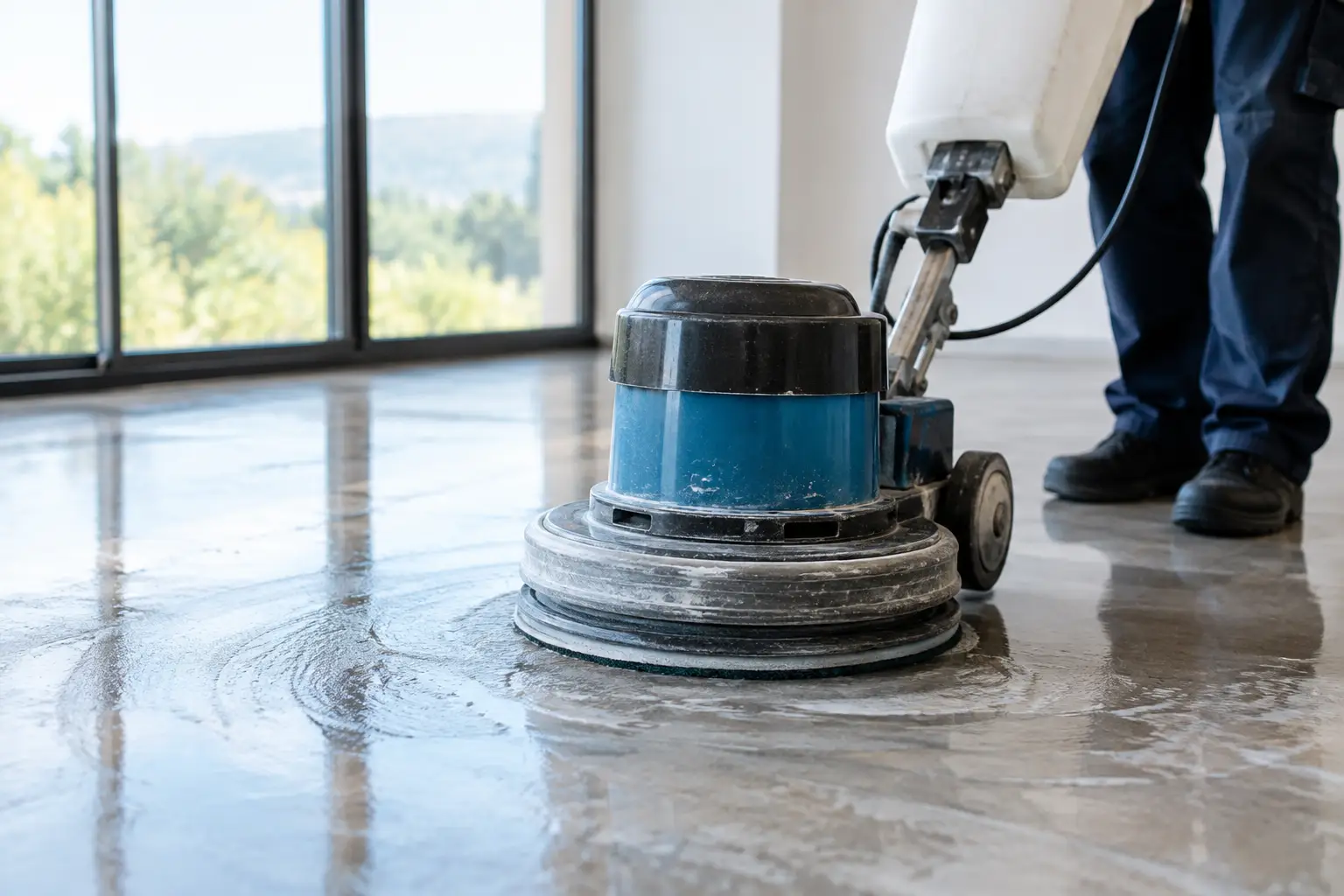
Diamond grinding is the most common method for bonded epoxy coatings. A floor grinder fitted with the right diamond tooling cuts through the coating and opens the concrete surface below. It is effective for large areas, gives the operator control over the finish, and can leave the slab suitably profiled for a new coating, adhesive or levelling compound.
The trade-off is dust and equipment. Concrete grinding creates fine silica dust, which is hazardous when inhaled. Professional grinders should be connected to high-quality dust extraction equipment, with edges and corners completed using dedicated hand grinders. A domestic grinder without proper extraction can turn a floor removal job into a major clean-up and health risk.
Grinding also needs a measured approach. Too aggressive, and the operator can leave swirl marks, low spots or exposed aggregate. Too light, and epoxy residue remains, creating weak points for the next flooring system.
Shot blasting
Shot blasting propels small steel shot at the floor to break up and remove coatings while creating a textured concrete profile. It works well on broad, open commercial floors where access is straightforward and a strong profile is needed for a new epoxy or industrial coating.
It is not always practical in homes or tight rooms. The machines need space, and they cannot reach right up to walls, into corners or around fixed joinery. Those sections still need hand preparation. For many residential jobs, grinding is the more flexible option.
Chemical stripping
Chemical strippers can soften some epoxy paints and lighter coatings, allowing material to be scraped away. This method can be useful for small areas, detailed edges or locations where grinder access is limited. It can also be slow, messy and unpredictable on a fully cured two-pack epoxy.
The biggest risk is residue. If stripper, softened epoxy or rinse water is left on the slab, it can interfere with the adhesion of tiles, vinyl, levelling compounds and new coatings. Chemical products also require proper ventilation, personal protective equipment and controlled disposal. Never wash removed coating slurry into garden beds, drains or stormwater.
Scarifying and scraping
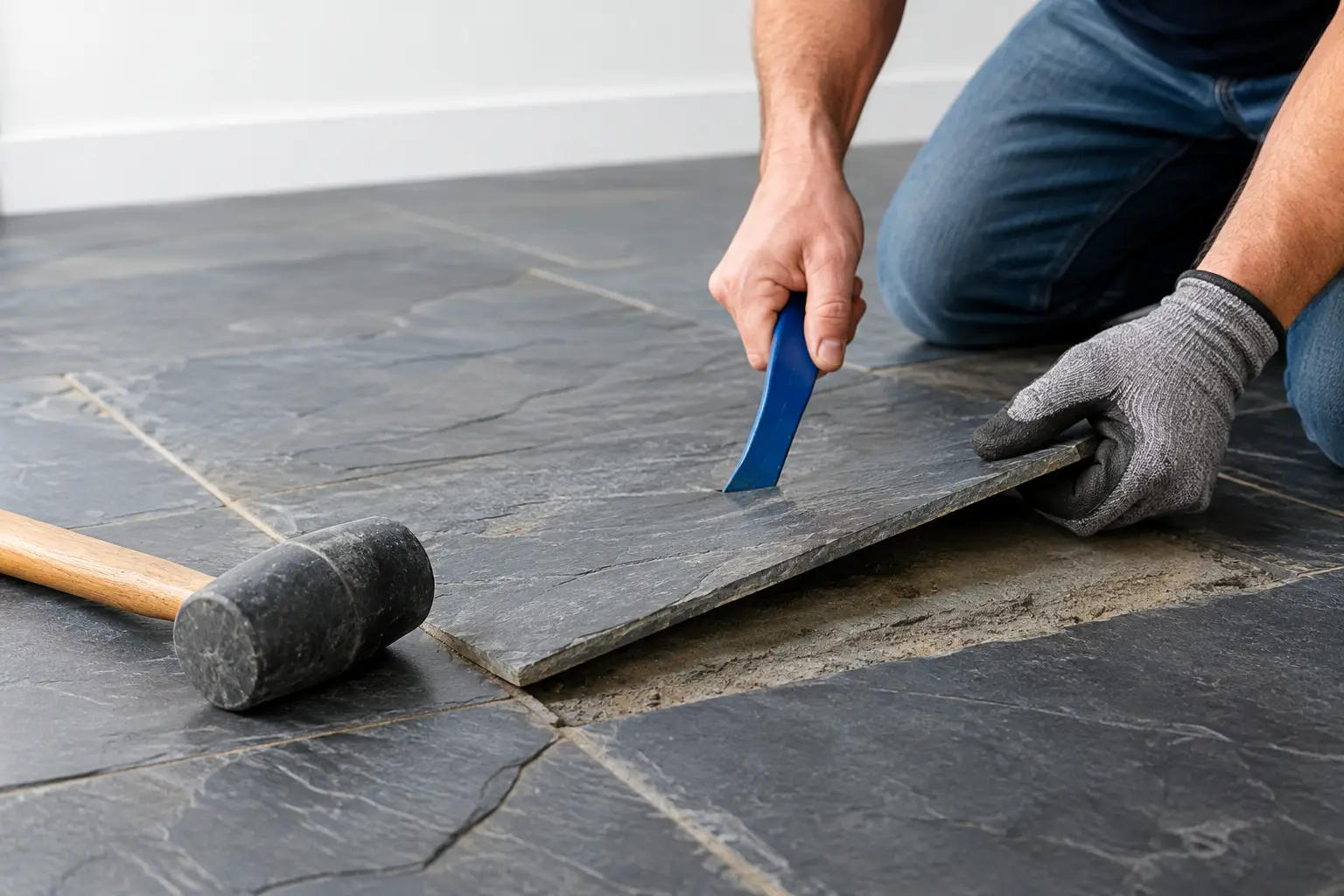
Scarifiers use rotating cutters to remove thick coatings quickly. They can be useful where epoxy has built up heavily, but they are aggressive machines and can leave a rough finish that requires follow-up grinding. Hand scrapers and floor scrapers are useful for lifting already-delaminated material, but they are rarely enough for sound epoxy on their own.
How to strip epoxy flooring step by step
A controlled process protects the concrete and avoids delays once the removal work starts.
Clear and isolate the work area
Remove vehicles, shelving, stock, furniture and loose items from the floor. Mask or protect nearby walls, doors, joinery and services where required. In occupied homes and commercial sites, plan access routes so workers, residents and customers are kept away from the active work zone.
Epoxy removal is noisy. Grinding and vacuum equipment can also affect normal operations, so it pays to schedule the job around other trades, business hours and building access. A clear site is faster to strip and easier to leave clean.
Test a small section first
Before committing to a method, test an inconspicuous section of floor. This confirms how hard the epoxy is, whether it clogs the diamond tooling, and how the concrete reacts underneath. It also identifies hidden layers, such as old adhesive, paint or a second coating system.
This test is where experience saves time. The operator can select the tooling and machine setup that removes the coating efficiently while keeping unnecessary slab damage to a minimum.
Remove the epoxy in controlled passes
Work across the floor in overlapping passes rather than concentrating on one spot for too long. Keep the machine moving and check regularly for missed strips, high areas and changes in the concrete. Edges, doorways, around posts and tight corners need separate attention because large machines cannot reach them properly.
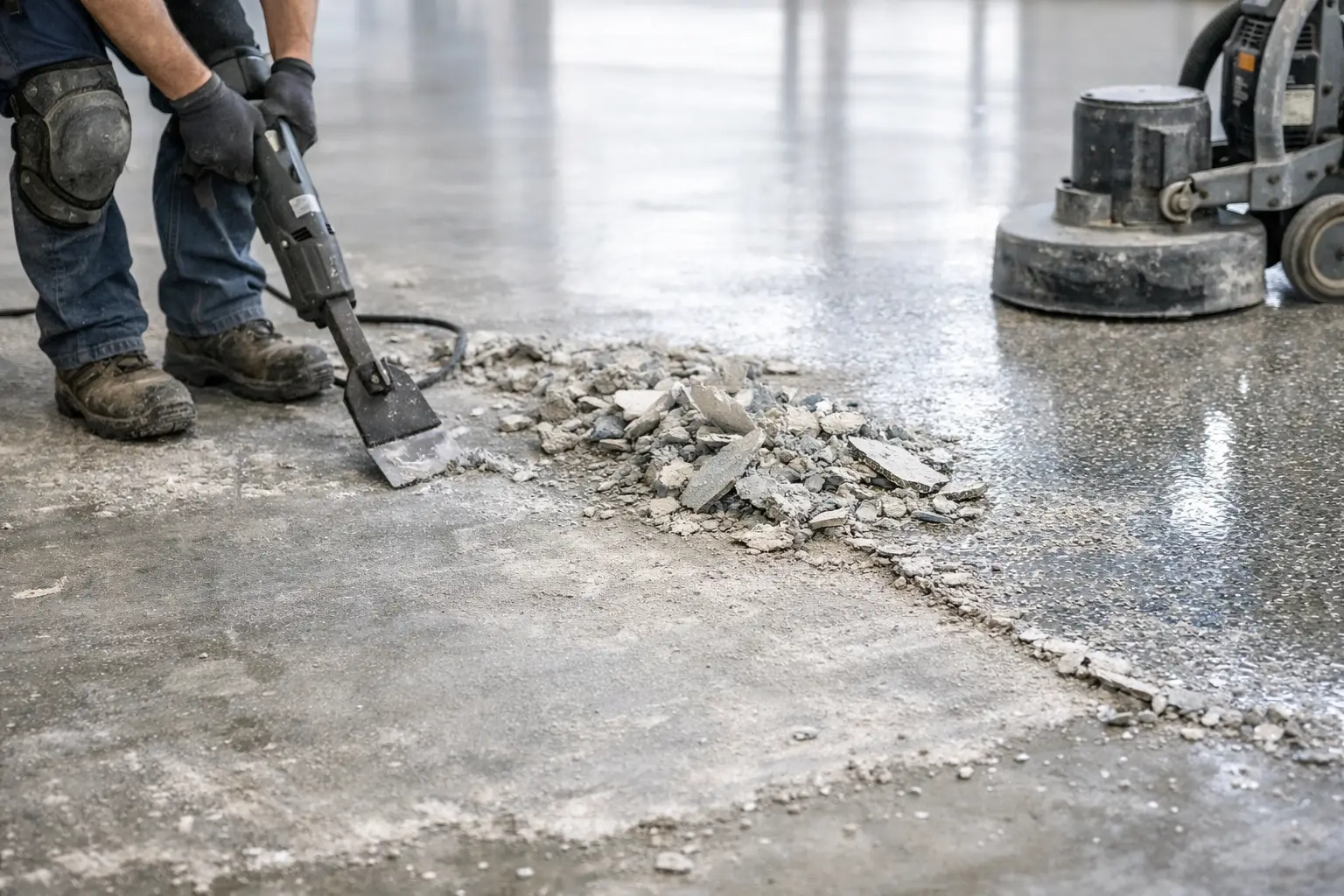
If the epoxy is thick, removal may happen in stages. The first pass takes off the bulk of the coating. Subsequent passes remove residual material and refine the concrete profile. Trying to achieve a perfect finish in one aggressive pass is how slabs get marked up.
Control dust and remove debris as you go
Dust control is not an optional extra. Use properly maintained extraction equipment rated for fine concrete dust, and keep the work area contained. Vacuum progressively rather than allowing debris to build up underfoot or get tracked through the property.
Once the coating is off, collect all flakes, grinding dust and waste for proper disposal. A quick sweep is not enough when a new floor system needs to bond to the concrete. The slab should be visibly clean and free from loose material.
Inspect and prepare the exposed slab
Stripping epoxy exposes the real condition of the floor. Inspect for cracks, spalls, holes, weak patches, moisture staining and contamination from oil or grease. These issues may need repair or further treatment before new flooring is installed.
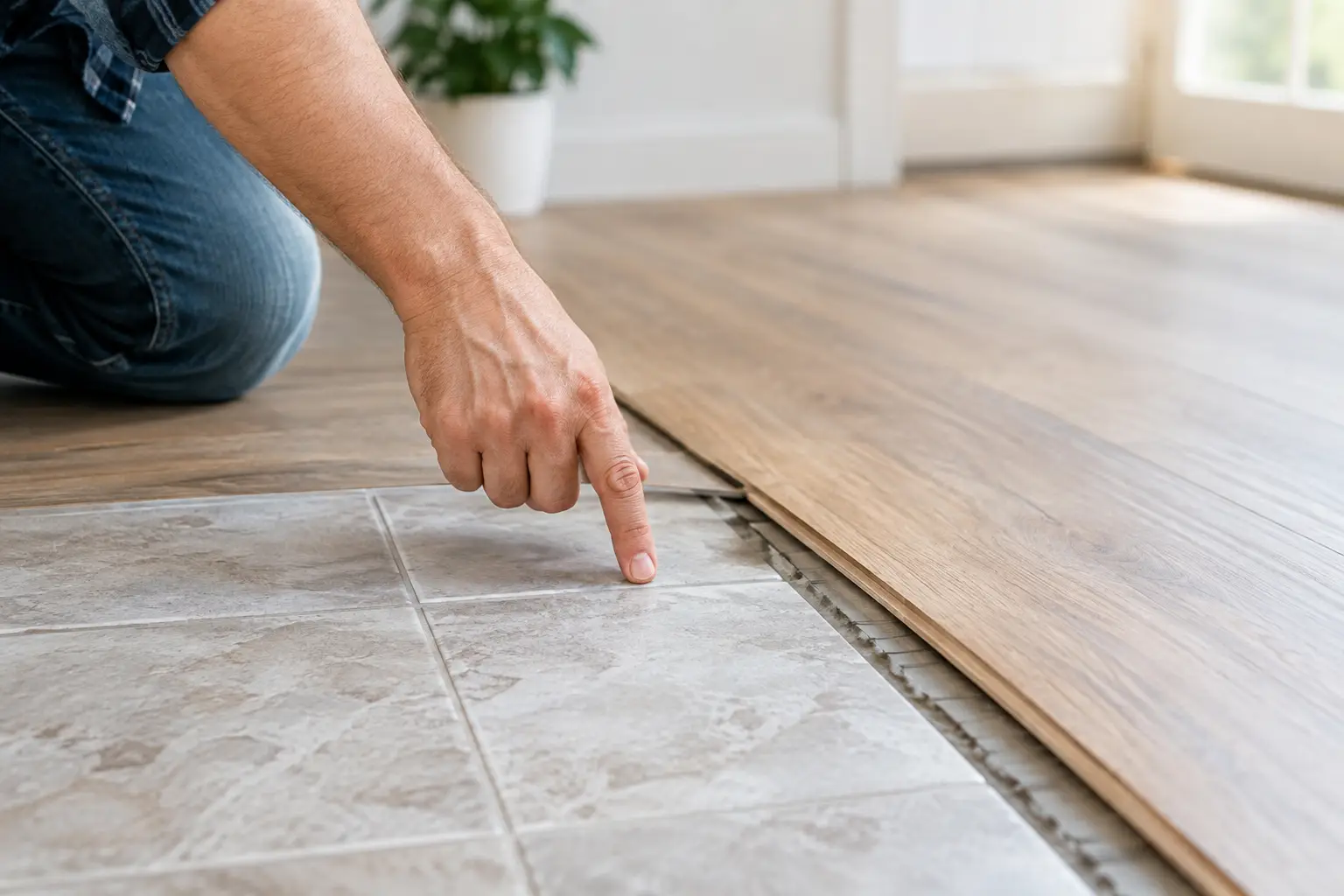
The correct final profile depends on the next stage. New epoxy generally needs a clean, sound and mechanically prepared surface. Tiles need a stable slab with no coating residue that could compromise adhesive. Vinyl, hybrid flooring and other sensitive finishes may require smoothing or levelling after removal. The goal is not simply to make the floor look bare. It is to leave it ready for the next trade.
Common mistakes that create bigger problems
The most common mistake is using the wrong tool. Small grinders, paint scrapers and harsh chemicals can appear cheaper at the start, but they often leave patchy epoxy or damage the slab. Another is ignoring moisture and contamination. If moisture pressure caused the old epoxy to fail, applying a new coating over the same unresolved problem will not produce a lasting result.
Skipping edge work is also a problem. A floor can look clear from the middle while a band of epoxy remains along walls and door frames. That residue can affect skirting, thresholds and the installation of the new finish.
Finally, do not underestimate silica dust. Dry grinding without proper extraction and respiratory protection is not a shortcut worth taking. It puts people at risk and sends fine dust into adjoining rooms, vehicles and ventilation systems.
When professional epoxy removal is the better call
Professional removal is particularly worthwhile when the floor is large, the epoxy is thick or well bonded, the property is occupied, or there is a tight renovation schedule. It is also the sensible choice when the slab needs to be ready for tiles, a new coating or another finish without delays caused by residual epoxy and uneven preparation.
Rapid Stripped handles difficult coatings using purpose-built removal and dust-control equipment, with a focus on leaving the site clean and ready for what comes next. For homes, workshops, commercial spaces and renovation projects across Northern NSW, the Gold Coast, Brisbane and the Sunshine Coast, the right preparation can keep the entire job moving.
A stripped epoxy floor should not be the messy middle of a renovation. Done properly, it is the point where an old, tired surface becomes a sound base for the finish you actually want.