
Epoxy looks tough because it is. Once it bonds properly to concrete, tiles or a prepared substrate, it does not let go without a fight. That is why choosing the best tools for epoxy removal matters so much. The wrong setup wastes hours, chews up the slab and leaves you with a bigger repair job than the coating itself.
For homeowners and builders, the main mistake is assuming epoxy comes off like old paint or loose vinyl glue. It does not. Some coatings flake cleanly with the right machine, while others gum up, chip unevenly or stay bonded in patches. The right tool depends on the thickness of the epoxy, the condition of the slab underneath, the amount of area involved and how clean the surface needs to be for the next stage.
Best tools for epoxy removal on concrete
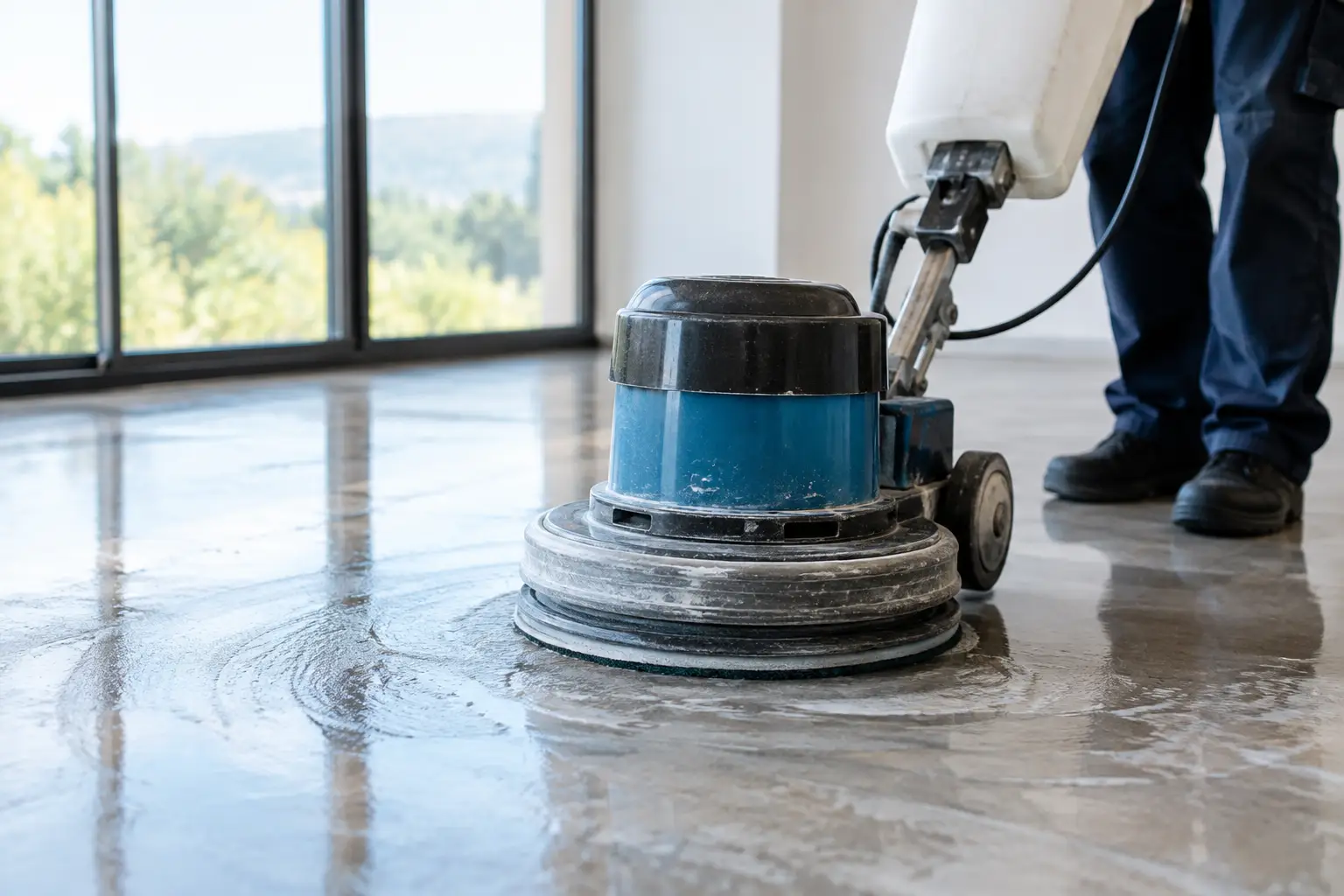
If the epoxy is on concrete, the most reliable tool is usually a diamond floor grinder. For broad areas, nothing else matches it for speed, consistency and control. A proper grinder cuts through the coating while also profiling the slab, which is exactly what you want if the floor is being prepared for new finishes, adhesives or coatings.
The catch is that not every grinder setup is the same. The size of the machine, the bond of the diamonds and the hardness of the concrete all affect the result. On a hard slab, the wrong diamond segment can glaze over and stop cutting. On a softer slab, an aggressive setup can mark the surface too deeply. That is where experience counts. A machine can be powerful and still be the wrong tool if it leaves the floor rougher than the next trade can use.
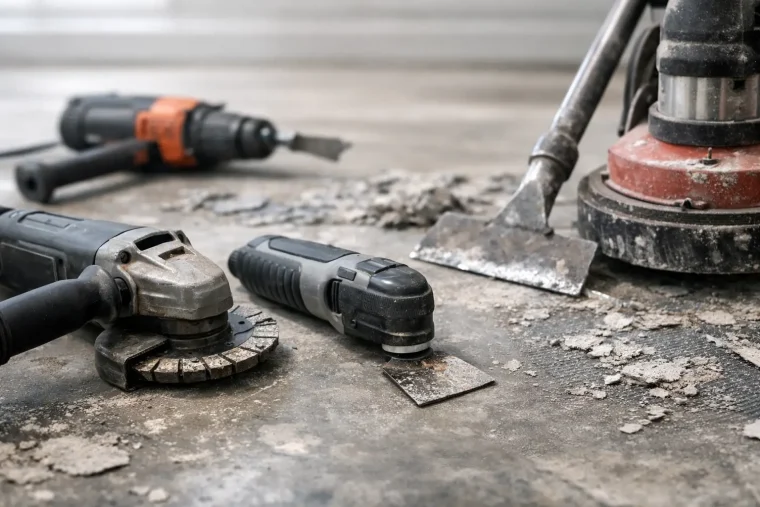
Handheld angle grinders also have their place. They work well around edges, doorways, columns and tight corners where larger machines cannot reach. They are useful support tools, not usually the best primary tool for a full floor. On bigger jobs, relying on a small grinder alone is slow, messy and hard on the operator.
Scrapers, chippers and jackhammers – when they help
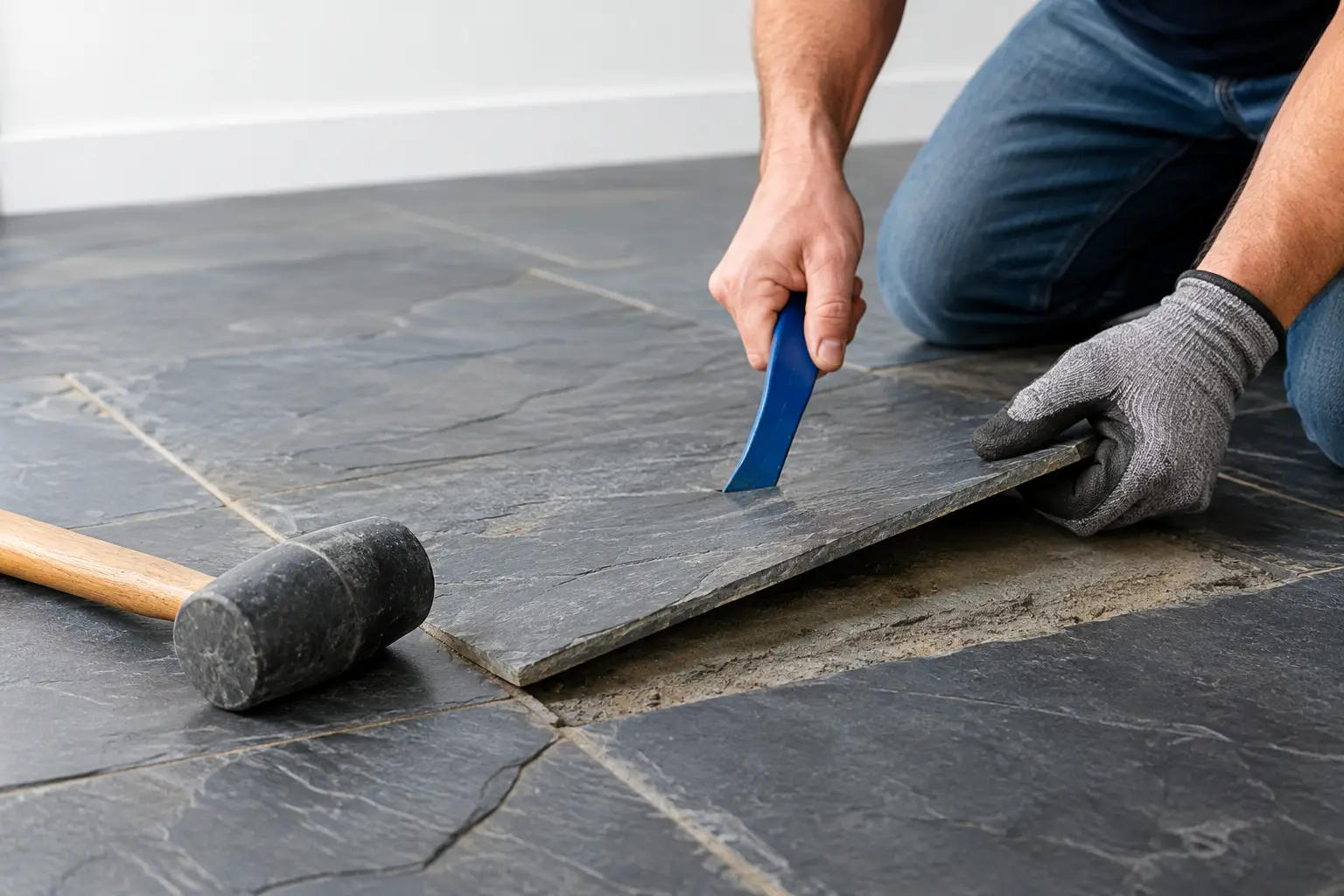
Mechanical scraping tools can work if the epoxy has already failed or if it was applied over a weak bond. A heavy-duty floor scraper can sometimes lift brittle sections quickly, especially on commercial floors where the coating is delaminating. But if the epoxy is still bonded properly, scrapers often leave behind stubborn residue and inconsistent patches.
For very thick build-up systems, a demolition hammer with a wide scaling chisel may help break the top layer and speed up removal in localised sections. This is more common where epoxy has been installed with heavy texture, non-slip aggregate or multiple built-up coats. It is effective in the right hands, but it is easy to damage the substrate if the operator gets too aggressive.
That is the trade-off with impact tools. They can save time on failed or heavy coatings, but they are not precision tools. If your goal is a clean, renovation-ready slab, impact tools are usually only part of the process, not the whole answer.
The role of shot blasting and scarifying
Shot blasting is another strong option for epoxy removal, particularly when you need to strip coatings and create an even surface profile across a wide open area. It throws steel shot at the surface and recovers it, taking the coating with it. This method can be very effective in warehouses, workshops and commercial spaces where access is open and a uniform prep standard matters.
Scarifiers are more aggressive again. They use rotating cutters to chew through coatings and remove material quickly. If the epoxy is exceptionally thick, or if there are high spots and contaminated layers to remove, a scarifier may be the right first-pass tool. The downside is the finish. Scarifiers are fast, but they leave a rougher texture than grinding, so further grinding is often needed afterwards.
This is where many people lose time by choosing one tool for the entire job. In practice, the best results often come from a combination – scarify or chip the heavy sections, grind the bulk area, then detail edges and corners with handheld gear.
Best tools for epoxy removal in tight areas
Bathrooms, laundries, small commercial tenancies and residential rooms rarely give you perfect access. In these spaces, compact grinders, edge grinders and oscillating multi-tools can all be useful depending on the detail required.
An oscillating tool with a rigid scraper blade can help lift epoxy from trims, edges and delicate transition points where a grinder would be too aggressive. It is slow, but controlled. For small patches around skirtings or thresholds, that control matters more than speed.
Heat guns are sometimes suggested for epoxy removal, but they are usually a poor choice on floors. Heating the coating can soften certain products, yet it can also make the material smear and become harder to remove cleanly. On concrete, heat rarely beats mechanical removal. It is more likely to create extra mess than save effort.
Chemical strippers are much the same. Some products will soften epoxy, particularly on smaller surfaces or vertical applications, but on flooring they often create a sticky residue that still needs to be scraped or ground off. Then you have disposal, odour, ventilation and surface contamination to deal with. For most floor removal work, chemical stripping is not the cleanest or most efficient route.
Dust control is not optional
A grinder without proper dust extraction is not a serious epoxy removal setup. It is a mess waiting to happen.
Concrete dust moves fast through a house, tenancy or worksite. It settles into joins, air-conditioning, cabinetry and finishes that are nowhere near the actual removal area. More importantly, airborne dust is a health and safety issue. That is why professional epoxy removal uses industrial vacuums, shrouded grinders and containment where needed.
This also affects productivity. Operators can only work accurately if they can see the surface and read what the coating is doing. Dust control is not just about cleanliness for the client. It helps the machine cut properly, reduces cleanup time and gives a better finished result.
What works best for thick, thin and failing epoxy
Thin epoxy coatings usually respond well to grinding, especially if the slab underneath is in reasonable condition. You remove the coating and prep the floor in the same pass. This is often the most efficient outcome.
Thick epoxy systems, especially those with non-slip aggregate or repeated recoats, often need a more staged approach. A scarifier, heavy scraper or demolition tool may be needed first to knock down the build-up before grinding can finish the job.
Failing epoxy is different again. If the bond has already let go in places, scrapers can move quickly across loose sections. But do not assume the whole floor will behave the same way. It is common to have one section lift easily while another remains fully bonded. That is where tool choice needs to change as the job unfolds.
When DIY equipment is not enough
Hire-shop grinders and handheld tools can work on very small jobs, but there is a point where the machine is simply underpowered for the coating. That usually becomes obvious when progress slows, diamonds stop cutting or the floor ends up patchy and uneven.
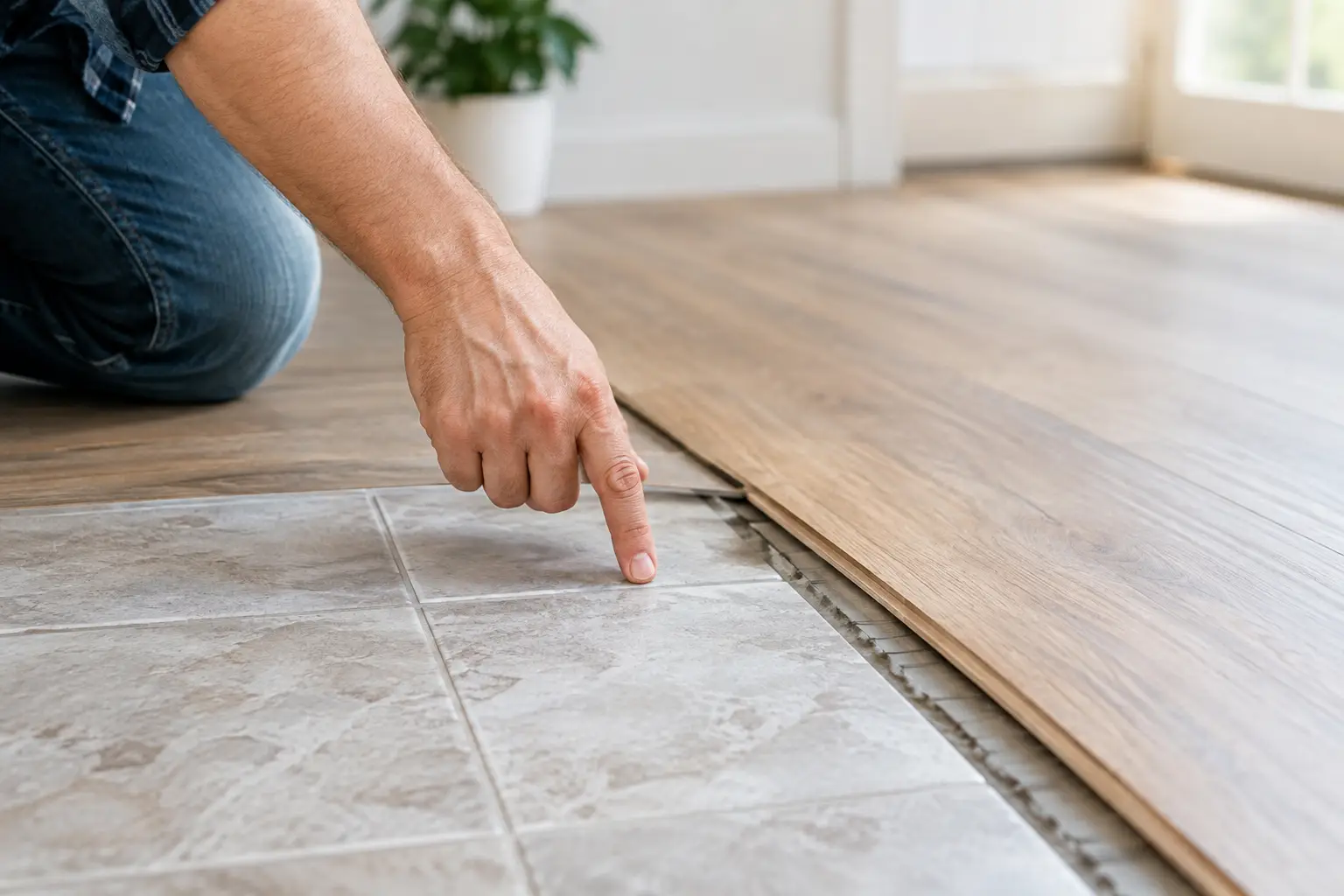
The other issue is slab damage. If you are removing epoxy before new tiles, timber, vinyl or another coating goes down, the slab condition matters. Gouges, ridges and uneven profiles can create delays for the next trade. Saving a few hours on removal means very little if the floor then needs extra patching or regrinding to become usable.
For larger areas, tenanted properties, commercial sites or renovation schedules with no room for rework, specialist removal is usually the better call. The right equipment is only part of it. Knowing when to change diamonds, when to switch methods and how to leave a floor ready for what comes next is what keeps the project moving.
Choosing the right approach for your site
The best tools for epoxy removal are not always a single machine. On most serious jobs, the right answer is a system: one tool for the open area, another for edges, another for heavy build-up and proper dust extraction across the whole process.
That matters whether you are stripping a garage floor before a new finish, removing failed epoxy from a commercial workspace, or getting a renovation site ready without dragging the job out for days. A clean removal is not just about getting the old coating off. It is about protecting the substrate, controlling disruption and handing over a surface that is genuinely ready for the next stage.
If the epoxy is fighting back, that is normal. The smart move is matching the tool to the coating, the slab and the finish you need at the end. Get that part right, and the rest of the project runs a lot smoother.