

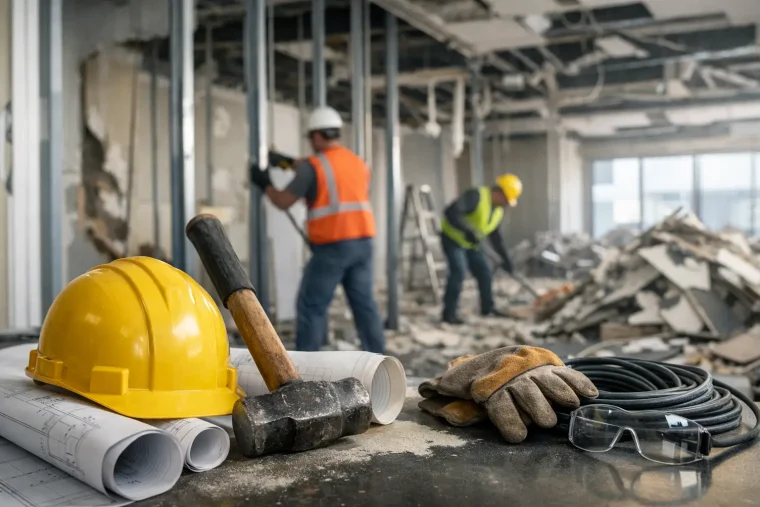
A rushed strip-out usually looks the same by midday – trades waiting around, bins in the wrong spot, hidden services slowing the job down, and a handover date that starts slipping before the real works even begin. A solid commercial strip out planning guide prevents that. If you want a site cleared safely, quickly and ready for the next stage, the planning needs to happen well before the first tool hits the floor.
Commercial strip-outs are rarely just about demolition. They are about sequencing, access, safety, dust control, waste removal, substrate condition and what the next trade needs from the space. Whether you are preparing an office, retail tenancy, café, restaurant or larger commercial fitout, the job runs better when the strip-out is treated as a critical construction phase rather than a quick tear-down.
What a commercial strip out planning guide should cover
The biggest mistake in commercial strip-out planning is assuming every site is straightforward. It is not. One tenancy might need floor coverings removed and adhesives ground back to clean slab. Another might involve internal non-structural demolition, joinery removal, bathroom demolition, kitchen strip-out and a make-safe process before builders move in.
A proper plan starts with scope. You need to be clear on exactly what is being removed, what is staying, and what condition the site must be left in. That sounds basic, but it is where many delays start. If the outgoing scope says remove carpet and tiles, but the incoming contractor expects smooth concrete ready for new finishes, there is a gap. That gap becomes time lost on site.
It also matters to separate demolition from preparation. Removing the old material is only half the job. Surface preparation, adhesive removal, slab grinding and clean-up often decide whether the next trade can start on schedule.
Start with the end state, not the demolition
The fastest way to plan a commercial strip-out properly is to work backwards from the handover condition. Ask what the next contractor needs on day one. Do they need bare slab, level substrate, clear access, isolated services, or a site free from debris and trip hazards? Once that is locked in, the strip-out scope becomes far easier to define.
This is especially important in commercial spaces where multiple trades are stacked tightly together. A flooring installer, shopfitter or builder does not want to arrive and find adhesive residue, uneven bedding, exposed fixings or rubbish still sitting in the tenancy. If the strip-out team knows the expected finish standard from the start, the work can be planned properly and completed in one run where possible.
There is also a practical point here. Some materials come up cleanly. Others do not. Vinyl may leave heavy adhesive. Old tiles may bring bedding with them in patches and leave the slab inconsistent. Timber flooring can expose moisture issues or damage beneath. Good planning allows for those site realities instead of pretending every removal is clean and simple.
Site inspection is where most problems are found early
A detailed site inspection saves time because it identifies constraints before the crew mobilises. Access is one of the first things to check. Can machinery get in easily? Are there lifts, loading dock restrictions, shopping centre rules, body corporate requirements or limited trading-hour windows? A strip-out in a standalone tenancy is a different job from one inside a live commercial complex.
Services need close attention as well. Electrical, plumbing, data, fire services and mechanical components can all affect demolition sequencing. If some of those items are staying live while part of the site is being stripped, the work method changes. Safety controls tighten, and the programme may need staging.
The inspection should also identify material types and likely removal difficulty. Surface coverings, screeds, tile bedding, adhesives and coatings all behave differently under removal equipment. That matters because production rates change from one substrate to another. It is one thing to remove loose carpet tiles. It is another to strip fully bonded vinyl, thick epoxy or stubborn ceramic tiles over hard bedding.
Programme around disruption, not just labour
Most commercial clients are not only asking how fast the work can be done. They are asking how little disruption the work will cause. That can affect timing more than the physical removal itself.
In offices, strip-outs may need to happen after hours or in staged zones. In retail and hospitality, the job may need to fit tight possession periods between tenants or work around centre management rules. In mixed-use buildings, noise, dust and waste movement often have narrow permitted windows.
This is why the commercial strip out planning guide should always include operational constraints. The best demolition plan on paper fails if waste bins cannot be swapped when needed or if noisy works are stopped during trading hours. Good contractors plan the work around the building, not just around the floor area.
Dust control, waste handling and cleanliness matter more than most people expect
Anyone can rip material out. The difference on a commercial site is control. Dust migration, debris management and final clean-up affect safety, neighbouring occupants and the start date for the next trade.
Floor removal and demolition can create fine dust quickly, particularly when grinding slabs, breaking tile bedding or removing brittle finishes. If dust control is poor, it travels into common areas, neighbouring tenancies and services. That creates complaints, cleaning issues and avoidable friction with site management.
Waste handling also needs planning upfront. You need to know where rubbish is being sorted, how it leaves the site, and whether there are restrictions on bin placement or removal times. On tighter sites, waste movement can become a bottleneck if it is not planned from the start.
Clean execution is not cosmetic. It is part of job readiness. A site that has been stripped properly should not leave the next contractor spending half a day clearing scraps, scraping residue or making the area safe before they can begin.
Identify what stays and protect it properly
Many commercial strip-outs are partial, not total. Joinery may be removed while ceilings stay. Floor finishes may be stripped while services remain. Back-of-house areas may be demolished while front-of-house elements are retained.
That means protection is as important as demolition. Existing walls, glazing, lifts, entries, shared corridors and retained services often need protection before works start. If this step is skipped, damage risks increase and the site becomes harder to manage.
There is also a communication issue here. Everyone involved should know what is staying. Mark-ups, site notes and pre-start clarification help prevent the classic problem of a retained item being removed because the scope was vague or assumptions were made on site.
Compliance and approvals can change the timeline
Some strip-outs can start quickly. Others depend on approvals, landlord sign-off, building rules or site-specific documentation. If you are working in a shopping centre, office tower or managed complex, there may be inductions, work method requirements, access bookings and insurance checks before tools come out of the ute.
This is where planning needs to be realistic. Fast turnaround is possible, but only when the paperwork and approvals are lined up. If they are not, the crew can be ready and still be unable to start.
For older sites, there may also be extra caution around unknown materials or previous alterations. Not every hidden issue can be predicted, but experienced planning allows room for investigation and quick decision-making if something unexpected is uncovered.
Choose a specialist, not a general labour crew
A commercial strip-out is one of those jobs that looks easier from the outside than it is. Speed matters, but speed without method causes damage, dust, delays and rework. The right contractor understands removal methods, substrate preparation, machinery selection, safety controls and what a proper handover standard looks like.
That matters most when the site has difficult floor coverings, stubborn adhesives, hard tile bedding or tight programme demands. A specialist team is more likely to finish the job with the slab properly prepared, the rubbish removed and the site genuinely ready for renovation. That is a very different outcome from a quick demolition pass that leaves follow-up work for someone else.
For builders, property managers and business owners, the practical question is simple: will the strip-out clear the path or create another problem to solve? The right planning and the right crew should do the first.
A practical handover standard
Before signing off the strip-out, walk the site against the agreed outcome. Check that all nominated items are removed, retained items are intact, waste is cleared, hazards are addressed and the surface condition matches what was promised. If slab grinding or adhesive removal formed part of the scope, confirm it has been done to the required standard rather than assumed.
This final check is where planning pays off. When the scope, access, protection, waste handling and substrate prep have all been organised properly, handover is straightforward. The next trade gets moving, and the programme holds.
A good strip-out does not draw attention to itself. It clears the space, removes the mess, deals with the hard parts and leaves the site ready for what comes next. That is the standard worth planning for.