
Old flooring rarely comes up cleanly. What looks like a simple floor removal job can quickly turn into broken screed, stubborn adhesive, uneven slabs, excess dust and delays for every trade coming in after. If the site needs to be ready for new tiles, timber, vinyl, carpet or a full renovation, the removal stage has to be done properly from the start.
That is where specialist removal matters. Floor removal is not just about ripping out surface materials. It is about separating coverings from the substrate without creating unnecessary damage, controlling dust and waste, and leaving a clean, workable base for whatever comes next. For homeowners, builders and commercial operators, that difference shows up fast in time saved, cleaner handover and fewer surprises during installation.
What floor removal actually involves
A proper floor removal job starts with identifying what is being removed and what is underneath it. Tiles over thick bedding need a different approach from glued vinyl on concrete. Timber flooring behaves differently again, especially if sections are fixed hard or the subfloor has already been patched. Carpet may come up quickly, but the adhesive and underlay residue can still hold up the project if not cleared properly.
In many jobs, the visible floor covering is only half the work. The harder part is removing the glue, bedding, levelling compounds or coatings left behind. If those materials stay on the slab, the next trade inherits the problem. New finishes do not perform well over contaminated, uneven or poorly prepared surfaces. That is why experienced operators treat removal and surface preparation as part of the same job, not two separate tasks.
Why the method matters
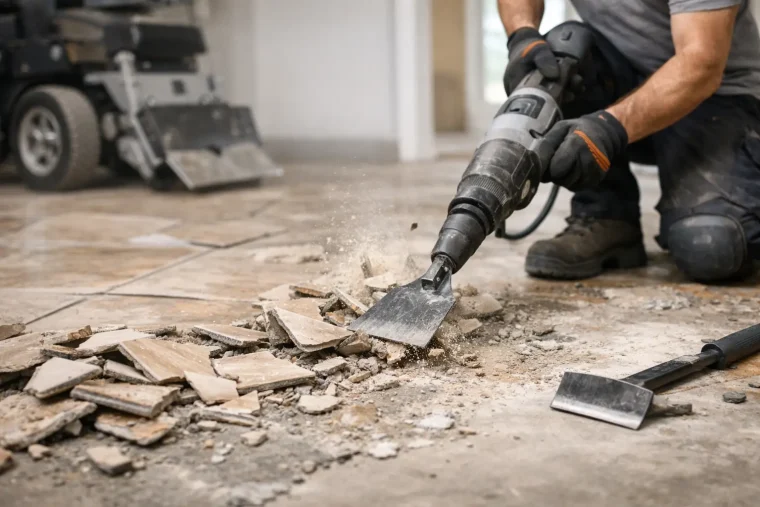
The wrong method can cost more in time than the original flooring itself. Over-aggressive removal can gouge concrete, crack surrounding finishes or damage thresholds and adjoining areas. On the other hand, a weak approach leaves residue everywhere and forces follow-up grinding or patching that should have been handled during the initial works.
Good floor removal is measured by what is left behind. The site should be safe, controlled and ready for the next stage. That means reduced dust migration, managed waste, and a substrate that has been stripped back properly rather than half-finished and handed over as someone else’s problem.
This matters even more on occupied sites. In offices, retail spaces, unit blocks and live renovation environments, disruption needs to be kept in check. Noise, dust and access restrictions all affect how the work is planned. A specialist team knows when to isolate an area, when to use dust-control equipment, and how to sequence the job so other works can continue with minimal interruption.
Common floor types and where jobs get difficult
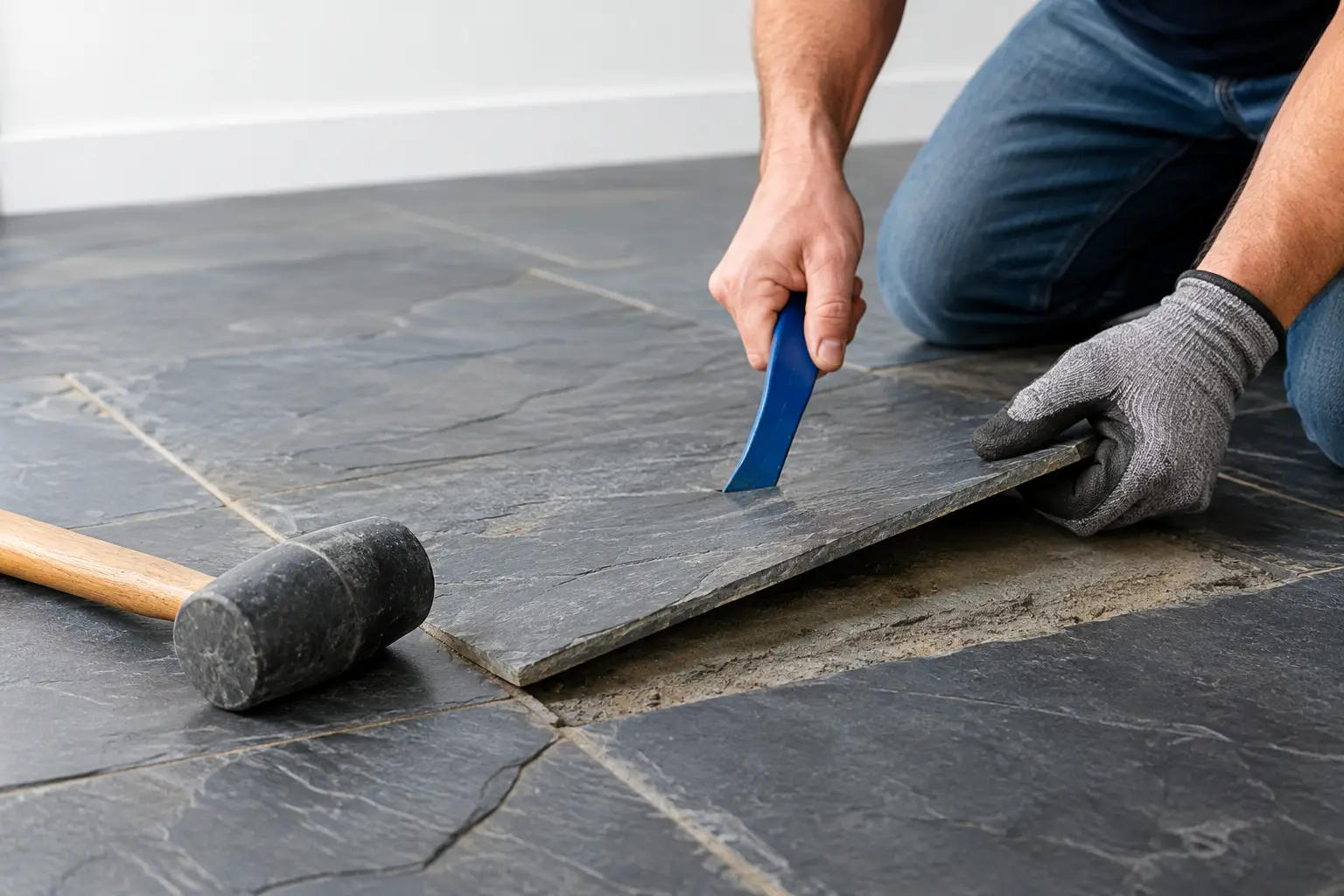
Tile removal is one of the most common requests, and one of the most variable. Some tiles lift cleanly. Others are bonded so hard that the bedding comes with them in chunks. In bathrooms, laundries and kitchens, waterproofing, falls and confined spaces can complicate the process. In older properties, you also find mixed repairs and uneven substrates that only become obvious once removal begins.
Timber floor removal can be straightforward or slow, depending on how it was installed. Floating boards are generally faster than direct-stick flooring, but both can leave problem areas behind. Nails, staples, acoustic underlays and hardened adhesive all add time and require care if the slab or subfloor needs to stay serviceable.
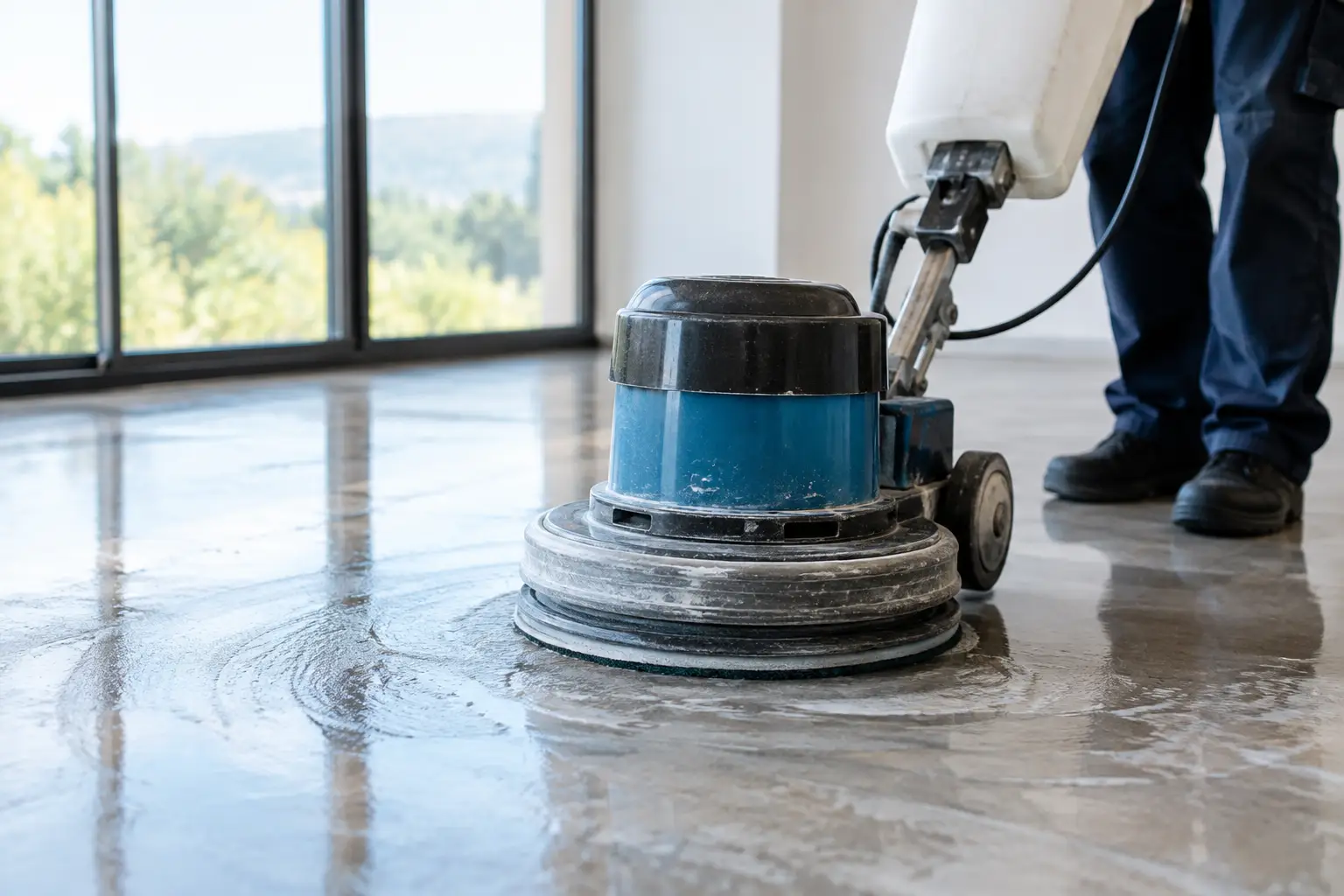
Vinyl and cork often look easy until the glue is exposed. Once old adhesive has cured hard, it can become one of the most time-consuming parts of the job. The same goes for epoxy coatings, paint build-up and other bonded finishes. These materials usually need mechanical removal and follow-up grinding to get the surface back to a usable condition.
Stone products such as marble, slate and terracotta add another layer again. They are heavy, they often sit on solid bedding, and they generate a lot of material once broken out. If access is tight or the property is occupied, the work has to be controlled carefully to keep things moving and keep the clean-up manageable.
When floor removal should include surface preparation
If the next step is retiling, polishing, levelling or installing a new floor covering, removal alone is rarely enough. The slab may need grinding to strip adhesive, flatten high spots or remove remnants of old coatings. Without that prep, even a good installer is working off a compromised base.
This is where jobs often lose momentum. One contractor removes the floor, then another has to come back to clean up what was left behind. That gap creates downtime, extra site traffic and confusion about who is responsible for getting the surface ready. It is far more efficient when the same team can remove the existing floor and prepare the substrate properly in one run.
For renovators and builders, that means fewer delays between demolition and fit-off. For homeowners, it means the site reaches a usable, cleaner stage faster. For commercial projects, it reduces the chance of reopening dates drifting because preparatory works were underestimated.
Residential and commercial jobs need different planning
In homes, the main concerns are usually access, dust, noise and protecting surrounding finishes. If the renovation is staged room by room, the removal team needs to work neatly and keep the job contained. That is especially true in kitchens, bathrooms and lived-in homes where other parts of the property remain in use.
Commercial floor removal tends to be more about deadlines, coordination and safety. Offices, shops, hospitality venues and unit developments often work to tighter programmes, and delays can affect multiple contractors at once. There may also be after-hours requirements, body corporate conditions, lift access limitations or stricter waste handling procedures.
The core principle is the same in both settings. The work should be planned around the site, not forced onto it. Fast turnaround only helps if the job is controlled and the finish is right.
What to look for in a floor removal specialist
Experience with multiple materials matters because removal work changes from one room to the next. A team that handles tile, timber, vinyl, carpet, adhesives and coatings is better placed to deal with what appears once the top layer is gone. Renovation sites are full of surprises, and a specialist should be equipped to adapt without losing time.
Dust control is another big one. Every removal job creates mess, but there is a major difference between unavoidable dust and poorly managed dust. Professional equipment, extraction methods and disciplined site handling protect adjoining areas and make post-removal clean-up far easier.
It also pays to ask whether the team prepares the slab as part of the process. Removal without proper clean-down or grinding often leaves the next phase exposed to problems. A site that is genuinely ready for installation is worth far more than a site that has simply had the old floor broken out.
Finally, reliability counts. If a contractor says the work can be done quickly, they need the crew, tools and process to back it up. Rapid Stripped is built around that kind of delivery – getting difficult floor removal and strip-out work completed efficiently, safely and with the site ready for what comes next.
Floor removal is often the job that sets up the whole renovation
Most people focus on the new finish. Fair enough. That is the part you see. But the quality of that result starts earlier, with how the old material is removed and how well the substrate is prepared afterwards.
A rushed or incomplete removal job creates flow-on issues for tilers, flooring installers, painters and cabinetmakers. A clean, well-executed one keeps the programme moving. It gives the next trade a proper starting point and reduces the risk of rework, delays and avoidable site problems.
If you are planning floor removal in a house, unit, office or commercial space, the smart move is to treat it as specialist work, not basic demolition. The right crew will remove the material, manage the mess and leave the site ready to build forward. That is how renovations stay on track from day one.