
You usually find out how tough tile adhesive removal really is after the tiles are gone. The floor looks close to ready, then you hit the glue bed, ridges, hard-set patches or crumbly residue that refuses to move. That last layer is often what holds up the whole renovation.
Adhesive removal is not just a clean-up task. It affects how well your new floor bonds, how level the finished surface is, and whether the next trade can get straight to work or loses time fixing avoidable substrate issues. If the slab is gouged, contaminated or left uneven, the problem gets pushed downstream.
Why tile adhesive removal matters
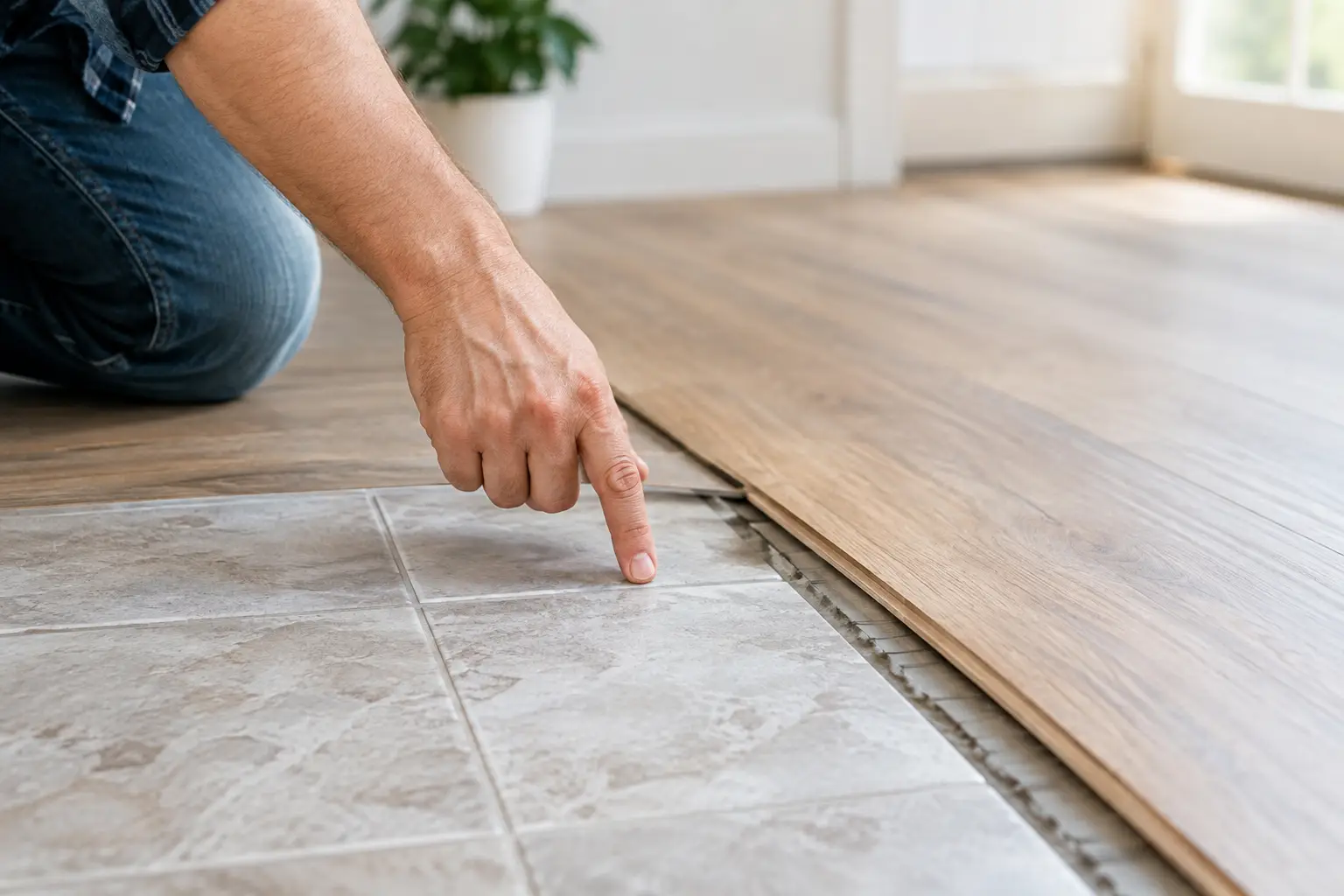
Old adhesive can interfere with nearly every floor finish. Timber, vinyl, hybrid planks, new tiles and coatings all rely on a properly prepared substrate. Even small amounts of leftover adhesive can create high spots, poor adhesion or visible imperfections once the new material goes down.
There is also the issue of moisture and movement. Some old mastics soften, some cement-based adhesives stay rock hard, and some residues break down unevenly under pressure. What looks minor on day one can become a failure point later. For builders, renovators and property owners, that means delays, rework and unnecessary frustration.
A floor that is genuinely ready for the next stage is not one that has simply had the tiles lifted. It has had the adhesive removed with the slab condition, floor finish and timeline in mind.
Not all tile adhesive is the same
This is where DIY assumptions usually come unstuck. Tile adhesive removal depends heavily on what was used in the first place, how long it has been there, what it is bonded to, and what needs to happen next.
Cement-based adhesives are common and often extremely hard once cured. These usually need mechanical removal rather than scraping by hand. Pressure-sensitive or older adhesive types can behave differently again, especially in renovations where multiple floor coverings have been laid over the years. In wet areas, you may also be dealing with waterproofing membranes, screeds or bedding compounds under or around the adhesive layer.
Then there is the substrate itself. A concrete slab can handle certain removal methods that would be completely wrong on a softer underlay or more fragile base. If the goal is to preserve the slab and leave it ready for new installation, the removal method has to match the job.
The main challenge is avoiding damage while removing adhesive
Anyone can attack a floor with brute force. The hard part is removing adhesive thoroughly without chewing up the slab underneath. That balance matters.
Hand tools might work on small isolated areas, but they are slow and inconsistent across larger spaces. Over-aggressive mechanical work can leave deep grinder marks, chipped edges or uneven sections that then need additional repairs. On the other hand, underpowered removal leaves patches behind, which can be just as problematic when the new flooring goes in.
This is why professional tile adhesive removal is usually a combination of the right machines, the right abrasives or blades, and the operator knowing when to change approach. A bathroom floor, a retail tenancy and a large open-plan home are not the same job, even if the adhesive looks similar at first glance.
Methods used for tile adhesive removal
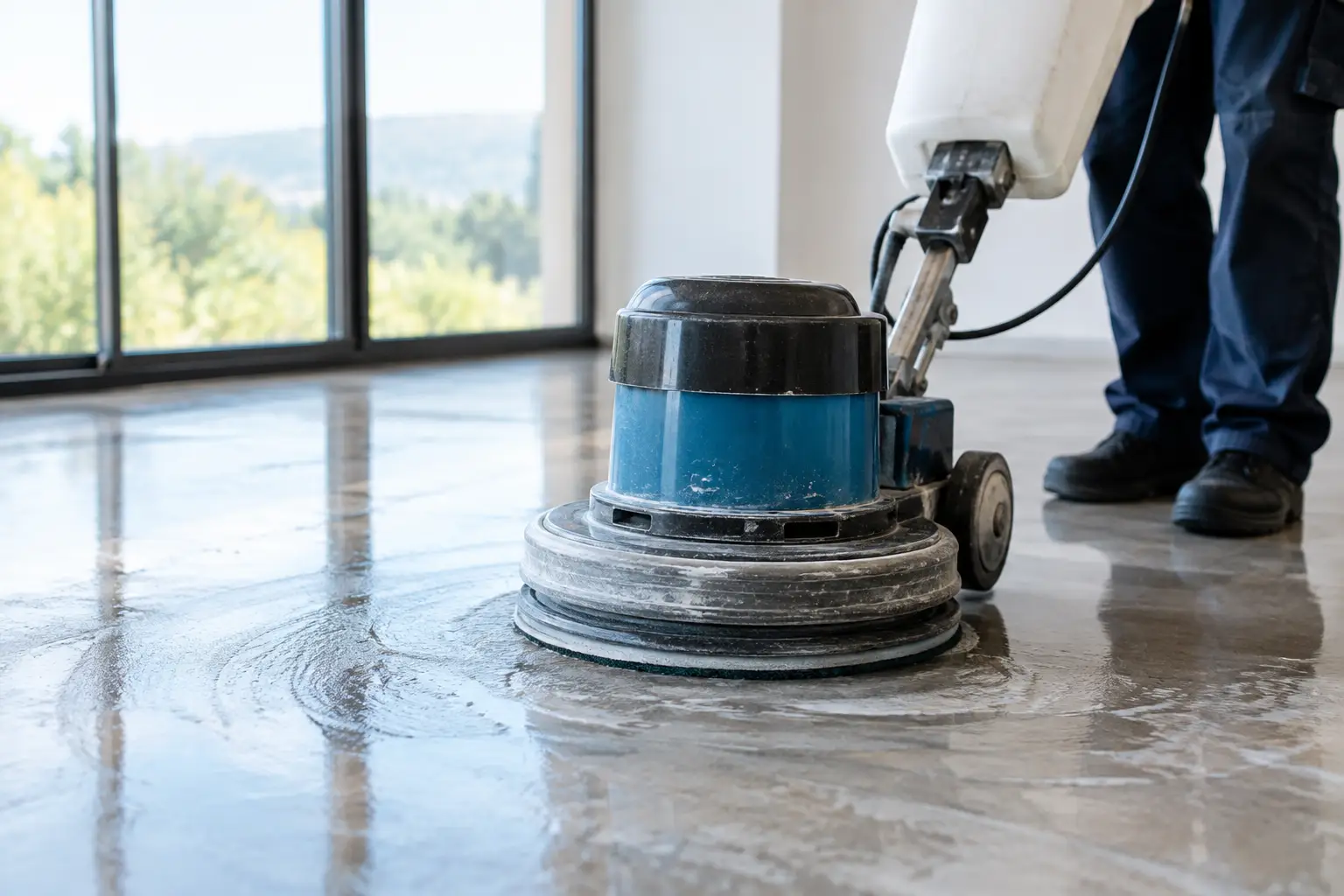
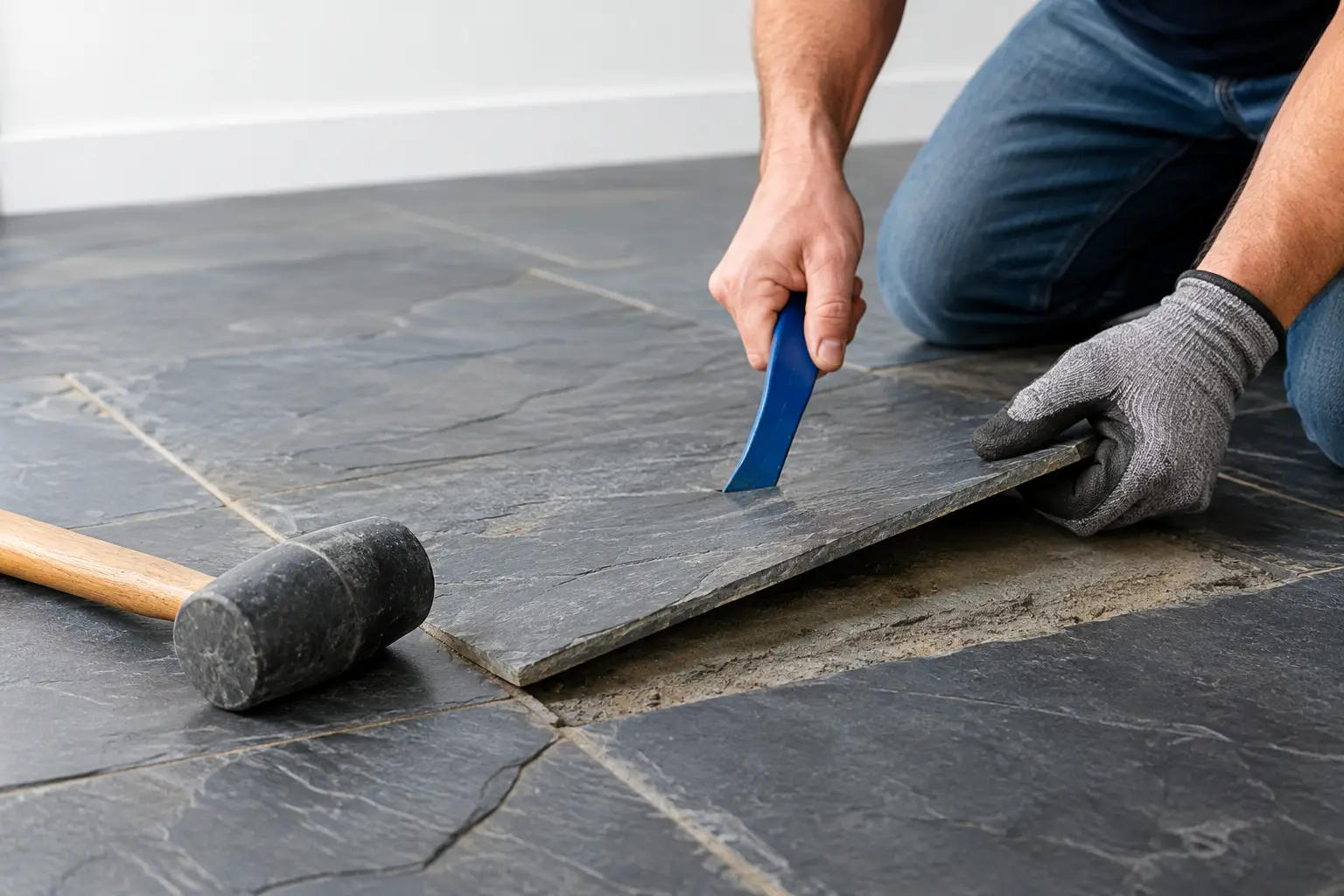
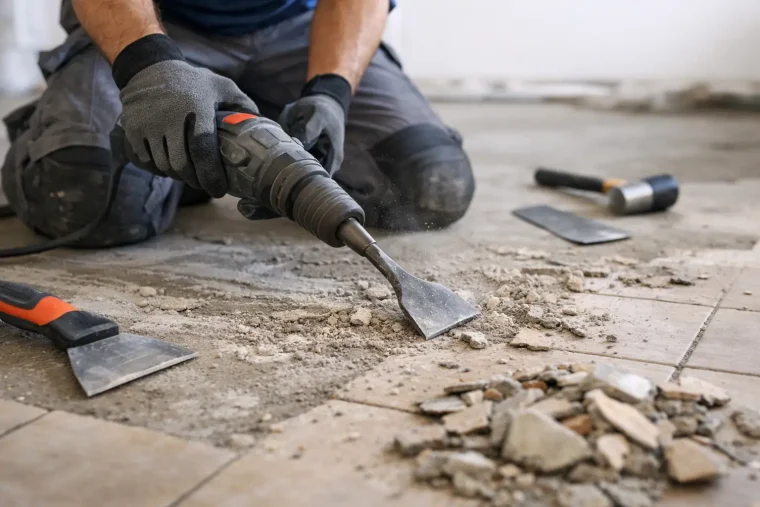
For smaller, lighter residues, scraping may have a place. Once the adhesive is thicker, harder or spread across a full room, mechanical removal is generally the practical option. Floor grinders, scarifiers and specialised stripping equipment are commonly used depending on the material and the finish required.
Grinding is often the best choice where the goal is to remove adhesive and refine the slab at the same time. It can take down ridges, smooth out the surface and leave the area more suitable for the next trade. That said, not every adhesive responds the same way. Some smears if the method is wrong. Some fractures cleanly. Some needs staged removal.
Dust control also matters more than many people expect. Adhesive and surface preparation work can generate a serious amount of fine dust if it is not managed properly. In occupied homes, commercial spaces or renovation sites with other trades moving through, proper dust-controlled equipment makes a real difference to safety, cleanliness and overall disruption.
When DIY tile adhesive removal becomes a false economy
There are jobs small enough to tackle yourself, especially if it is one room, the adhesive is already loose, and the finish standard is not critical. But most people underestimate the time, effort and clean-up involved. What starts as a weekend task can drag on, especially once the floor proves harder than expected.
The bigger issue is not just time. It is substrate condition. If the slab ends up pitted, uneven or contaminated, you may save nothing by doing it yourself. The installer coming in after you may still need to grind, patch or re-prepare the floor before they can proceed.
That is where specialist removal work earns its keep. An experienced crew is not just there to strip material. They are there to get the floor to a usable condition quickly, safely and with minimal mess, so the next stage of the project can move.
What to expect from a professional adhesive removal job
A proper assessment comes first. The type of adhesive, the tile system, the slab condition and the required finish all need to be understood before the machines start. In some cases, the adhesive comes off cleanly after the tiles are lifted. In others, there is a combination of glue, screed, bedding and damaged substrate that needs a more controlled process.
The best results come from treating the work as surface preparation, not just demolition. That means looking beyond removal and focusing on what the floor needs to be ready for. If a new tile installation is going down, the requirements may differ from a polished concrete finish or a resilient floor covering.
On well-managed jobs, the removal phase is fast, the site is kept under control, and the finished slab is left in a condition that supports the next trade rather than creating extra work. For many clients, that speed is the difference between staying on schedule and losing days to avoidable delays.
Common problem areas after tiles come up
Bathrooms and kitchens often present the toughest adhesive removal conditions because of moisture exposure, tighter working areas and the layers built into wet area construction. Older homes can also surprise you with multiple generations of flooring, patch repairs or inconsistent substrates across adjoining rooms.
Commercial sites bring a different set of pressures. Timeframes are tighter, access may be restricted, and there is usually less tolerance for dust, noise and downtime. In those environments, efficient removal is not just about labour. It is about planning, equipment choice and finishing cleanly enough that other work can continue.
Even outdoor or pool-related tile removal can create adhesive challenges, particularly where exposure and age have changed how the material bonds to the base. No two slabs behave exactly the same, which is why experience matters.
Choosing the right team for tile adhesive removal
If you are bringing in a contractor, look for more than someone who says they can remove tiles. Adhesive removal and slab preparation are specialist work. You want a crew that understands difficult substrates, knows how to manage dust, and can leave the site ready for renovation rather than halfway there.
Clear communication matters too. You should know what condition the floor is likely to be in, whether grinding or additional prep may be needed, and how the work will be carried out with minimal disruption. That is especially important in occupied homes, unit blocks, offices and active commercial sites.
A good operator will not oversimplify the job. They will tell you where the risks are, where the slab may need attention, and what level of finish is realistic based on the material being removed. That honesty usually saves time.
For clients across Northern NSW, the Gold Coast, Brisbane and the Sunshine Coast, Rapid Stripped handles this kind of work with the right equipment, proper dust control and a strong focus on leaving sites clean, safe and ready for the next stage.
The main thing to remember is this: tile adhesive removal is not the part of the job to rush or guess your way through. Get it done properly, and everything that follows has a better chance of going in straight, bonding well and finishing the way it should.