
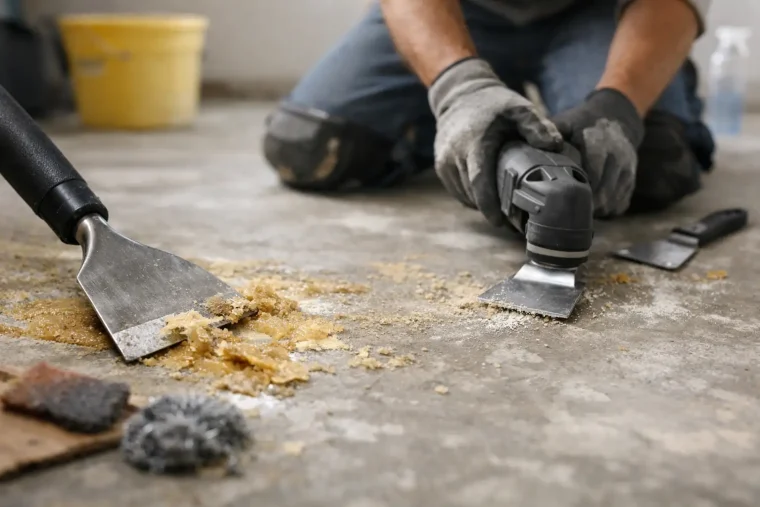
If you need to remove carpet glue from slab, you already know the hard part is not pulling up the carpet. It is what gets left behind. That old adhesive can sit like tar, smear when it gets warm, clog grinding gear, and turn a straightforward renovation into a slow, filthy job.
The right approach depends on the glue, the slab condition, and what is going back on top. A concrete slab being prepared for polished concrete needs a different standard than a slab going under hybrid flooring or tiles. Get that part wrong and the next trade inherits the problem.
Why carpet glue on concrete is such a problem
Carpet glue bonds differently depending on its age, product type, and how porous the slab is. Some adhesives stay rubbery and scrape off in strips. Others go brittle and break away in patches. The worst ones soak into the slab surface and leave a dark, stubborn residue that does not respond well to basic scraping.
That matters because most new floor finishes rely on a clean, sound substrate. Adhesive residue can affect levelling compounds, tile adhesives, epoxy systems, and direct-stick floor installations. Even when it looks thin, it can still interfere with adhesion. A slab can appear clean enough to the eye but still fail the next stage of prep.
There is also the dust and contamination issue. Once glue starts breaking up under mechanical removal, it mixes with concrete fines and creates a mess quickly. In lived-in homes, offices, shops and strata properties, that can become a disruption issue as much as a flooring issue.
Remove carpet glue from slab – first work out what you are dealing with
Before choosing tools, check three things. First, look at the adhesive itself. Black, dark brown, yellowed or beige glue can all behave differently. Some older black mastics need extra caution because age and composition can change how they should be handled.
Second, check the slab. A smooth, hard-finished slab will usually release glue differently to a rough or damaged one. Cracks, old patching, moisture issues or previous coatings can all affect the result.
Third, be clear about the finish you need. If the slab only needs to be roughly cleaned before a floating floor goes down, the prep can be different to a slab that needs grinding smooth for direct adhesive application. The end use dictates how aggressive the removal should be.
The main ways to remove carpet glue from slab
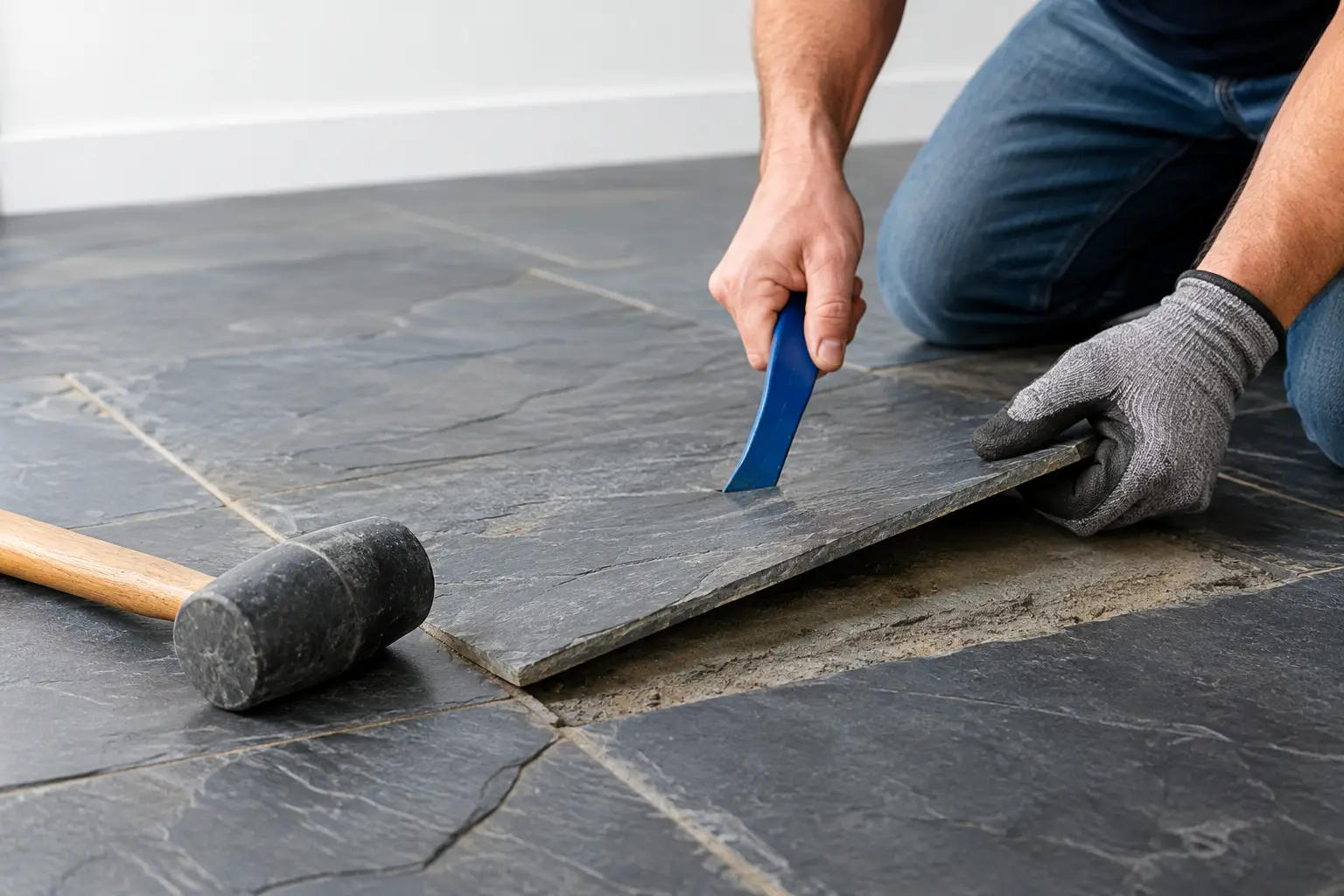
In lighter cases, hand scraping can work. Long-handled floor scrapers are useful when the glue is old and brittle or when most of the adhesive came up with the carpet. It is labour-heavy, but sometimes it is the cleanest first pass because it avoids spreading softened glue across the slab.
Mechanical scraping steps things up. Powered floor scrapers can remove larger areas faster and are often a practical option on commercial jobs or open-plan residential spaces. They are effective when the glue is thick enough to shear off, but they do not always leave the slab ready for reinstallation. There is usually still a film or embedded residue left behind.
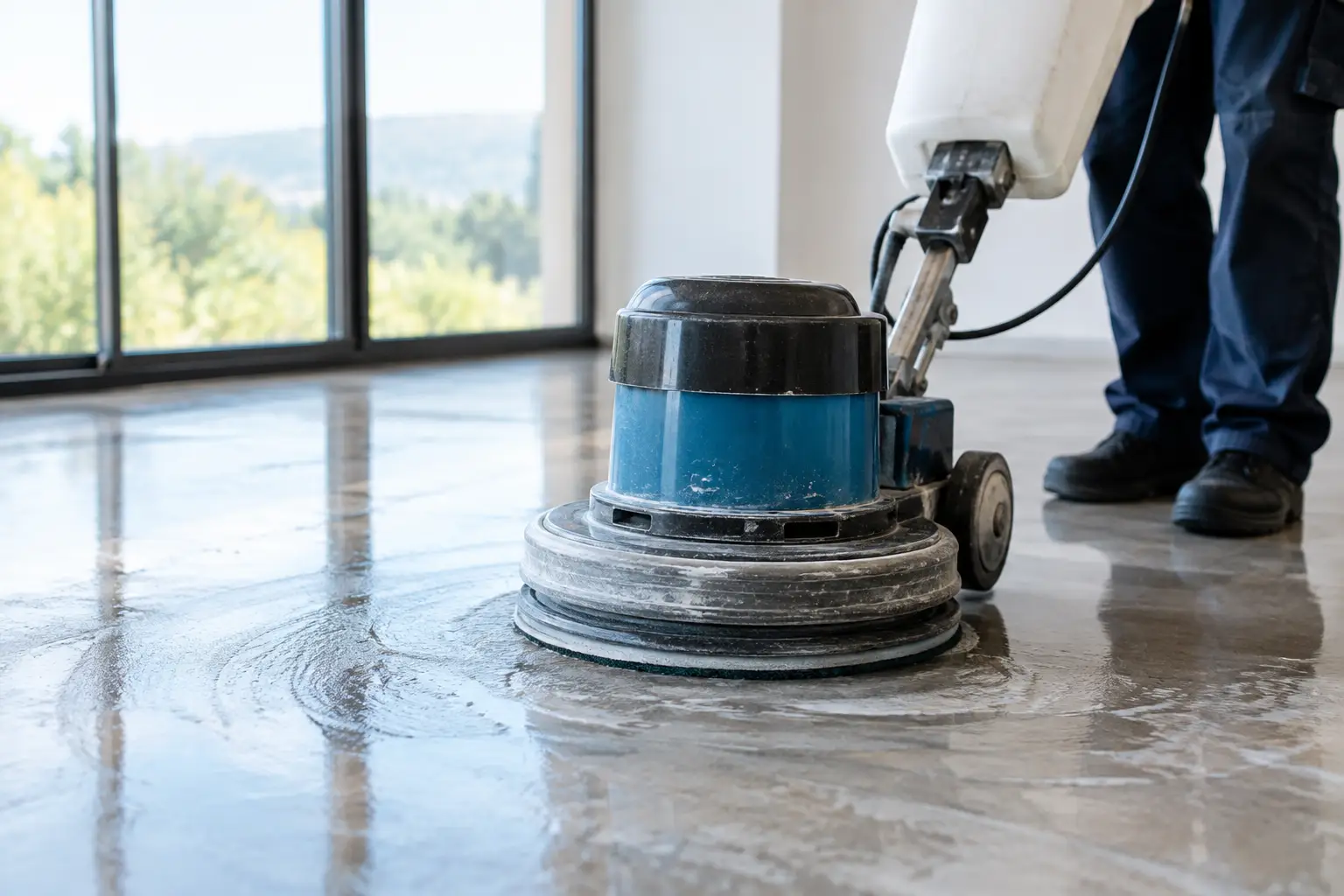
Grinding is often what gets the slab properly back into shape. Diamond grinders remove residual glue and open the surface, which is important when the next flooring system needs a clean bond. This is also where experience matters. Too light and the residue stays. Too aggressive and you mark the slab unnecessarily or create extra repair work.
Chemical softeners and adhesive removers can help in some situations, but they are not a universal fix. They may loosen certain glues, yet they can also create a smeared mess that is harder to contain and clean. Some leave residue of their own, which can cause issues for the next floor finish if the slab is not fully neutralised and cleaned.
What usually goes wrong on DIY glue removal
The most common mistake is assuming all glue will come off the same way. It will not. A scraper might fly through one room and do almost nothing in the next because sun exposure, moisture and age have changed the adhesive.
The next issue is using the wrong grinder or the wrong tooling. Standard hire equipment can struggle on stubborn adhesives, especially if the slab needs a consistent finish across the full area. Instead of removing the glue cleanly, it can gum up, skip over residue, or leave swirl marks and uneven patches.
Then there is dust control. Concrete prep is not just messy. Without proper containment and dust extraction, it can move through the property fast. That matters in occupied homes, tenancies, retail spaces and commercial environments where keeping the site controlled is part of doing the job properly.
Another problem is stopping too early. A slab that looks mostly clean may still have enough adhesive contamination to affect primers, levellers or new flooring adhesives. This is where plenty of renovation delays start. The floor installer arrives, checks the substrate, and the site is not ready.
When scraping is enough and when grinding is the better option
If the glue is dry, flaky and sitting on the surface, scraping may be enough for initial removal. It is often the quickest way to clear bulk material without grinding unnecessary concrete. For smaller rooms or isolated adhesive patches, that can be a sensible first step.
If the glue is smeared, soaked into the slab, or spread across a large area, grinding is usually the better option. It gives you a more reliable finish and reduces the risk of hidden residue causing trouble later. This is especially true before tiling, direct-stick vinyl, epoxy coating, or any finish where slab condition matters.
There is always a trade-off. Grinding is more specialised and generally needs the right machinery, dust control and operator judgement. But when the goal is a slab ready for the next stage, it is often the most efficient path overall.
Preparing the slab for what comes next
Removing the glue is only part of the job. The slab still needs to be checked for remaining adhesive, low spots, old patching, cracks and surface inconsistencies. On many renovation sites, glue removal exposes problems that were hidden under the carpet for years.
That is not bad news. It is better to find it now than after new flooring starts failing. Once the slab is clean, you can properly assess whether it needs grinding, patch repair, levelling or further surface prep.
This is why specialist removal crews focus on job readiness, not just demolition. A fast strip-out is only useful if the next trade can step in without rework. On demanding residential and commercial projects, that handover matters.
When it makes sense to call in specialists
If the area is large, the glue is heavy, or the slab needs to be ready quickly, specialist removal is usually the smart call. The same applies if you are working in an occupied property, managing a renovation schedule, or preparing a site for multiple follow-on trades.
A proper floor removal team brings more than muscle. They bring the right stripping gear, grinding equipment, dust-control systems and the experience to read the slab properly. That means less guesswork, less mess and less chance of turning one problem into three.
For builders, renovators and property managers, speed matters, but clean execution matters just as much. A slab covered in half-removed glue is not a finished job. A slab prepared properly and ready for the next stage is.
Rapid Stripped handles this kind of work every day across residential and commercial sites where delays and mess are not acceptable. The focus is straightforward – remove the covering, remove the adhesive, and leave the surface properly prepared for what comes next.
A few practical checks before work starts
Clear the room properly. Not just furniture, but doors if clearance is tight, and any loose fixtures that can collect dust or get damaged. If the carpet has underlay staples or smooth edge still fixed around the perimeter, those need to come up as part of the process.
Confirm the intended new floor finish before removal begins. That one detail changes the standard of prep required. It is far better to know early than to redo the slab later.
And if the glue appears unusually thick, very dark, or the building is older, do not make assumptions. Older materials can need a more careful approach, and that is best assessed before machines hit the floor.
A stubborn glue bed on concrete is one of those jobs that looks simple until it is not. When the slab needs to be clean, sound and ready without wasting days on trial and error, the best result usually comes from treating glue removal as surface preparation, not just strip-out.