
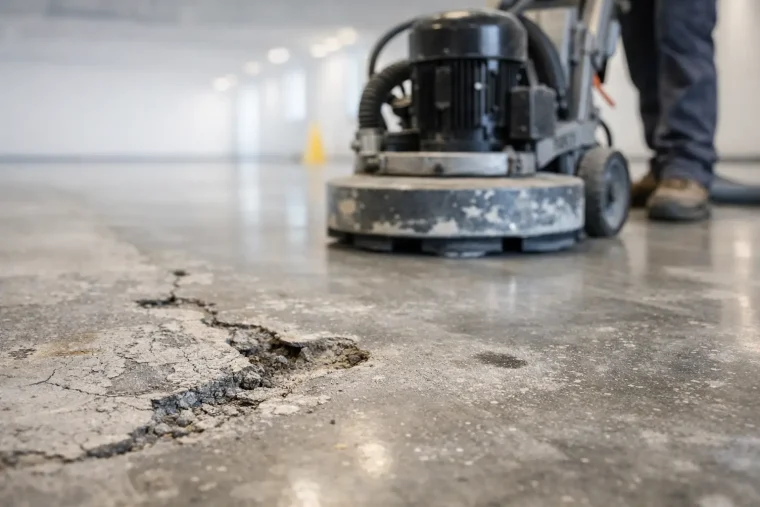
A new floor can only go down as well as the surface underneath it. If the slab is rough, uneven, contaminated or still covered in old adhesive, you are already setting the next stage of the job up for trouble. That is why knowing the top signs floor needs grinding matters before you install tiles, timber, vinyl, epoxy or carpet.
Floor grinding is not a cosmetic extra. It is a preparation step that fixes the substrate so the next trade is not fighting high spots, failed adhesion or visible imperfections after the finish goes down. In renovation work, that can be the difference between a clean handover and an expensive delay.
Top signs floor needs grinding before new flooring
One of the clearest signs is leftover adhesive that refuses to come up cleanly. Old vinyl glue, carpet adhesive, tile glue and black mastic can bond hard to concrete, and even when the floor looks mostly clean, thin residue can still affect how new coatings or flooring products stick. If the slab feels tacky in places, looks patchy, or has ridges and scrape marks after removal, grinding is often the right next step.
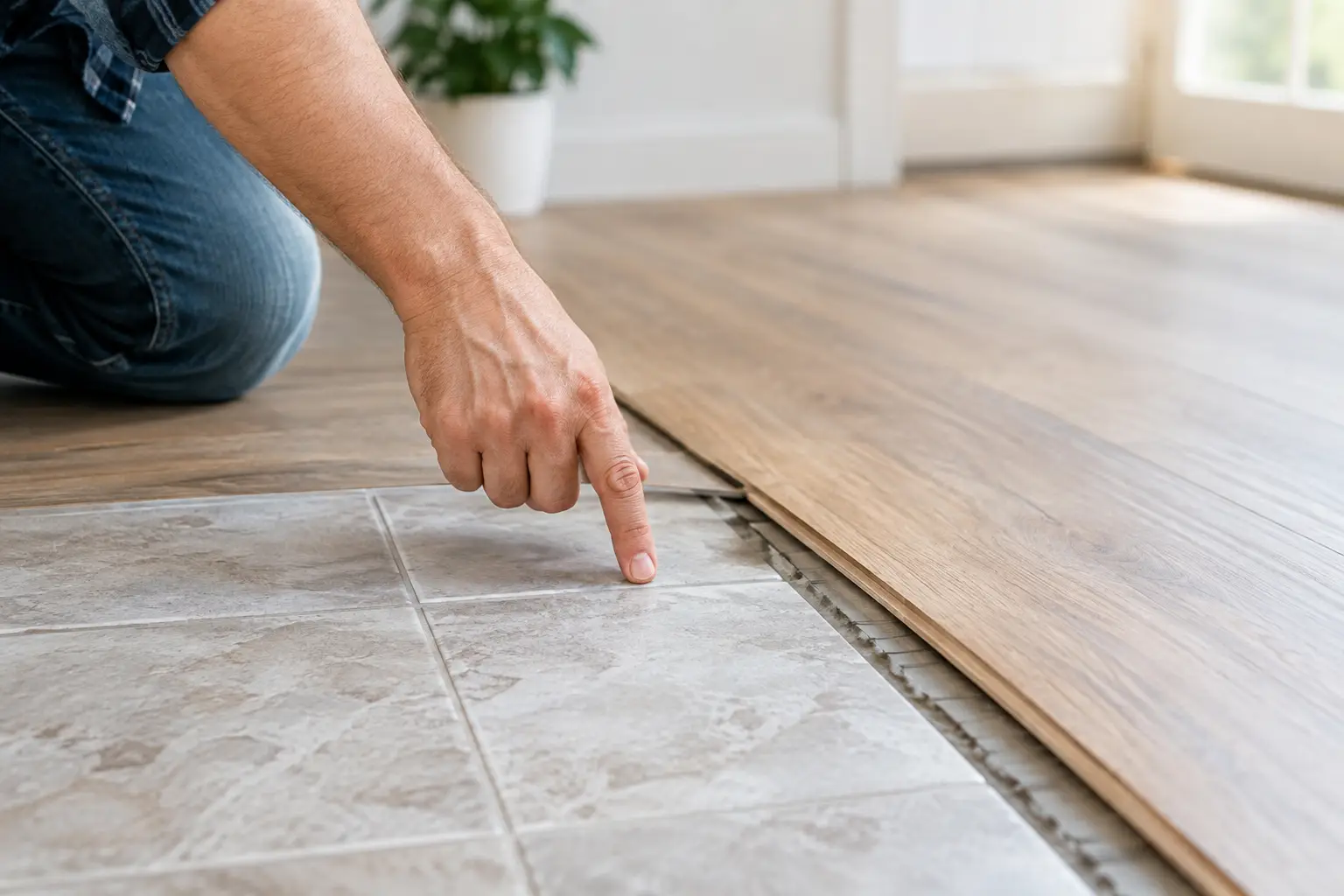
Another strong indicator is unevenness. You do not need a wildly sloped floor to have a problem. Minor lips between rooms, isolated high spots, trowel marks, and old repair patches can all create issues once the new covering goes down. Timber and hybrid boards can sound hollow or move underfoot, large format tiles can sit unevenly, and vinyl can telegraph defects straight through the surface. If the floor is not consistently flat, grinding helps bring it back into line.
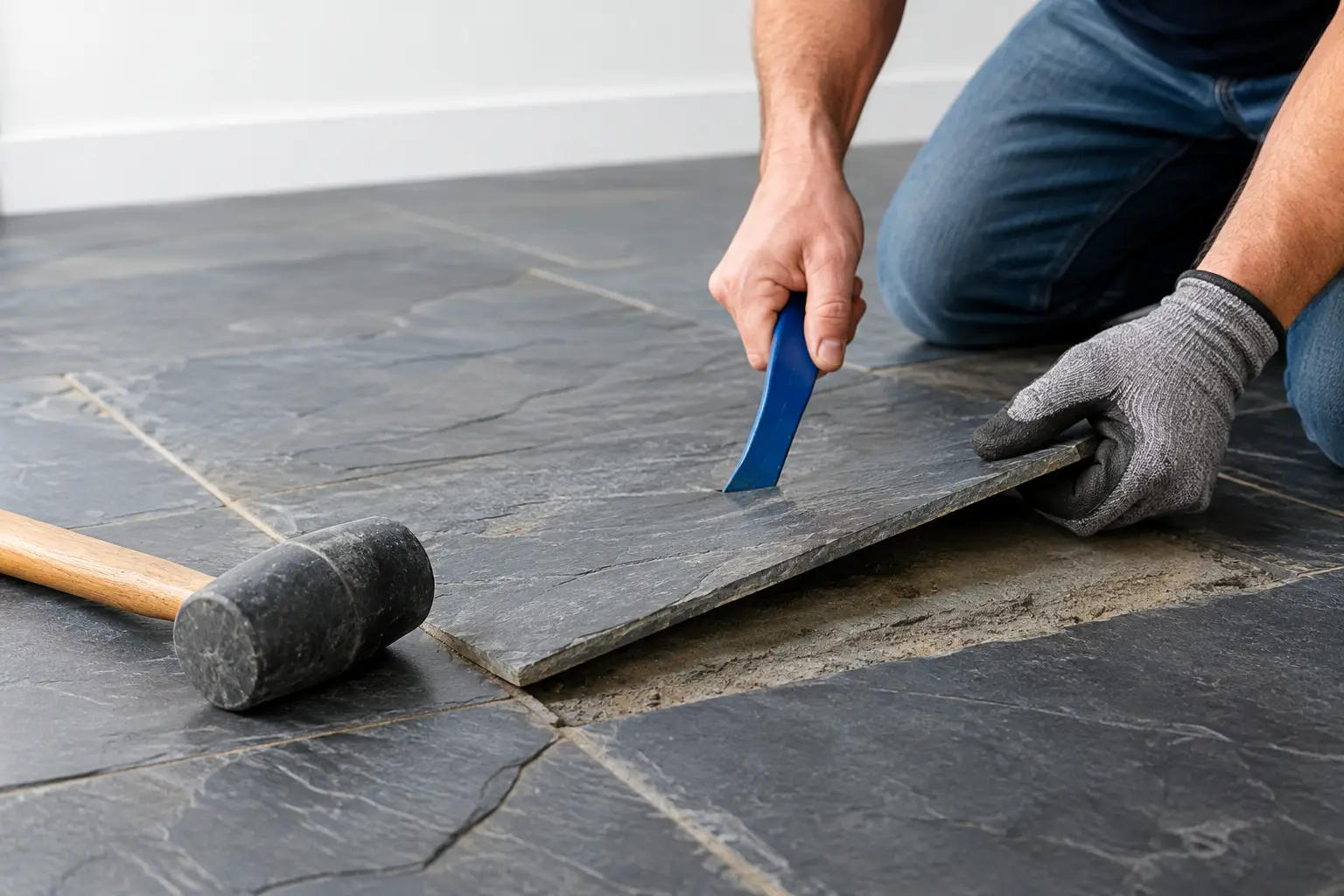
Tile bedding remnants are another common problem on renovation sites. Once tiles are removed, the slab underneath is rarely ready to go. You are often left with hardened mortar, thin-set build-up or stubborn bedding that leaves the floor rough and proud in sections. Trying to install over that is asking for trouble. Grinding removes the leftover material and creates a cleaner, more uniform base.
Cracks and patch repairs can also point to the need for grinding, although this depends on their condition. Grinding will not solve a structural slab issue, but it does help feather repaired sections, remove raised edges and blend uneven patching compounds into the surrounding floor. If you can feel or see transitions across the slab, they will usually show up even more once the final floor is laid.
Surface damage that usually means the floor needs grinding
Sometimes the problem is not leftover material. It is the condition of the concrete itself. Paint overspray, surface sealers, minor spalling, old coating failure and general wear can all stop the floor from performing as it should. If the concrete is flaky, brittle at the top layer, or contaminated by previous finishes, grinding is often needed to expose a sound surface underneath.
This is especially relevant before epoxy or other coatings are applied. Coatings need the right surface profile to bond properly. A slab that is too smooth, contaminated, or partly sealed may look acceptable at first glance, but it can lead to peeling or patchy adhesion later. Grinding gives the coating a better mechanical bond and removes weak material from the top of the slab.
Moisture-related damage can also leave a floor in poor condition. You might see bubbling in old coatings, crumbling patches, salt residue or dark staining. Grinding is not a cure for every moisture problem, but it can be part of proper preparation once the cause has been assessed. What matters is not guessing. If the slab shows signs of contamination or breakdown, it needs to be checked before anything new goes over it.
When a floor looks fine but still needs grinding
This catches plenty of people out. A floor can look reasonably clean after removal and still not be ready. That is because many preparation problems are felt more than seen. Run a straightedge across the slab and you may notice high spots. Walk the area and you may feel rough transitions, shallow grooves or adhesive ridges. Shine a light across the floor and low-angle shadows often reveal surface variation that normal room lighting hides.
This matters most with thinner floor finishes. Vinyl, glue-down planks and some polished or coated systems do not forgive poor preparation. They highlight it. Even carpet can show substrate issues if the floor underneath is rough enough. If the finished result needs to look sharp and last, the slab has to be properly prepared first.
A rushed strip-out is another giveaway. If old tiles, timber or vinyl have been pulled up quickly, there is a fair chance the substrate has been left with scars, gouges or bonded residue. That does not mean the removal was done badly. Some materials simply come off hard. It means the next step should be a realistic assessment of whether grinding is needed to finish the job properly.
Why grinding is often better than patching alone
Patching has its place, but it is not a fix for everything. If the slab has widespread adhesive, multiple high spots or broad areas of rough bedding, spot repairs alone usually turn into a messy workaround. You end up chasing defects across the floor instead of correcting the surface properly.
Grinding gives you consistency. It takes down high areas, removes contamination and helps create a cleaner profile across the whole slab. After that, patching can be used where it makes sense, rather than as a substitute for surface preparation. On many jobs, the best result comes from using both methods in the right order.
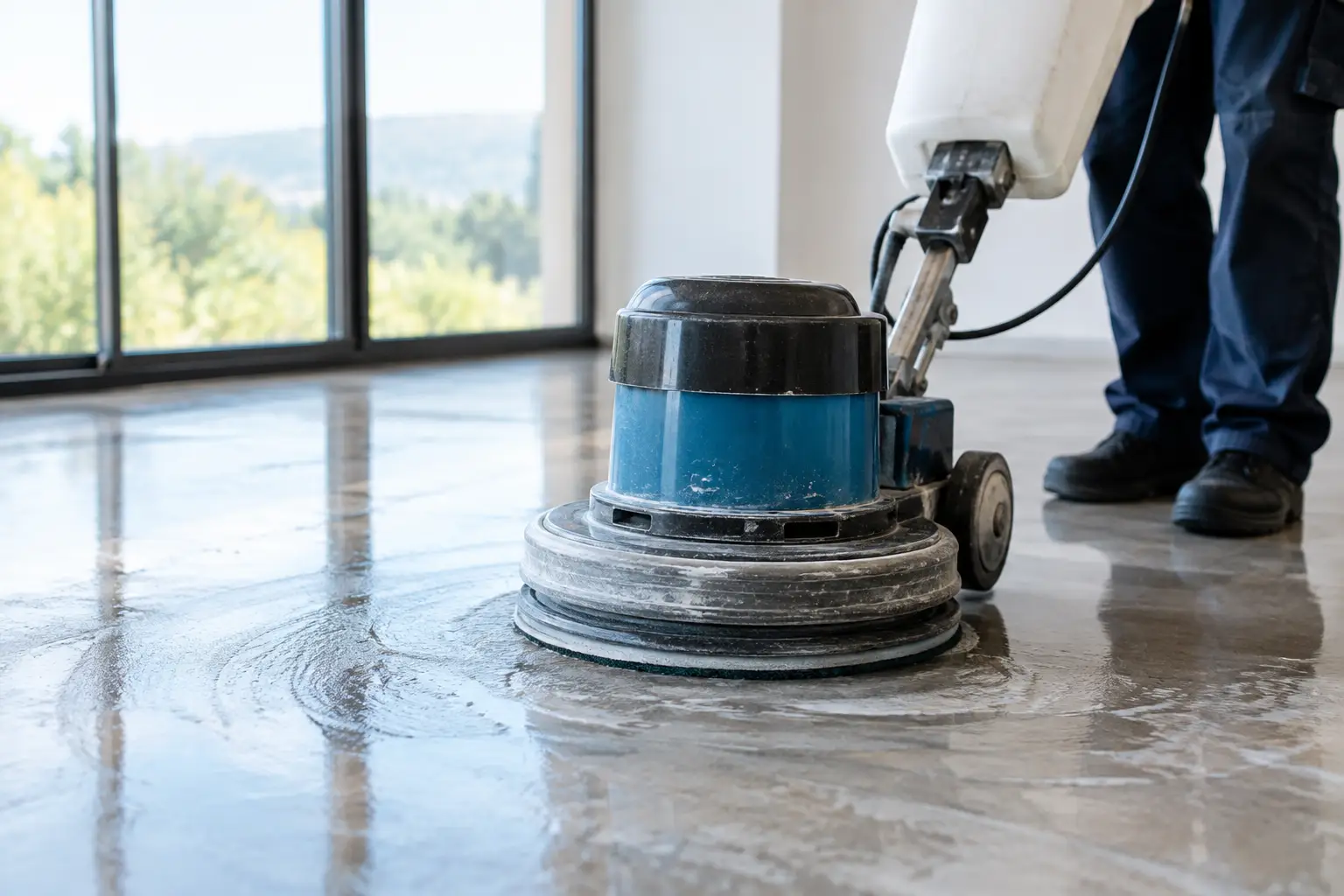
There is also a time factor. Trying to chip, scrape and hand-level a difficult floor can drag out the program. Mechanical grinding is often the faster and cleaner way to get a slab ready for the next trade, especially when dust control and site access are being managed properly.
Floors that commonly need grinding after removal
Concrete slabs under old tiles are one of the biggest examples, especially when thick bedding or mortar has been used. Floors under sheet vinyl and carpet also commonly need grinding because adhesives tend to leave widespread residue. Timber floors can create their own issues when old glues, levelling compounds or perimeter build-up remain after removal.
Commercial sites often need grinding because multiple floor finishes have been installed over time. One tenancy leaves vinyl, the next adds tiles, the next paints over sections, and eventually the slab ends up layered with residue and repairs. In those cases, grinding is less about one isolated defect and more about resetting the floor so it is fit for purpose again.
Residential renovations are no different. Kitchens, bathrooms, laundries, units and full-home strip-outs regularly uncover slabs that are far rougher than expected. The floor covering hides a lot. Once it is gone, the condition of the substrate becomes obvious very quickly.
When grinding might not be the only answer
There are situations where grinding is only part of the fix. Deep cracks, major low spots, moisture issues or structural movement may require additional treatment. A heavily damaged slab might need repairs or levelling after grinding, not instead of it. Likewise, if the floor is contaminated by substances that have penetrated beyond the surface, preparation may involve more than simply taking the top layer off.
That is why experience matters. The goal is not to grind every floor by default. The goal is to identify what is actually stopping the slab from being ready and apply the right preparation method. Sometimes that means targeted grinding. Sometimes it means broad grinding followed by patching. Sometimes it means stopping and addressing a bigger substrate issue first.
How to tell if it is time to call a specialist
If the floor has visible glue, mortar, coating failure, rough patches or uneven sections, it is worth getting it looked at before the next stage begins. The same applies if a floor installer has flagged concerns about flatness or adhesion. Waiting until new materials are on site is the wrong time to find out the slab is not ready.
A proper assessment saves rework. It also keeps the renovation moving. For homeowners, builders and property managers, that is often the main issue. You want the old surface removed, the slab prepared, and the area ready for the next trade without blowing out the schedule or filling the site with unnecessary mess.
If you are seeing the top signs floor needs grinding, act early. It is far easier to prepare the slab properly now than to deal with lifting boards, drummy tiles or failing coatings later. A clean, level and properly ground surface gives the next stage every chance to go right the first time.
The best floor finish in the world will not hide a bad substrate, but a properly prepared slab gives every other part of the job a fair start.