



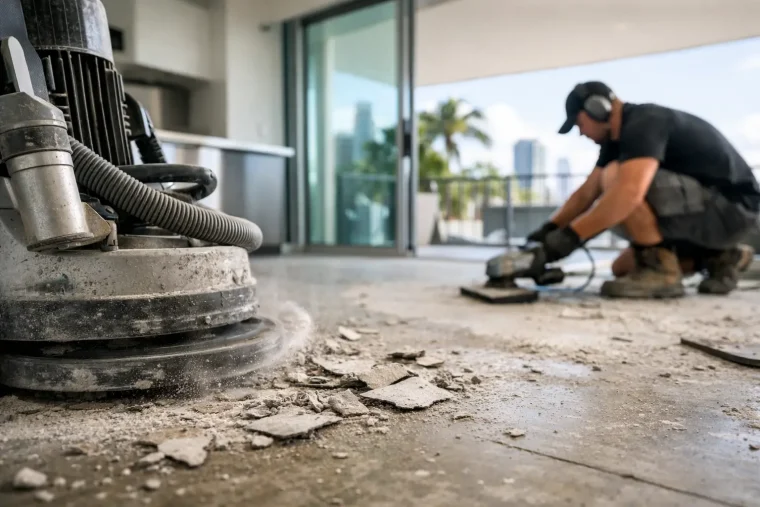
When epoxy starts failing, it does not fail quietly. It peels at doorways, bubbles under tyres, flakes in traffic lanes and leaves a patchy, unsafe mess that holds up whatever comes next. Gold Coast epoxy removal is not just about stripping off an old coating. It is about getting back to a clean, sound slab that is ready for new finishes, repairs or a full renovation without dragging the job out.
Epoxy is tough by design, which is exactly why removing it properly takes the right gear, the right method and a crew that knows what is underneath. On some jobs the coating is thin and brittle. On others it is heavily built up, bonded hard and sitting over cracks, moisture issues or previous surface treatments. Treat every floor the same and you risk gouging the slab, leaving contamination behind or wasting days chasing a result that should have been handled in one organised hit.
Why Gold Coast epoxy removal needs a specialist
A lot of problem floors look similar from the top, but they behave very differently once removal starts. A warehouse floor with failed epoxy over concrete is one thing. A garage with multiple coating layers, tyre marks and old repair compounds is another. Commercial kitchens, workshops, retail spaces and body corporate areas all come with their own access, cleanliness and downtime pressures.
That is where specialist removal matters. Proper epoxy removal is usually a grinding job, sometimes backed by mechanical stripping depending on the coating type and thickness. The aim is not simply to scar the surface until most of the colour is gone. The aim is complete, controlled removal with the slab left in the right condition for the next trade.
That means checking bond strength, coating thickness, slab hardness, contamination and whether the floor needs a light key, a full strip or more aggressive preparation. It also means working with dust control, safe equipment handling and a plan for edges, corners and transitions. Shortcuts show up later when the new coating fails or the installer has to spend extra time fixing what should already have been done.
What causes epoxy floors to fail
Most people call for epoxy removal when the floor has already become a problem. The visible issue might be peeling or cracking, but the reason underneath is not always obvious.
Poor surface preparation is one of the biggest causes. If the slab was not properly ground or cleaned before the original epoxy went down, the bond can break. Moisture is another major factor, especially on concrete that was not correctly assessed or sealed for conditions. In working environments, chemical exposure, impact, forklift traffic and heat can all wear a coating past the point of repair.
Sometimes the epoxy itself is not the real issue. The slab may be weak on the surface, contaminated with oil, or carrying old adhesives, patching compounds or paint from previous works. In those cases, removing the coating is only half the job. The real value comes from exposing the substrate clearly so defects can be identified and dealt with before the next stage.
How the right removal method is chosen
Not every epoxy floor should be attacked with the same machine and no proper operator works blind. Good Gold Coast epoxy removal starts with identifying what is on the floor and what the floor needs to become.
If the slab is being recoated, the finish left behind matters. If the area is being tiled, polished or covered with another system, the preparation target changes. A storage room with easy access gives more flexibility than a tenanted commercial site that needs tight dust control and fast completion.
Grinding for controlled epoxy removal
Diamond grinding is the most common method for epoxy removal because it gives control. It can take off failed coatings, smooth out residues and open the concrete surface in a consistent way. It is also the best option when the end result needs to be clean and ready for a new flooring system.
The key is matching the tooling and machine setup to the job. Too aggressive and you can mark the slab unnecessarily. Too light and you leave coating behind, especially in hard-to-see low spots. Experienced operators know how to read the floor as they go and adjust rather than forcing a one-size-fits-all pass.
Mechanical stripping where needed
On some thicker or brittle coatings, mechanical stripping can be useful to lift heavier material before final grinding. This can improve efficiency on the right job, but it depends on the bond, the slab condition and how much precision is needed near edges or sensitive areas.
There is always a trade-off. Fast bulk removal sounds good until it leaves a rough surface that needs extra corrective work. The best approach is the one that gets the floor clean without creating a new problem.
What a properly prepared slab should look like
A floor is not ready just because the old epoxy is gone. It is ready when the surface is clean, even and suitable for whatever is going on top.
That might mean a concrete profile suitable for recoating. It might mean removing residual glue, paint or levelling compounds uncovered during the strip. It might mean grinding back high spots, feathering transitions or exposing cracks and damage that need repair. The floor should not be handed over with guesswork left in it.
This matters on renovation timelines. Builders, tilers, epoxy installers and flooring crews all work better when the prep is done right the first time. Delays often start with surface issues that were missed or half-finished during removal. A disciplined removal crew saves time for everyone after them.
Dust control, safety and keeping the site workable
Epoxy removal is messy if it is done badly. It should not leave the site blanketed in fine dust or force other trades to stop because access has become unsafe. On occupied sites especially, that level of disruption is not acceptable.
Professional dust-control systems make a real difference. They keep airborne dust down, improve visibility, reduce clean-up and help protect adjacent areas. That matters in homes, shops, offices and shared commercial spaces where the site still needs to function around the work.
Safety matters just as much. Coating removal involves heavy equipment, silica risks, trip hazards, power management and controlled work zones. A competent crew plans for these basics rather than reacting after the fact. It is the difference between a job that runs cleanly and a job that becomes everyone else’s problem.
Where epoxy removal is commonly needed
The callouts are varied, but the pattern is familiar. Homeowners need failed garage epoxy stripped so the slab can be recoated or tiled. Builders need old workshop and warehouse floors cleaned back before fit-out. Property managers need common areas or commercial spaces turned around quickly between tenancies.
Hospitality and retail jobs often need fast action because downtime costs more than the removal itself. Industrial sites usually need tougher preparation because years of wear, spills and patched repairs have built up in layers. In each case, speed matters, but only if it comes with proper finish quality.
That is why experienced teams focus on job readiness, not just material removal. A floor that is stripped fast but handed over rough, dusty or incomplete is not actually a fast result.
Choosing a contractor for Gold Coast epoxy removal
The right contractor should be able to tell you how they will remove the coating, what condition they expect underneath and how they will leave the slab when they are done. If they cannot talk clearly about substrate condition, dust control and next-stage readiness, that is a red flag.
You also want a team that understands time pressure. On renovation and commercial jobs, there is no room for vague arrival windows, blown schedules or half-finished prep. A specialist operator should be responsive, realistic and set up to get through demanding removal work without creating unnecessary delays.
Rapid Stripped works on exactly these kinds of jobs – difficult coatings, stubborn residues, tight timeframes and sites that need to be handed over clean and ready for what comes next. That specialist focus matters when the floor has already caused enough delays.
If your epoxy floor is lifting, cracking, worn out or stopping the next stage from moving forward, the fix is not another patch. It is a proper strip, a clean slab and a site that is ready to work again.