
A failed balcony membrane rarely stays a small problem. Once it starts lifting, cracking or trapping moisture, every layer above and below it is at risk. This balcony membrane removal guide is built for owners, renovators and builders who need a clear picture of what the job involves before new waterproofing goes down.
Removing a membrane is not just about stripping off old material. The real work is getting back to a sound substrate without damaging the slab, edge details or falls to waste. If that part goes wrong, the next trade inherits a bad surface and the whole renovation slows down.
When membrane removal is the right call
Not every balcony needs full removal. In some cases, a localised repair is enough, especially where the failure is minor and the surrounding membrane is still well bonded. But once you have widespread bubbling, drummy tiles, water ingress into rooms below, loose screed, cracked corners or multiple repair patches, patching often becomes false economy.
Full removal is usually the smarter option when the existing system is unknown, when several membranes have been applied over time, or when the balcony is being retiled and re-waterproofed from scratch. Starting fresh gives the waterproofer a clean, reliable base and removes guesswork about compatibility between old and new products.
What sits above and below the membrane
A balcony membrane can be buried under more than most people expect. You may be dealing with tiles, adhesive, screed, fibre cement sheeting, levelling compounds or previous waterproofing coats. Under that, there is usually a concrete slab, but the condition of that slab can vary a lot depending on age, moisture exposure and how the original job was built.
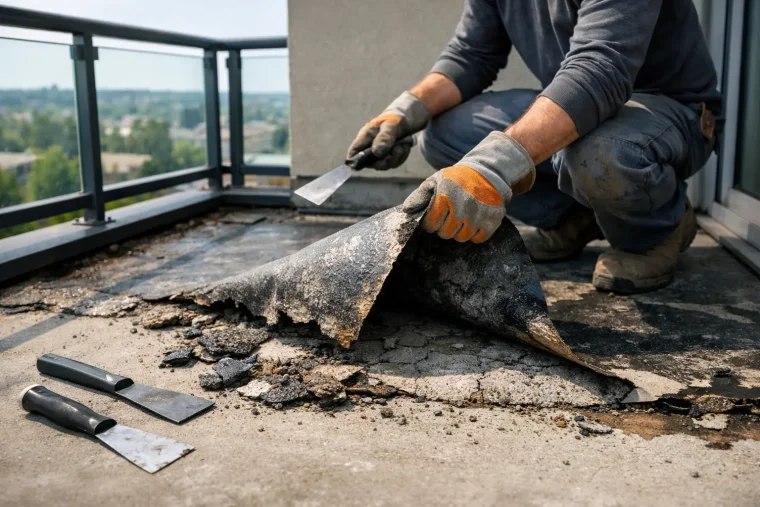
This matters because membrane removal is rarely one clean peel. Some membranes lift in strips. Others bond hard and need mechanical removal. Some jobs expose weak screed that has to come out with the membrane. Others reveal adhesive contamination that needs grinding before the next stage can start.
That is why a proper assessment at the start saves time. You need to know what is being removed, what has to stay, and what condition the substrate needs to be left in for reinstallation.
Balcony membrane removal guide – how the process usually works
The first step is site preparation. Balcony removal creates debris, dust and vibration, so surrounding areas need protection. Doors, adjacent flooring, balustrades and drainage points should be covered or isolated where needed. In occupied homes or commercial settings, controlling mess is not optional. It keeps the job safer and prevents the clean-up from becoming bigger than the removal itself.
The next step is exposing the membrane. If tiles or another surface finish sit over the waterproofing, those layers come up first. This stage often tells you a lot about the condition underneath. Hollow tiles, wet bedding or crumbling screed usually point to broader failure rather than a simple top-layer issue.
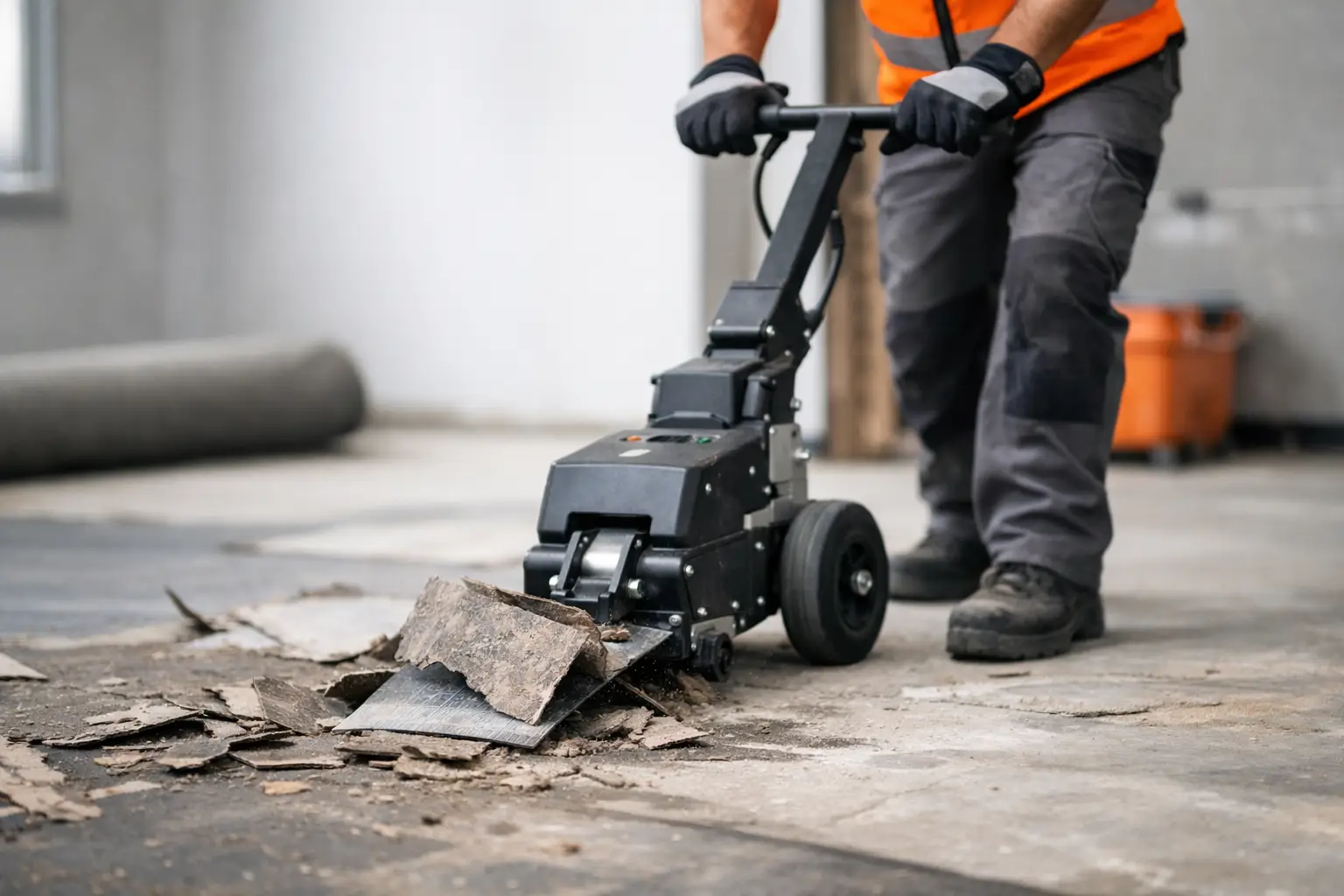
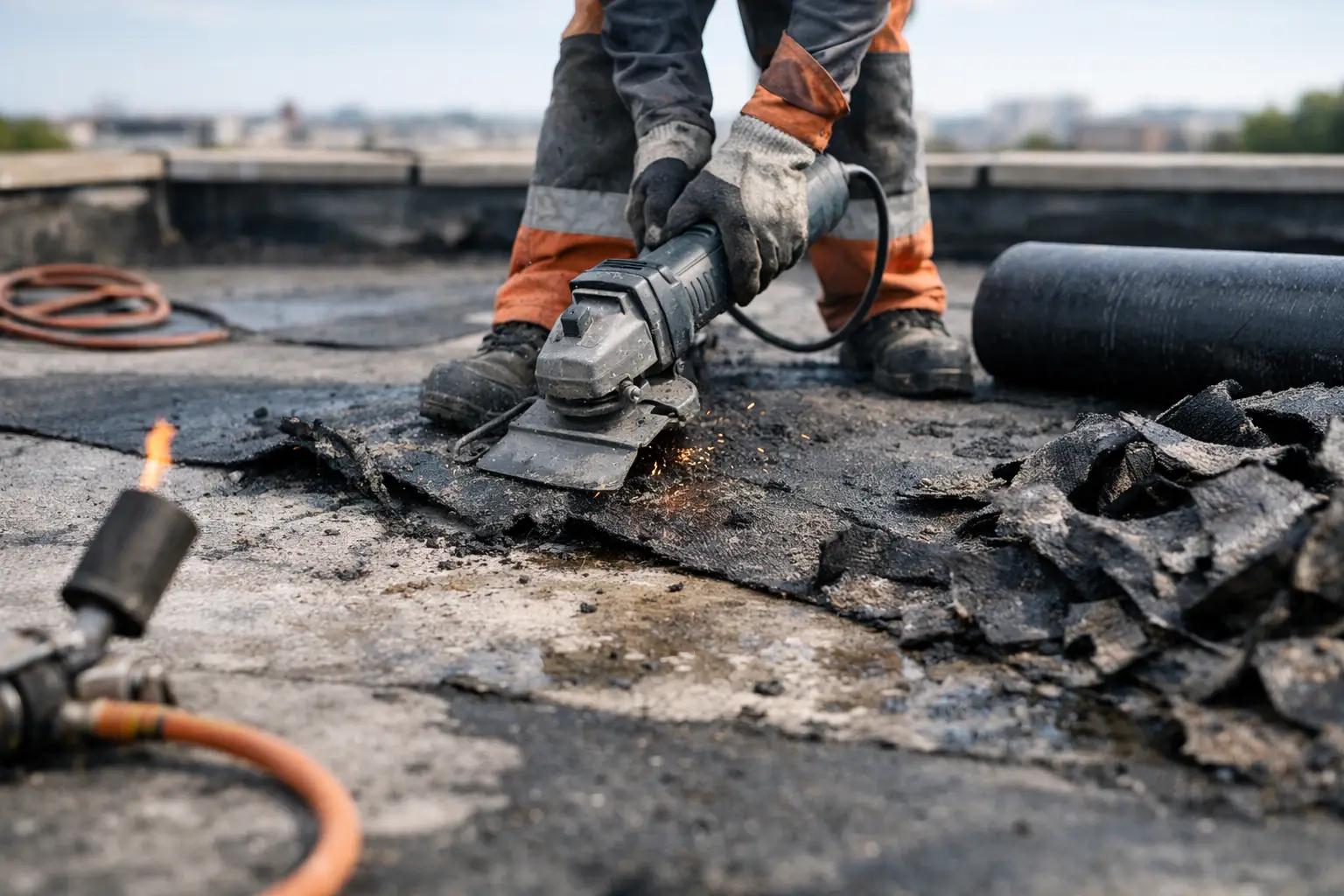
Once the membrane is exposed, removal method depends on the product and bond strength. Sheet membranes may be cut and lifted, though old adhesive residue often remains. Liquid membranes are more stubborn and commonly require mechanical stripping, scraping or grinding. The aim is not to rough up the surface and hope for the best. The aim is to remove contaminated material cleanly enough that the new system can bond properly.
After the membrane is off, the substrate needs to be checked. Cracks, weak sections, laitance, leftover adhesive, ponding areas and damaged edges should all be identified before handover to the next trade. If the slab is not sound, no waterproofing system will perform as it should.
Tools and techniques matter more than brute force
A lot of balcony damage happens during removal, not before it. The wrong machine, an overworked demo hammer or aggressive grinding can gouge a slab, chip corners and destroy falls. That then turns a removal job into a repair job.
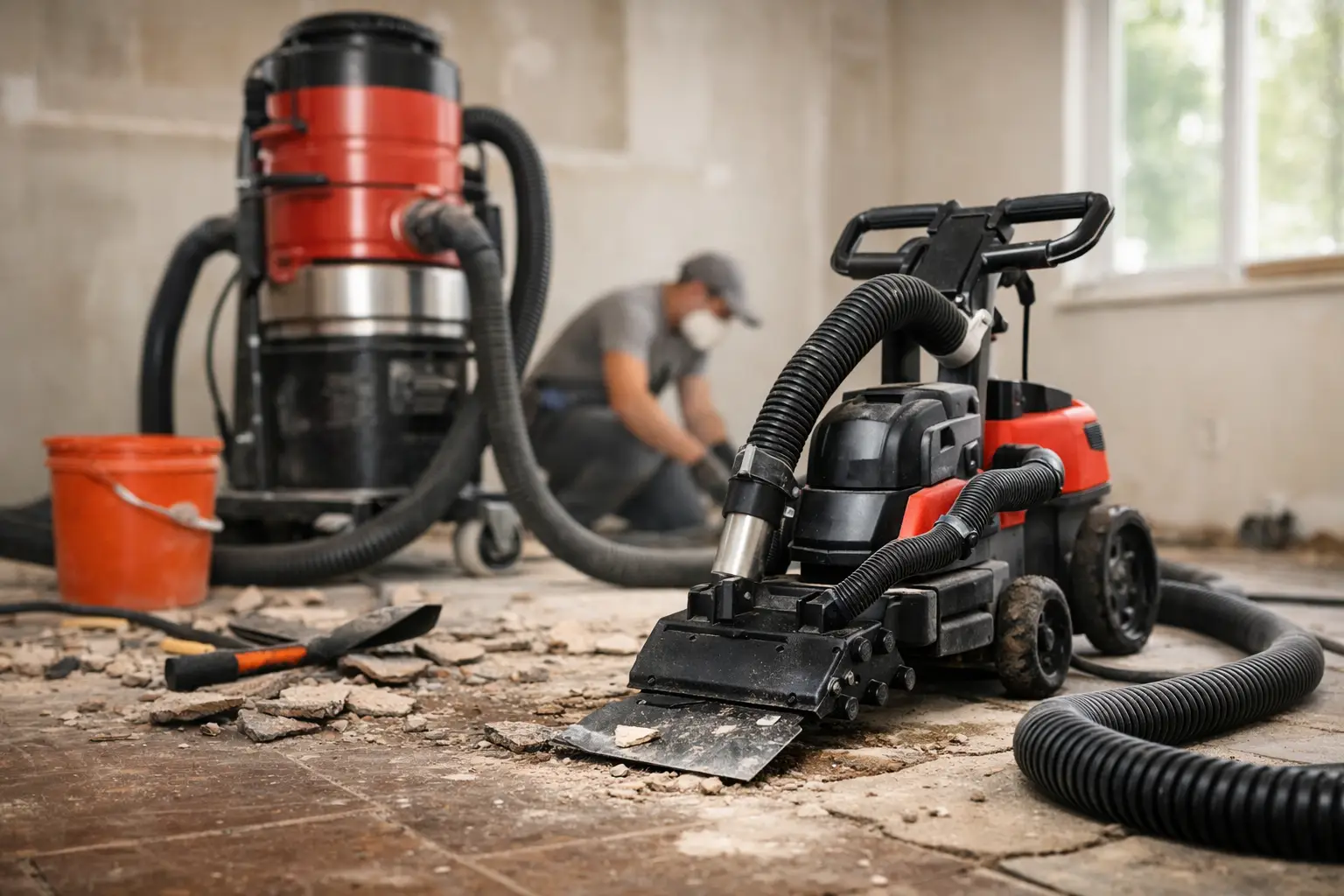
Good removal work is controlled. It uses the right combination of stripping tools, grinders and dust-control equipment based on the membrane type and the condition of the substrate. On some balconies, hand removal around thresholds, outlets and terminations is the safest approach. On others, mechanical removal is the fastest and cleanest way to get the area back to a usable state.
There is always a trade-off between speed and finish quality if the operator lacks experience. A fast strip-out that leaves ridges, scars and bonded residue behind is not efficient. It simply shifts the problem to screeders, waterproofers and tilers later on.
The biggest risks during balcony membrane removal
Waterproofing work sits in a part of the building where details matter. Removal needs to protect those details, even when the existing system has failed.
Thresholds are one of the biggest problem areas. Damage here can affect door clearances, floor heights and future waterproofing terminations. Drain outlets are another. If debris enters the waste or the area around the drain is damaged, reinstatement becomes more complicated.
Balcony edges, upturns and wall junctions also need care. These are often the first places to fail, but they are also where careless removal can cause extra substrate damage. If the balcony has cracked tiles and visible leaks, there may already be deterioration in the screed or concrete below. In that case, removal becomes part of a broader remediation process rather than a simple strip-off.
Dust is the other issue that gets underestimated. Membrane removal, tile removal and grinding can generate fine airborne dust unless the job is set up properly. In occupied properties, that affects surrounding rooms and nearby trades. In strata, retail or hospitality settings, poor dust control can create immediate disruption.
How to tell if the substrate is ready for the next trade
A balcony is not ready just because the old membrane is gone. It is ready when the remaining surface is structurally sound, reasonably clean and suitable for the new build-up.
That usually means no loose material, no flaky residue, no drummy screed left in place and no heavy contamination that will interfere with adhesion. It may also mean grinding back stubborn adhesive or membrane remnants so the next layer can be applied to a stable surface.
This is where specialist removal makes a difference. Surface preparation is part of the job, not an afterthought. A balcony that has been stripped properly lets the waterproofer and tiler work to specification instead of wasting time correcting defects from demolition.
When to bring in a specialist for balcony membrane removal guide jobs
If the balcony is small and the membrane is already loose, people often assume it is a straightforward DIY task. Sometimes it is manageable in a limited area. More often, the membrane is only one layer in a larger failure, and removing it without the right gear creates extra damage, extra clean-up and extra delay.
A specialist is worth bringing in when the membrane is bonded hard to concrete, when tiles and screed are also coming up, when access is tight, or when the site needs to stay clean and operational. The same applies where there are signs of water damage into adjoining rooms, ceilings below or structural elements that need further inspection once exposed.
For builders and project managers, the priority is simple: get the area stripped efficiently and handed over in a condition that keeps the next stage moving. For homeowners and investors, it is about avoiding the common trap of half-removed material and a balcony that still needs days of corrective prep before waterproofing can start.
What a good removal outcome looks like
A good result is not dramatic. The old membrane, surface coatings and failed build-up are gone. Waste is managed properly. The slab or base is exposed without unnecessary damage. Dust and disruption are controlled. And the area is left ready for repair, screeding, waterproofing or retile work.
That is the benchmark professionals work to because every day lost between demolition and reinstatement costs time across the whole renovation. On balcony jobs, delays usually start with poor prep. Clean, accurate removal is what keeps the rest of the project on track.
If your balcony membrane has failed, the smartest move is to treat removal as a technical preparation stage, not just demolition. Get the old system out cleanly, protect the substrate, and give the next trade a surface they can trust.