
A concrete grinder for tile bedding review should not start with the machine. It should start with the slab underneath. Once tiles are lifted, the job is rarely finished. Thick bedding mortar, adhesive ridges, loose patches and high spots can leave a floor looking rough and unsuitable for the next trade. Grinding can be the right answer, but only when the grinder, tooling and dust-control method suit the material and the site.
For homeowners and builders, the main question is simple: will grinding leave a sound, level-enough surface for the new floor? The honest answer is that it depends on the depth and condition of the bedding, the strength of the concrete, the floor covering going back down, and whether the slab has existing damage. A good operator assesses those details before putting a machine on the floor.
What a concrete grinder actually does after tile removal
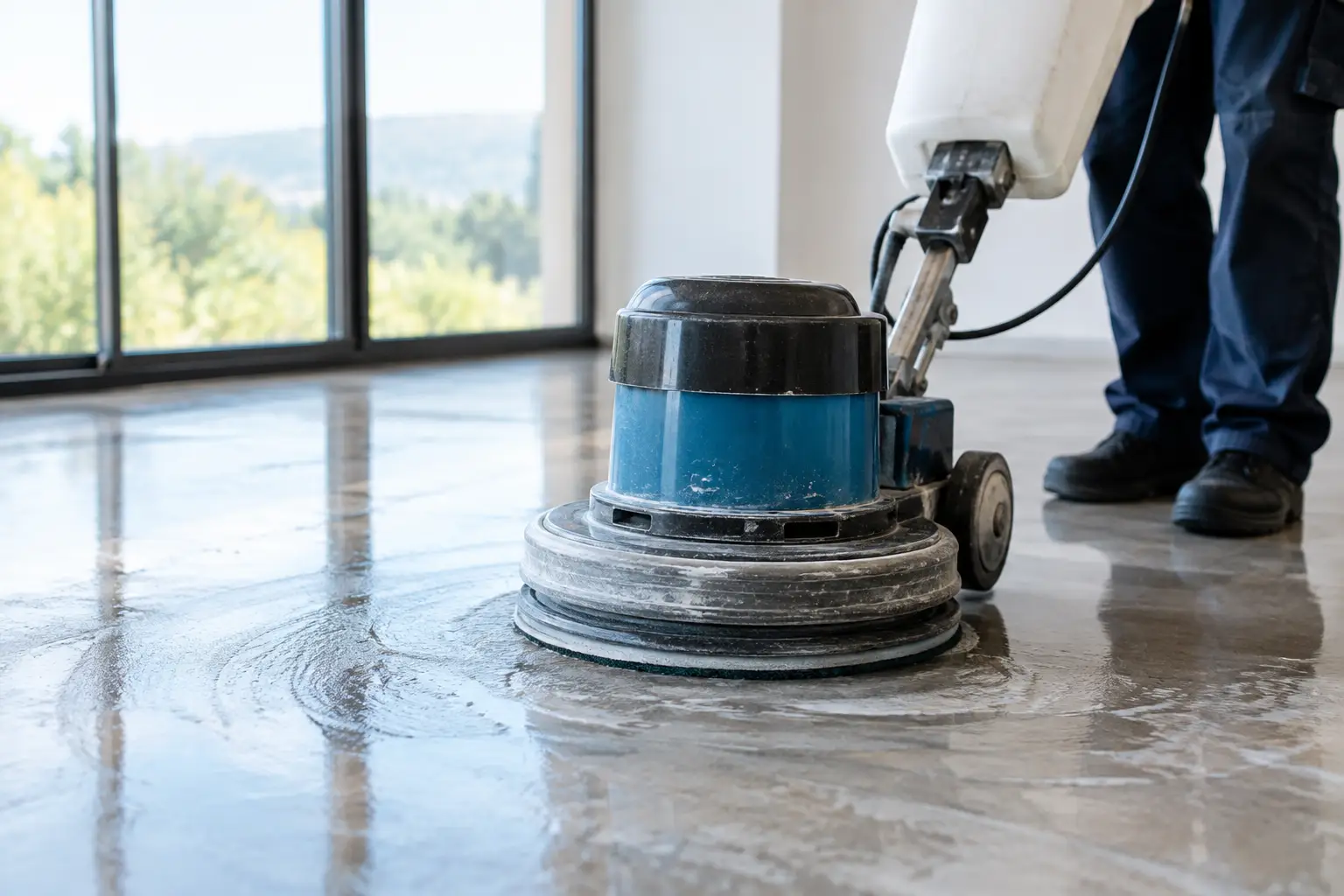
A concrete grinder uses rotating diamond tooling to cut down high spots and remove bonded material from a concrete slab. After tile removal, that material may be thin-set adhesive, cement-based bedding, levelling compound or remnants of old coatings. It is a controlled abrasion process, not a shortcut that magically repairs every floor defect.
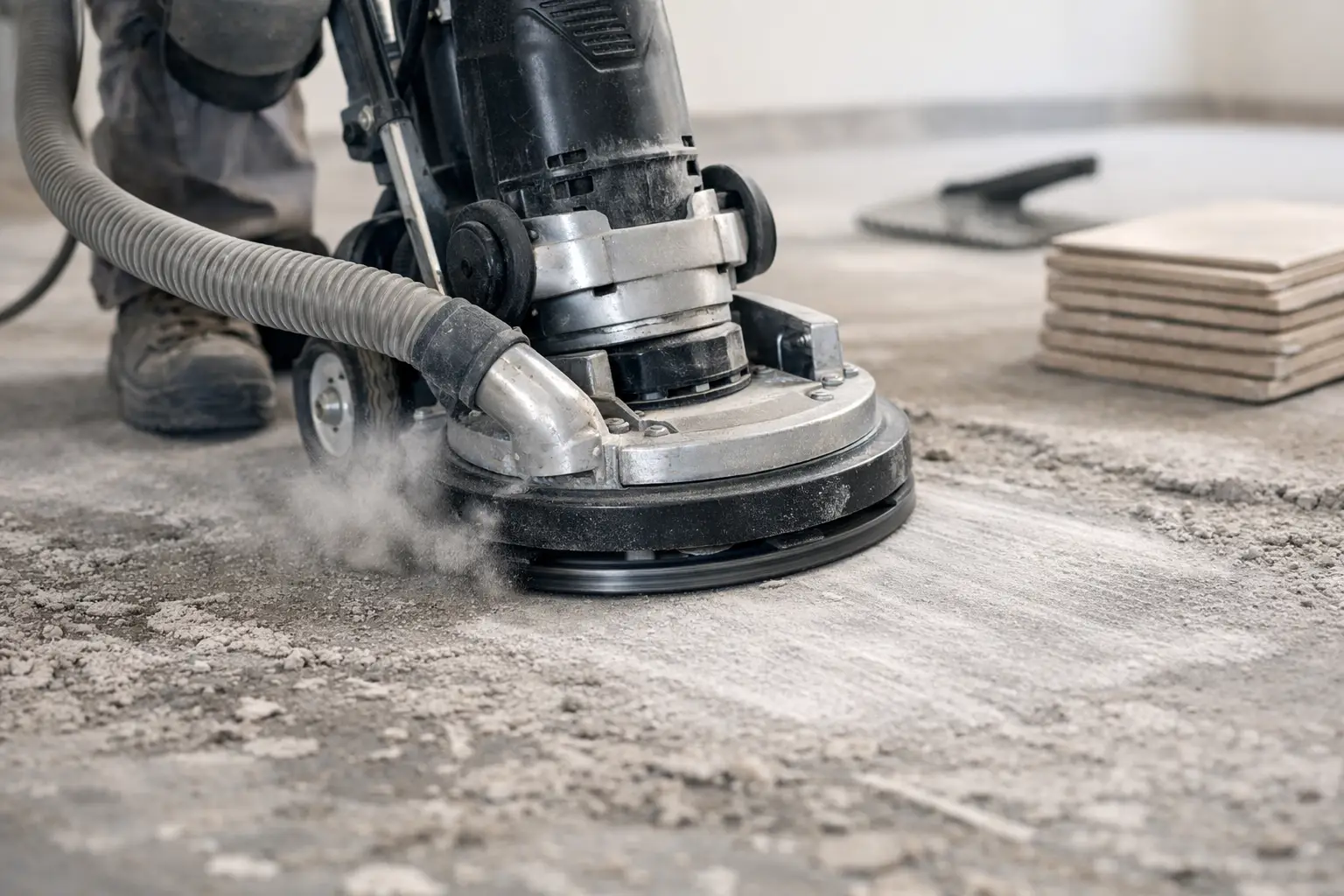
For light adhesive residue and shallow bedding, a planetary or single-head grinder with the right diamond segments can produce a clean, open concrete surface efficiently. It is particularly useful where new vinyl, hybrid flooring, carpet tiles, epoxy or a direct-stick timber system needs a flatter, cleaner base than tile removal alone can provide.
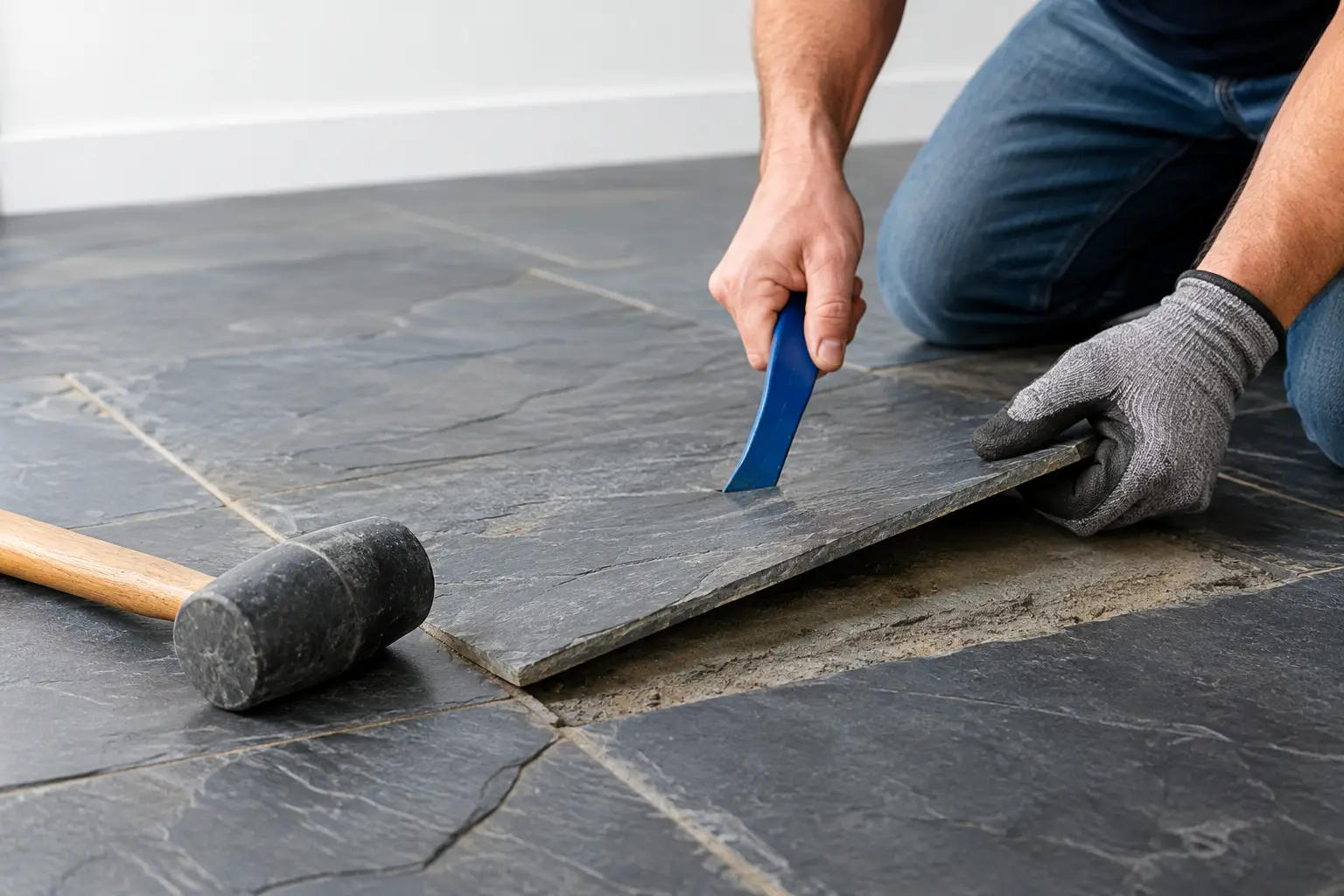
Thicker tile bedding changes the approach. If the mortar is heavily built up or has been laid unevenly, a grinder may be used after mechanical removal to refine what remains. Trying to grind several centimetres of hard bedding across a large area can be slow, hard on equipment and unnecessarily aggressive on the slab. In those situations, stripping or breaking out the bulk first is usually the more practical method.
Concrete grinder for tile bedding review: what matters most
A worthwhile review is not about claiming one grinder suits every job. The result comes from matching machine size, diamond tooling, extraction and operator control to the floor in front of you.
Grinding power is only useful with the right tooling
Diamond segments come in different bonds and profiles. Hard concrete generally calls for a softer bond that exposes fresh diamond, while softer concrete may need a harder bond to avoid wearing through too quickly. The wrong choice can glaze over, cut poorly or leave scratch marks that create more preparation work later.
Tile bedding can also vary dramatically within one property. A bathroom may have a relatively soft sand-cement bed, while an adjoining kitchen could have hard adhesive over a denser slab. A competent crew checks the surface as work progresses and changes tooling when needed. That is how you maintain production without sacrificing the finish.
Machine weight matters too. Larger machines tend to cut flatter over broad areas and are more efficient on open floors. Smaller edge grinders are essential around walls, door jambs, kitchen kickboards and bathroom perimeters, where a large machine cannot reach. A floor is not properly prepared if a clean centre is surrounded by raised bedding along every edge.
Flat is not always level
This distinction saves renovation headaches. Grinding removes high points and reduces residue, which improves flatness. It does not necessarily make a slab level across the whole room. If a floor falls towards a drain, has a structural slope, or has low areas from previous movement, grinding alone will not change that without taking more concrete from the high side.
That may be neither necessary nor sensible. For a tiled wet area, falls may need to remain. For floating flooring, the priority is usually meeting the product’s flatness tolerance rather than making the room perfectly level. For glued finishes or coatings, low areas may need patching or levelling after the grinding stage. The right preparation sequence is based on the finish being installed, not just on making the concrete look clean.
Dust control is part of the job, not an optional extra
Grinding concrete and cement-based bedding creates fine silica-containing dust. It travels quickly through a renovation site, settles on framing and cabinetry, and can disrupt other trades if it is not managed properly. For occupied homes, commercial sites and units, this is one of the biggest reasons to use properly matched extraction rather than treating the work as basic demolition.
A professional setup pairs the grinder with suitable industrial dust extraction and keeps the work area organised. Doors, openings and unaffected surfaces may also need protection, depending on the layout and stage of the renovation. There will always be some clean-up involved in floor preparation, but a controlled process is vastly different from allowing dust to spread through the property.
When grinding is the right method
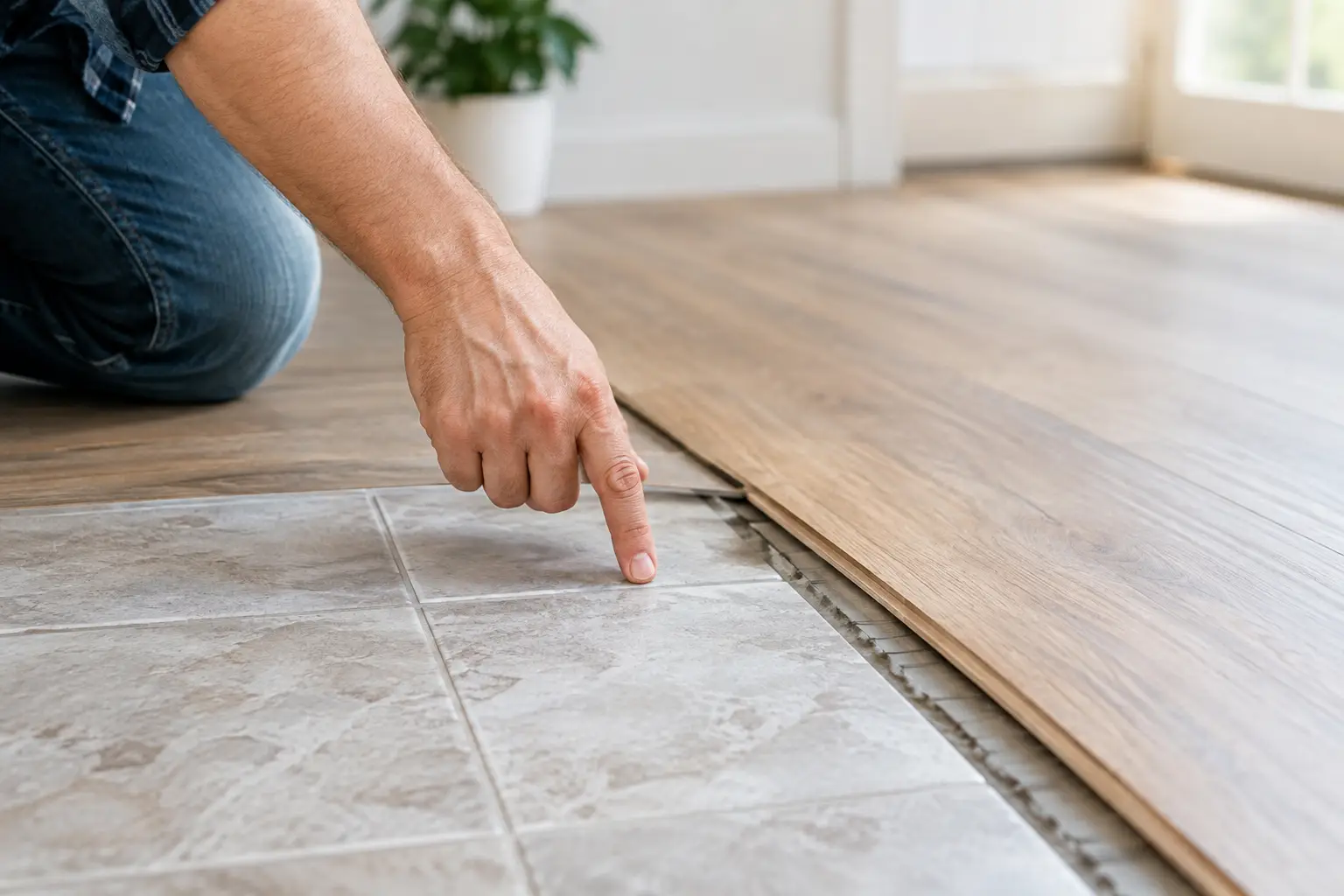
Grinding is a strong choice when tiles have already been removed and the remaining bedding is relatively shallow, firmly bonded and uneven enough to interfere with the next installation. It is also useful for removing trowel ridges, cleaning adhesive residue, feathering transitions between rooms and preparing exposed concrete for a coating system.
It is especially effective where a renovation schedule is tight. Rather than waiting for a rough slab to be manually chipped and patched in stages, grinding can rapidly bring the floor to a predictable condition. That helps tilers, flooring installers and builders measure, set out and start their work with fewer surprises.
For a typical house renovation across Northern NSW, the Gold Coast, Brisbane or the Sunshine Coast, access also affects the method. An open ground-floor area may allow larger equipment and fast production. Upper-level units, tight stairs, occupied premises or restricted work hours may require smaller machines, staged removal and more careful containment. The desired result stays the same, but the work plan must suit the site.
When a grinder is not enough
A grinder is not the answer to every tile bedding problem. Hollow, drummy or crumbling bedding should be removed rather than polished down. Grinding over weak material can leave an unstable layer beneath the new finish, and that instability often returns as cracked tiles, loose flooring or coating failure.
Deep mortar beds, thick screeds and heavily contaminated surfaces may need mechanical stripping first. The same applies where waterproofing, membrane remnants or bituminous adhesives are present. Some materials need a different removal method, and some require testing and specific handling before work begins. Rushing in with a grinder can damage the slab or create a poor substrate for what follows.
Cracks and spalls need attention as well. Grinding can expose their true condition, but it does not repair them. Once the floor is clean, the builder or flooring contractor can decide whether cracks need filling, stitching, isolation treatment or another repair system suited to the planned finish.
What a good finished slab should look like
Do not judge a completed floor only by colour. After tile bedding removal and grinding, the concrete may show variations in aggregate, old patching, marks from previous coverings and naturally different shades. Those are not automatically defects.
What matters is that loose material is gone, high spots have been addressed, adhesive and bedding remnants are reduced to a level suitable for the next system, and the floor has been cleaned of grinding dust. A straightedge check can help identify remaining local highs and lows. The final standard should be agreed against the new flooring manufacturer’s requirements and the scope of the renovation.
For exposed concrete or coatings, the finish standard is more demanding. Scratch pattern, edge work, repairs and surface porosity become visible, so the grinding sequence needs to be planned accordingly. For a floor that will be tiled again, minor visual marks may be irrelevant if the substrate is sound and correctly prepared for adhesive.
The practical verdict
A concrete grinder is one of the most effective tools for finishing a slab after tile removal, but it earns its value through correct use, not brute force. It can remove stubborn residue, flatten high bedding and prepare a floor quickly for the next trade. It cannot turn unstable mortar into sound concrete, fix every low spot, or replace proper assessment.
At Rapid Stripped, the focus is on getting beyond surface removal and leaving the site ready for the next stage. If tile bedding is holding up your renovation, the best outcome comes from choosing the removal and grinding method that protects the slab, controls the mess and gives the new floor a proper start.