
If you’ve pulled up a floor coating and found stubborn epoxy still bonded to the slab, you already know this is not a quick scrape-and-go job. Knowing how to clear epoxy from concrete properly can be the difference between a clean, renovation-ready surface and a slab that’s still uneven, contaminated, or too damaged for the next finish.
Epoxy is designed to stick hard. That is exactly why it performs well in garages, warehouses, workshops, showrooms, and commercial spaces. The same strength becomes a problem when it is time to remove it. Some epoxy comes off in brittle flakes. Some smears. Some holds on so tightly that the top layer of concrete comes with it. The right method depends on how thick the coating is, how well it was installed, and what needs to happen on the slab afterwards.
How to clear epoxy from concrete without making a bigger mess
The first thing to understand is that not every epoxy floor should be attacked the same way. A thin failed coating on an old patio is one thing. A heavy-build commercial epoxy over a hard-trowelled slab is another. If you choose the wrong removal method, you can waste hours, gouge the concrete, or leave behind residue that causes the next flooring system to fail.
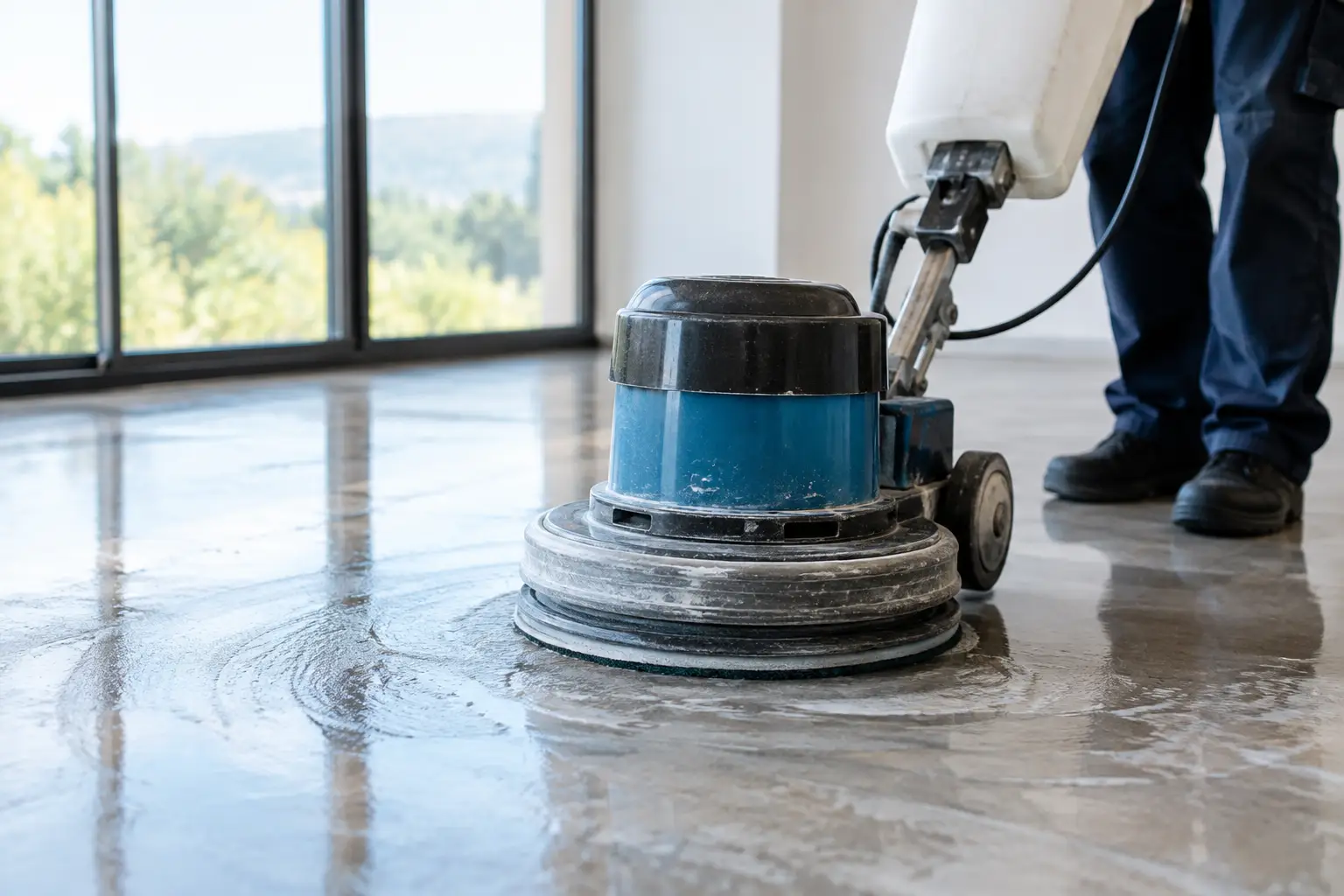
In most cases, proper epoxy removal comes down to three realistic options – mechanical grinding, shot blasting, or chemical stripping. For residential and light commercial work, grinding is usually the most effective and predictable approach. It removes the coating and prepares the slab at the same time. Chemical strippers can work, but they tend to create a messy clean-up and can leave contaminants in the pores if the slab is not washed and neutralised properly. Shot blasting is effective on some larger open areas, but it is not always practical in tighter spaces or occupied sites.
That is why epoxy removal is usually treated as surface preparation work, not just coating removal. The goal is not simply to get the visible epoxy off. The goal is to leave the concrete sound, clean, and ready for whatever comes next.
Start by identifying what is actually on the slab
Before any removal starts, work out what you are dealing with. Not every shiny floor is epoxy, and not every epoxy system is the same. Some are thin roll-on coatings. Others are self-levelling systems, flake floors, quartz broadcast finishes, or heavy industrial builds. Thickness matters because a thin coating may grind off relatively quickly, while a thick self-leveller can take serious machine time.
You also need to check the slab condition underneath. Cracks, spalling, moisture issues, old adhesive contamination, or previous patching can all change the removal process. In renovation work, it is common to find layers – epoxy over glue, epoxy over paint, or epoxy over a weak skim. Once the top layer starts coming off, hidden problems show up fast.
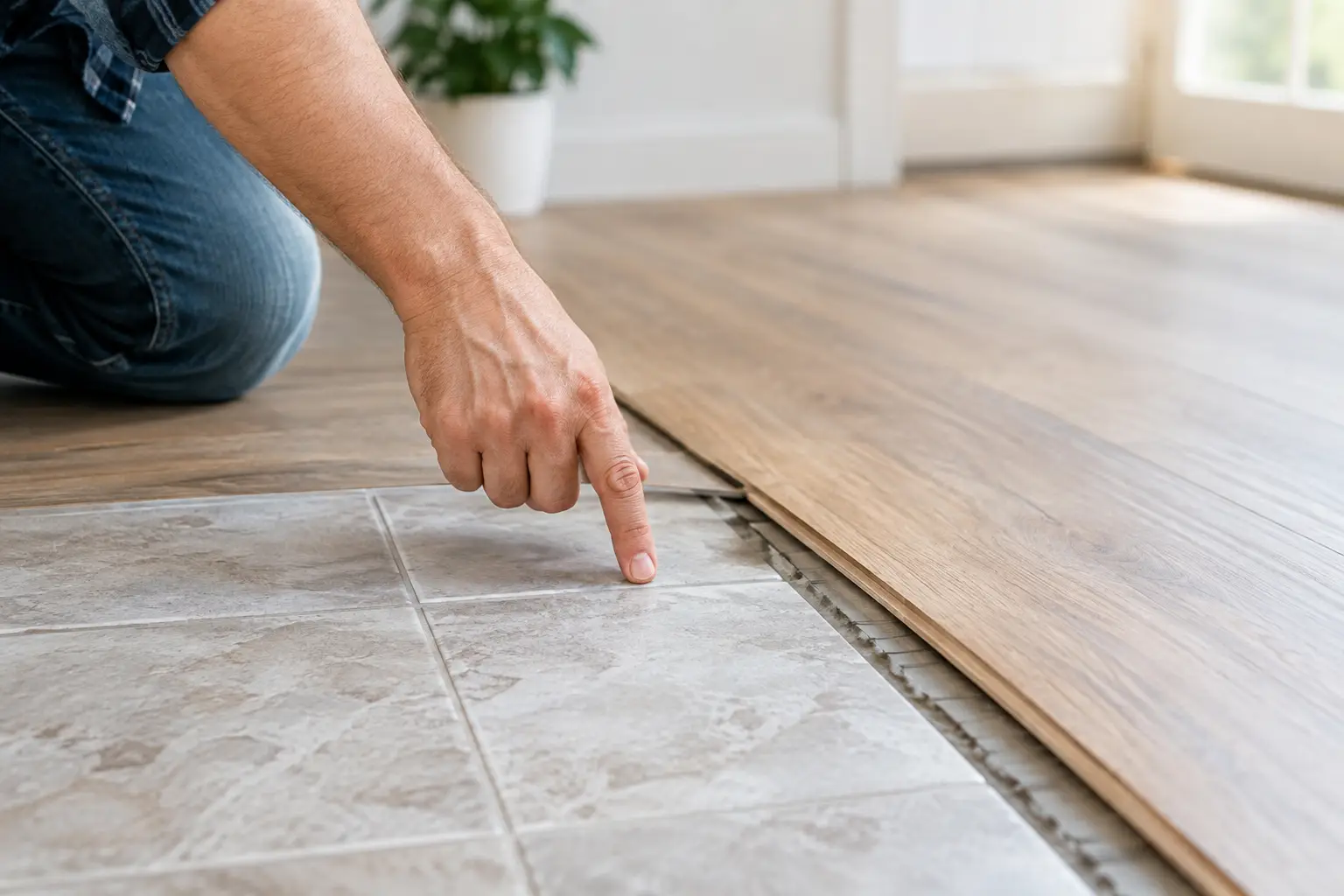
If the slab needs to be polished, retiled, resealed, or recoated after removal, the finish requirements matter too. A rough mechanical profile may be perfect for a new coating system but not suitable if the next step is a thin vinyl installation or decorative finish.
Mechanical removal is usually the best option
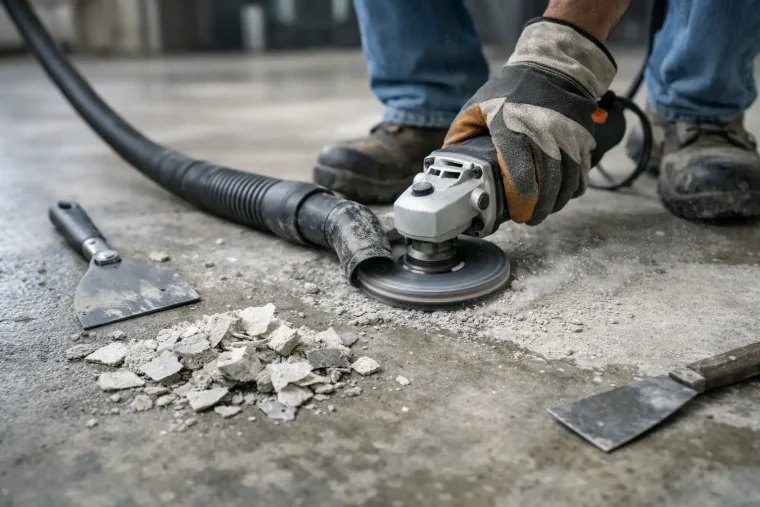
For most jobs, mechanical grinding is the most reliable answer to how to clear epoxy from concrete. It physically removes the coating rather than trying to soften it and shift it around. With the right grinder, correct diamond tooling, and proper dust control, it gives a clean, controlled result.
The process sounds simple, but it is not just a matter of hiring a grinder and pushing it around. Different epoxies respond differently to heat and abrasion. Some powder off cleanly. Some gum up the tooling. Some require coarse segments first, followed by finer passes to remove scratching and even out the slab. Edge work is another issue. Open floor areas are one thing, but corners, wall lines, doorways, and around fixtures need smaller machines or hand-held equipment.
Dust control matters as much as removal speed. Dry grinding without proper extraction can turn a job site into a cloud of fine dust that settles through the whole property. On occupied residential or commercial sites, that is not acceptable. Professional set-ups use industrial vacuums and controlled grinding methods to keep the site cleaner and safer.
The other benefit of grinding is visibility. You can see how the slab is behaving as the coating comes off. That allows defects to be identified and repaired before the next trade comes in.
When chemical stripping makes sense
Chemical stripping has its place, but it is rarely the first choice when a clean, ready-to-work slab is the priority. It can help in smaller areas, on awkward detailing, or where grinding is restricted. It may also be used where preserving the underlying concrete surface is critical and the coating bond is poor enough to respond well.
The downside is clean-up. Once the epoxy softens, it has to be scraped, collected, and disposed of properly. Then the slab still needs to be cleaned thoroughly. If any residue stays in the pores, it can interfere with adhesives, levelling compounds, coatings, or tile bedding later on. That is where DIY jobs often come undone. The floor can look clean but still be contaminated.
There is also the safety factor. Strippers can involve strong chemicals, fumes, skin contact risk, and ventilation issues. In enclosed areas, occupied buildings, or commercial environments, that needs to be managed properly.
What usually goes wrong on DIY epoxy removal jobs
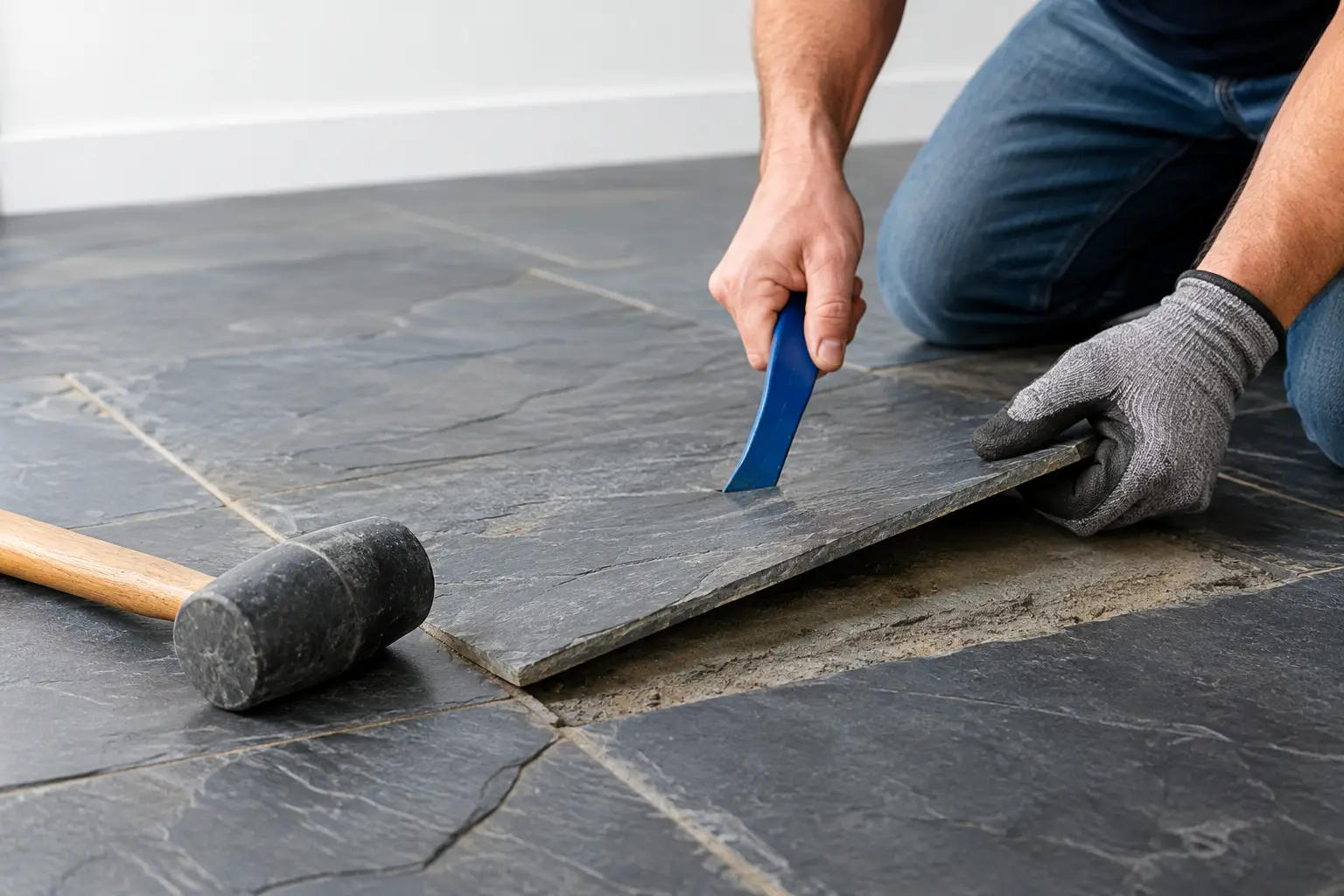
Most problems come from underestimating the bond strength and overestimating what basic tools can do. Scrapers, heat guns, and light sanders might shift loose bits, but they usually will not remove a full epoxy system properly. The result is patchy removal, uneven profiling, and plenty of wasted time.
Another common issue is damaging the slab. Aggressive tools in untrained hands can leave grooves, chatter marks, or low spots that need patching before the floor can be finished. That adds another stage to the project and can delay everyone else.
Then there is the hidden moisture and adhesion risk. If chemical residue, epoxy smearing, or dust contamination is left behind, the next floor system may fail. Tiles can debond. Coatings can blister. Adhesives can struggle to grab. At that point, the original removal shortcut becomes an expensive rework.
When to bring in a specialist
If the epoxy covers a large area, sits in a commercial space, or needs to be removed quickly without shutting a site down for days, specialist removal is the smart call. The same applies if the slab needs to be left ready for new flooring, levelling, polishing, or recoating.
A professional team does not just remove the coating. They assess the substrate, match the machine and tooling to the floor, control dust, deal with edges, and leave the site prepared for the next stage. That matters on renovation schedules where every delay flows through to other trades.
For builders, renovators, and property owners, speed alone is not the main benefit. Certainty is. You want to know the epoxy is gone, the slab is sound, and the area is genuinely ready to move forward.
The concrete underneath still needs attention
Once the epoxy is removed, the job is not automatically finished. Concrete often needs follow-up work. That can include patching cracks, repairing chipped sections, removing adhesive residue from earlier floor coverings, or refining the surface profile.
This is where experience counts. A slab prepared for a fresh epoxy system will not always be prepared the same way as a slab intended for tiles, hybrid flooring, carpet tiles, or polished concrete. Good removal work is tied to the end use. There is no point stripping epoxy efficiently if the slab is left wrong for the next installer.
On many jobs, especially older residential and commercial renovations, removal exposes more than expected. Weak toppings, past repairs, moisture marks, and uneven sections are common. Better to deal with that straight away than discover it after new materials arrive on site.
A practical way to approach the job
If you are deciding whether to handle it yourself or bring in help, start with three questions. How much epoxy is there, what condition is the slab in, and what needs to go back down afterwards? If the answer involves a large area, tight timeframe, or a floor finish that depends on proper substrate preparation, this is specialist work.
That is especially true for occupied homes, retail spaces, offices, hospitality venues, and renovation projects where dust, downtime, and rework need to be kept under control. A fast removal job is only useful if it is also clean and accurate.
At Rapid Stripped, this kind of work is approached as a preparation job, not just a demolition task. The focus is getting difficult coatings off properly and leaving a slab ready for the next trade, with minimal disruption and no mucking around.
If the epoxy is fighting back, that usually tells you one thing – it was built to last. Removing it properly takes the same level of seriousness. Get the method right, protect the slab underneath, and the rest of your project has a much better start.