
A failed epoxy floor usually tells on itself early. Hot tyre pickup in a garage, peeling in a warehouse aisle, bubbling from moisture, or a coating that looked good for six months and then started letting go. Once that happens, patching rarely fixes the real problem. Proper epoxy floor removal is what gets the job back to clean, sound concrete so the next finish has a chance of lasting.
This is not a light cleanup job. Epoxy bonds hard, and when it has been installed over rough concrete, old adhesives or multiple coats, removal becomes a substrate job as much as a coating job. The goal is not simply to strip off what you can see. The goal is to remove failed material, manage dust, and leave the slab ready for whatever comes next.
Why epoxy floor removal is rarely straightforward
Epoxy is designed to resist wear, chemicals and impact. That is great when the coating is performing. It is a problem when it needs to come off. Some floors have a thin roll-on coating that can be ground away relatively cleanly. Others have thick self-levelling epoxy, quartz broadcast systems, flake finishes or layered repairs underneath. Each behaves differently under mechanical removal.
The age of the floor matters too. Older coatings can become brittle and chip off in sections, while newer systems often smear or gum up under the wrong equipment. Moisture in the slab, previous sealers, patch repairs and contamination from oil or cleaning products can all change how the floor responds. That is why no decent operator treats every epoxy removal as the same job.
In working sites, access also affects the method. A small residential garage is one thing. A tenanted retail space, food premises or office with fixed joinery and tight turnaround times is another. The removal method has to suit the floor, the building and the schedule.
What epoxy floor removal usually involves
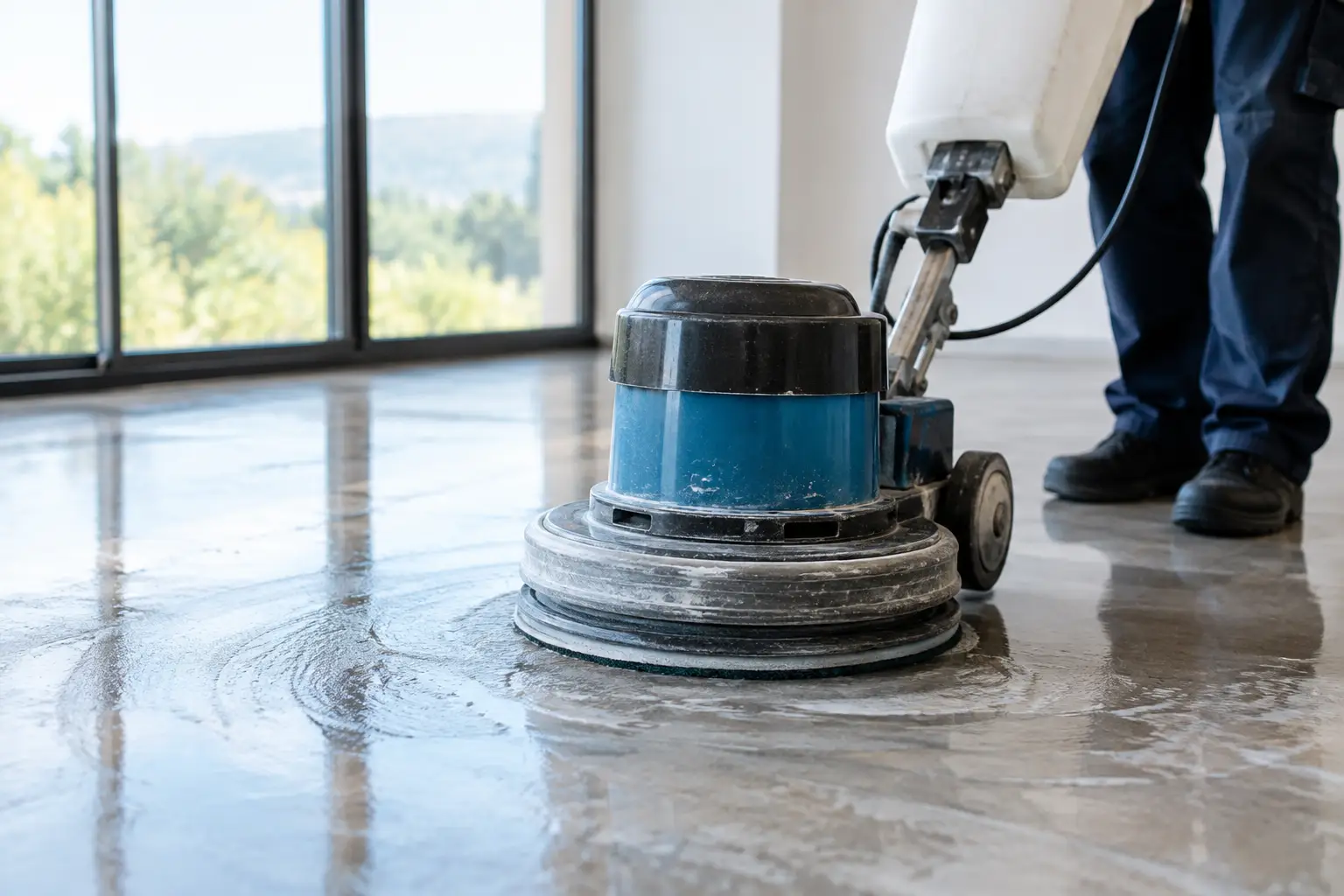
Most epoxy floor removal is done mechanically. In practical terms, that means using the right combination of floor grinders, scarifiers, hand grinders and specialised tooling to break the bond and remove the coating from the concrete surface. Chemical stripping can have a place in limited situations, but for most renovation and commercial prep work, mechanical removal gives better control and a more reliable surface outcome.
Grinding is often the preferred method when the slab needs to be preserved and prepared for a new coating, tile, vinyl or polished finish. It removes the epoxy progressively and helps expose the condition of the concrete underneath. Scarifying is more aggressive and can be effective on thick or badly failed coatings, but it can leave a rougher profile that may need further preparation.
The real skill is not just in getting the epoxy off. It is in stopping at the right point, reading the slab as you go, and knowing whether more grinding, patching or levelling will be needed before the next trade steps in.
The slab underneath is part of the job
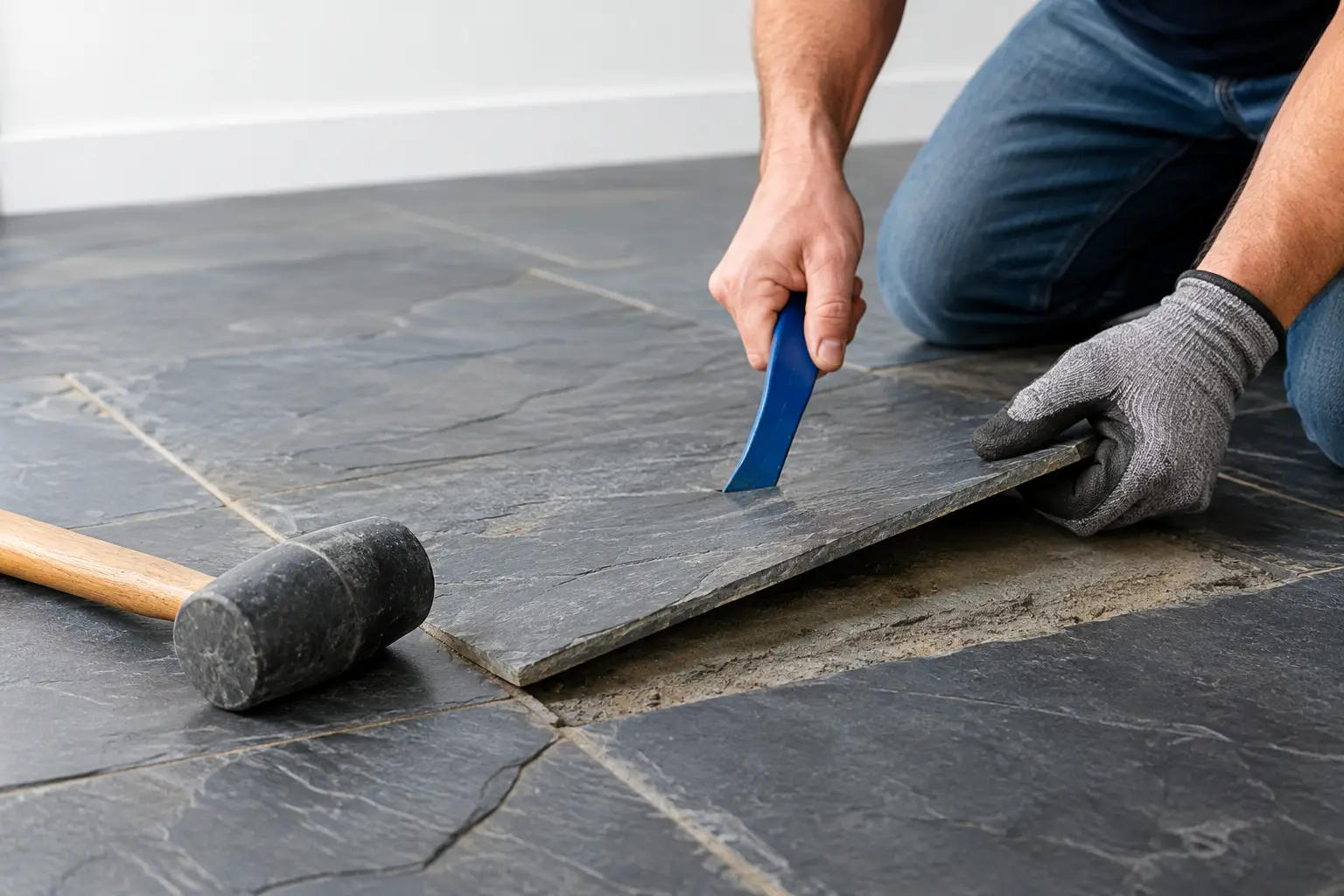
Once the epoxy starts coming off, underlying issues often show up fast. You may find soft concrete, old tile glue, levelling compounds, paint residue, crack repairs or moisture damage that had been hidden by the coating. If those problems are ignored, the next finish can fail just as quickly.
That is why surface preparation sits hand in hand with epoxy removal. A floor may need localised repairs, edge work around walls and columns, or a full grind to create an even, clean profile. On some jobs, the removal phase is only half the work. The rest is getting the slab truly ready.
When DIY epoxy floor removal goes wrong
A lot of people underestimate this job because epoxy looks like just another surface coating. It is not. Basic hire gear often struggles with bonded epoxy, especially if the floor has multiple layers or mixed systems. What usually happens is the operator removes some areas, misses others, and leaves a patchy slab that still needs professional grinding.
Dust is another issue. Without proper dust-control equipment, epoxy and concrete grinding can spread fine dust through nearby rooms, stock, fittings and air-conditioning systems. In homes, that means extra cleanup and disruption. In commercial spaces, it can mean serious delays and problems for other trades or occupants.
There is also the risk of damaging the slab. Using the wrong machine or tooling can gouge the concrete, leave deep chatter marks, or create uneven low spots that need repair. A floor that was meant to be ready for new finishes ends up needing more rectification.
Signs a professional removal crew is the right call
If the epoxy is peeling, blistering or lifting over a large area, the safest approach is usually full removal rather than isolated patch repairs. The same goes for floors with heavy wear, thick build-up, moisture issues or unknown substrate conditions. Once a coating system has broadly failed, spot-fixing often becomes a short-term fix that wastes time.
Professional removal also makes sense when timing matters. Builders, renovators and property managers generally do not want a floor half stripped, covered in dust and still not ready for the next stage. A specialist crew brings the right machines, dust extraction and process to move the job forward properly.
For sites that need to stay controlled and clean, experience matters even more. In occupied homes, retail tenancies, offices and commercial buildings, the removal has to be efficient and well managed. That includes protecting surrounding areas, working safely and keeping the project on schedule.
How epoxy floor removal affects the next finish
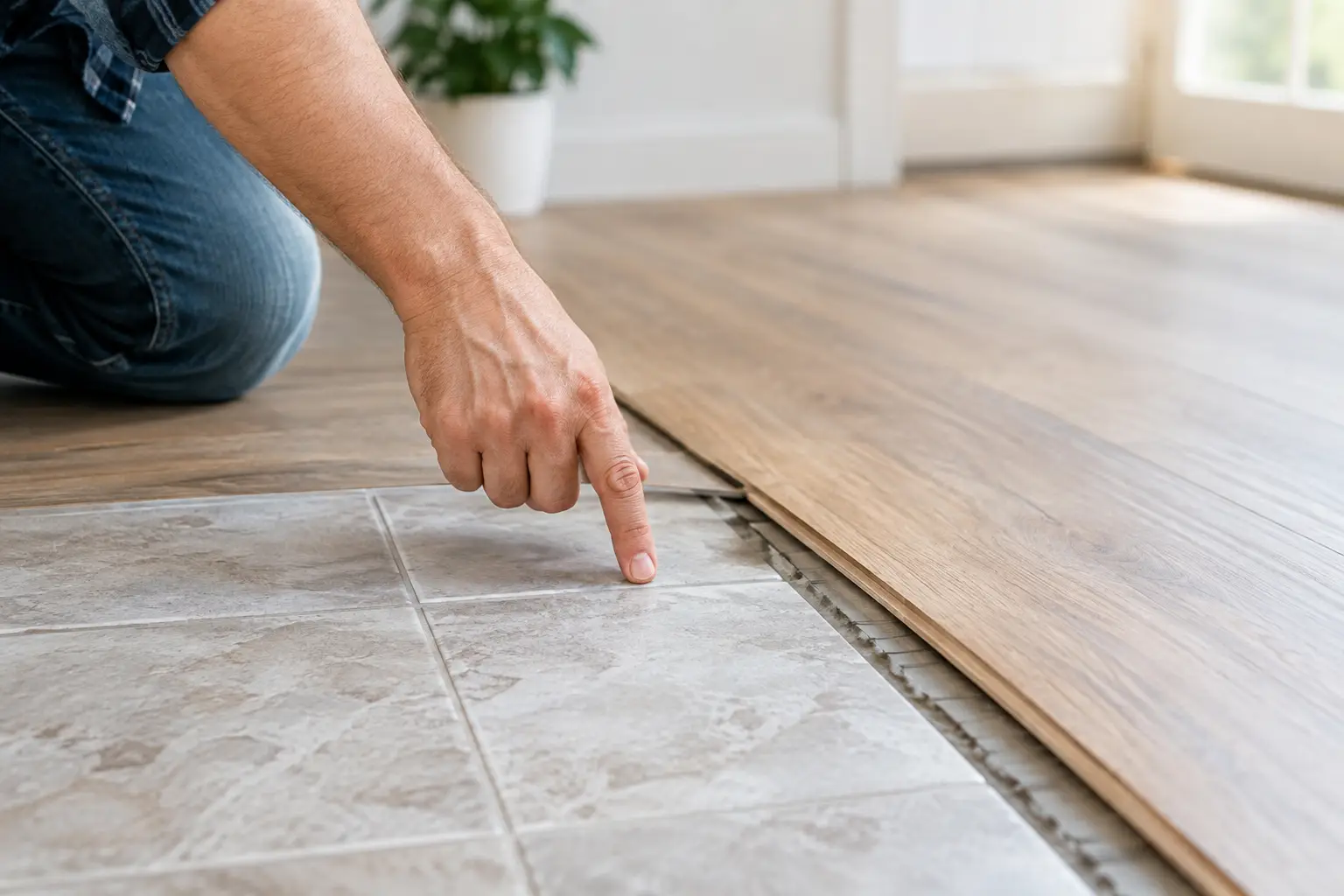
The quality of removal directly affects what can be installed afterwards. If even small sections of epoxy remain where a new coating needs direct bond to concrete, that can compromise adhesion. If the slab is left too rough or uneven, vinyl, timber or tile installation can be delayed by extra floor preparation.
This is where a lot of renovation timelines blow out. Someone removes the visible coating but leaves behind contaminated patches, adhesive residue or an inconsistent profile. Then the next contractor arrives and cannot proceed. Proper floor removal should leave no doubt about what the slab condition is and what, if anything, still needs to be done.
Different end goals need different preparation
If the floor is being recoated with epoxy, the slab usually needs a consistent mechanical profile and clean, contaminant-free surface. If it is being tiled, flatness and soundness become just as important. If it is being polished or sealed, the visual quality of the concrete matters more, and removal has to be done with that in mind.
That is why one-size-fits-all removal does not work. Good operators plan the removal around the next finish, not just the current demolition stage.
What to expect from a well-run epoxy floor removal job
A proper job starts with assessing the coating type, thickness, slab condition and site access. From there, the removal method can be matched to the floor rather than guessed on the day. That usually means choosing the right machine set-up, planning dust control, and allowing for edge detail and any likely substrate repairs.
On the day, the site should be kept orderly, with clear control of dust and waste. The work should move with purpose. Most clients do not need a lecture on tooling types. They need confidence that the coating will be removed properly and the slab will be left ready for the next step.
That is where specialist operators stand apart. At Rapid Stripped, the focus is on getting difficult floor removal done quickly, cleanly and with the concrete properly prepared at the end of it. That matters whether the job is a home garage, a commercial tenancy, or a larger renovation where multiple trades are waiting on access.
Epoxy floor removal is about readiness, not just demolition
The strongest result is not a floor with the old coating torn off and dust everywhere. It is a floor that is clean, sound and ready for the next trade to get straight to work. That takes more than brute force. It takes the right equipment, practical judgement and a crew that knows how to deal with stubborn coatings without creating new problems.
If your epoxy floor has failed, is outdated, or is holding up a renovation, the smartest move is to treat removal as a preparation job, not just a strip-out. Get the slab right, and everything after that gets easier.