
A concrete slab can look clean after old flooring comes up and still be nowhere near ready for the next trade. Adhesive ridges, failed coatings, tile bedding, high spots and uneven patches all affect the finish. Scarifying versus grinding is not a choice between two versions of the same job. Each method removes material differently, leaves a different surface profile and suits a different condition of slab.
Choosing the wrong process can create unnecessary dust, take longer than it should, or leave a surface that needs more work before waterproofing, levelling compound, epoxy or new flooring can go down. The right approach starts with an honest look at what is on the slab, how firmly it is bonded and what needs to happen next.
Scarifying versus grinding: the practical difference
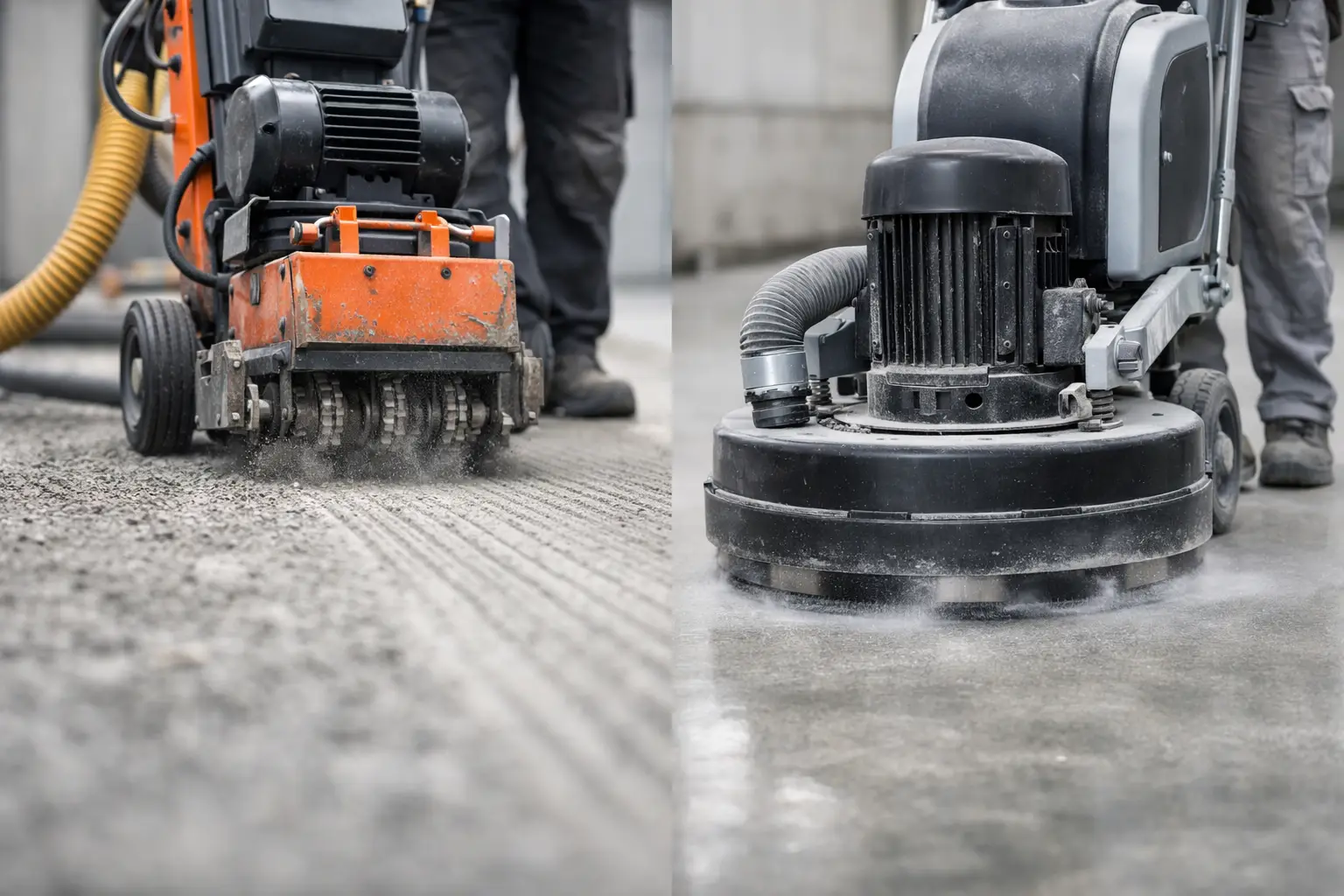
Scarifying is an aggressive mechanical removal process. A scarifier uses a rotating drum fitted with cutters that strike the concrete surface. It is built to break up and remove thicker, tougher material quickly. Think heavy adhesive build-up, brittle coatings, old tile bedding, concrete splatter, high lips and uneven areas that need to be reduced.
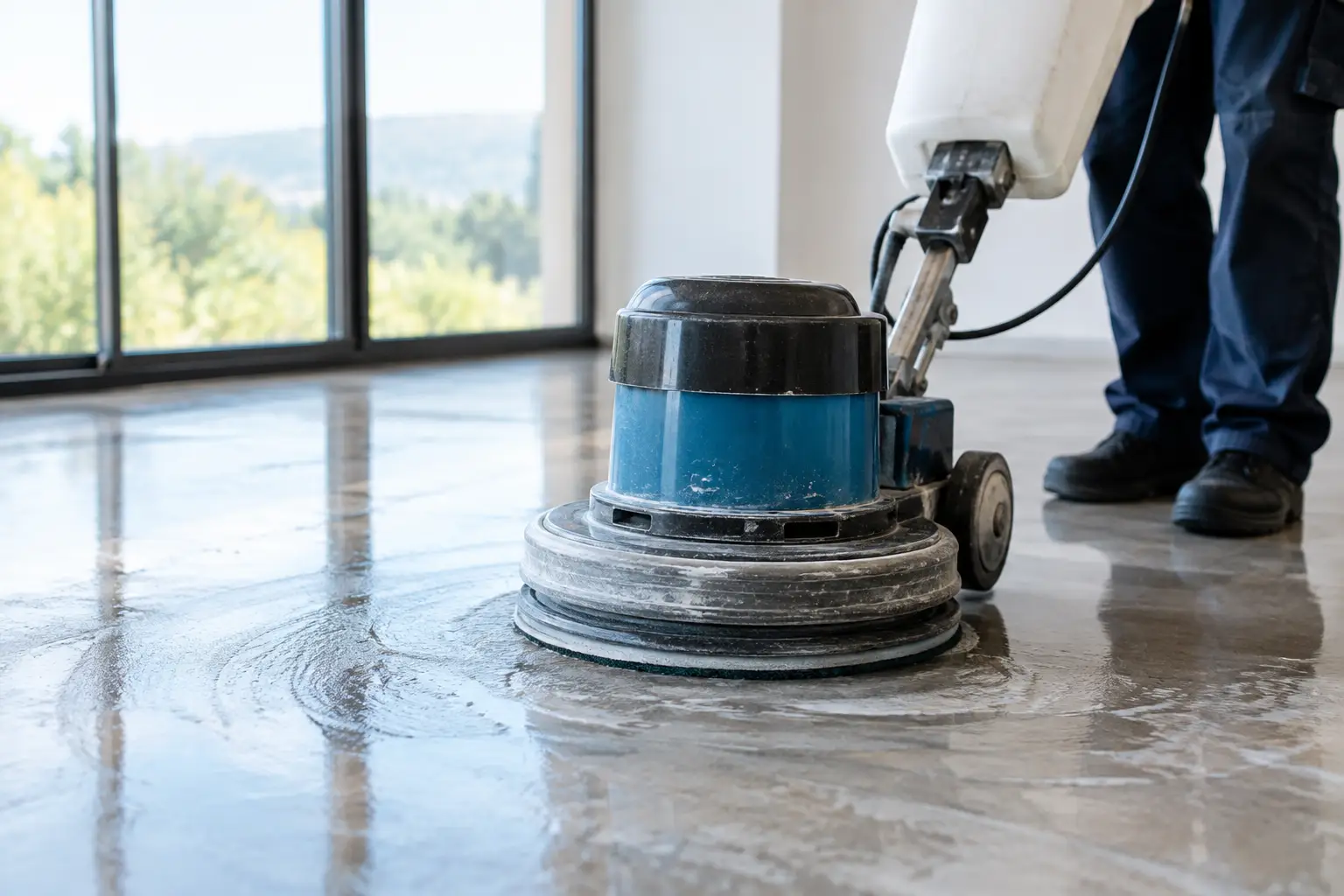
Grinding uses diamond tooling to abrade the slab in a more controlled way. Rather than chipping the surface with cutters, a floor grinder shaves it down. This makes grinding the better option where the goal is to smooth a slab, remove residual glue or thin coatings, flatten minor imperfections, or prepare concrete for a specified finish.
The difference matters because scarifying leaves a noticeably rougher, more open texture. That can be useful when a coating system requires a strong mechanical key, but it is generally not the final finish for a floor receiving vinyl, polished concrete or a thin floor leveller. Grinding produces a more even surface and can be stepped through different diamond grits depending on the required result.
Neither method is automatically better. The slab condition and the installation plan decide the process.
When scarifying is the right call
Scarifying earns its place when there is substantial material to remove and production matters. On renovation and commercial strip-out work, this often includes thick mastic, stubborn tile adhesive, old epoxy, paint layers, hard-set bedding mortar and localised high areas of concrete.
It is also useful where a slab has been poorly patched or has surface contamination that extends beyond a thin film. A grinder can remove these problems, but it may be slow and hard on diamond tooling if the material is thick or highly variable. Scarifying removes bulk material efficiently, allowing the floor to be brought back to a workable starting point.
There is a trade-off. Scarifying can leave cutter marks and a coarse profile, particularly where the machine has had to work hard through thick residue. If the floor needs to be dead smooth for sheet vinyl, hybrid flooring, carpet tiles or a fine architectural coating, a follow-up grind or levelling stage is often required.
Scarifying also needs controlled operation around edges, penetrations, doorways and changes in slab level. It is a powerful removal method, not a shortcut to ignore detail. An experienced operator works the main field efficiently, then addresses perimeter areas and tight spots with suitable smaller equipment.
When grinding gives a better result
Grinding is the more precise choice when the slab is broadly sound but needs refining. After tiles, timber, vinyl or carpet have been removed, it is common to find adhesive smears, minor trowel marks, small high spots and old coating residue. A diamond grinder can clean these areas while keeping the slab reasonably flat.
It is also the preferred method for smoothing after scarifying. Once bulk material is stripped, grinding takes out rough cutter marks, blends repaired areas and creates a consistent surface for the next stage. This is particularly valuable where flooring manufacturers require a clean, sound and even substrate before their product is installed.
For exposed concrete or coating projects, the chosen diamond tooling and grinding sequence are critical. A floor intended for a decorative finish requires more attention than a slab being prepared for carpet or tile. The goal might be coating adhesion, a smooth base for levelling compound, or a refined concrete appearance. Those are different outcomes and should not be treated as one standard grind.
Grinding is not always the sensible first move. It can be inefficient on thick, rubbery glue, uneven mortar beds or heavy coating build-up. In those cases, removal may need to start with stripping or scarifying before the grinder takes over.
The best jobs often use both methods
On difficult floors, scarifying and grinding commonly work as a sequence rather than an either-or decision. Scarifying removes the heavy material fast. Grinding then brings the slab into tolerance for the planned finish.
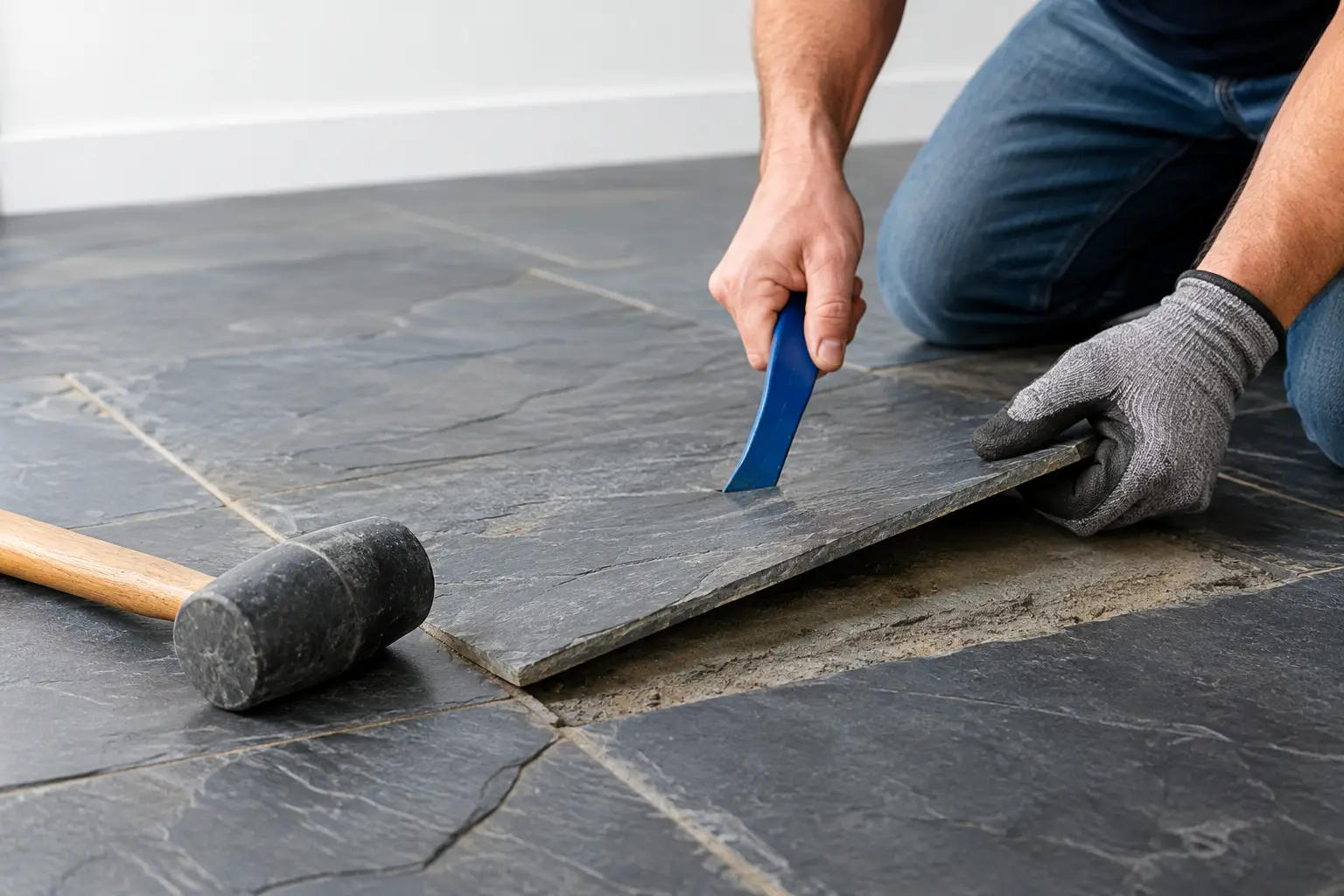
A typical example is an old tiled floor. Tile removal may leave bedding adhesive, broken mortar and isolated high points across the concrete. Scarifying can take down the heavy residue and level problem areas. Grinding then cleans up the remaining material and creates an even base for new tiles, waterproofing systems or floor coverings.
The same approach applies to failed epoxy or commercial coatings. Where the coating is thick, damaged or poorly bonded, aggressive removal may be required first. A controlled diamond grind can then remove the last remnants and establish the right profile for the replacement system.
This staged method avoids wasting time trying to make one machine do every part of the job. It also reduces the risk of preparing only the obvious areas while leaving hidden residue that causes problems later.
What must be checked before any concrete preparation
The visible floor tells only part of the story. Before choosing equipment, the removal team needs to understand the substrate, the existing materials and the requirements of the new installation.
First, check the slab for hollows, cracks, weak patches and previous repairs. A surface may look level while containing loose or delaminated concrete. Grinding or scarifying will expose those failures, which is better than covering them up, but it means repairs may be needed before the next trade proceeds.
Second, identify what is being removed. Adhesives behave differently. Some turn to powder, some smear under heat and some remain extremely hard. Coatings can be thin and brittle, thick and flexible, or bonded so strongly that several passes and tooling changes are needed. Tile bedding can vary from a shallow adhesive layer to a heavy mortar bed.
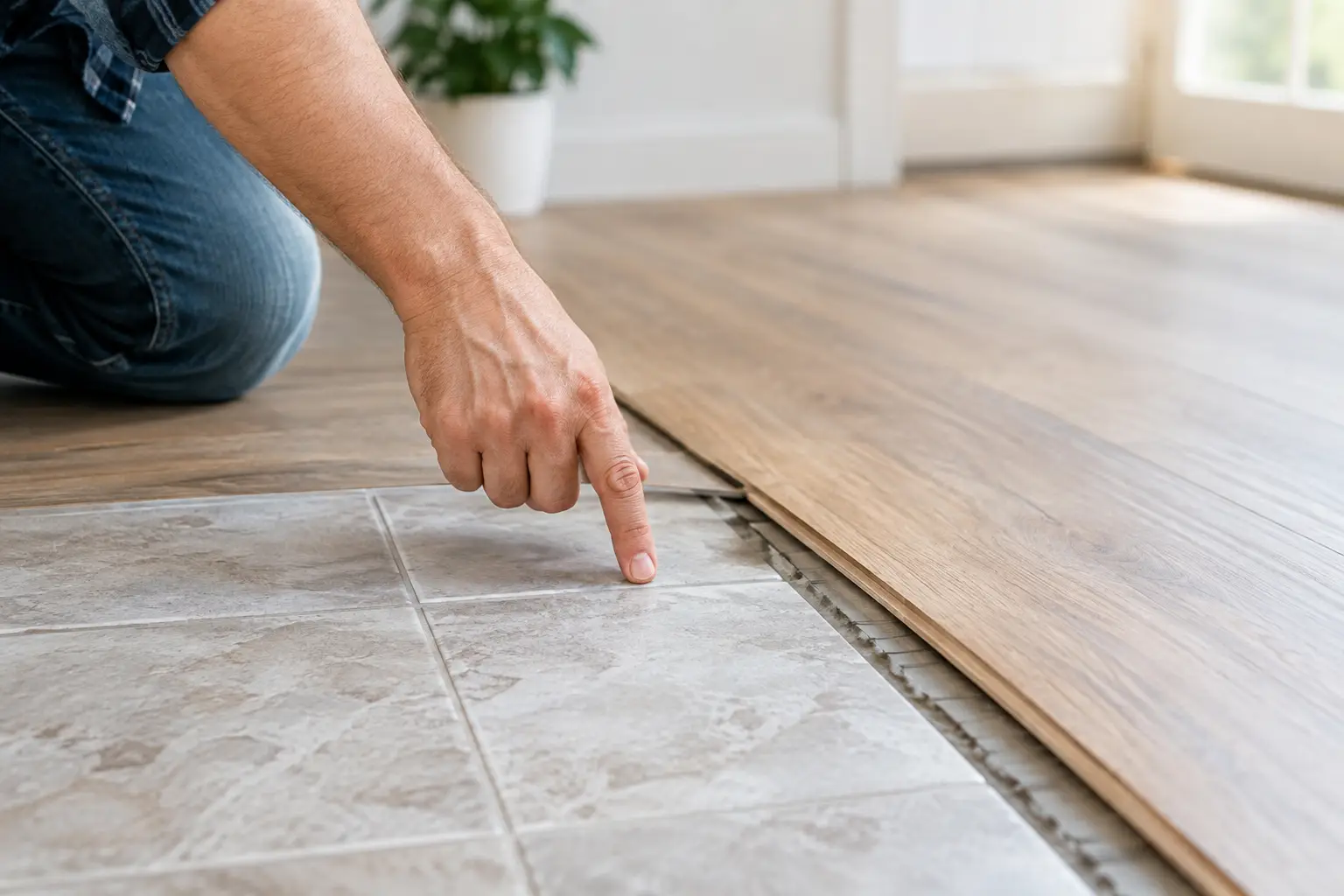
Third, confirm the finish requirement. A slab for carpet does not need the same standard as a slab for polished concrete. A coating supplier may specify a surface profile, while a vinyl installer may require a very smooth, flat base with no sharp ridges. The preparation method needs to match that requirement, not simply make the concrete look cleaner.
Finally, consider access and site conditions. Occupied homes, units, retail spaces and offices need a plan for noise, dust containment, rubbish removal and access protection. A fast job is only useful if it leaves the site clean, safe and ready for the renovation to continue.
Dust control is part of the method
Concrete preparation creates fine silica-containing dust. It is not something to sweep up at the end of the day or manage with an open door and a fan. Proper dust extraction, suitable filtration, equipment maintenance and safe work practices are essential when scarifying or grinding indoors.
Dust control also protects the rest of the project. Fine concrete dust can travel into adjoining rooms, settle on new cabinetry and affect other trades working nearby. For occupied properties and commercial sites, containment and clean-up are as important as material removal.
At Rapid Stripped, the work is assessed as a removal and preparation task, not just a machine hire exercise. That means selecting the process that removes the problem efficiently while keeping the slab, surrounding areas and next stage of the build in mind.
Do not judge readiness by appearance alone
A pale, exposed slab can still have glue residue, surface contamination or unevenness that compromises the next finish. Run a hand across it, inspect it in side light and check it against the flooring or coating specification. The problem areas are often the small ridges, hard patches and transitions that only show up once a new floor is installed.
The smart move is to decide what the new finish needs before removal starts. When scarifying and grinding are used for their proper strengths, the result is not merely a stripped floor. It is a clean, sound and properly prepared slab that lets the next trade get on with the job.