
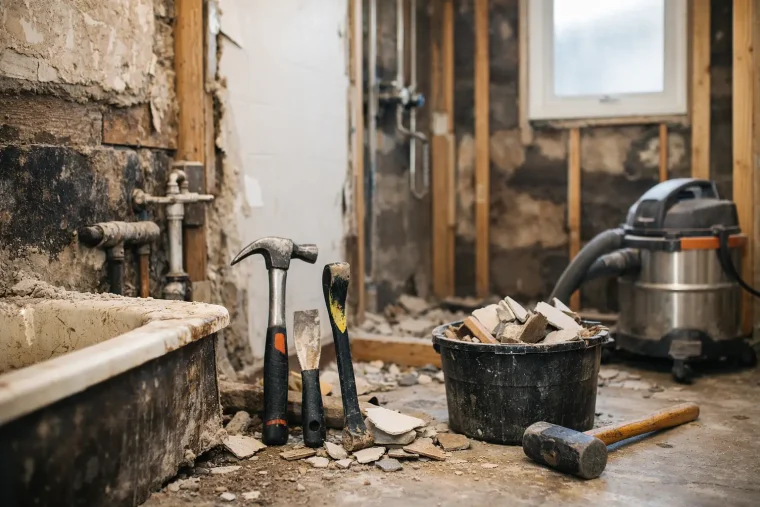
A bathroom strip-out goes wrong in the first half hour, not the last. Crack a waste pipe, damage a structural wall, or leave tile bed bonded hard to the slab, and the whole renovation slows down before the new work even starts. If you want to know how to strip bathroom for renovation properly, the job is less about brute force and more about method, sequence, and knowing what stays put.
How to strip bathroom for renovation without creating bigger problems
The cleanest bathroom strip-outs start with a clear scope. Are you removing everything back to frame and slab, or only taking out tiles, vanity, shower screen and fittings while keeping walls or plumbing points in place? That decision changes the tools, the demolition approach, and what needs protection.
Before any removal starts, isolate services. Water should be shut off and confirmed off at the fixtures. Power to the bathroom needs to be isolated if lighting, exhaust fans, heated rails or power points are being removed. If the bathroom is in a unit, townhouse, hotel or active commercial site, access and noise timing matter as much as demolition itself. In occupied properties, dust control is not optional. It is the difference between a manageable renovation and a mess through the rest of the building.
A proper pre-start also includes checking for the hidden stuff that causes delays – cement sheet behind tiles, waterproofing membrane bonded to wall sheeting, thick mortar beds under floor tiles, old patching compounds, and set-down slab details around the shower. Bathrooms are layered systems. You are rarely only removing the visible finish.
Start with what comes out easily
The first stage is usually removing fixtures and fittings. That includes mirrors, towel rails, shower screens, vanity units, toilets, tapware, basins and cabinetry. These items come out before hard demolition because they open the room, improve access and reduce the chance of damaging reusable components in adjoining spaces.
This part sounds simple, but it depends on the plan for the renovation. If plumbing rough-in locations are changing, you can be more aggressive. If the renovation is keeping some service positions, care matters. A fast strip-out should still leave the site ready for the next trade, not full of avoidable repair work.
Once the room is cleared, protection goes down to adjoining floors, hallways and common areas. This is where experienced strip-out crews save time later. Controlled removal, rubbish handling and dust containment keep the project moving and stop complaints from family members, tenants, neighbours or other site users.
Removing wall and floor tiles is the heavy part
Most people asking how to strip bathroom for renovation are really asking about tile removal. That is where the hard labour is, and it is also where surface damage can make the next stage more expensive in time and effort.
Wall tiles can come off cleanly, or they can bring the sheet lining with them. It depends on the substrate, adhesive bond and age of the installation. In some bathrooms, trying to preserve the wall lining is a waste of effort because the sheeting is already compromised or the waterproofing will need full replacement anyway. In others, especially partial renovations, selective removal makes sense.
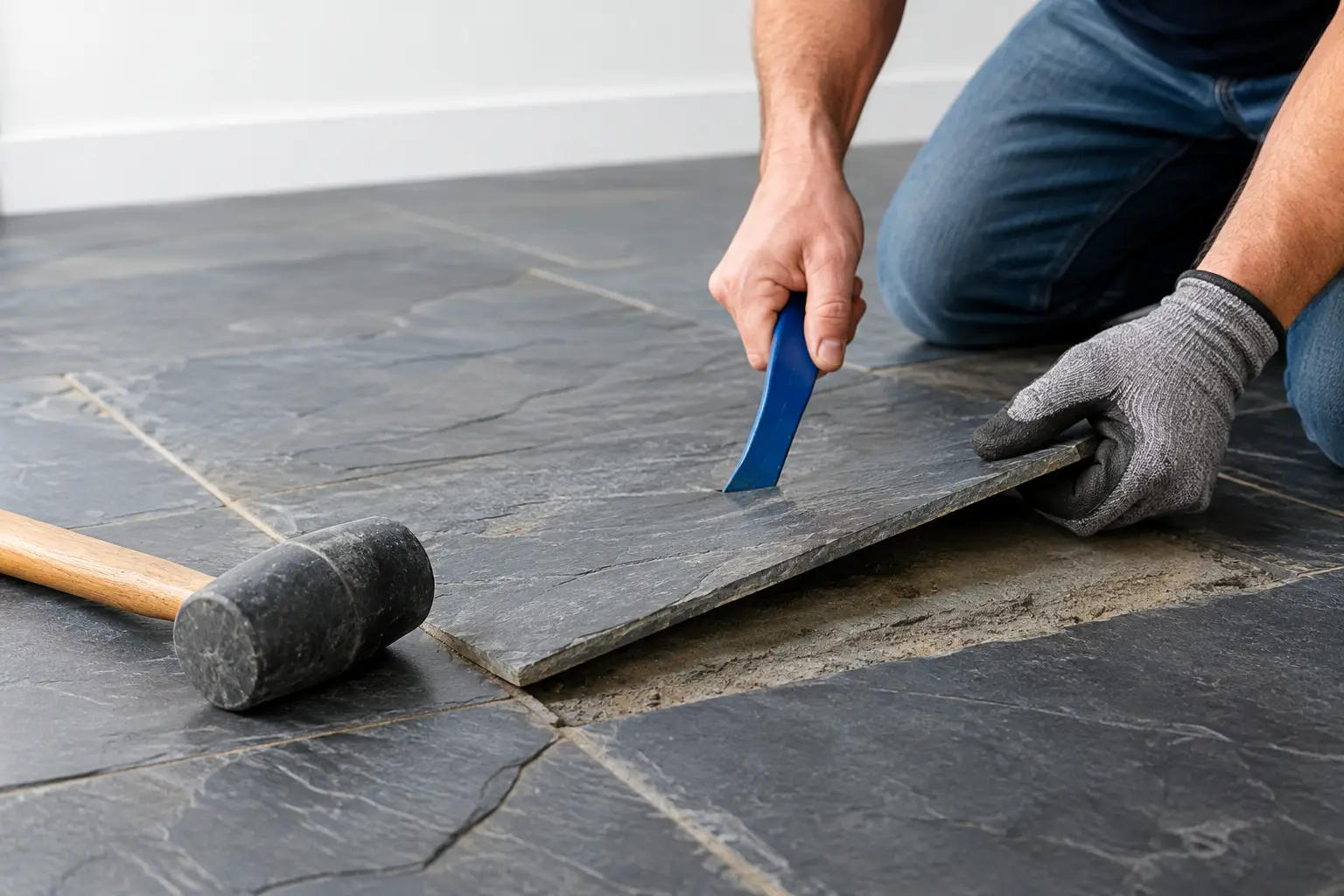
Floor tile removal is often tougher. Bathroom floor tiles are commonly laid over a screed or mortar bed, and that bedding can be strongly bonded to the slab. Taking up tiles but leaving ridges of adhesive, broken bedding or loose patches is not a proper finish. The floor needs to be taken back to a sound, stable surface so the next installer is not battling old material.
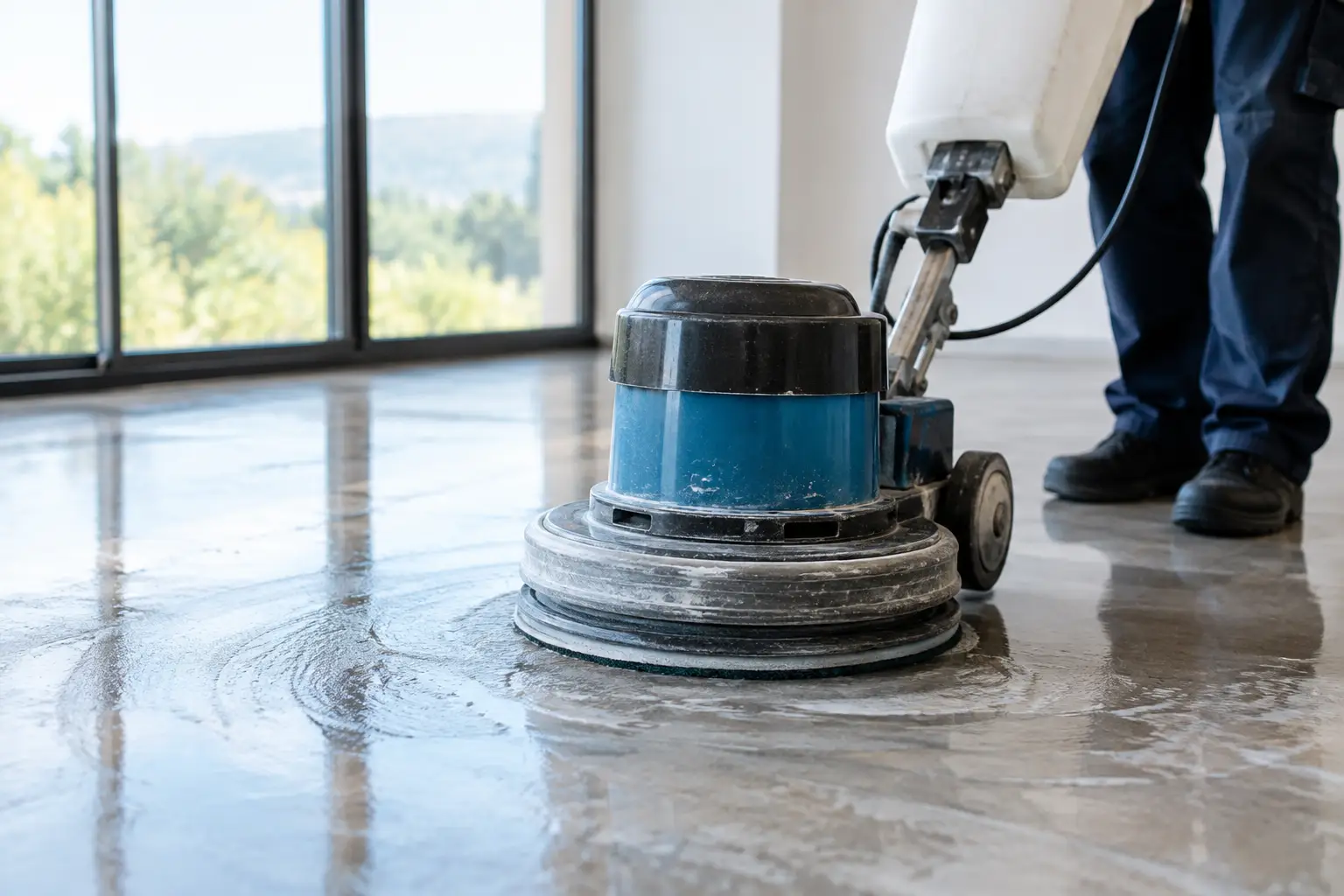
That is why tile removal and substrate preparation are really one job. If the tile comes up but the slab is still covered in glue, bedding, high spots or contamination, the bathroom is not ready. In many renovations, grinding or further preparation is needed after demolition to get the surface back to a usable condition.
What sits underneath matters
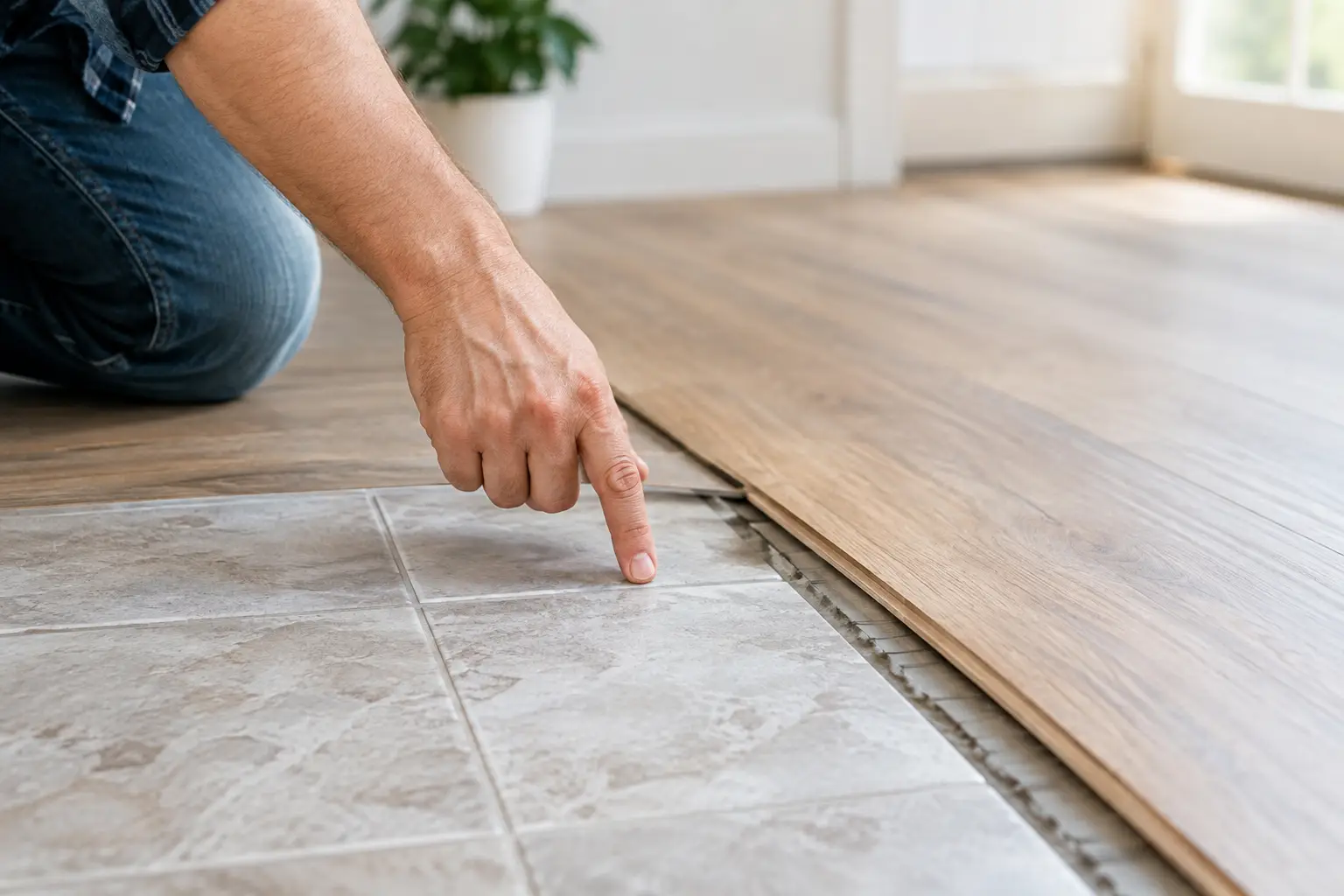
Older bathrooms can hide multiple layers – tile over tile, patch over old adhesive, or repairs around previous leaks. Timber subfloors need a different approach from concrete slabs. So do upper-level bathrooms where vibration, waste removal and structural protection need tighter control.
There is no single demolition setting that suits every bathroom. Push too hard on fragile substrates and you create more reinstatement work. Go too lightly on bonded material and you leave a half-finished strip-out. Good operators adjust method to the room, not the other way around.
Don’t ignore waterproofing, sheeting and damaged substrates
A bathroom renovation usually means the existing waterproofing system is coming out with the tiles and linings in the wet areas. That is normal. What matters is not pretending the underlying surfaces are still fit for the next stage if they are not.
If wall sheeting is torn, mould-affected, water-damaged or crumbling at fixings, remove it and expose the framing cleanly. If the floor has failed screed, soft spots or delamination, it needs to be stripped back properly. Covering over compromised material is where rushed renovations come undone.
This is also the point where structural and non-structural elements must be separated clearly. Non-load-bearing partitions may be slated for removal, but not every wall should be touched with demolition gear. If there is any doubt about whether a wall is structural, get that checked before the strip-out starts. Fast work is good. Rebuilding preventable damage is not.
Waste removal and site cleanliness are part of the job
Bathroom strip-outs create dense, abrasive waste – tile shards, broken screed, cement sheet, fittings, glass, timber and general rubble. It builds quickly and gets in the way even faster. Efficient rubbish removal is not just about neatness. It is about safety, access and keeping the room workable as the strip progresses.
A clean strip-out also helps the next trades assess the site properly. Plumbers can see penetrations and pipe routes. Waterproofers can inspect the substrate. Tilers can check levels and preparation requirements. Builders can identify any framing or repair work needed before linings go back in.
For occupied homes and active commercial sites, dust suppression matters just as much as waste removal. Fine demolition dust travels. Containment, extraction and disciplined cleanup make a major difference, particularly in apartments, tenanted properties and businesses where disruption needs to be kept under control.
DIY strip-out or bring in specialists?
That depends on the bathroom, the timeline and your tolerance for risk. A small, straightforward ensuite with easy access may look like a DIY candidate. But even then, tile bedding, concrete grinding, waste volume and hidden service lines can turn a weekend plan into a drawn-out mess.
For builders, renovators and property owners working to a schedule, specialist strip-out crews earn their keep in speed and finish quality. The value is not just demolition. It is getting the room back to a clean, workable state quickly, with difficult floor coverings, adhesives and bedding removed properly.
That matters even more on projects where other trades are lined up straight after. Delays at strip-out stage have a domino effect. If the demolition is incomplete, too rough, or not cleaned up properly, everyone behind it loses time.
What a bathroom should look like after stripping
A bathroom stripped properly is not just empty. It should be safe to enter, clear of loose debris, and visibly ready for the next scope of work. Fixtures are gone, tiles and associated bedding are removed where required, waste is cleared, and the remaining slab, framing or wall substrate is exposed in a way that makes assessment easy.
That last part is where standards show. A rushed job leaves jagged sections, hidden waste, bonded adhesive and patchy removal around corners and penetrations. A professional strip-out leaves a site that makes the next trade’s work easier, not harder.
In regions like Northern NSW, the Gold Coast, Brisbane and the Sunshine Coast, where renovation schedules are often tight and access can vary from freestanding homes to units and commercial tenancies, that speed-to-readiness matters. Rapid Stripped focuses on exactly that kind of outcome – hard removal work done properly, quickly, and with the site left ready for what comes next.
If you are planning a renovation, think beyond demolition for demolition’s sake. The goal is not to smash out an old bathroom. The goal is to hand over a clean, sound, well-prepared space so the rebuild can start without chasing fixes from the strip-out.