
Fresh paint on concrete is one thing. Old bonded paint that has soaked into a garage slab, workshop floor or shopfront is another. Paint removal from concrete floors can look straightforward at first, but once coatings start resisting scrapers, clogging grinders or leaving patchy residue behind, the job quickly turns into lost time, dust and a floor that still is not ready for the next stage.
That matters because removing paint is rarely the real end goal. Most people are trying to prepare a slab for tiles, epoxy, vinyl, polishing, sealing or a full renovation. If the paint is not removed properly, whatever goes over the top is more likely to fail.
Why paint removal from concrete floors is rarely a simple scrape-off job
Concrete is porous, but not always evenly porous. Some slabs are hard-trowelled and dense. Others are soft, aged or already damaged. Paint behaves differently on each one. A thin acrylic coating on a patio may lift relatively easily. Old enamel in a garage, line marking in a warehouse or multiple layers of unknown paint in a commercial tenancy can be far more stubborn.
The biggest mistake is assuming all paint should be removed the same way. It should not. The right method depends on the coating type, the slab condition, how much paint is present and what the floor needs to be ready for afterwards.
If the goal is a renovation-ready surface, it is not enough to just get most of the visible paint off. Residue, contamination and uneven texture all matter. A floor can look clean and still be unsuitable for adhesive, leveller or a new coating system.
The main methods used to remove paint from concrete floors
There are three broad approaches – mechanical removal, chemical stripping and heat-based removal. On concrete floors, mechanical methods are usually the most effective and reliable, particularly where speed, cleanliness and substrate preparation matter.
Mechanical removal
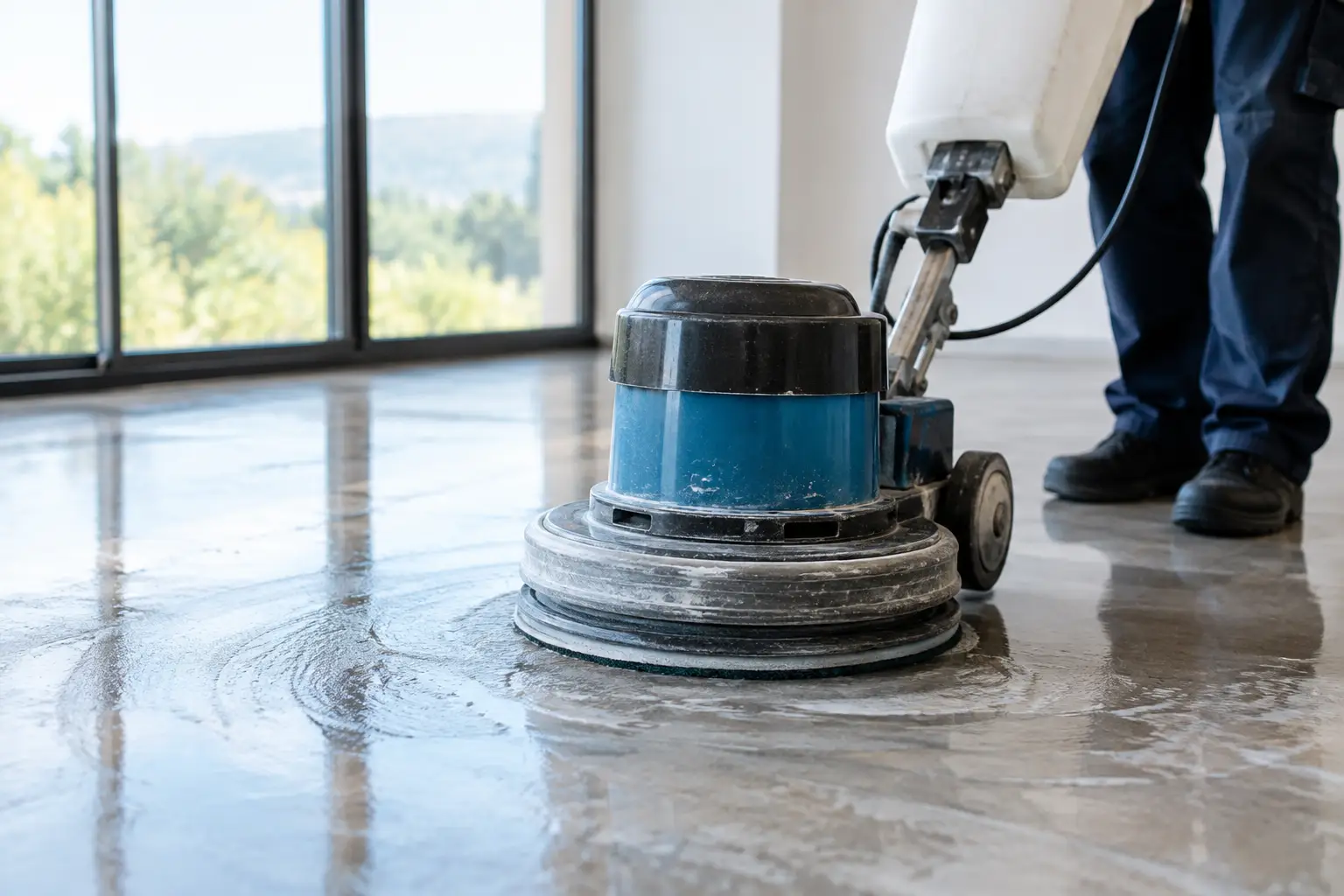
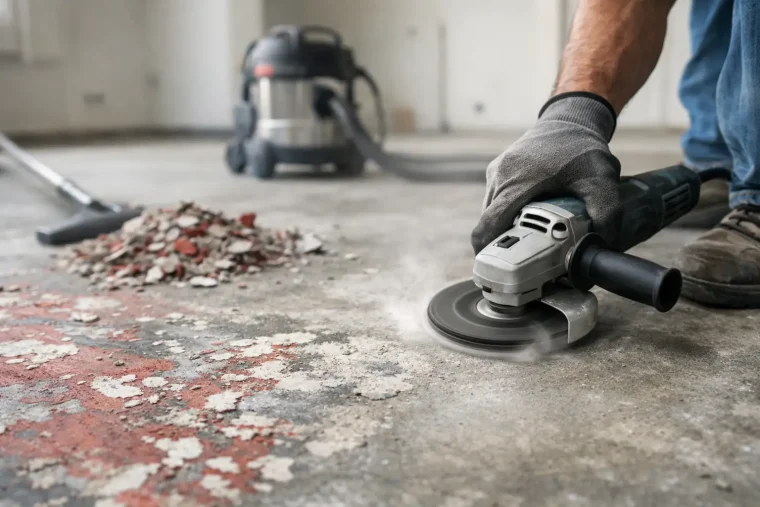
This includes grinding, scarifying and specialised floor stripping equipment. For most bonded floor paint, grinding is the method that gives the most controlled result. It removes paint while also addressing the surface profile of the slab.
That last part is important. If you are planning to recoat, retile or lay another floor covering, the slab often needs more than paint removal. It needs proper preparation. Mechanical removal can achieve both in one process when done correctly.
The trade-off is that aggressive equipment in inexperienced hands can gouge or wave the slab. It can also expose weak areas, old repairs or hidden defects. That is not necessarily a bad thing – better to find those issues before installation than after – but it does mean the operator needs to know how to read the floor.
Chemical stripping
Chemical paint strippers can work on certain paints, especially where dust must be reduced or access is awkward. They are more common for detailed areas, edges or situations where grinding is not the first choice.
The downside is residue. Chemicals can soak into concrete, and if they are not fully neutralised or removed, they may interfere with future coatings or adhesives. They can also create a messy cleanup process, especially on larger floor areas.
For isolated spots, chemical stripping may have a place. For full-floor preparation, it is often slower and less predictable than mechanical removal.
Heat-based methods
Heat guns and similar tools are usually not practical for full concrete floors. They may help with small localised areas, but on large surfaces they are inefficient and can still leave embedded residue in the concrete pores.
For most residential and commercial floor projects, heat is not the first method worth considering.
When grinding is the better option
If the floor needs to be ready for the next trade, grinding is often the smarter path. It removes bonded paint, evens out remaining residue and creates a more consistent surface. That is especially useful in garages, warehouses, retail tenancies, unit renovations and homes where old painted concrete is being converted for a new finish.
Grinding also suits jobs where timing matters. A professional setup with proper dust control can move quickly, keep the site cleaner and avoid the stop-start process that often comes with patch stripping and repeated scraping.
That said, not every slab should be ground aggressively. Some older concrete floors are soft or already compromised. In those cases, the process needs to be adjusted to avoid unnecessary damage while still removing enough material to prepare the surface properly.
The risks of getting it wrong
A lot of paint removal problems do not show up until later. The paint seems gone, the site gets handed over, and then the new adhesive, coating or topping starts failing. Usually the cause is one of three things – paint residue left behind, contamination from the removal process, or a slab that was damaged rather than prepared.
Patchy grinding is another common issue. One section is taken back to clean concrete, another still has thin paint film, and another has deep grinder marks. That unevenness affects how new materials bond and how the finished floor looks.
Dust is a separate issue and one that should not be treated lightly. Paint removal without proper control creates a mess through the whole site, slows down adjoining trades and adds avoidable cleanup. In occupied homes, offices and commercial spaces, that disruption becomes a real cost even when nobody writes it on an invoice.
What to check before starting paint removal from concrete floors
Before any equipment is switched on, the job needs a proper assessment. What type of paint is on the slab? How many layers are there? Is the concrete sound? Are there cracks, old adhesive traces or moisture issues underneath? What is the next floor finish going down?
Those questions change the method.
For example, if the slab is only being cleaned up for a utility area, the finish standard may be less critical. If the floor is being prepared for epoxy, polish or a glued floor covering, the tolerance is much tighter. Surface profile, contamination and consistency all matter more.
Edge work is also worth thinking about early. Large machines handle open areas efficiently, but perimeters, corners and tight sections usually need separate tools and more detailed work. If that gets skipped, the floor is not truly ready.
Residential and commercial jobs are not the same
A painted concrete patio, a home garage and a commercial tenancy can all involve paint removal, but the job conditions are different.
In a home, the priority is often cleanliness, access and getting the area turned around quickly so the renovation keeps moving. In a commercial site, the pressure is usually on downtime, compliance and making sure the next contractor can start without delay.
That is why specialist removal teams tend to approach floors differently from general trades. The focus is not just getting material off the ground. It is getting the site to the right standard, with the right equipment, and without creating fresh problems in the process.
DIY versus bringing in a specialist
Small paint spots on outdoor concrete can sometimes be handled by a capable DIYer. Once the paint is widespread, heavily bonded or tied to a renovation schedule, the margin for error gets smaller.
The issue is not just labour. It is equipment choice, dust control, slab assessment and knowing when to shift methods. Hiring the wrong machine or using the wrong disc can waste a day and still leave the floor half-finished. Worse, it can chew into the slab and create repair work that was never part of the plan.
A specialist team brings speed, but speed only matters when the result is right. Good operators remove the paint, manage dust, and leave a floor ready for what comes next. That is the difference between surface-level removal and actual preparation.
For homeowners, renovators and builders, that usually means less downtime and fewer handover issues. For business operators and property managers, it means less disruption and a cleaner path to reopening or refit.
What a good finished result actually looks like
A properly completed floor should be free of loose or bonded paint in the treatment area, consistent across the slab and suitable for the intended next stage. That does not always mean a polished-looking surface. Sometimes it means a ground, open-profile concrete slab ready for adhesive or coating. Sometimes it means deeper preparation to remove residue and weak surface material.
The key is fitness for purpose. A floor prepared for tiles is not judged exactly the same as one prepared for clear sealing or decorative coating. The removal method needs to match the final use, not just the visible problem.
That is where experienced floor removal contractors earn their keep. They do not just chase paint. They work backwards from the finished floor requirement and prepare the slab accordingly.
Rapid Stripped handles these sorts of jobs every day, particularly where speed, dust control and a renovation-ready finish matter. Whether it is a garage, shop, office or full strip-out, the goal is always the same – remove the problem properly and leave the next trade with a floor they can actually work with.
If you are dealing with painted concrete, think beyond getting it off. The real question is whether the floor will be ready when it is gone.