
A floor can look simple until it is time to remove it. Tiles may be bonded to a thick mortar bed, old vinyl can leave stubborn adhesive across the slab, and timber flooring can conceal uneven surfaces underneath. Professional Sunshine Coast floor demolition is about more than getting the old covering out. It is about leaving a clean, sound surface that allows the next trade to start without delays.
For homeowners, builders and commercial property managers, the difference is felt immediately. A rushed removal job can leave high spots, loose adhesive, damaged concrete and a site full of dust. A properly managed strip-out keeps the work controlled, clears the waste and prepares the substrate for the flooring, waterproofing or renovation work that follows.
What floor demolition actually involves
Floor demolition covers the removal of existing floor coverings and the materials holding them in place. Depending on the property, that can mean ceramic or porcelain tiles, terracotta, slate, marble, cork, vinyl, carpet, timber, epoxy coatings or pool tiles. It can also involve adhesive removal, screed removal, slab grinding and targeted concrete surface preparation.
The right method depends on what is on the floor and what sits beneath it. A tiled bathroom floor may need careful removal to protect adjoining walls and avoid unnecessary damage before waterproofing. A large commercial tenancy may need fast removal of vinyl and glue so a new fit-out can proceed on schedule. In an older home, several layers of flooring may have been installed over decades, each requiring a different approach.
This is why floor removal should not be treated as a basic labouring task. The tools, machine pressure, blade selection and dust-control process all affect the final condition of the slab.
Why Sunshine Coast floor demolition needs a site-specific approach
There is no one-method-fits-all approach to Sunshine Coast floor demolition. Coastal properties range from older beach houses and units through to new builds, retail spaces, medical suites and hospitality venues. Access can be tight, parking can be limited, and occupied properties need a far more controlled process than an empty construction site.
In a unit or apartment, the work may need to account for lift access, common areas, neighbours and noise restrictions. In a family home, protecting cabinetry, walls and nearby rooms can matter just as much as removing the flooring quickly. In commercial spaces, the priority is often reducing downtime so other trades or staff can return as soon as possible.
A specialist team assesses the floor covering, substrate, access points and disposal requirements before work begins. That planning helps avoid the usual problems: underestimating the hardness of tile bedding, finding adhesive that will not lift cleanly, or removing a finish only to discover the slab still needs grinding.
The condition of the slab matters most
Once the old floor is removed, the concrete underneath becomes the focus. New tiles, hybrid flooring, polished concrete, carpet and epoxy all need an appropriate base. A slab covered in ridges, old glue or loose material is not ready for the next stage, no matter how clear the room looks.
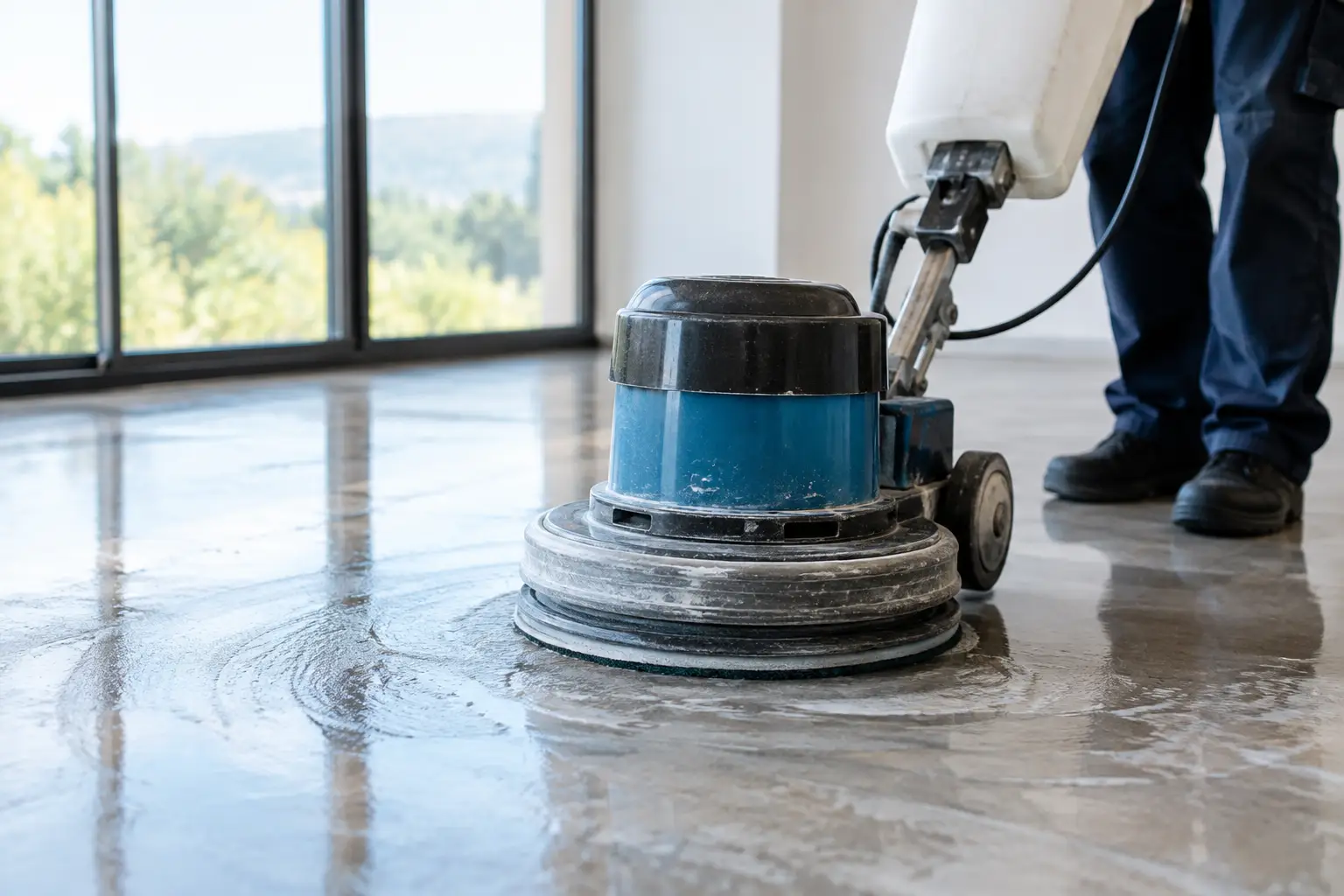
Tile bedding often leaves uneven patches that need mechanical removal. Vinyl adhesive can remain tacky or harden into a dense residue that interferes with new flooring products. Paint, coatings and epoxy may need grinding to expose a suitable surface. These jobs call for the correct machinery and controlled technique, not a quick scrape with hand tools.
There is also a balance to get right. The aim is to remove the unwanted material and prepare the substrate without unnecessarily scarring or weakening the slab. Where the existing concrete has cracks, low spots or previous repairs, the incoming flooring system and the builder’s requirements will determine how far preparation needs to go.
Tile and bedding removal
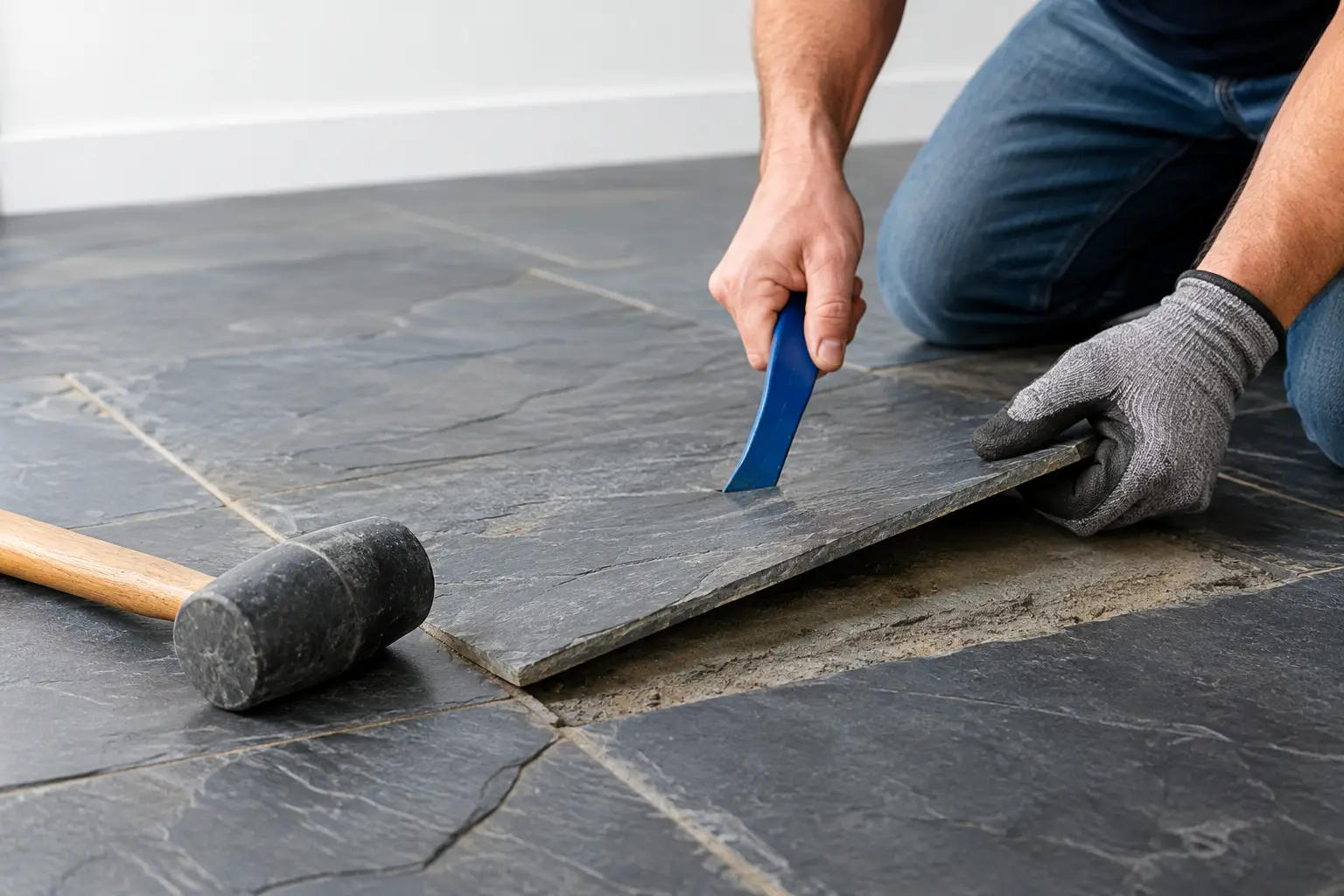
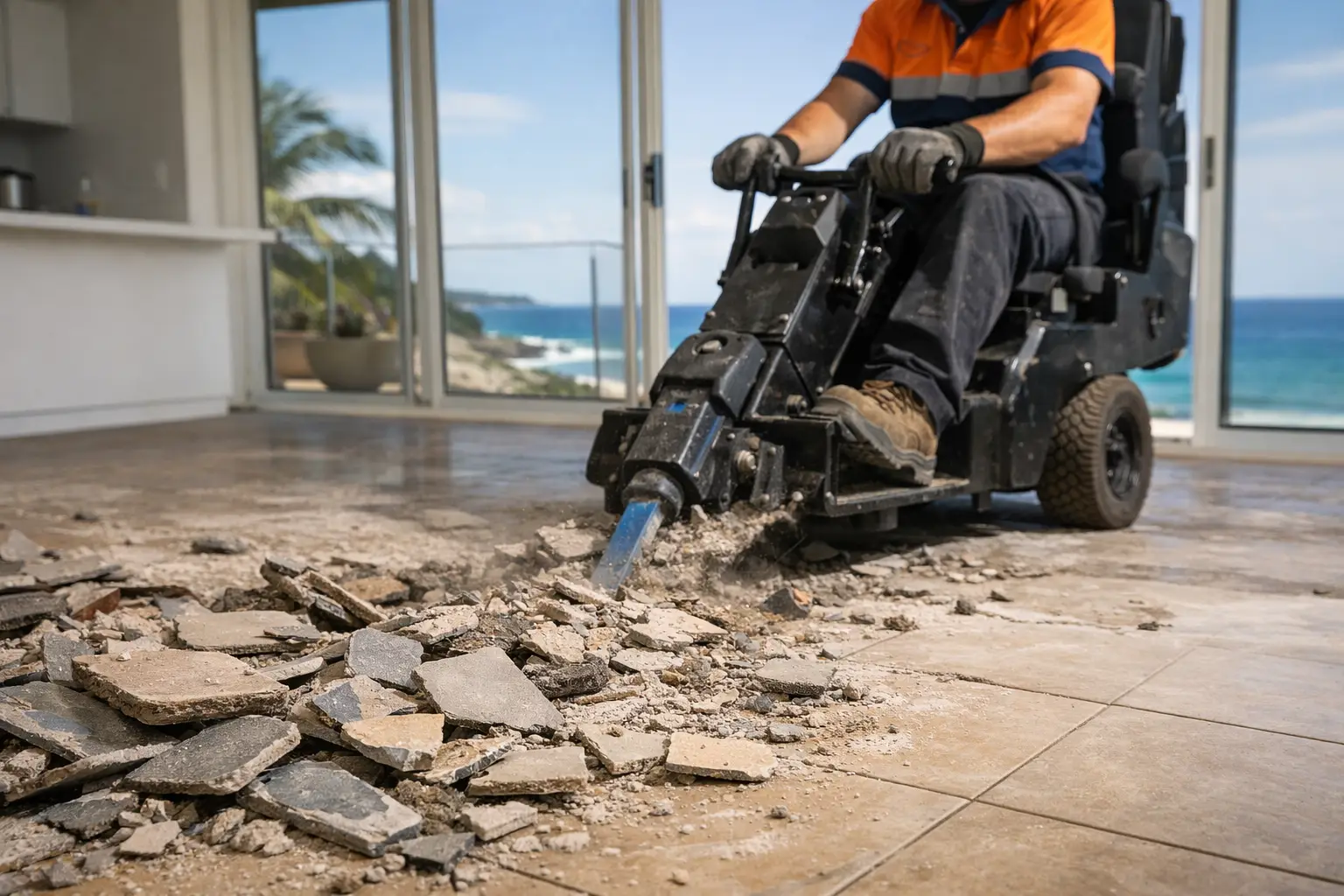
Tiles are rarely the difficult part. The real work is usually the adhesive, mortar bed or screed below them. Dense porcelain tiles and older installations can be particularly stubborn, with material bonded hard to the concrete.
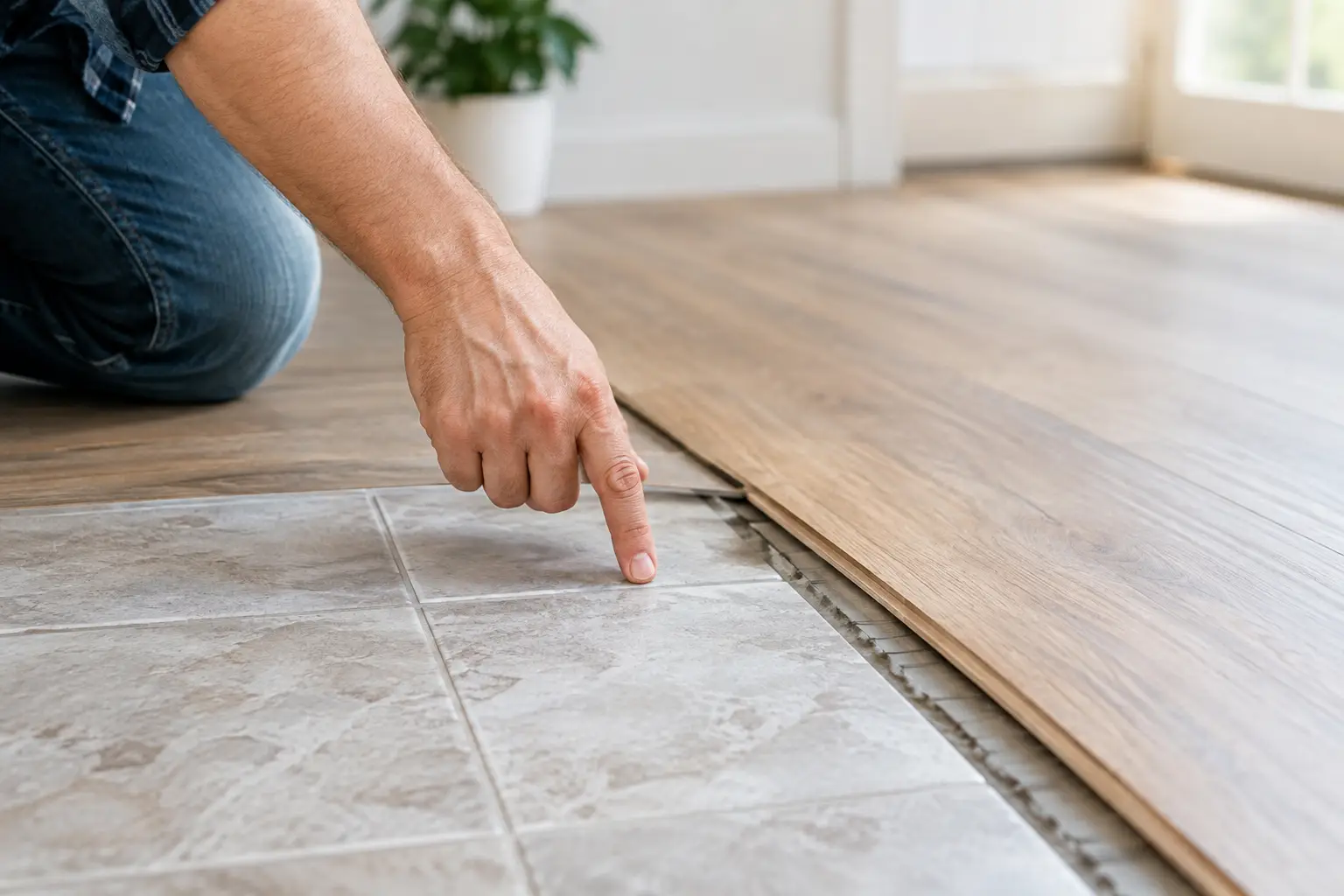
Professional removal uses purpose-built equipment to lift the tile and break down the bedding efficiently. In kitchens and bathrooms, edges and transitions need additional care. The objective is not simply speed. It is to remove the floor without creating avoidable repair work around walls, doorways, cabinetry or drains.
Vinyl, carpet and adhesive removal
Vinyl and carpet removal can appear straightforward, but adhesive residue changes the job completely. Some glues lift easily, while others require mechanical scraping or grinding to achieve a clean finish. The same applies to old carpet underlay and tack strips, which can leave holes, staples and adhesive behind.
For commercial floor replacement, this preparation is often the critical stage. New vinyl, carpet tiles or polished finishes rely on a flat, clean surface. Leaving old adhesive behind can compromise the installation and create problems that show up after the new floor is laid.
Timber, cork and specialty coverings
Timber, engineered boards and cork can be fixed with nails, staples, adhesive or a combination of all three. The removal process must deal with the covering and every fixing left in the substrate. This is particularly relevant when a property is changing from timber to tile, vinyl or an exposed concrete finish.
Specialty materials such as slate, marble, terracotta and epoxy require similar care. They are often heavy, firmly bonded and capable of producing substantial dust and debris when removed without the right equipment.
Dust control is part of a professional job
Floor demolition is dusty work by nature. The difference is whether that dust is managed at the source. Grinding concrete, removing adhesive and breaking up tile bedding can release fine particles that travel through a property quickly if the work area is not properly controlled.
A professional process uses suitable extraction equipment, containment where required and careful clean-up throughout the job. This is especially important in occupied homes, offices, retail sites and buildings with finished areas next door to the work zone.
Dust control also improves the quality of the result. When the surface is visible as it is being prepared, the operator can identify remaining adhesive, high spots and imperfections instead of working blind under a layer of debris. Clean execution saves time for the next trade and reduces the chance of a return visit to fix missed areas.
When a strip-out should happen before flooring removal
Floor removal is often only one part of a renovation. If a bathroom, kitchen, office or full property is being stripped out, the work needs to be sequenced properly. Removing flooring too early can create unnecessary damage from later demolition. Leaving it too late can slow down plumbing, electrical or framing work.
For a bathroom renovation, fixtures, wall linings and the old floor may need to come out in a controlled order. For a commercial tenancy, partitions, joinery, ceilings and floor coverings may all be part of the same make-good or fit-out preparation. Coordinating the demolition scope from the start keeps the site cleaner and prevents trades from working around materials that should already be gone.
Rapid Stripped handles both specialist floor removal and broader strip-outs, allowing the work to be planned as one practical demolition stage rather than a collection of separate jobs.
What to check before work begins
A good result starts with clear information. Before booking floor demolition, identify the areas being removed, the type of covering where known, and whether the property is occupied. Photos are useful for showing access, stairs, narrow hallways, cabinetry and transitions between rooms.
It also helps to confirm what the floor needs to be ready for next. Is new tile being installed? Does the slab need to be suitable for vinyl? Will it be waterproofed, levelled or coated? The required finish affects the level of adhesive removal and grinding needed.
Older properties may require extra caution where unknown materials are present. If there is any concern about hazardous building materials, this should be assessed before demolition starts. Safe work is not an optional extra, particularly when removal work can disturb concealed layers.
A clean handover keeps renovation moving
The best floor demolition job does not leave a renovation team with another demolition job to finish. It leaves the area stripped, cleared and prepared to the agreed stage, with rubbish removed and the substrate visible for inspection.
That matters whether you are replacing a few rooms of tiles before moving in, renovating an investment unit between tenants or preparing a commercial space for a new operator. Fast work is valuable, but only when it is paired with care, proper equipment and a surface that is genuinely ready for the next step.
When the old floor is holding up the project, get the removal stage handled properly. A clean slab and an organised site give every trade that follows a better place to start.